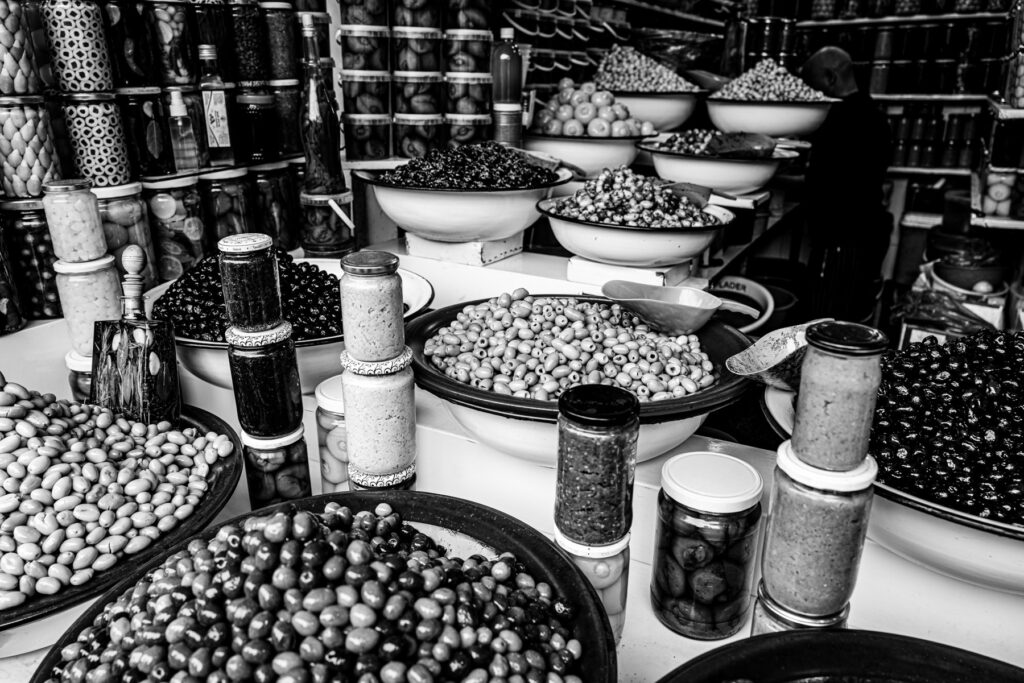
As a photographer, walking into a market like this is a visceral experience, a sensory overload even before you lift the camera. But in this case, I chose to strip away the riot of color, opting for black and white to distill the scene down to its essence. What immediately captivated me was the sheer abundance, the organized chaos of a thousand olives spilling from generous bowls, the stacked jars holding secrets of pickled delights. It felt timeless, a tableau that could have existed centuries ago, untouched by modern fleeting trends. My lens sought to capture that feeling, the deep-rooted tradition.
The challenge was the light – or rather, the interplay of light and shadow that the black and white conversion would accentuate. I wanted to highlight the textures: the smooth, plump olives, the rough glass of the jars, the subtle gleam on the metal bowls. The careful stacking of the jars, each one a miniature monument of preservation, spoke volumes about the care and craft involved in preparing these staples. In the background, a lone figure, a silent guardian of this edible treasure trove, adds a human element, grounding the scene in reality while maintaining its almost painterly quality.
This isn’t just a photograph of food; it’s a window into a culture, a testament to enduring traditions, and a quiet moment of beauty found amidst the daily grind. It’s about the rhythm of life, the bounty of the earth, and the artistry of presentation, all rendered in shades of grey, emphasizing form, contrast, and the undeniable charm of a traditional marketplace. Every time I look at it, I can almost hear the gentle murmur of conversation, the rustle of bags, and the quiet pride of the vendor.
Historical background:
Olives have been a cornerstone of Mediterranean culture and cuisine for millennia. Evidence suggests olive cultivation began over 7,000 years ago in the Eastern Mediterranean, with the tree quickly becoming a symbol of peace, longevity, and prosperity. The ancient Greeks and Romans valued olives not only for their culinary use (both the fruit and oil) but also for religious ceremonies, medicine, and cosmetics. Olive oil was a vital trade commodity, shaping economies and facilitating cultural exchange across empires. Traditional markets, much like the one depicted, have been central to this heritage, serving as hubs where the bounty of the land – including various preparations of olives, pickled vegetables, and preserves – has been exchanged and celebrated for centuries, connecting modern life to ancient practices.
Schreibe einen Kommentar