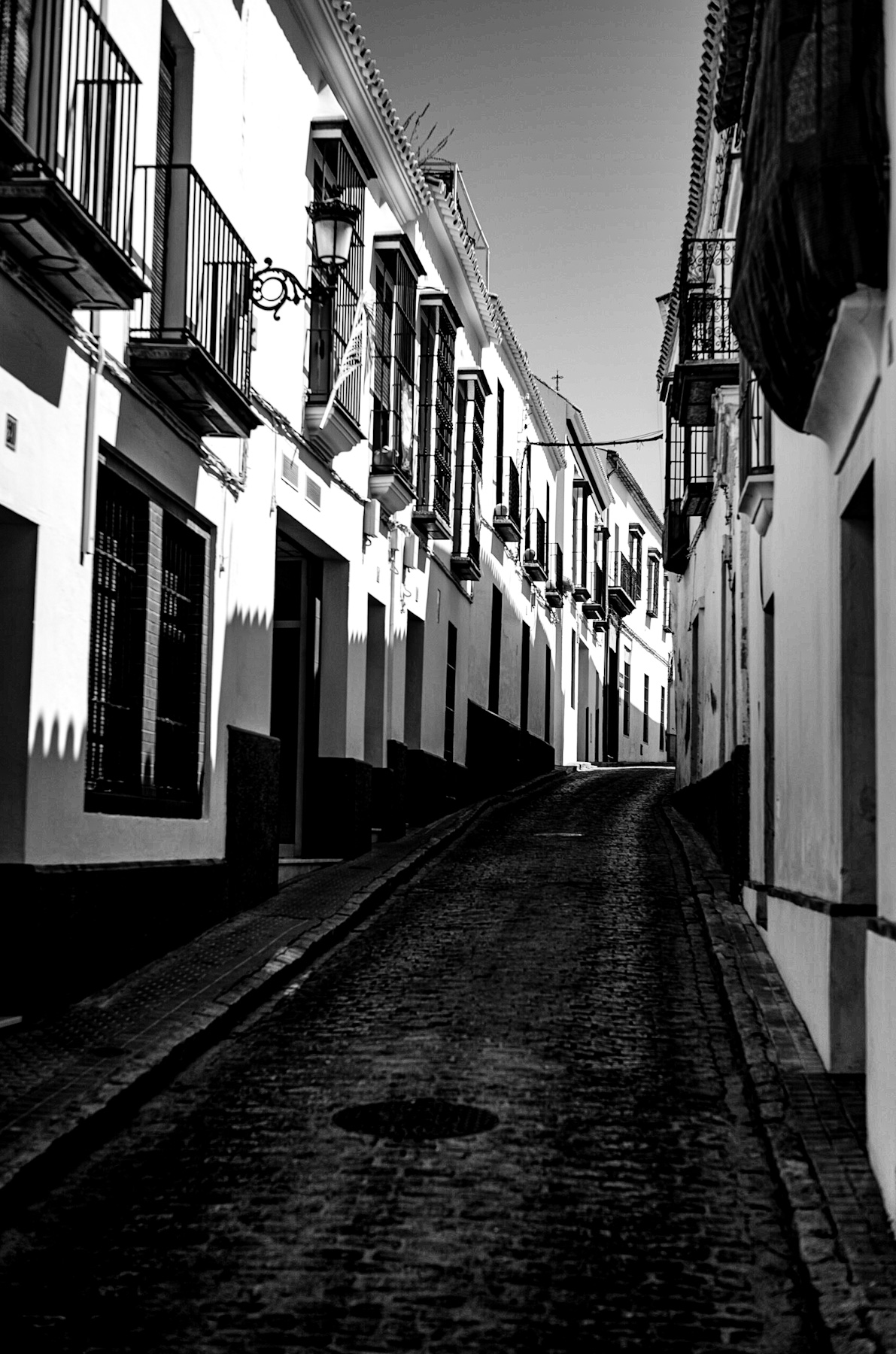
This striking black-and-white photograph transports us to a narrow, sun-drenched lane, a scene deeply characteristic of Andalusia’s historic heart. The image is a study in texture and contrast, where weathered cobblestones lead the eye up a gentle incline, flanked by buildings that seem to lean into one another. It is a portrait of a place where every stone and shadow tells a story, inviting us to explore its layered past.
—
**The Architecture of Light and Survival**
The visual power of the photograph lies in the dramatic interplay between brilliant sunlight and deep, sharp shadows. The buildings, with their iconic whitewashed facades, serve as a brilliant canvas. This tradition, known as *encalado*, is a cornerstone of Andalusian architecture. Far from being merely decorative, the lime wash (*cal*) was a practical necessity for centuries. Its reflective properties helped to keep interiors cool during the scorching summer months, while its natural antiseptic qualities contributed to public health, making these streets not just beautiful, but ingeniously sustainable.
Key architectural elements punctuate the scene, each with its own historical significance:
* **Wrought-Iron Work (Rejas):** The dark, ornate ironwork of the balconies and window grilles stands in stark contrast to the white walls. This is a testament to the region’s long and celebrated history of metal craftsmanship. These *rejas* provided security but also functioned as a subtle display of a family’s wealth and social standing.
* **Terracotta Roof Tiles:** Peeking over the rooflines, the curved terracotta tiles (*tejas árabes*) add a layer of texture and are a direct link to Roman and Moorish building traditions, designed to efficiently channel rainwater away from the structures.
* **Minimalist Facades:** The buildings are unpretentious, their beauty found in their functional form. The rhythmic repetition of windows, doors, and balconies creates a sense of harmony and order along the winding path, reflecting a practical elegance.
—
**A Legacy Carved by Cultures**
The very layout of this street is a living artifact of Andalusia’s multicultural past. Its narrow, winding form is a direct inheritance from the nearly 800 years of Moorish rule in Al-Andalus. This urban design was a masterful solution to the challenges of the environment and the era:
1. **Natural Climate Control:** The tall buildings create a canyon effect, shading the street for most of the day and providing a cool refuge from the intense sun. The winding layout was also designed to create gentle air currents, offering a natural form of ventilation in hot climates.
2. **A Defensive Design:** In medieval times, these labyrinthine streets were a strategic advantage. They were inherently confusing for invading forces, making it easy for defenders to control the territory from rooftops and balconies. This design is especially prominent in the old Jewish Quarters (*Juderías*) and Moorish medinas, speaking volumes of historical resilience.
This single cobblestone path is a physical timeline. It has been trodden by Romans, Visigoths, Moors, Jews, and Christians. Each civilization left its indelible mark, contributing to the unique cultural and architectural fusion that defines Andalusia today.
By stripping away color, the monochrome photography forces us to engage with the fundamental elements of the scene: the rough texture of the ancient stones, the smooth lime-washed walls, and the profound geometry of light and shadow. It is a quiet, contemplative view of a street that has silently witnessed centuries of history unfold, continuing its timeless narrative for all who walk its path.
—
Schreibe einen Kommentar