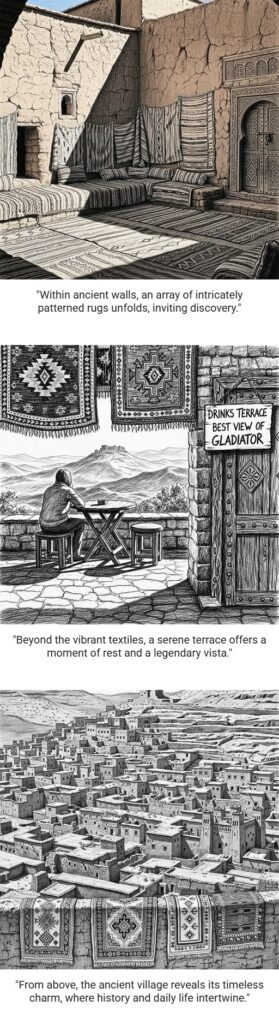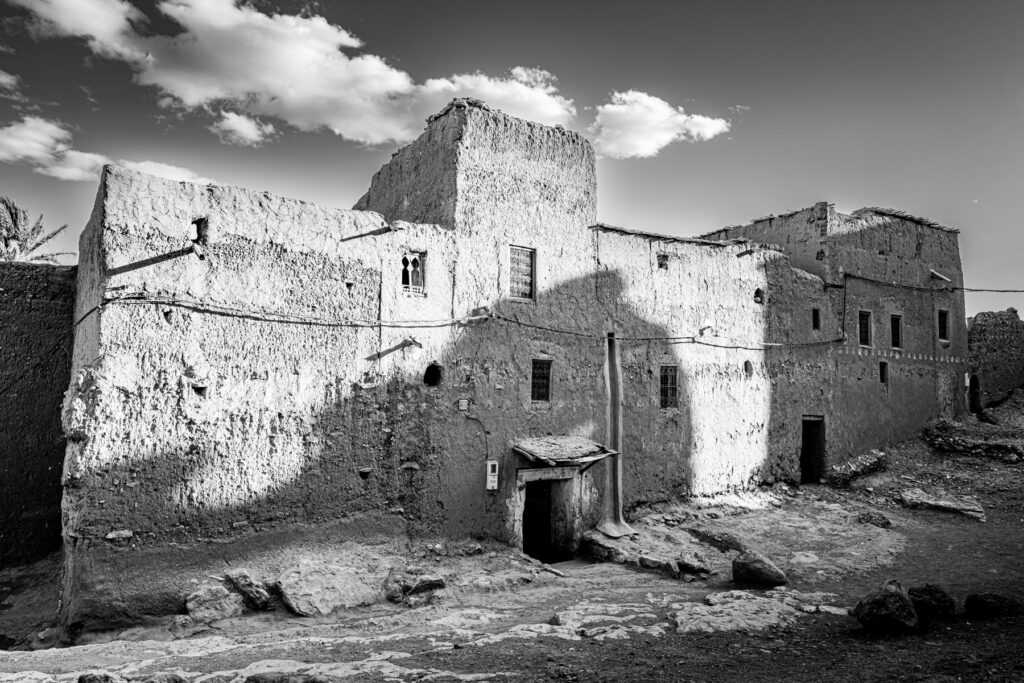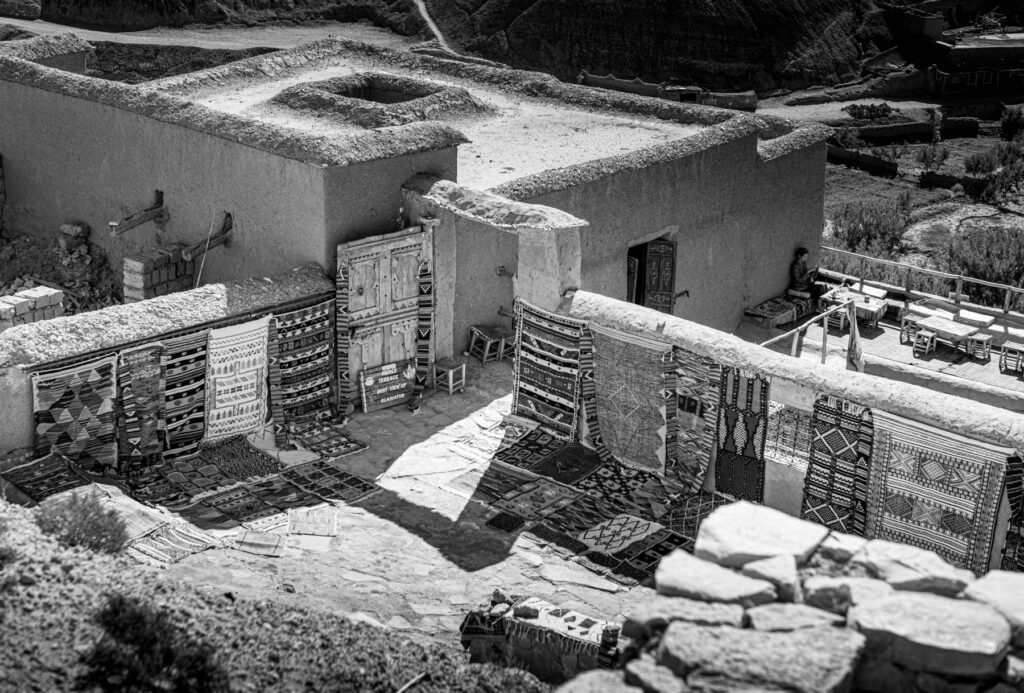
Walking through Ait Ben Haddou, every corner held a story, every shadow a secret. As a photographer, it’s these moments I live for – a place where time seems to slow, allowing the light to paint scenes of profound beauty. This particular morning, the sun was just beginning its ascent, casting long, dramatic shadows across the ancient ksar. I found myself drawn to this elevated perspective, looking down into a small, sun-drenched courtyard. What immediately captivated me were the patterns. Rows upon rows of handwoven rugs, their intricate designs a testament to generations of craftsmanship, hung from a low wall and lay sprawled across the dusty ground. The stark black and white treatment felt right for this scene; it stripped away the distractions of color, allowing the textures – the rough plaster walls, the soft wool of the carpets, the worn wooden doors – to truly sing. The light was phenomenal, creating deep, rich shadows that gave the scene a sculptural quality, emphasizing the architectural lines and the folds of the textiles. In the background, a person sat quietly on a terrace, almost becoming part of the ancient structure, sipping tea perhaps, or simply gazing at the valley below. This human element, so unobtrusive, added a layer of quiet contemplation to the scene, a sense of everyday life continuing amidst the grandeur of history. I remember waiting for the light to hit just so, for the perfect interplay of brightness and shadow, wanting to capture not just a place, but a feeling – the enduring spirit of this remarkable fortified village. It was a moment of profound peace and visual richness, a slice of life rendered timeless by the monochrome lens.
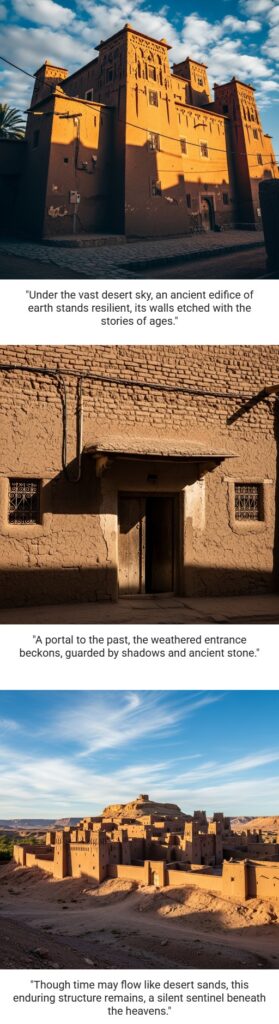
Ait Ben Haddou, a majestic fortified village (ksar) nestled in the Ounila Valley in Morocco, stands as a remarkable example of pre-Saharan earthen architecture. Designated a UNESCO World Heritage site in 1987, its origins date back to the 11th century, serving as a strategic stop along the ancient trans-Saharan trade route between Marrakech and the Sahara Desert. The ksar’s traditional mud-brick structures, including houses, towers, and defensive walls, are built into the hillside, offering breathtaking views and natural protection. Beyond its historical significance as a trading post and a testament to traditional Moroccan life, Ait Ben Haddou has achieved global fame as a popular filming location. Its iconic scenery has provided the backdrop for numerous blockbusters and television series, including ‚Lawrence of Arabia,‘ ‚Jesus of Nazareth,‘ parts of ‚Game of Thrones,‘ and most notably, Ridley Scott’s ‚Gladiator,‘ a fact playfully highlighted by the ‚Best View of Gladiator‘ sign visible in the image.