Autor: Ralf Kayser

  • Le Chat Noir: A Parisian Nightscape and Its Bohemian Echoes

    Le Chat Noir: A Parisian Nightscape and Its Bohemian Echoes

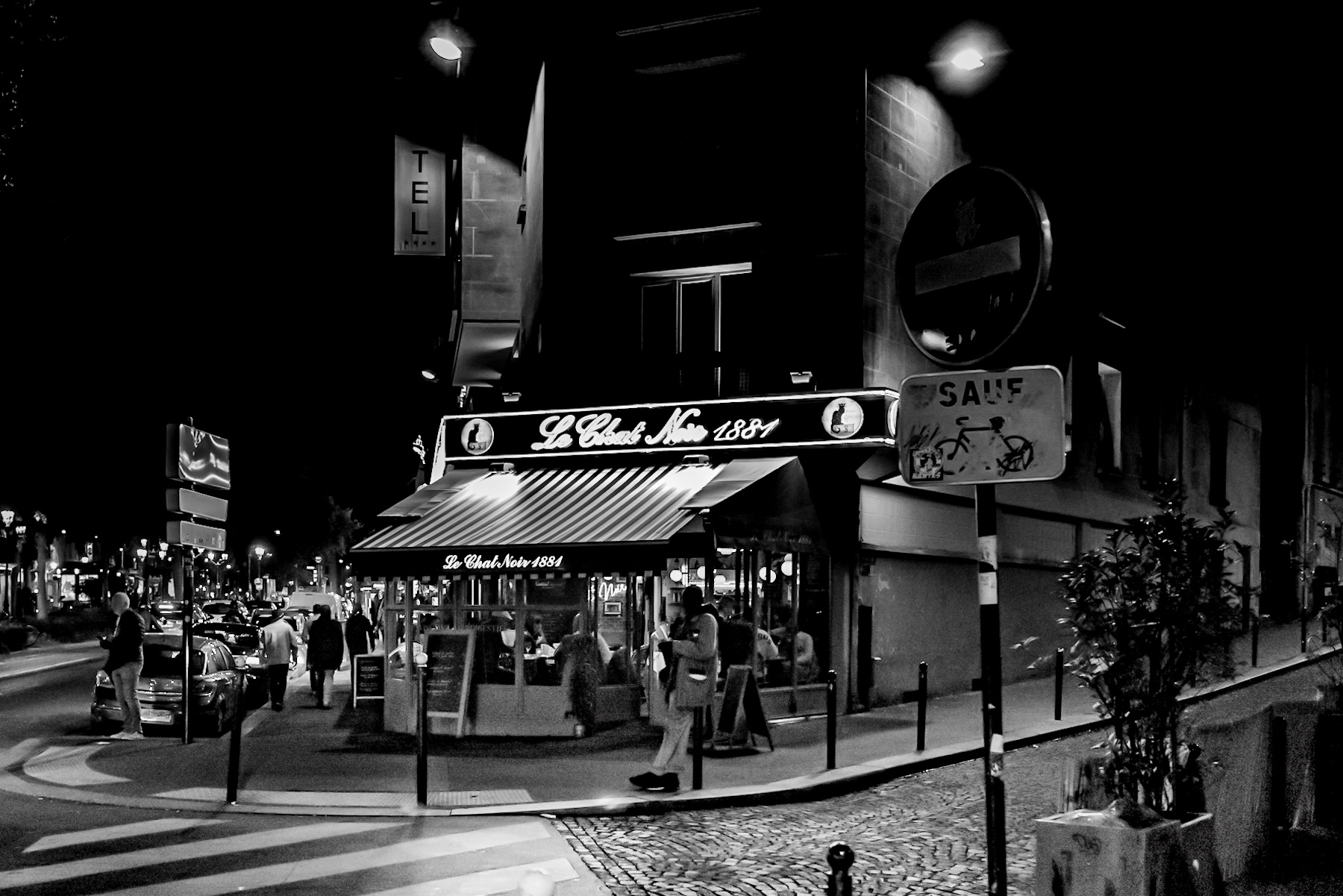
    The black and white photograph captures a quintessential Parisian street scene at night. The iconic signage of „Le Chat Noir 1881“ illuminates the facade of a building, its neon glow casting a distinct atmosphere onto the cobblestone street. The awning of the establishment, striped and classic, hints at a bygone era. Figures, silhouetted against the ambient light, move along the sidewalk and cross the street, their presence adding a sense of life and movement to the nocturnal tableau. Cars are parked along the curb, their forms softened by the darkness and the limited light sources.
    The sign itself, with its stylized lettering and the emblem of a black cat, immediately evokes the rich history associated with this name. „Le Chat Noir“ was not merely a cabaret; it was a legendary venue in Montmartre, Paris, during the late 19th and early 20th centuries. Founded in 1881 by Rodolphe Salis, it became the epicenter of bohemian culture, attracting artists, writers, poets, musicians, and intellectuals. It was a place where avant-garde ideas flourished, and where the spirit of artistic rebellion found a vibrant expression.
    The date „1881“ prominently displayed on the sign is a direct reference to the founding year of the original cabaret. This historic establishment was known for its cabaret performances, shadow plays, and its role in fostering the careers of many prominent figures of the Belle Époque. It was a hub for the Absinthe-fueled artistic scene, a stark contrast to the more formal salons of the time. The black cat, the establishment’s symbol, became an internationally recognized icon of Montmartre’s artistic and bohemian identity.
    The photograph, while depicting a contemporary scene, carries the weight of this historical legacy. The enduring presence of the name „Le Chat Noir“ suggests a continuation, perhaps a modern incarnation or a respectful homage to the original. The street signs, including one that appears to indicate „SAUF“ (except), and the traffic signals, are typical of urban environments, grounding the image in the present. Yet, the overall mood, enhanced by the monochrome palette and the dramatic interplay of light and shadow, lends a timeless quality to the scene.
    The visual elements of the photograph – the architecture, the street lighting, the style of the signage, and the very act of people gathering at night – all contribute to a sense of urban narrative. It invites the viewer to contemplate the layers of history embedded within the Parisian landscape. The modern streetscape coexists with the echoes of a vibrant past, a past characterized by artistic innovation, social commentary, and a unique brand of Parisian charm. This image serves as a visual bridge, connecting the present-day experience of the city with its storied bohemian heritage, embodied by the enduring legend of Le Chat Noir.
  • The Arc de Triomphe: A Timeless Symbol of French History and Grandeur

    The Arc de Triomphe: A Timeless Symbol of French History and Grandeur

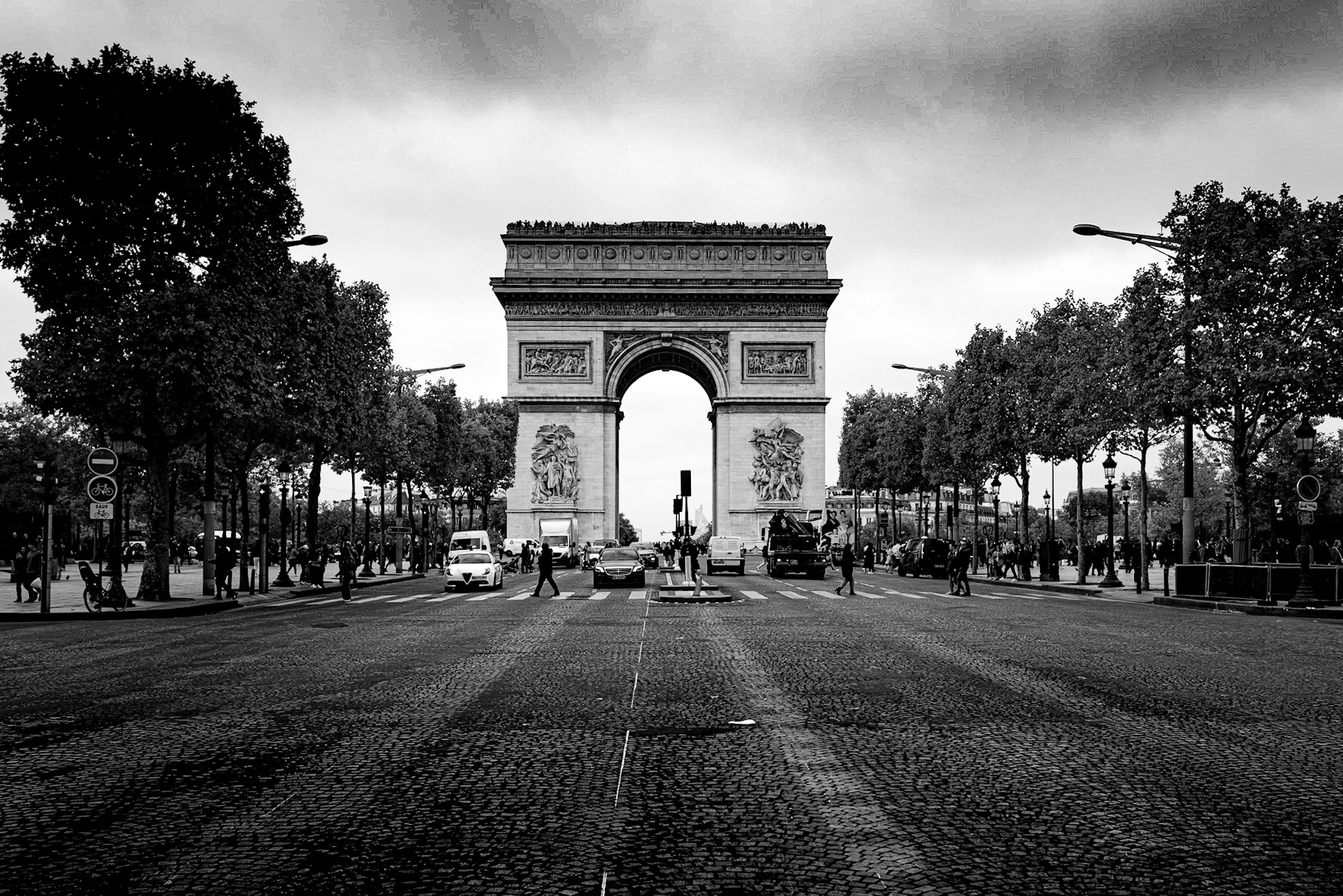
    The photograph presents a classic, almost poetic view of the Arc de Triomphe in Paris, a monument that resonates deeply with French national identity and historical achievements. The black and white treatment imbues the scene with a sense of timelessness, drawing attention to the impressive architecture and the enduring story it tells.
    **Architectural Majesty and Historical Roots**
    The magnificent Arc de Triomphe commands the center of the image. Its grand design, detailed with elaborate sculptures and bas-reliefs, stands as a testament to the artistic and engineering skills of its era. Napoleon Bonaparte’s vision for this arch, commissioned in 1806 following his victory at Austerlitz, was to honor the French military. Its construction, however, was a lengthy endeavor, spanning thirty years and reflecting the turbulent political landscape of France during that period.
    This architectural marvel is a prime example of Neoclassical style, drawing inspiration from the triumphal arches of ancient Rome. Particularly striking are the four principal sculptural ensembles at the base: François Rude’s „The Departure of the Volunteers of 1792“ (often referred to as La Marseillaise), Jean-Pierre Cortot’s „The Triumph of 1810,“ and Antoine Étex’s „The Resistance of 1814“ and „The Peace of 1815.“ These allegorical representations capture pivotal moments in French history, from the revolutionary spirit to eras of both conflict and accord.
    **A Bustling Parisian Crossroads**
    Despite the absence of color, the area surrounding the Arc pulses with life. The cobblestone streets, a hallmark of historic European cities, lead the eye towards the monument, their surfaces mirroring the subdued tones of the sky and adding tactile depth to the foreground. Modern Parisian life is evident in the presence of automobiles, including a notable white sedan navigating the intersection, and what appears to be a truck. Pedestrians, their forms softened by motion, can be seen crossing the streets, underscoring the dynamic energy of this renowned location.
    The avenues are graced with trees, their branches reaching skyward, introducing a natural counterpoint to the urban environment. Tall, slender lampposts stand as sentinels, hinting at the transition from day to night. The overall composition, with the Arc as its undisputed focal point and the converging avenues drawing the viewer in, creates a profound sense of perspective and awe.
    **Enduring Significance**
    The Arc de Triomphe transcends its status as a mere historical artifact; it serves as a central stage for national celebrations, military processions, and solemn commemorative events. It is also the resting place of the Unknown Soldier from World War I, whose tomb is marked by the eternal flame, a perpetual symbol of sacrifice and remembrance. Situated at the western end of the iconic Champs-Élysées, it is undeniably one of Paris’s most paramount landmarks.
    This photograph, with its stark yet evocative imagery, invites contemplation on the rich tapestry of history, art, and human experience that converges at this extraordinary site. It encapsulates the enduring spirit of Paris and the monumental achievements it commemorates, solidifying the Arc de Triomphe’s position as a timeless emblem of French heritage.
    **Keywords:** Arc de Triomphe, Paris, France, Monument, History, Architecture, Napoleon Bonaparte, Champs-Élysées, Triumphal Arch, Neoclassical, French History, Landmark, Parisian Icon.
  • Bearing the Weight of History: A Look at the Wallace Fountain’s Artistic Legacy

    Bearing the Weight of History: A Look at the Wallace Fountain’s Artistic Legacy

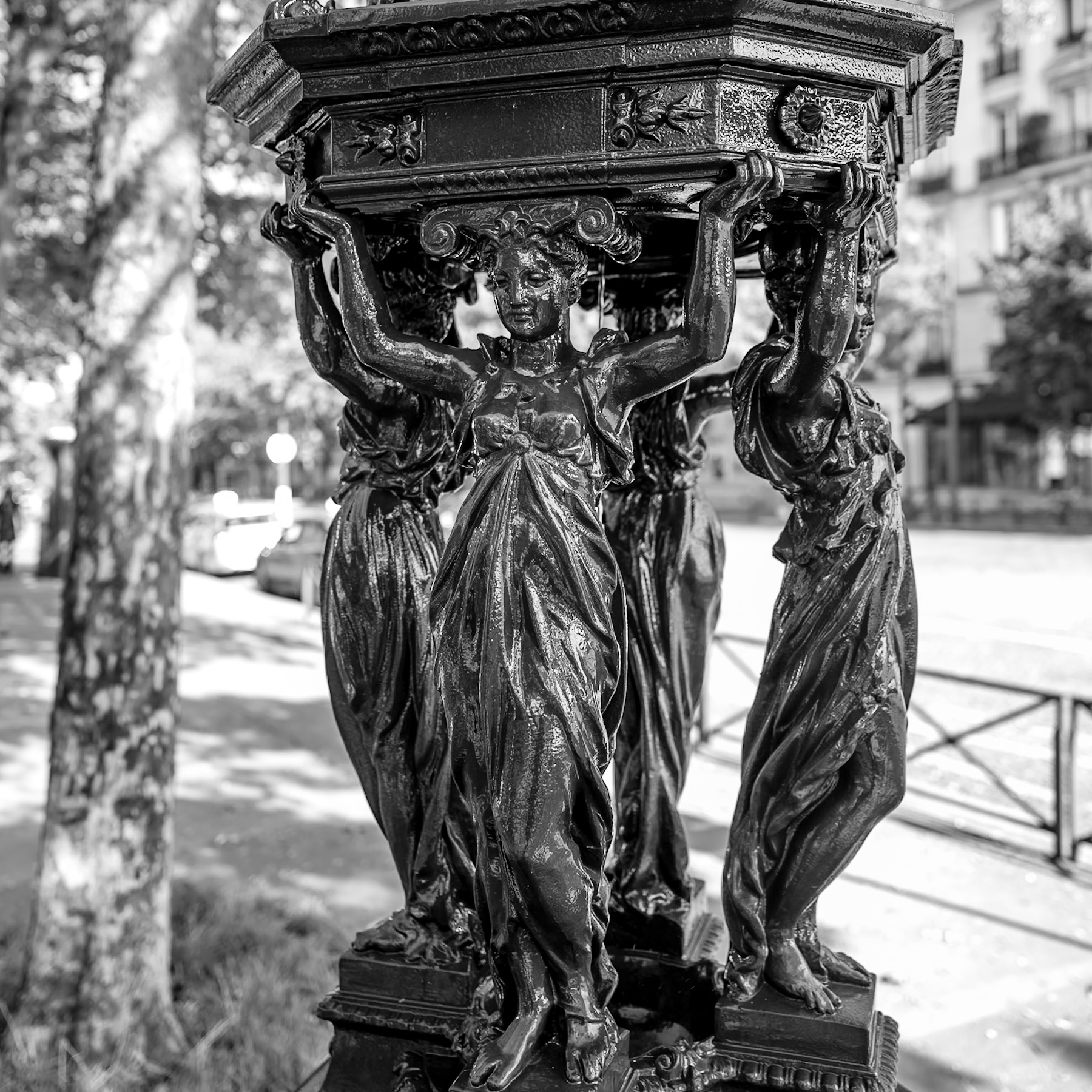
    The image presents a detailed, black and white view of the upper section of a Wallace Fountain, a distinctive piece of public art and infrastructure found across Paris and beyond. The focus is on the intricate sculptural work, specifically the four female figures, known as „Caryatids,“ that support a decorative, ornate basin above. These figures, rendered in dark, weathered metal, are depicted with flowing drapery that emphasizes their musculature and graceful posture. Their arms are raised, straining to hold the heavy structure, a powerful visual metaphor for endurance and support.
    The artistic style of these figures reflects the Second Empire aesthetic prevalent in Paris during the mid-19th century. This era, under Napoleon III, saw a significant urban renewal and beautification program, spearheaded by Baron Haussmann. The grand boulevards, uniform architecture, and proliferation of public art, including fountains, were hallmarks of this period. The Wallace Fountains, conceived by Sir Richard Wallace and designed by Charles-Auguste Lebourg, were not merely decorative elements; they served a vital social function.
    Commissioned in the 1870s, these fountains were intended to provide free access to drinking water for the public, a progressive initiative in a rapidly expanding city. They were placed strategically throughout Paris, becoming an integral part of the urban landscape and a symbol of philanthropic endeavor. The choice of classical figures, such as the Caryatids, to adorn the fountains was deliberate. In classical architecture, Caryatids are female figures used as supporting columns. Their inclusion here evokes a sense of timelessness and enduring strength, aligning with the fountain’s purpose of providing a stable and essential resource.
    The craftsmanship evident in the sculpture is remarkable. The detailed rendering of the faces, the folds of the fabric, and the muscular tension in the figures suggest a high level of skill from the foundry workers. The patina of the metal, captured in this monochrome image, adds a sense of age and gravitas, hinting at the many years these figures have stood in their public spaces, silently witnessing the ebb and flow of city life.
    The background of the photograph, slightly blurred, suggests an urban setting with trees lining a walkway and buildings in the distance. This context reinforces the fountain’s role as a piece of public art integrated into the daily life of the city. The contrast between the enduring, classical forms of the sculpture and the transient nature of the urban environment behind it is striking.
    The Wallace Fountains, and the sculptures that adorn them, represent a fascinating intersection of art, engineering, and social reform. They are enduring monuments to a period of significant change in Paris, offering not only a practical service but also a visual reminder of classical ideals and the artistic sensibilities of the 19th century. Each figure, diligently holding its load, becomes a silent testament to the historical context from which it emerged and the enduring value of public art.
    Keywords: Wallace Fountain, Paris, Public Art, Sculpture, Caryatids, 19th Century Art, Second Empire, Baron Haussmann, Charles-Auguste Lebourg, Sir Richard Wallace, Urban Infrastructure, Philanthropy, Classical Sculpture, Architectural Detail, Black and White Photography.
  • Paris Catacombs: A Chilling Testament to History

    Paris Catacombs: A Chilling Testament to History

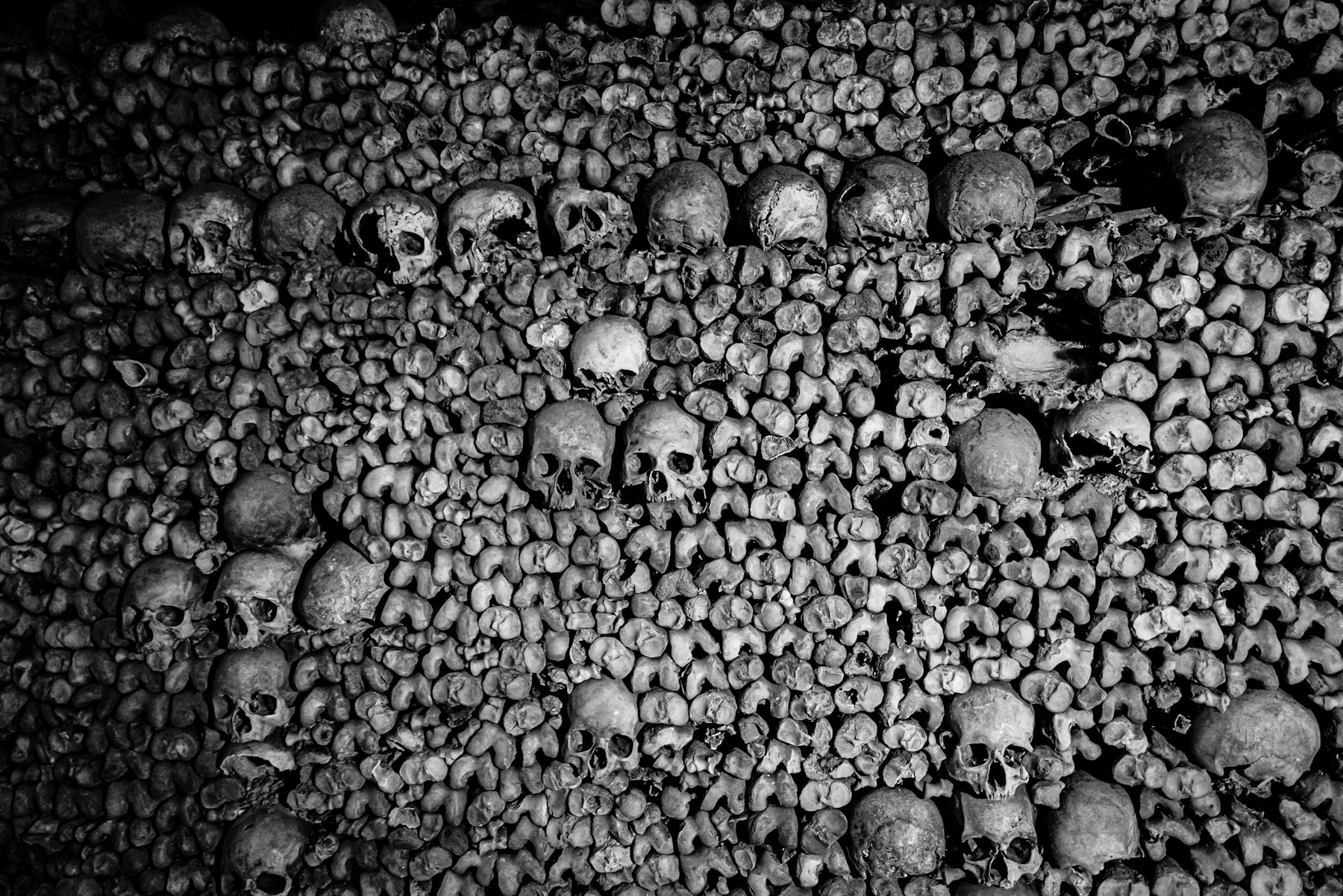
    The stark black and white photograph presents a disquieting yet historically significant scene: walls meticulously constructed from human skulls and bones. This image offers a glimpse into the Paris Catacombs, an ossuary holding the remains of millions of Parisians. The arrangement is not haphazard; skulls are often placed facing outwards, their empty eye sockets staring into the darkness, while femurs and tibias form intricate patterns, creating a macabre yet organized mosaic.
    Historical Context: Addressing a Sanitary Crisis
    The origins of the Paris Catacombs are rooted in a profound public health crisis that plagued the city in the late 18th century. The Parisian cemeteries, particularly the Holy Innocents‘ Cemetery, had become dangerously overcrowded. Centuries of burials had led to the ground becoming saturated with decomposing bodies, posing a significant risk of disease and foul odors that permeated the surrounding neighborhoods. The situation was deemed unsustainable and a threat to public well-being.
    In an effort to resolve this issue, a royal decree was issued in 1785, ordering the transfer of the remains from overflowing cemeteries to underground quarries. These subterranean limestone quarries, which had been excavated for centuries to provide building materials for Paris, offered a vast and stable network of tunnels. The process of exhumation and relocation was a monumental undertaking, involving the careful removal of bones and skulls from their resting places and their transport to the quarries under the cover of night.
    Transformation into an Ossuary
    Once in the quarries, the bones were not simply dumped. Over time, and under the supervision of various officials, they were arranged and organized. The intention was to create a more dignified and respectful resting place, transforming a sanitary necessity into a monumental ossuary. The distinctive wall formations seen in the photograph, with skulls and long bones deliberately stacked, are the result of this organized reburial process. This systematic arrangement served not only practical purposes of space management but also created a unique and somber aesthetic.
    The Catacombs Today: A Tourist Attraction and a Historical Reminder
    Today, a small portion of the Paris Catacombs is open to the public, attracting millions of visitors each year. It has become a significant tourist attraction, offering a unique and profound experience that delves into the history of Paris and the human condition. The site serves as a tangible reminder of past urban challenges, ingenious solutions, and the ephemeral nature of life. The visual impact of the stacked remains is undeniably powerful, evoking contemplation on mortality, memory, and the passage of time. The photograph captures this essence, presenting a silent, enduring testament to a critical period in Parisian history and the enduring human impulse to manage even the most challenging aspects of life and death.
  • Juxtaposition of Luxury and Survival: A Parisian Street Scene

    Juxtaposition of Luxury and Survival: A Parisian Street Scene

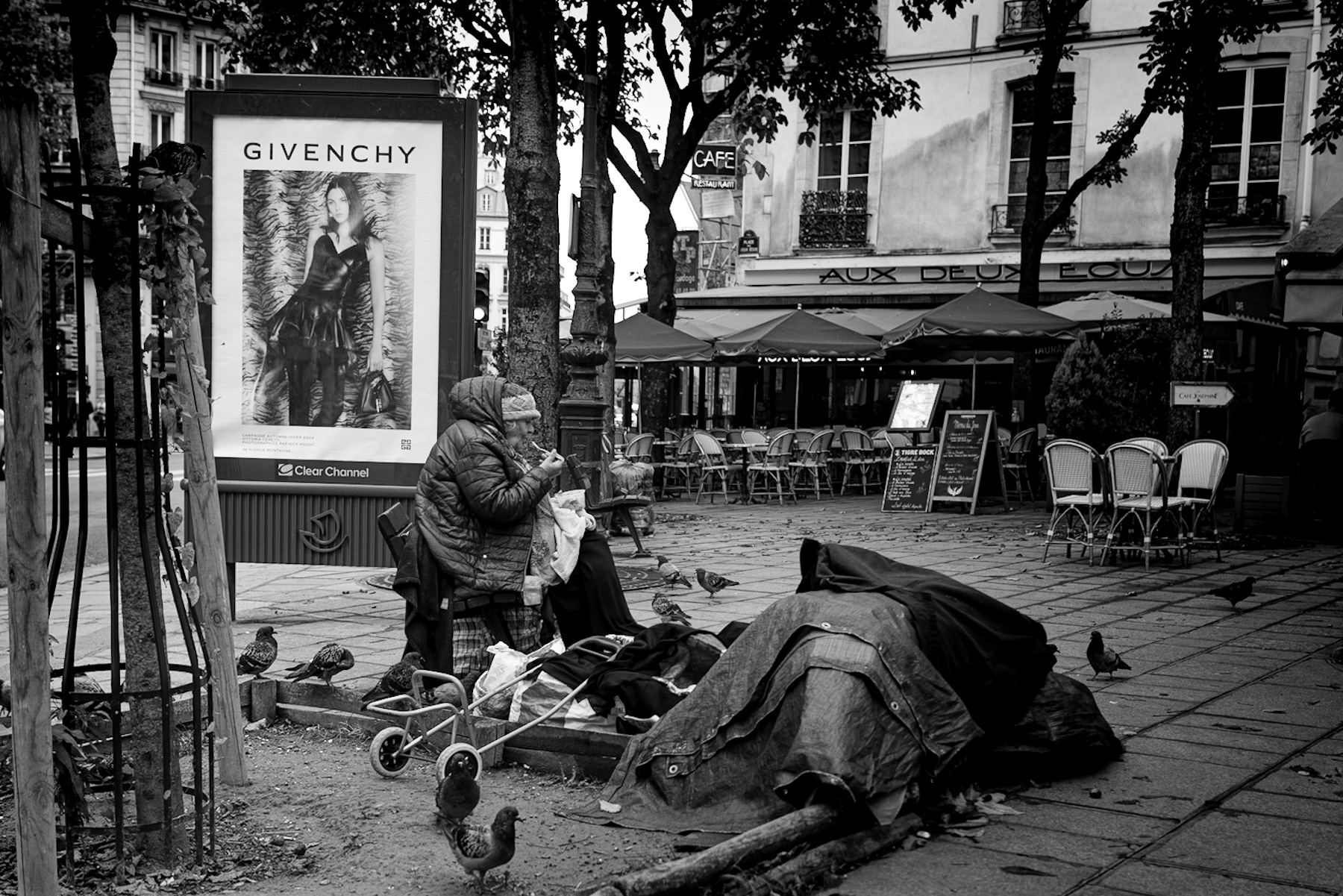
    This black and white photograph captures a poignant scene in what appears to be a Parisian street. The image is dominated by a stark contrast between the world of high fashion and the harsh realities of homelessness, set against the backdrop of a bustling café culture.
    In the foreground, a person, bundled in layers of clothing and a headscarf, is seated on a low surface, seemingly engaged in eating. Their belongings are spread around them, including a small trolley, bags, and what appears to be a makeshift shelter covered by a tarp. Pigeons peck at the ground nearby, a common sight in urban environments, adding to the sense of everyday life unfolding.
    Dominating the left side of the frame is a large advertisement for Givenchy, a renowned French luxury fashion house. The billboard features a striking image of a model in an avant-garde outfit, set against a tiger-print background. The prominent placement of this advertisement for luxury goods directly beside the individual experiencing homelessness creates a powerful visual juxtaposition. It highlights the vast economic disparities that can exist within a single urban space. The „Clear Channel“ branding on the billboard also points to the commercial nature of public space, where advertisements are a constant presence, often framing our perceptions of the world.
    Behind the individual and the advertisement, the scene opens up to a typical Parisian street with a café. Tables and chairs are neatly arranged under awnings, suggesting outdoor seating and a lively atmosphere. A sign for „CAFE RESTAURANT“ is visible, further emphasizing the presence of establishments catering to leisure and consumption. The architecture of the buildings in the background, with their characteristic windows and facades, firmly roots the scene in a European urban setting, likely Paris given the Givenchy advertisement and the café style.
    The historical context of Parisian street life is rich and varied. For centuries, Paris has been a center of art, culture, and commerce, attracting people from all walks of life. The image subtly touches upon the enduring presence of street vendors, artists, and those living on the margins, who have always been part of the city’s fabric. The café culture, in particular, has a long history in Paris, serving as social hubs and places for intellectual and artistic exchange.
    However, this photograph also brings to the fore the contemporary challenges faced by many cities, including Paris: the growing issue of homelessness and the visible presence of individuals struggling with poverty amidst opulence. The stark black and white treatment of the photograph enhances the dramatic contrast and the emotional impact of the scene, forcing the viewer to confront the complex realities of urban existence. It’s a moment frozen in time, capturing a silent narrative of human experience against a backdrop of aspirational advertising and everyday urbanity.
    SEO Keywords: Paris street photography, homelessness, luxury fashion, Givenchy, café culture, urban juxtaposition, social commentary, black and white photography, Parisian life, street scene, economic disparity.
  • Art Nouveau’s Enduring Elegance: A Parisian Métro Entrance

    Art Nouveau’s Enduring Elegance: A Parisian Métro Entrance

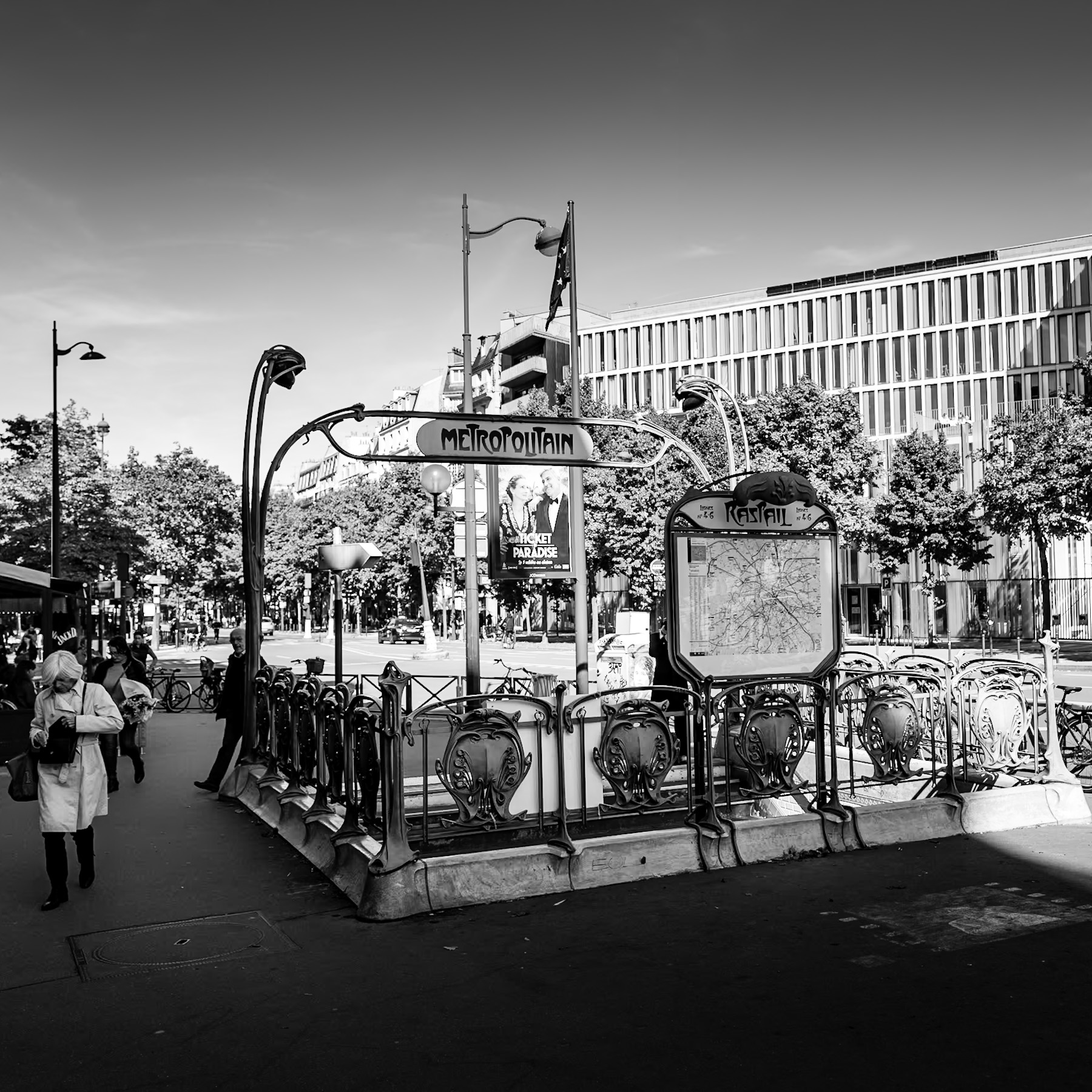
    The black and white photograph captures a quintessential Parisian scene, focusing on a historic Métropolitain entrance that stands as a testament to the enduring legacy of Art Nouveau. The intricate ironwork, characteristic of this artistic movement, forms a decorative barrier around the descent into the underground. These distinctive entrances, designed by Hector Guimard, were commissioned by the Paris Métro company for the 1900 Universal Exhibition, intended to bring a touch of modern artistic flair to the city’s burgeoning public transportation system.
    The „METROPOLITAIN“ signage, rendered in a distinctive font, is prominently displayed, a clear identifier of the station. Below it, an advertisement poster featuring a couple, possibly from a film or theatrical production, adds a layer of contemporary life to the historical structure. The poster, though faded in this monochrome depiction, hints at the vibrant cultural landscape of Paris.
    To the right, a detailed map of the Paris Métro system is encased in glass, showcasing the extensive network that has served the city for over a century. The station name „RASPAIL“ is visible, indicating the specific location, and the mention of „feuille n°46“ suggests an older edition of the map, further emphasizing the historical context.
    The surrounding environment is a blend of old and new. The elegant, organic forms of the Art Nouveau structure are contrasted with the modern, rectilinear architecture of the building in the background. This juxtaposition highlights how Paris, while deeply rooted in its history, continues to evolve. Trees line the street, their leaves providing a natural canopy, and pedestrians are seen moving along the sidewalk, their presence grounding the scene in the present day. The presence of streetlights, also designed in a style that echoes Guimard’s work, reinforces the cohesive aesthetic of the Métro’s early infrastructure.
    This image is more than just a snapshot of a Métro station; it is a visual narrative of Paris’s commitment to integrating art and functionality. The Art Nouveau entrances are not merely functional access points but are recognized as significant works of public art, cherished for their unique design and their contribution to the city’s identity. They represent a period when public infrastructure was conceived with an emphasis on beauty and artistic expression, a philosophy that continues to define the charm of Paris and its iconic Métro system. The timeless appeal of these structures ensures their place as enduring symbols of Parisian heritage and design innovation.
  • A Glimpse into Parisian Grandeur: The Iconic Dome of Galeries Lafayette

    A Glimpse into Parisian Grandeur: The Iconic Dome of Galeries Lafayette

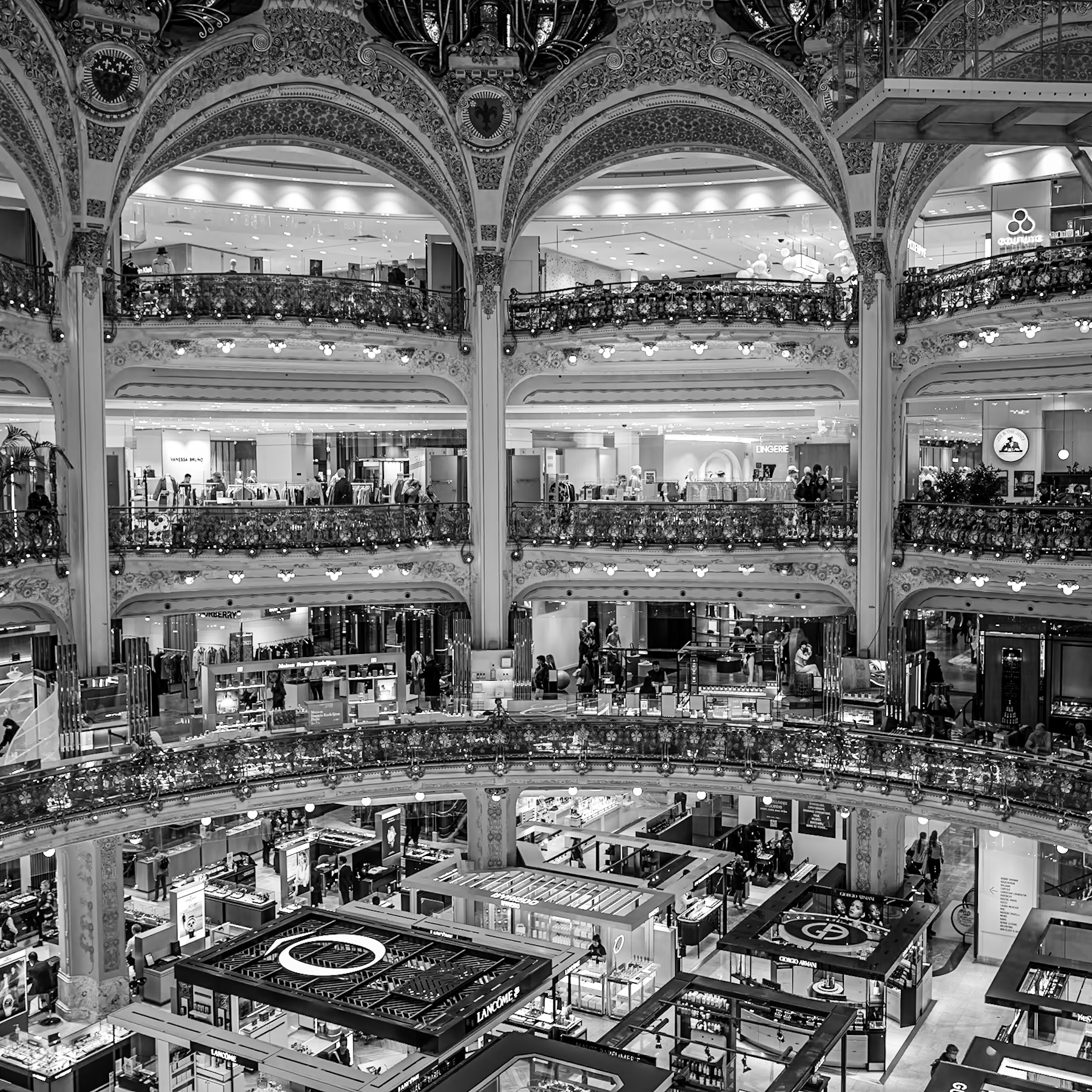
    The provided black and white photograph offers a captivating perspective of the interior of a grand department store, specifically capturing the breathtaking view from a high vantage point towards the magnificent Art Nouveau dome. This architectural marvel is not merely a ceiling; it is a testament to a bygone era of opulence and innovation, a central feature of the renowned Galeries Lafayette Haussmann in Paris.
    Architectural Splendor and Historical Context
    The image showcases the intricate details of the store’s interior, characterized by multiple levels of balconies adorned with ornate railings and decorative moldings. These balconies overlook a bustling retail space, with various displays and shoppers moving about. The very structure of the building, with its soaring ceilings and open atrium, is designed to impress and invite exploration.
    The highlight of the scene, however, is the dome itself. While its vibrant stained glass is not visible in this monochromatic rendition, the structure’s impressive scale and the surrounding architectural elements speak volumes about its grandeur. This dome, designed by Ferdinand Chanut and decorated by Jacques Grüber, was completed in 1912 and is considered one of the most beautiful examples of Art Nouveau architecture in Paris. It replaced an earlier, more modest dome and was part of a significant expansion of the department store.
    Galeries Lafayette, founded in 1893, quickly became a symbol of Parisian chic and modern commerce. The store’s founders, Théophile Bader and Alphonse Kahn, envisioned a space that was not just for shopping but for experiencing a new way of living and consuming. They embraced innovation, from the use of steel structures to facilitate open spaces to the integration of art and design into the very fabric of the building. The Art Nouveau dome perfectly embodies this philosophy, blending functionality with artistic expression.
    The Experience of the Department Store
    The photograph captures the essence of the department store as a destination. The presence of shoppers on various levels, browsing merchandise and interacting, suggests a vibrant and dynamic environment. In the late 19th and early 20th centuries, department stores like Galeries Lafayette were revolutionary. They brought together a vast array of goods under one roof, offering convenience and a sense of discovery to consumers. They were also social spaces, places where people could meet, see and be seen, and immerse themselves in the latest trends.
    The black and white treatment of the image lends a timeless quality, allowing the viewer to focus on the architectural forms and the interplay of light and shadow. It evokes a sense of historical significance, inviting contemplation of the era when such grand retail establishments were at their zenith. The image serves as a visual reminder of the enduring appeal of beautiful design and the rich history embedded within Parisian landmarks.
  • A Timeless Parisian Scene: Restaurant Charm and Historical Echoes

    A Timeless Parisian Scene: Restaurant Charm and Historical Echoes

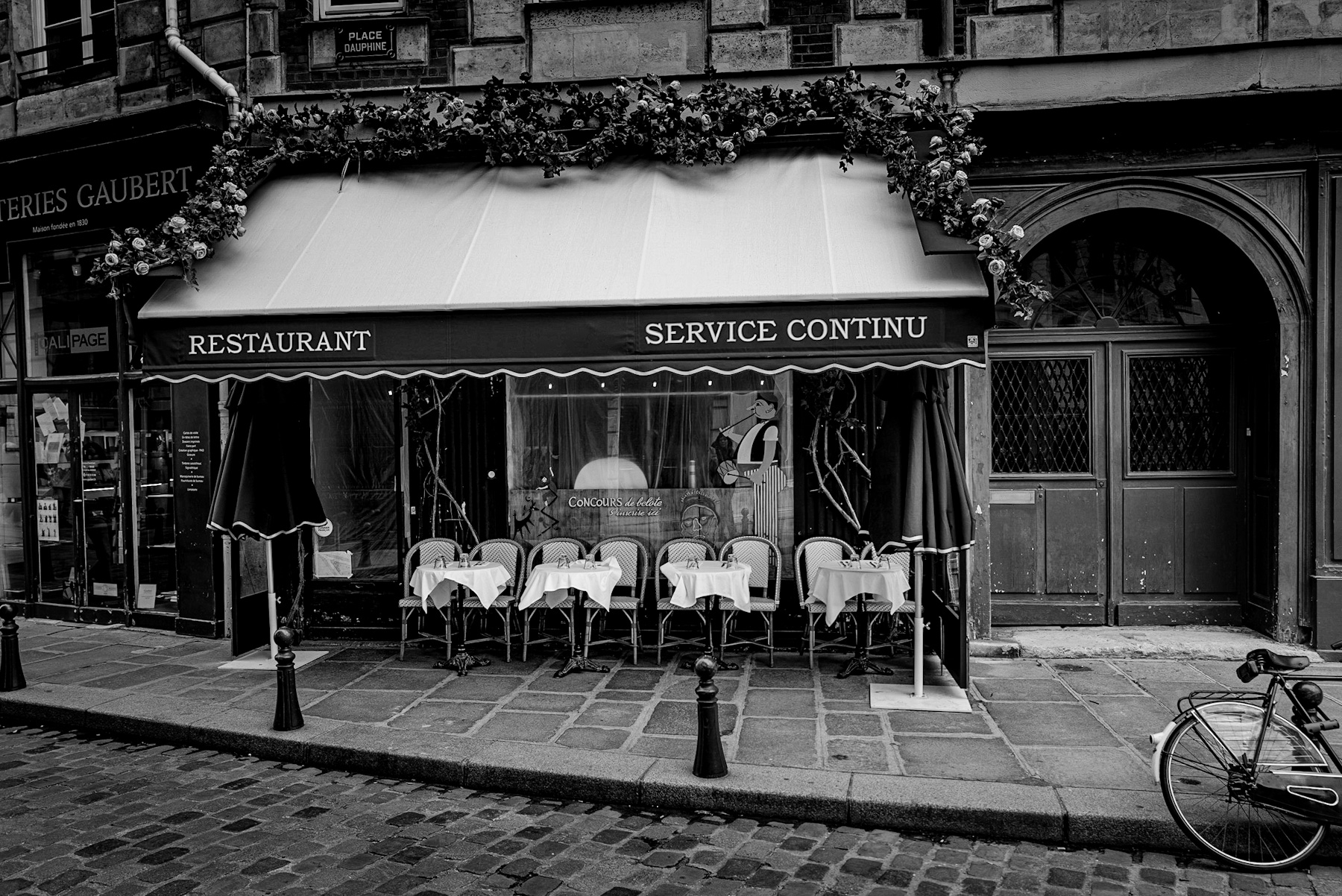
    The black and white photograph captures a quintessential Parisian street scene, evoking a sense of enduring charm and historical depth. The focal point is a restaurant facade, its awning proclaiming „RESTAURANT“ and „SERVICE CONTINU“ – a promise of continuous culinary offerings that is synonymous with the city’s vibrant café culture.
    **Architectural Elegance and Outdoor Dining**
    The restaurant’s exterior is adorned with a delicate cascade of faux roses, adding a touch of romanticism to the scene. Beneath the awning, neatly set tables with white tablecloths and chairs are arranged on a cobblestone patio. The presence of these tables suggests an inviting outdoor dining experience, a beloved tradition in Paris, especially during warmer months. The dark, closed umbrellas further hint at the practicalities of Parisian weather, ready to shield patrons from sun or rain.
    To the left, the signage „TERIES GAUBERT“ with the inscription „Maison fondée en 1830“ (House founded in 1830) provides a significant historical anchor. This indicates that the establishment has a long-standing presence, a testament to its resilience and likely its ability to adapt to changing times while maintaining its identity. The adjacent sign „PLACE DAUPHINE“ above the building confirms the location, a historic square on the Île de la Cité, a small island in the Seine river, known for its elegant architecture and tranquil atmosphere.
    **The Windows to a Past Era**
    The restaurant’s windows offer glimpses into its interior. A charming, almost cartoonish depiction of a figure playing a musical instrument can be seen, adding a whimsical touch. Below this, a sign reads „CONCOURS DE BELOTE,“ referencing a card game popular in France. These details suggest a place that not only serves food but also fosters a sense of community and leisure, a reflection of traditional French social life. The overall composition, with its muted tones and sharp contrasts, lends a timeless quality to the image, making it difficult to pinpoint an exact era.
    **Cobblestones and Cycling: Symbols of Parisian Life**
    The foreground is dominated by the textured, uneven surface of cobblestone streets, a characteristic feature of many historic European cities, including Paris. These stones have borne witness to centuries of footsteps, horse-drawn carriages, and now, the occasional bicycle. Indeed, a bicycle is positioned to the right of the frame, its presence subtly connecting the past with the present. Cycling has always been a practical and popular mode of transport in Paris, and its inclusion here adds another layer of authenticity to the scene.
    **Historical Context and Enduring Appeal**
    The restaurant’s location on Place Dauphine, established in the early 17th century, places it within a historically rich environment. The architecture of the surrounding buildings, with their stone facades and arched doorways, further reinforces this sense of historical continuity. The monochrome treatment of the photograph enhances this feeling, stripping away the distractions of color and focusing on form, texture, and light. It allows the viewer to appreciate the enduring beauty of Parisian architecture and the timeless appeal of its street-level establishments. This image is more than just a snapshot; it’s a portal to a past that continues to resonate in the present, inviting contemplation of the stories held within these ancient streets and the establishments that have thrived there for generations.
    SEO Keywords: Paris restaurant, Place Dauphine, historic Paris, French cuisine, Parisian cafe, cobblestone streets, vintage Paris, restaurant facade, outdoor dining, European charm, black and white photography, historical buildings, French culture, Île de la Cité.
  • The Majestic Église de la Madeleine: A Neoclassical Gem Aglow in the Parisian Night

    The Majestic Église de la Madeleine: A Neoclassical Gem Aglow in the Parisian Night

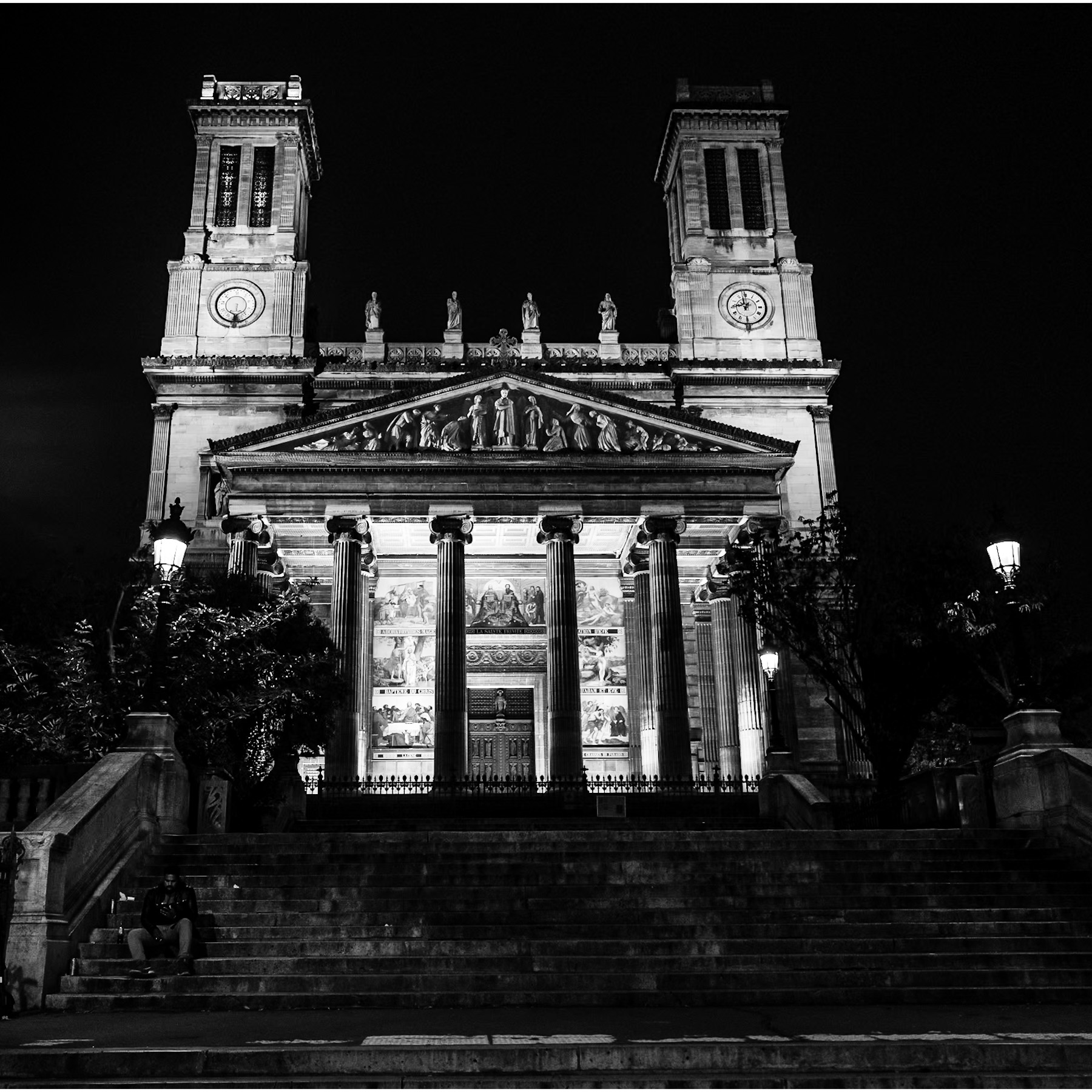
    The Église de la Madeleine, a monumental church in Paris, stands as a breathtaking example of Neoclassical architecture, particularly stunning when illuminated against the velvety darkness of the night sky. Captured in a striking black and white photograph, its imposing facade, bathed in artificial light, highlights every intricate detail and grand proportion.
    Looming on either side of the main structure are the twin bell towers, each featuring a clock face, like sentinels guarding this iconic Parisian landmark. Their classical design, complete with fluted columns and elaborate cornices, clearly reflects the Neoclassical influences that shaped the building. Beneath these towers, a richly decorated pediment, the triangular gable above the portico, hints at sculpted figures that likely depict biblical stories or allegorical themes, adding layers of meaning to its visual narrative.
    The church’s impressive portico, a grand entranceway, is supported by a series of majestic Corinthian columns. These illuminated pillars create a sense of depth and solemnity, drawing the viewer’s gaze towards the entrance. Visible between these columns are large, painted panels, showcasing religious scenes. Even in monochrome, these vibrant murals are clearly central to the church’s artistic and spiritual identity. An inscription, partially visible as „LA SAINTE TRINITÉ,“ suggests a connection to the Holy Trinity, while other inscriptions, such as „LE BAPTÊME DU CHRIST“ (The Baptism of Christ), provide direct clues to the narratives depicted.
    A broad stone staircase, worn smooth by the countless footsteps of visitors over the years, ascends towards the entrance. A single, solitary figure is seated on these steps, offering a poignant contrast between the small scale of human life and the immense, eternal presence of the building. The surrounding trees, rendered as dark silhouettes against the illuminated facade, introduce a touch of natural softness to the otherwise rigid architectural geometry. The warm, diffused glow of gas lamps further enhances the atmospheric quality of the scene, making it truly captivating.
    The history of the Église de la Madeleine is as multifaceted as its impressive architecture. Initially conceived by Pierre-Alexandre Vignon in the early 19th century as a temple dedicated to the glory of Napoleon’s army, its design drew inspiration from classical structures like the Maison Carrée in Nîmes and the Temple of Olympian Zeus in Athens. However, after Napoleon’s downfall, the building’s intended purpose underwent a significant transformation. It was eventually consecrated as a Roman Catholic church in 1842. This shift from a secular monument to a place of worship is evident in its architectural evolution and the eventual incorporation of religious murals.
    The church’s distinctive Corinthian colonnade and temple-like form distinguish it from many of the more common Gothic cathedrals, firmly placing it within the Neoclassical architectural movement. This style, popular in the late 18th and early 19th centuries, aimed to revive the principles of classical antiquity, emphasizing symmetry, order, and grandeur. The Église de la Madeleine stands as a powerful testament to this era, a monumental structure that has witnessed immense historical changes and continues to inspire awe with its enduring presence. This photograph, by capturing its nocturnal splendor, invites viewers to reflect on its rich past and its continued significance in the heart of Paris.
    **SEO Keywords:** Église de la Madeleine, Paris, Neoclassical Architecture, French History, Parisian Landmark, Religious Art, Monumental Architecture, Night Photography, Architectural Photography, Historical Buildings, Napoleon, Temple of Glory, Corinthian Columns, Bell Towers, Pediment Sculpture, Architectural Marvel, Paris Attractions.
  • The Fontaines de la Concorde: A Majestic Symbol of Parisian History

    The Fontaines de la Concorde: A Majestic Symbol of Parisian History

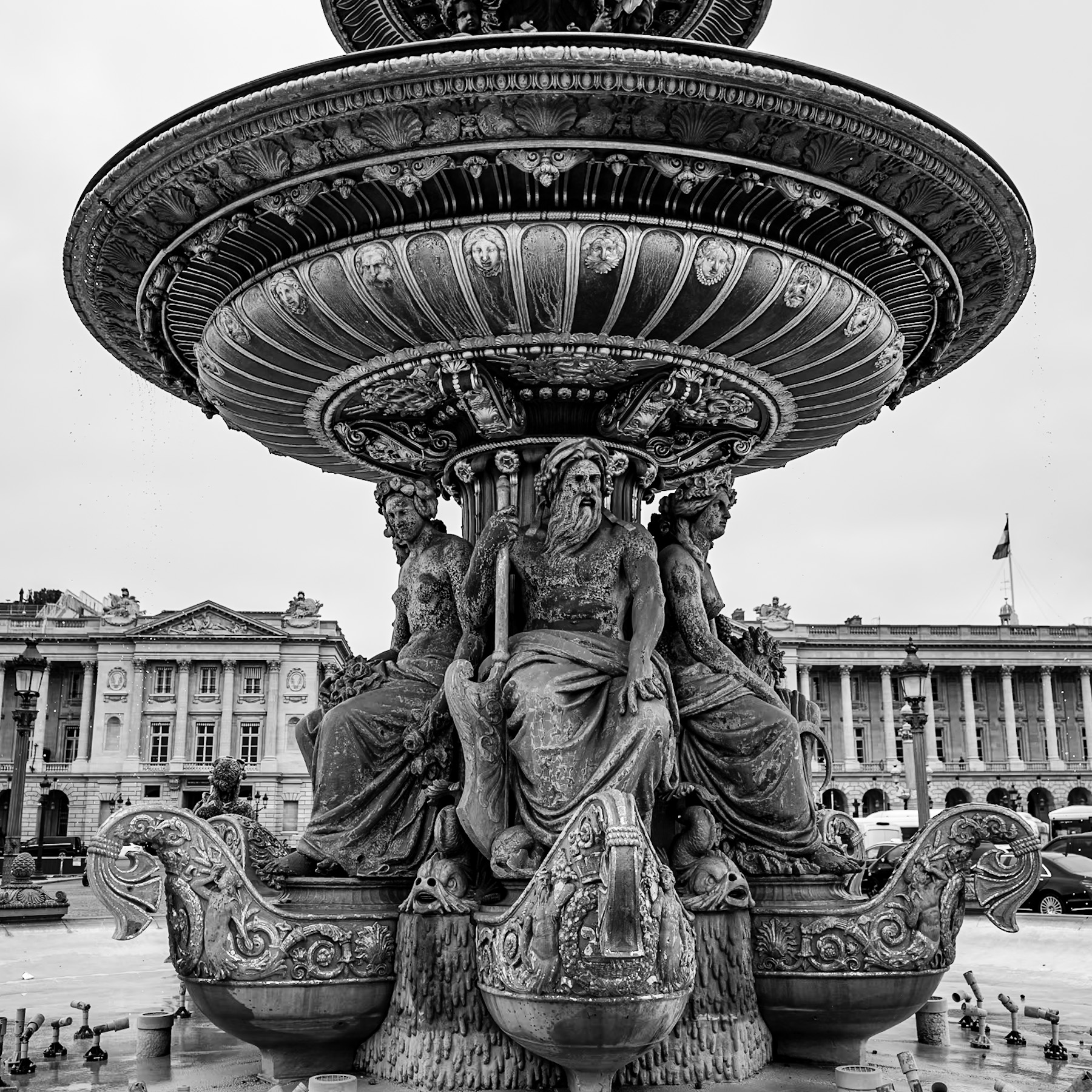
    The striking black and white photograph captures a detailed view of one of the ornate fountains adorning the Place de la Concorde in Paris. This iconic public square, steeped in centuries of French history, serves as the backdrop to these magnificent water features. The image focuses on the intricate sculptural elements of the fountain, showcasing its grandeur and artistic merit.
    At the heart of the fountain’s composition, as depicted in the photograph, is a central figure, likely representing a deity or allegorical personification. This figure, with a prominent beard and a commanding presence, holds a staff, suggesting authority and power. Flanking this central figure are two other sculpted forms, appearing to be female, adorned with flowing drapery and elaborate headdresses. Their postures and serene expressions contribute to the overall sense of classical beauty and artistic expression.
    The fountain’s design is characterized by rich ornamentation. The tiered structure is adorned with decorative motifs, including what appear to be shells and classical facial profiles, adding layers of visual interest. The lower section of the fountain features boat-like structures, intricately carved with swirling patterns and mythological creatures, further enhancing its opulent aesthetic. Water, captured in mid-air, hints at the dynamic and lively nature of the fountain in operation.
    The historical context of the Place de la Concorde is inseparable from the story of these fountains. Commissioned during the reign of King Louis-Philippe in the mid-19th century, they were intended to rival the fountains of Rome and London. The square itself has witnessed pivotal moments in French history, from its origins as the Place Louis XV, a site for royal ceremonies, to its infamous role as the Place de la Révolution during the French Revolution, marked by the guillotine. Following the revolution, it was renamed Place de la Concorde, symbolizing a desire for reconciliation and peace.
    The fountains, designed by Jacques Hittorff, were inspired by the fountains of Saint Peter’s Square in Rome. Their placement in the Place de la Concorde was a deliberate choice, intended to beautify and civilize this historically significant and often tumultuous space. The sculptures themselves, crafted from stone and bronze, represent various allegorical themes, with the two main fountains dedicated to maritime and river navigation, reflecting France’s colonial and commercial power.
    This photograph, through its close-up perspective, invites viewers to appreciate the craftsmanship and artistry that went into creating these enduring monuments. The play of light and shadow in the black and white rendering emphasizes the textures and details of the sculptures, allowing for a deeper understanding of their aesthetic appeal. The presence of the grand architecture of the surrounding buildings in the background reinforces the fountain’s integration into the urban landscape and its role as a focal point within this historically significant Parisian square. The Fontaines de la Concorde are not merely decorative elements; they are tangible links to France’s rich past, standing as testaments to artistic innovation and the enduring spirit of Parisian heritage.