Autor: Ralf Kayser

  • Echoes of Stone: Exploring the Rugged Landscape and History of Jordan’s Desert Canyons

    Echoes of Stone: Exploring the Rugged Landscape and History of Jordan’s Desert Canyons

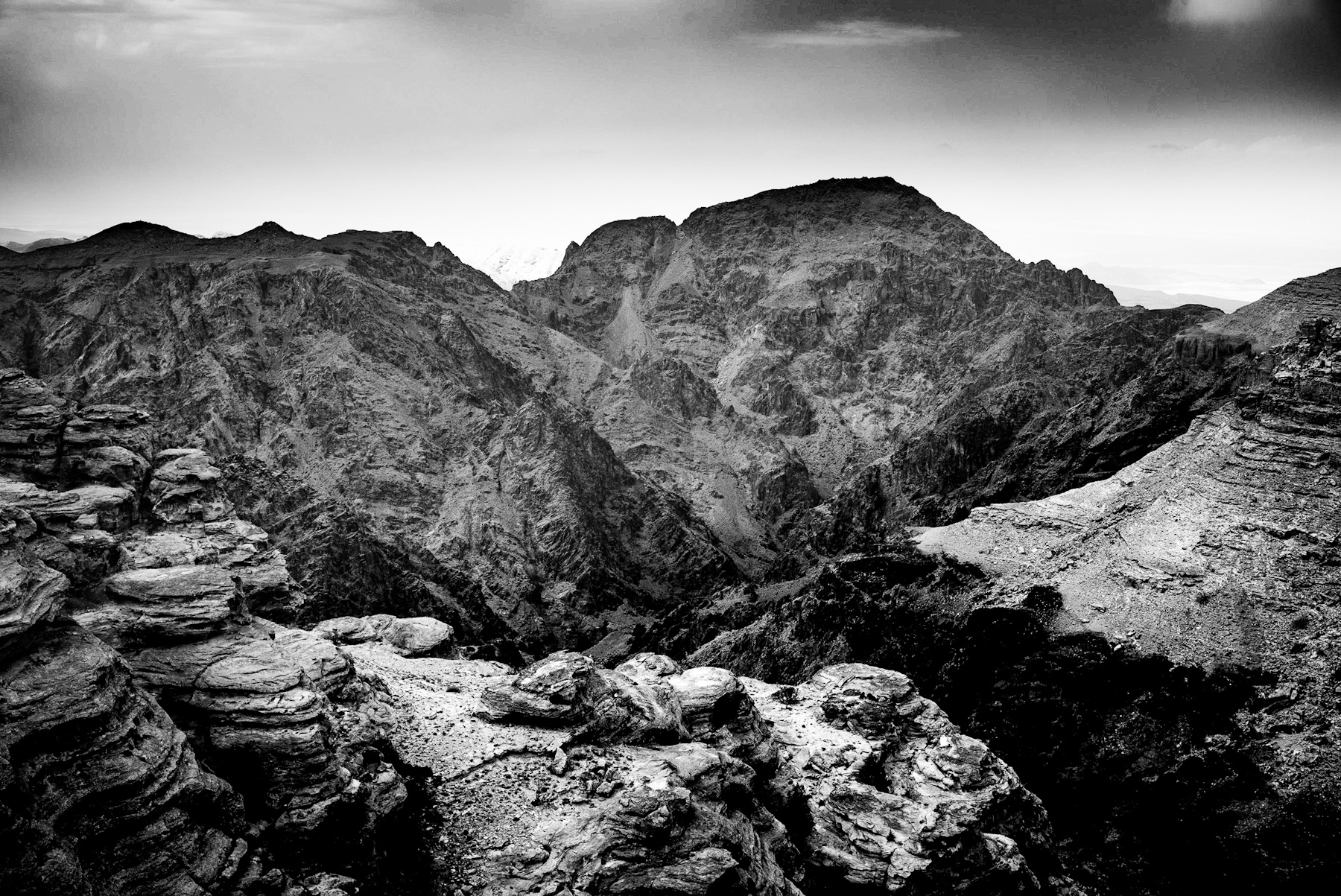
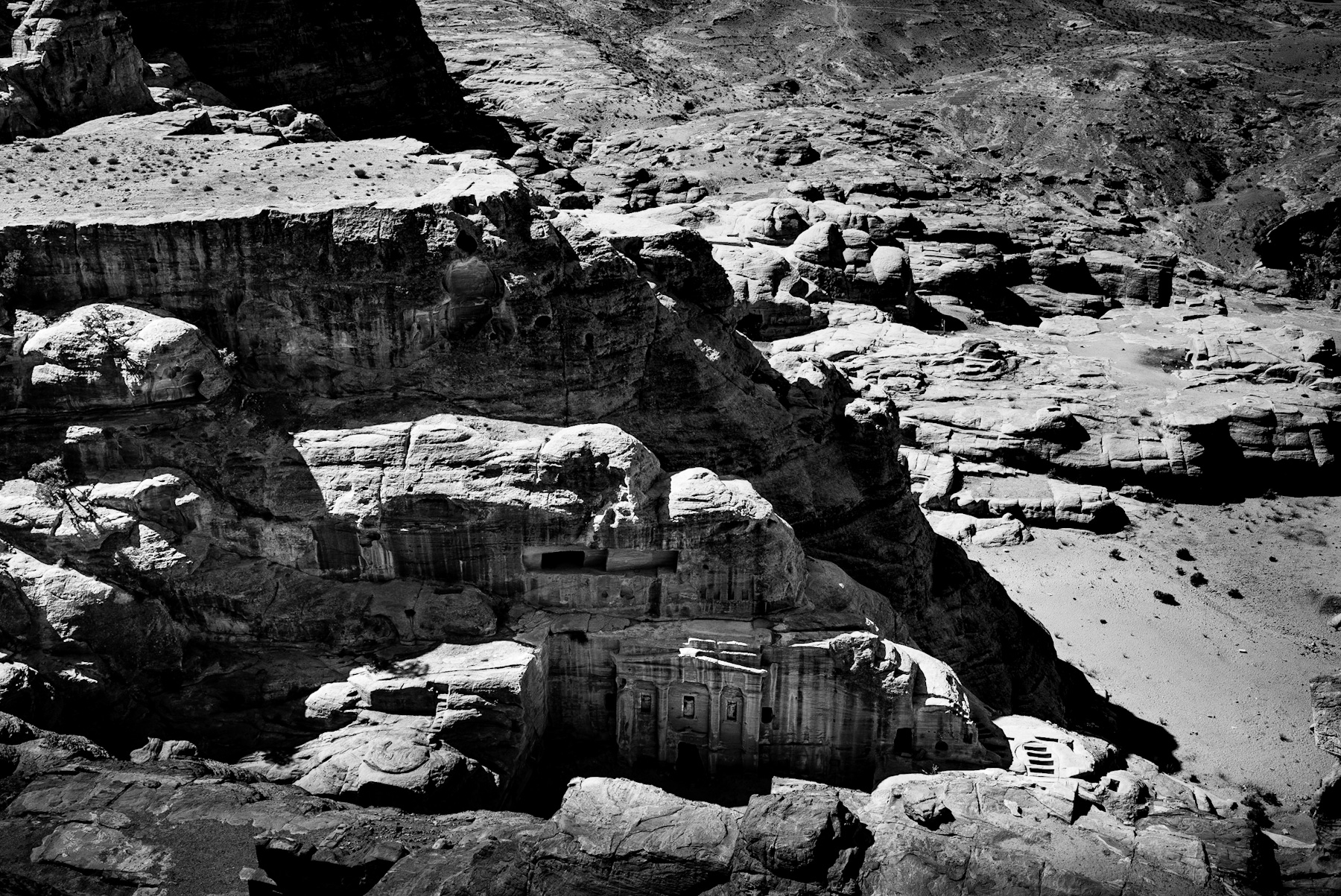
    The dramatic black and white photograph captures a vast, rugged landscape defined by deep canyons, layered rock formations, and a powerful play of light and shadow. Under a turbulent, cloud-filled sky, patches of sunlight illuminate the arid valley floor, contrasting sharply with the dark, weathered ridges in the foreground. Sparse, hardy vegetation clings to the rocky terrain, emphasizing the challenging environment of this ancient region. This striking topography is characteristic of the mountainous desert surrounding the ancient city of Petra in southwestern Jordan, a place where geological grandeur meets profound human history.
    The Geology of the Shara Mountains
    The landscape depicted in the image is part of the Shara (or Shera) mountain range. These formations consist primarily of Cambrian and Ordovician sandstone, which has been sculpted over millions of years by wind and water erosion. The resulting terrain is a labyrinth of deep gorges (known locally as siqs), high ridges, and flat-topped mesas. The lack of color in the photograph highlights the structural complexity of the rock strata, revealing the natural terraces and sediment layers that have witnessed millennia of environmental change.
    The Rise of the Nabataean Kingdom
    While this terrain appears inhospitable, it was once the heart of a thriving global trade empire. Around the 4th century BC, the Nabataeans, a nomadic Arab people, settled in this rugged region. They chose this fortress-like landscape precisely for its defensibility and strategic location.
    Nestled within these protective mountains, the Nabataeans established their capital, Petra (originally known as Raqmu). They successfully controlled the vital trade routes that crossed the region, linking the Arabian Peninsula with the Mediterranean, Egypt, and Syria. Caravans carrying precious goods, such as frankincense, myrrh, spices, and silk, had to navigate these precise mountain passes, paying tolls and taxes to the Nabataeans in exchange for protection and water.
    Conquering the Arid Environment
    The key to surviving and prospering in this hyper-arid landscape was water management. The Nabataeans were master hydrological engineers. Within the very canyons and cliffs shown in the image, they constructed a highly sophisticated system of dams, cisterns, channels, and aqueducts.
    These structures harvested and stored the scarce winter rainfall, preventing destructive flash floods while securing a reliable year-round water supply for a population that grew to tens of thousands. This engineering marvel transformed a barren desert canyon into a flourishing oasis.
    A Legacy Preserved in Stone
    Following Roman annexation in 106 AD and subsequent shifts in global trade routes, the region gradually declined in economic importance. By the late Byzantine era, many of the settlements within these mountains were abandoned, leaving the structures to be preserved by the dry desert climate.
    Today, this landscape is recognized globally as a UNESCO World Heritage site. The dramatic vistas, such as the one captured in this photograph, serve as a reminder of human ingenuity. The rugged cliffs did not act as a barrier to civilization, but rather as the foundation for one of the most remarkable empires of the ancient world.
  • Echoes of the Past: Exploring the Geological and Historical Heritage of Wadi Rum

    Echoes of the Past: Exploring the Geological and Historical Heritage of Wadi Rum

    The stark beauty of the desert is captured in this striking black-and-white photograph, revealing a vast valley framed by monumental sandstone cliffs. This rugged terrain depicts Wadi Rum, also known as the Valley of the Moon, located in southern Jordan. The monochrome perspective highlights the dramatic geological formations, the textured, rocky ground, and a faint path winding into the distance, hinting at centuries of human passage through this formidable landscape.
    The Geological Formation of Jordan’s Desert Giant
    The geological history of Wadi Rum spans millions of years. The towering cliffs visible in the image are composed of sandstone and granite, shaped by tectonic forces, wind, and water erosion. These natural processes have created a labyrinth of monolithic rockscapes, narrow canyons, and towering arches. In reality, these rocks display vibrant hues of red, ochre, and yellow, though the black-and-white depiction focuses the viewer’s attention on the sheer scale, structural complexity, and timeless nature of the formations.
    Ancient Civilizations and Historic Trade Routes
    Beyond its geological marvels, Wadi Rum holds a profound historical significance. For millennia, this valley served as a crucial corridor for nomadic tribes and trade caravans. As early as the prehistoric era, various cultures inhabited the region, leaving behind a wealth of petroglyphs, inscriptions, and archaeological remains.
    The Nabataeans, the ancient civilization famous for building the city of Petra, left a significant mark on Wadi Rum during the classical period. They utilized the valley’s natural springs and built temples, leaving inscriptions in Nabataean script carved directly into the rock faces. The ancient pathways, echoed by the trail in the photograph, were once busy routes for caravans carrying frankincense, myrrh, and spices across the Arabian Peninsula to the Mediterranean.
    The Legacy of the Arab Revolt and Lawrence of Arabia
    In modern history, Wadi Rum is inextricably linked with the events of the Arab Revolt (1916–1918). British officer T.E. Lawrence, widely known as Lawrence of Arabia, used the valley as a strategic base of operations. Alongside Arab leaders, Lawrence navigated these very canyons to coordinate guerrilla tactics against the Ottoman forces. The dramatic landscape served both as a natural fortress and a source of inspiration, which Lawrence later detailed in his famous autobiographical account, „Seven Pillars of Wisdom.“
    A Protected World Heritage Site
    Today, Wadi Rum is recognized as a UNESCO World Heritage site, protected for both its natural beauty and its cultural heritage. The path shown in the photograph represents not just a physical route through the desert, but a journey through time. From prehistoric hunters and Nabataean traders to the fighters of the Arab Revolt, the Valley of the Moon remains an enduring monument to human resilience and natural majesty.
  • Ein Gedi: The Miraculous Springs Breathing Life into the Judean Desert’s Ancient Soul

    Ein Gedi: The Miraculous Springs Breathing Life into the Judean Desert’s Ancient Soul

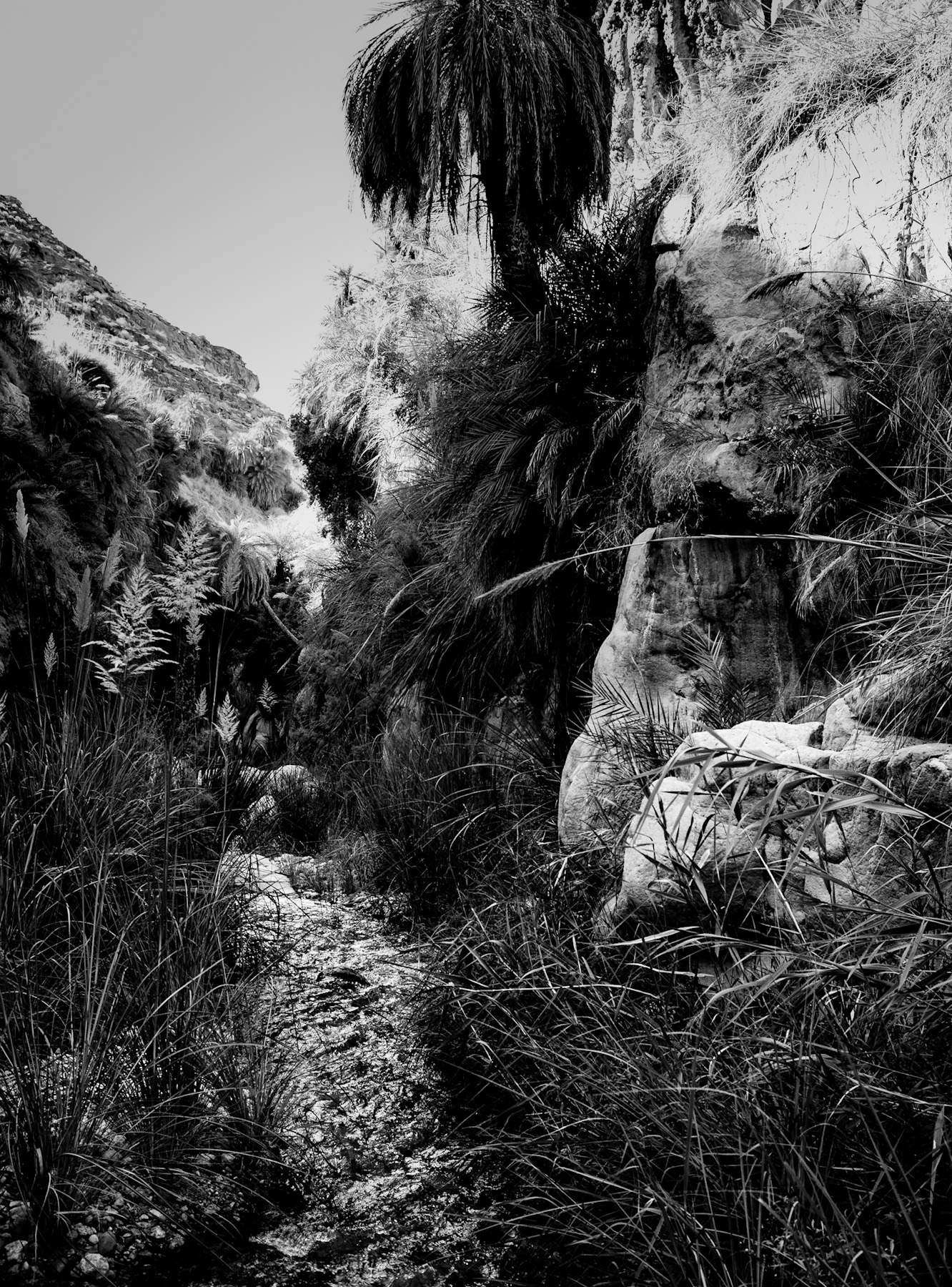
    Imagine a scene frozen in time: freshwater rushing dynamically through a rugged, rocky landscape. A swift stream cascades over dark, wet stones, creating patches of white foam. To the left, dense stalks of wild reeds, their delicate seed heads bending slightly, frame the water. On the right, massive, weathered limestone boulders rise sharply, showcasing the harsh, arid geology that surrounds this flowing water. This is a classic desert oasis, perfectly capturing the essence of the springs found in the Judean Desert, specifically within the Ein Gedi Nature Reserve near the Dead Sea.
    The Hydrological Miracle of the Judean Wilderness
    To truly grasp the enduring significance of Ein Gedi, we must first understand the unique hydrology of this remarkable region. The Judean Desert is a rain-shadow desert, notorious for its minimal annual rainfall. Yet, the towering Judean Hills to the west receive abundant winter rains. This precious water percolates deep into subterranean limestone aquifers, flowing silently eastward underground until it encounters impermeable rock layers near the Dead Sea rift valley. At geological faults along the canyon walls of valleys like Nahal David and Nahal Arugot, this hidden water miraculously emerges as perennial freshwater springs. The very stream we envision represents this vital geological phenomenon—a constant, life-giving source in an otherwise barren and hyper-arid environment.
    Historical and Biblical Significance
    For millennia, the reliable presence of freshwater in this remote region transformed it into a crucial hub for human survival, trade, and even spiritual refuge.
    Biblical Refuge In ancient texts, most notably the Hebrew Bible, Ein Gedi famously served as the wilderness sanctuary where David sought refuge from King Saul (1 Samuel 24). The „strongholds of Ein Gedi,“ hidden deep within the canyons, provided ideal hiding places, while the freshwater streams and wild vegetation offered essential sustenance. The dramatic contrast between the harsh desert cliffs and the lush, concealed streams served as a powerful metaphor in ancient literature, symbolizing protection and sustenance amidst adversity.
    Ancient Agriculture and the Balsam Industry Moving into the Greco-Roman and Byzantine periods, these vital springs were ingeniously engineered to support highly sophisticated irrigated agriculture. The region became world-renowned for cultivating rare perfumes and medicinal plants, most notably the legendary Judean Balsam (opobalsamum). This highly prized resin, valued more than its weight in gold, was a coveted export throughout the vast Roman Empire. The sophisticated aqueducts and terraced fields built by Jewish settlers of the Second Temple period relied entirely on the constant, unwavering flow of streams identical to the one pictured.
    Ecological Sanctuary in the Modern Era
    Today, the delicate ecosystem sustained by these precious streams remains critically important. The dense reeds and fresh water provide an indispensable habitat for a diverse array of fauna, including the majestic Nubian ibex and the agile rock hyrax—species that have graced these canyons since antiquity. The enduring visual of a monochrome image, stripping away color, powerfully highlights the timeless struggle and harmony between water and stone. It illustrates with stark clarity why these desert springs have persisted as a vital oasis of life and history for thousands of years, a testament to nature’s enduring power.
  • Shadows of the Past: Analyzing Ancient Rock-Cut Architecture Through Monochrome Photography

    Shadows of the Past: Analyzing Ancient Rock-Cut Architecture Through Monochrome Photography

    The power of monochrome photography lies in its ability to strip away the distraction of color, forcing the viewer to focus entirely on form, texture, and the dramatic interplay of light and shadow. The featured photograph captures a towering, rugged cliff face carved with ancient openings, presenting a stark visual narrative of human history etched directly into the earth. Through high-contrast black-and-white tones, the image highlights the raw geological formations and the remnants of ancient craftsmanship.
    Visual Analysis of the Composition
    In the foreground, dark, shadowed rock formations frame the composition, creating a sense of depth and leading the viewer’s eye upward toward the illuminated cliffside. The midground and background reveal a sheer sandstone wall weathered by centuries of wind and water erosion.
    Carved into this vertical rock face are several distinct, hollowed-out openings and niches. The intense sunlight striking the upper portion of the canyon creates deep shadows within these cavities, emphasizing their depth and mystery. The rough, striated texture of the sedimentary rock layers contrasts sharply with the smooth, dark voids of the hand-carved chambers, showcasing the intersection of natural geology and human intervention.
    The Historical Context of Nabataean Architecture
    The structures depicted in the photograph are highly characteristic of the ancient Nabataean civilization, most famously preserved in the archaeological site of Petra in modern-day Jordan. Active from around the fourth century BC until their annexation by the Roman Empire in 106 AD, the Nabataeans were nomadic Arabs who accumulated immense wealth through their control of the regional trade routes, particularly the incense and spice trades.
    Rather than constructing buildings from the ground up, the Nabataeans perfected the art of rock-cut architecture. They carved elaborate tombs, temples, dwellings, and water-conduit systems directly into the sandstone cliffs. The openings visible in the photograph likely served as simple tombs or loculi (burial niches) for the lower classes, or perhaps storage chambers. Over the millennia, natural erosion has softened the sharp edges of these man-made excavations, blending them seamlessly back into the natural landscape.
    Geological Significance and Modern Preservation
    The rock formations of the region consist primarily of Cambrian-Ordovician sandstone. This material is relatively soft and easy to carve, which allowed ancient builders to create precise architectural details using simple iron chisels and pickaxes. However, the same properties that made the sandstone easy to carve also make it highly susceptible to weathering.
    Today, these archaeological sites face significant threats from natural erosion, salt weathering, and modern tourism. Monochrome photography serves as an invaluable tool for documentation, as it emphasizes the structural integrity and surface degradation of these ancient monuments more clearly than color photography.
    Conclusion
    This photograph is more than a study in contrast; it is a visual record of human endurance and ingenuity. By capturing the rugged beauty of these ancient rock-cut structures, the image connects the modern viewer with the legacy of a civilization that literally shaped the landscape to secure its place in history.
  • Shadows of Antiquity: Exploring the Historical Legacy of Rugged Desert Landscapes

    Shadows of Antiquity: Exploring the Historical Legacy of Rugged Desert Landscapes

    The provided high-contrast, black-and-white photograph captures a dramatic and stark landscape defined by light and shadow. In the foreground and midground, deep black silhouettes of rugged mountain ridges dominate the frame. The sharp, uneven contours of the rocky terrain suggest an arid, mountainous environment, characteristic of the desert canyons found in the Middle East and the southern Levant. Above these dark peaks, a bright, luminous sky is filled with horizontal bands of clouds. The sun, positioned low on the horizon, creates a powerful backlighting effect, casting the valley into deep shadow while illuminating the sky in stark contrast. This composition evokes a sense of timelessness, isolation, and ancient mystery.
    **The Historical Context: The Nabataean Kingdom and Petra**
    Landscapes like the one depicted in this image have played crucial roles in human history, particularly in the ancient Near East. This rugged topography is highly characteristic of the region of Edom, located in modern-day Jordan. Between the 4th century BCE and the 2nd century CE, this inhospitable terrain was the heartland of the Nabataean Kingdom.
    The Nabataeans established their capital, Petra, amidst towering sandstone cliffs very similar to the formations silhouetted in the photograph. Rather than viewing the harsh, mountainous terrain as a barrier, the Nabataeans utilized the geography to their advantage. The deep canyons and narrow gorges, known as *siqs*, served as natural fortifications, making the city virtually impregnable to foreign invaders for centuries.
    **Engineering in the Desert**
    To survive in this arid environment, the Nabataeans became masters of water engineering. They carved complex networks of aqueducts, dams, cisterns, and reservoirs directly into the solid rock faces. This sophisticated system allowed them to collect and store flash-flood water, securing a constant water supply for a population of tens of thousands of people and enabling agriculture in the middle of the desert. The dark, silent valleys seen in the image once bustled with innovative hydrological activity that allowed a major civilization to flourish where survival seemed impossible.
    **The Strategic Importance of Desert Passes**
    Beyond agricultural survival, these mountainous desert regions held immense geopolitical and economic value. The hidden passes and valleys nestled between these ridges were vital corridors for the ancient Incense Route. This network of trade routes connected southern Arabia with the Mediterranean ports, facilitating the transport of highly valuable luxury goods, such as frankincense, myrrh, spices, and silk.
    By controlling these mountain passes, the Nabataeans secured vast wealth through taxation and protection fees. The strategic significance of this landscape eventually drew the attention of the Roman Empire, which annexed the kingdom in 106 CE, integrating these trade routes into the broader imperial network.
    **A Timeless Visual Legacy**
    Today, these ancient mountain ranges remain largely unchanged, preserving the physical context of past civilizations. The monochrome aesthetic of the photograph emphasizes the enduring, permanent nature of the stone against the fleeting light of the sun. It serves as a visual reminder that beneath these silent, dark silhouettes lie centuries of human ingenuity, trade, and empire-building that shaped the course of ancient history.
  • Echoes of the Past: The Historical and Geological Significance of Desert Canyons

    Echoes of the Past: The Historical and Geological Significance of Desert Canyons

    The stark contrast of black-and-white photography captures a dramatic desert canyon landscape, characterized by towering sandstone formations and sparse, resilient vegetation. The high-contrast image emphasizes the raw, textured surfaces of the rock faces, which rise sharply against a clear sky. In the foreground, hardy desert shrubs anchor the sandy ground, framing a path that winds deeper into the gorge. This visual narrative is not merely a study in geological grandeur; it is a gateway to understanding the rich historical tapestry of ancient desert landscapes, particularly those found in the Arabian Peninsula and the Levant.
    Geological Characteristics of Sandstone Canyons
    The geological features depicted in the image are characteristic of arid canyon systems formed over millions of years through wind and water erosion. Sandstone, a sedimentary rock, is highly susceptible to weathering, resulting in the intricate patterns, crevices, and layered strata visible on the cliff faces.
    These natural corridors, often referred to as „wadis“ or canyons, have historically served as crucial pathways through otherwise impassable terrain. Despite the harsh environment, the presence of desert scrub demonstrates the adaptability of flora in arid ecosystems, where deep root systems tap into scarce underground water sources.
    Historical Context: The Lifelines of Ancient Trade
    From a historical perspective, canyons like the one pictured were the lifelines of ancient civilizations. Regions such as Wadi Rum in Jordan and the AlUla valley in Saudi Arabia served as vital hubs for the Nabataean Kingdom and various nomadic tribes. Between the 4th century BCE and the 1st century CE, these natural corridors facilitated the Incense Route—a network of major ancient land and sea trading paths linking the Mediterranean world with eastern and southern sources of incense, spices, and luxury goods.
    Caravans consisting of hundreds of camels navigated these exact types of sandstone passages. The high canyon walls provided essential benefits:
    * **Shelter:** The towering cliffs offered crucial shade from the scorching desert sun. * **Protection:** The narrow passages provided natural defense against desert winds and potential raiders. * **Water Access:** The geology of these canyons often concealed hidden water sources, such as natural springs and cisterns carved into the rock by ancient engineers, making them strategic stopping points.
    Cultural Legacy and Modern Preservation
    Today, many of these historical desert canyons are recognized globally for their cultural and natural significance. Sites like Wadi Rum are designated UNESCO World Heritage sites, celebrated not only for their geological aesthetic but also for the thousands of petroglyphs and inscriptions carved into the rock faces by ancient travelers.
    The black-and-white medium of the photograph strips away the modern world, offering a timeless perspective that connects the contemporary viewer to the ancient merchants, nomads, and explorers who once walked these sandy paths.
    In conclusion, the image serves as a powerful visual representation of the intersection between nature and human history. The towering sandstone cliffs and the quiet desert path invite reflection on the enduring legacy of these rugged landscapes, which shaped the trade, culture, and survival of ancient civilizations.
  • Echoes of the Nabataeans: Jordan’s Ancient Sandstone Secrets

    Echoes of the Nabataeans: Jordan’s Ancient Sandstone Secrets

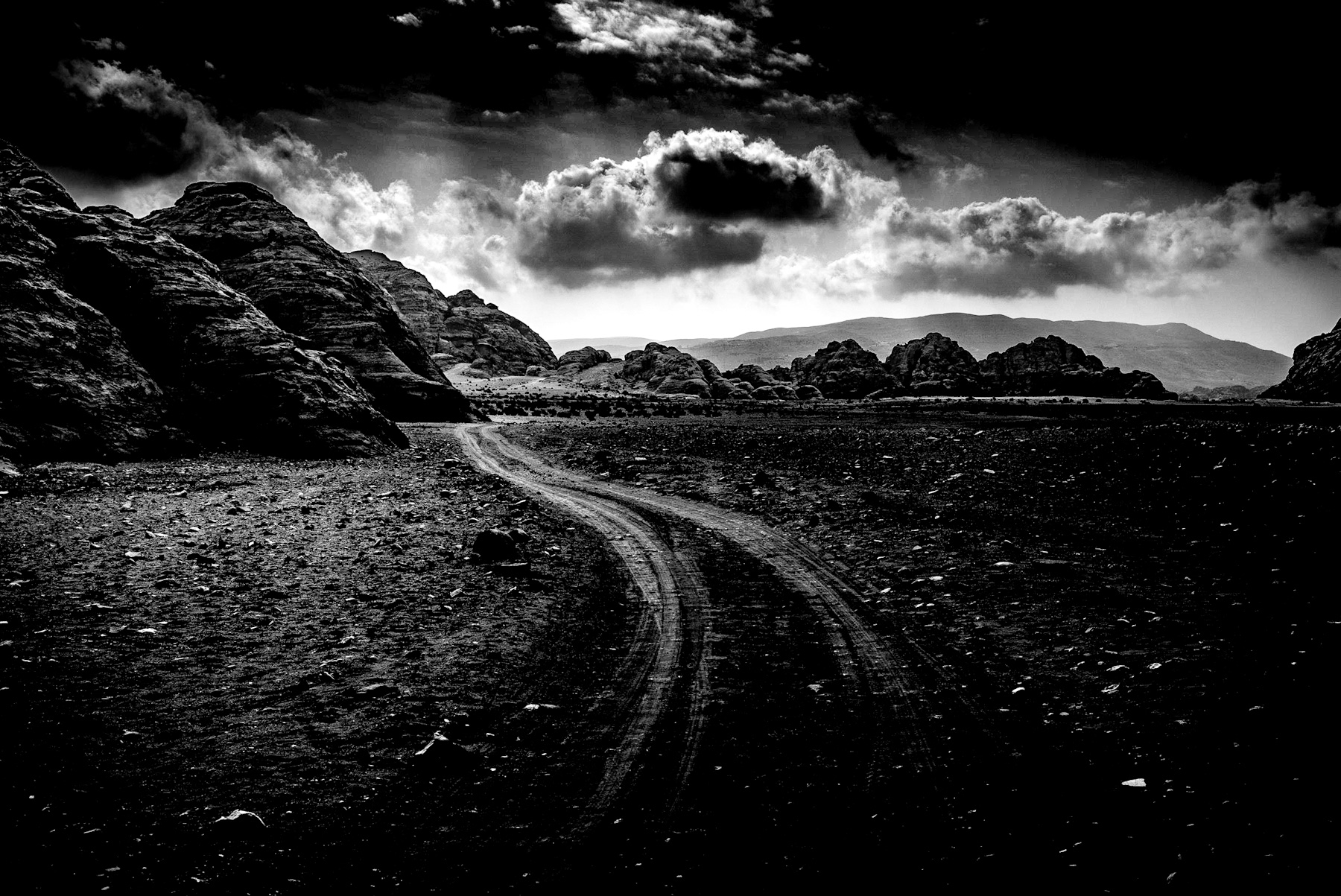
    The stark contrast of black and white photography brings a timeless quality to the rugged landscapes of southern Jordan. The image captures a barren, gravel-strewn valley bordered by massive, weathered sandstone formations. A winding dirt track snakes through the center, leading the eye toward towering rock faces characterized by deep vertical fissures and rounded, beehive-like shapes. The harsh sunlight casts deep shadows, emphasizing the texture of the arid terrain and the ancient geological structures that define this historic region.
    Ancient Formations, Enduring Legacy
    The rock formations depicted are typical of the area surrounding Petra and Little Petra (Siq al-Barid). Composed primarily of Cambrian and Ordovician sandstone, these magnificent cliffs have been shaped over millions of years by relentless wind and water erosion. Historically, this challenging yet breathtaking terrain was the heartland of the Nabataean Kingdom, an ancient Arab civilization that flourished from the 4th century BCE until its annexation by the Roman Empire in 106 CE. The Nabataeans recognized the strategic value of these natural sandstone barriers, choosing not merely to build upon the land but to carve their monumental tombs, temples, and dwellings directly into the cliff faces, creating a unique synthesis of nature and architecture that still astounds visitors today.
    Masters of Trade and Water
    The winding path visible in the image is a powerful echo of the ancient caravan routes that once traversed this very region. The Nabataeans amassed immense wealth by ingeniously controlling the vital trade routes of the ancient world. They were at the heart of networks like the Incense Route, which connected the Arabian Peninsula with crucial Mediterranean ports. Caravans laden with valuable commodities such as frankincense, myrrh, exotic spices, and precious silk journeyed through these narrow valleys. To not only survive but thrive in this hyper-arid environment, the Nabataeans developed highly sophisticated water harvesting and storage systems. These innovations allowed them to support a large population and offer much-needed refuge to weary travelers, cementing their position as a crucial hub. The defensive advantages offered by this landscape were unparalleled. The deep canyons, famously known as siqs, provided natural protection against invading forces, rendering the Nabataean capital of Petra virtually impregnable for centuries.
    A Timeless Connection to the Desert Landscape
    Today, this extraordinary region is globally recognized for its profound cultural and historical value. Petra, the crown jewel, was deservedly designated a UNESCO World Heritage Site in 1985, drawing archaeologists, historians, and eager travelers from every corner of the globe. The photograph serves as a poignant visual reminder of the enduring and intricate relationship between human civilization and the natural environment. While the ancient traders and skilled builders have long departed, the majestic sandstone cliffs and the very desert pathways remain, meticulously preserving the history of a culture that mastered one of the most inhospitable landscapes on Earth. For modern visitors, exploring these ancient paths offers a profound and tangible connection to the past, where every weathered rock formation whispers a story of survival, ingenious engineering, and unparalleled architectural brilliance.
  • Echoes of the Nabataeans: Where Ancient History Meets Daily Life in Petra

    Echoes of the Nabataeans: Where Ancient History Meets Daily Life in Petra

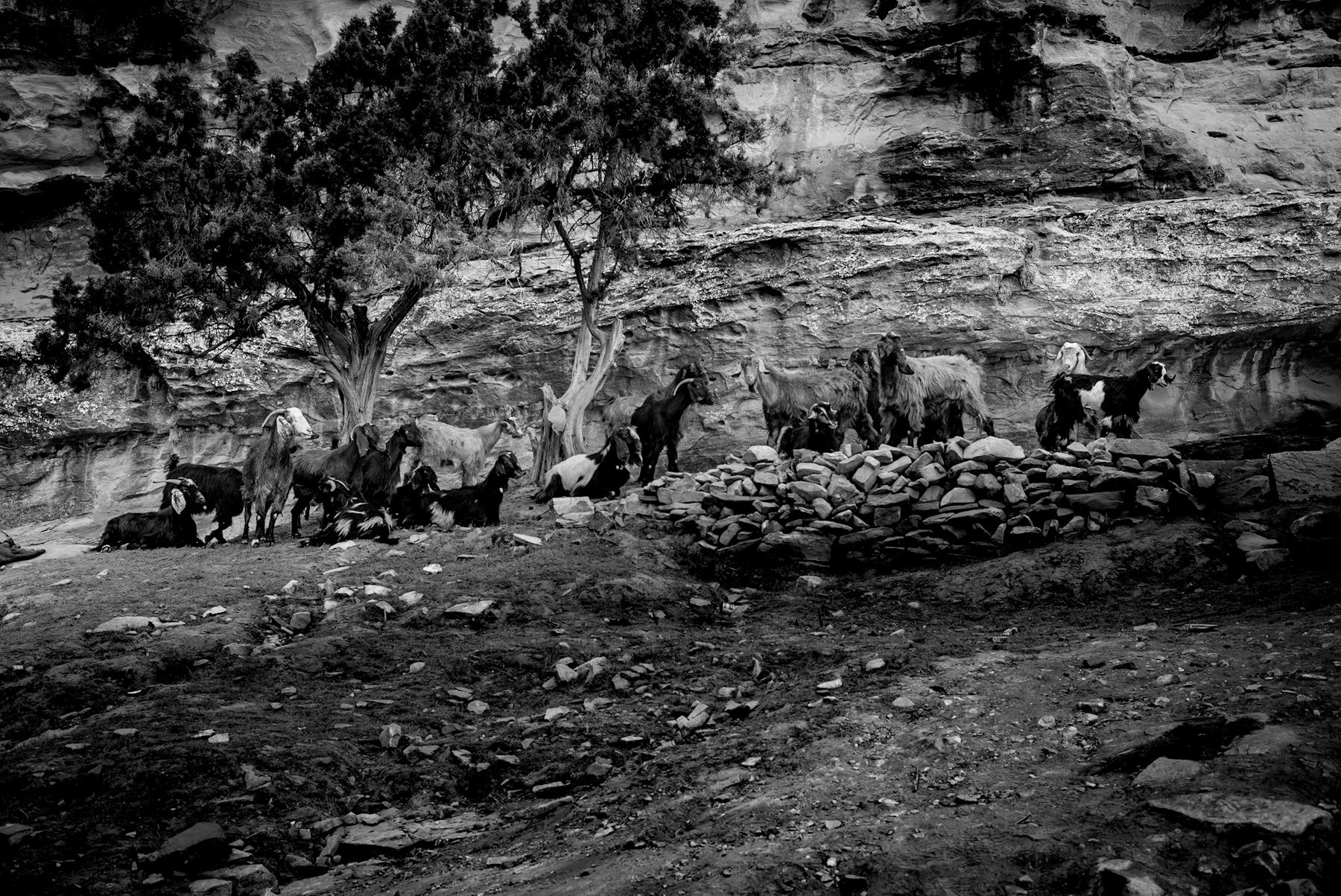
    The stark contrast of black-and-white photography often reveals the raw essence of a landscape, stripping away the distraction of color to focus on form, texture, and history. In this striking image, the timeless ruggedness of Jordan’s desert landscape is captured in a single, powerful frame. The photograph depicts a herd of goats traversing a rocky plain, set against the monumental backdrop of ancient rock-cut architecture and dramatic, cloud-filled skies. This scene is not merely a depiction of rural life; it is a visual bridge connecting modern pastoral traditions with one of the ancient world’s most remarkable civilizations.
    A Landscape Carved by Time and Human Hands
    In the foreground of the image, a herd of goats moves systematically across a stony, arid terrain. This daily ritual of pastoralism has remained largely unchanged for millennia in the Middle East. However, it is the background that elevates this scene from a simple pastoral photograph to a historical document.
    The towering sandstone cliffs visible in the background are characteristic of the region surrounding Petra, the ancient capital of the Nabataean Kingdom. Carved directly into the sheer rock faces are the dark openings of ancient caves and tombs. High on the ridge to the right, a monumental structure stands silhouetted against the dark, dramatic clouds. This architectural style, blending Hellenistic design elements with traditional Eastern motifs, is the hallmark of Nabataean craftsmanship.
    The Historical Legacy of the Nabataean Kingdom
    To understand the significance of the structures carved into these cliffs, one must look back to the Nabataeans, a nomadic Arab people who settled in the southern Levant around the 4th century BCE. Petra, strategically located at the crossroads of ancient trade routes, became the prosperous capital of their empire.
    The Nabataeans accumulated immense wealth by controlling the trade of luxury goods, particularly frankincense, myrrh, and spices, which were transported from the Arabian Peninsula to the Mediterranean ports. This wealth allowed them to transform the rugged sandstone canyons into a thriving metropolis.
    The carvings shown in the photograph are remnants of this golden age. While Petra is famous for grand monuments like the Treasury (Al-Khazneh) and the Monastery (Ad Deir), the surrounding valleys are filled with hundreds of smaller rock-cut tombs, dwellings, and cisterns. The Nabataeans were master hydrologists, constructing complex systems of dams, conduits, and reservoirs that allowed them to survive and flourish in an otherwise inhospitable desert environment.
    The Continuity of Bedouin Culture
    The presence of the goat herd in the photograph highlights the cultural continuity of the region. Following the decline of the Nabataean Empire and the subsequent Roman and Byzantine eras, Petra was largely forgotten by the Western world until its rediscovery in 1812. Throughout these centuries, local Bedouin tribes, such as the Bdoul, inhabited the ancient caves and maintained their traditional pastoral lifestyle.
    Today, while Petra is recognized as a UNESCO World Heritage Site and a major global tourist destination, the traditional herding of livestock remains an integral part of the local economy and cultural identity. The image captures this harmonious coexistence: the monumental, permanent structures of a long-lost empire serving as the backdrop for the transient, daily patterns of nomadic life.
  • Echoes in the Stone: Exploring the Historical Depth of Arid Desert Landscapes

    Echoes in the Stone: Exploring the Historical Depth of Arid Desert Landscapes

    Arid landscapes have long captured the human imagination. Across the globe, rocky deserts and dry valleys serve as stark reminders of nature’s raw power and the passage of time. The monochrome photograph presented here captures a rugged, boulder-strewn valley, likely a wadi, winding through eroded mountain ranges. This specific topography is characteristic of Middle Eastern desert regions, such as the Sinai Peninsula, the Negev, or the mountainous areas of Jordan.
    By stripping away color, the high-contrast black-and-white image emphasizes the harsh textures, unique geological formations, and sparse vegetation that define these ancient terrains.
    ***
    **Visual Analysis of the Desert Terrain**
    The photograph illustrates a classic desert valley floor, cluttered with a mixture of dark, basaltic boulders and lighter, weathered limestone rocks. In the foreground, the accumulation of stones indicates the path of a dry riverbed, or wadi. These channels remain dry for most of the year but can transform into raging torrents during brief, seasonal flash floods.
    Sparse, hardy vegetation, including deep-rooted shrubs and small acacia-like trees, clings to the rocky slopes. In the background, layered, sun-bleached mountains rise against a dark, cloudless sky. The lack of modern infrastructure highlights the isolation and timelessness of the environment, making it difficult to distinguish whether the image was captured today or a century ago.
    ***
    **The Historical Significance of the Wadi and Desert Routes**
    Regions matching this geological profile have played pivotal roles in human history. Far from being empty voids, these arid valleys served as crucial corridors for migration, trade, and cultural exchange for millennia.
    **1. Ancient Trade and the Incense Route**
    For thousands of years, deserts like the Negev and the Arabian Peninsula were crisscrossed by complex trade networks. The most famous of these, the Incense Route, facilitated the transport of frankincense and myrrh from southern Arabia to the Mediterranean port of Gaza. Nabataean merchants mastered the art of survival in these harsh landscapes, establishing hidden water cisterns and fortified outposts along rocky valleys similar to the one pictured.
    **2. Nomadic Survival and Bedouin Culture**
    The survival of nomadic tribes, such as the Bedouins, is deeply tied to this landscape. For centuries, these communities navigated the rugged terrain, utilizing wadis for seasonal grazing and water collection. Their deep understanding of geology and botany allowed them to thrive in an environment that appeared uninhabitable to outsiders.
    **3. Spiritual and Biblical History**
    In historical and religious texts, the wilderness is often depicted as a place of testing, refuge, and revelation. The Sinai Peninsula, characterized by its jagged granite mountains and deep valleys, is historically associated with the biblical Exodus. For early Christian monastics in the 3rd and 4th centuries, the extreme isolation of these desert valleys provided the perfect environment for spiritual contemplation, leading to the establishment of some of the world’s oldest continuously inhabited monasteries.
    ***
    **Conclusion**
    The rugged beauty captured in this black-and-white photograph is more than just a geological study; it is a visual record of a landscape that has profoundly shaped human civilization. From ancient traders navigating rocky paths to seekers of spiritual solitude, these timeless desert valleys remain a powerful symbol of endurance, history, and natural majesty.
  • Echoes of the Past: The Timeless Landscape and History of Jordan’s Desert

    Echoes of the Past: The Timeless Landscape and History of Jordan’s Desert

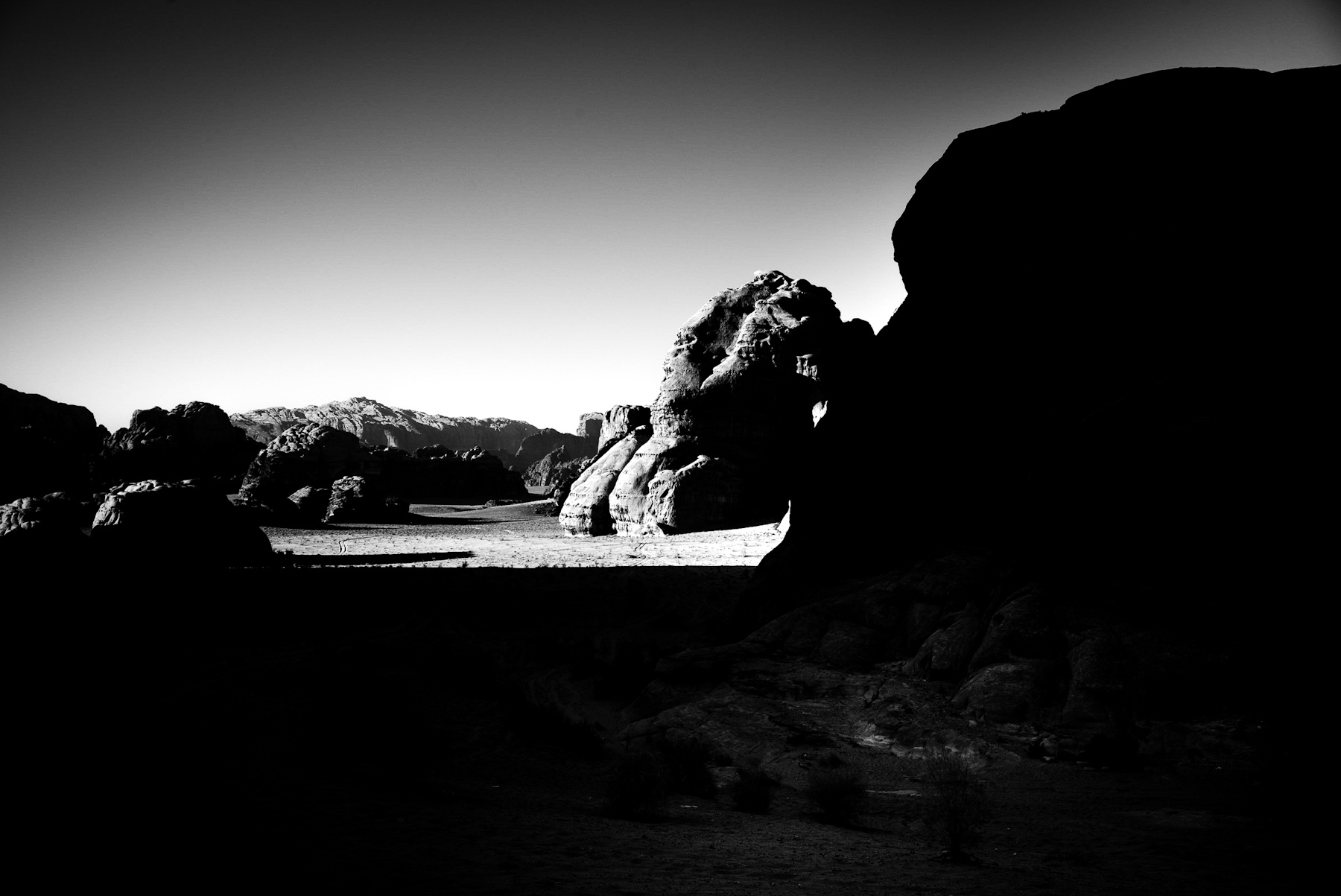
    This striking black and white photograph instantly transports you to a dramatic desert landscape, a realm of high contrast and geological grandeur. Deep shadows in the foreground cradle sparse desert vegetation, anchoring the scene with a strong tonal presence. Further back, the terrain unfolds into a sunlit, gravelly plain dotted with low-lying shrubs. To the right, a towering, sheer sandstone cliff dominates the frame, its vertical weathering and intricate geological layering a testament to ages past. In the distance, rugged, pyramid-like rock formations pierce a dark, cloudless sky, underscoring the profound isolation and vastness of this arid environment. This powerful visual composition strongly evokes the unique topography of southern Jordan, particularly the famed Wadi Rum valley, often revered as the Valley of the Moon.
    A Landscape Forged by Time: The Geological Foundation
    From a geological standpoint, the landscape captured in the image is a masterpiece forged over millions of years by unrelenting tectonic activity, fierce wind erosion, and persistent water carving. The massive sandstone and granite formations you see are characteristic features of the ancient Arabian Shield. The monochrome presentation of the photograph masterfully accentuates these textures, drawing out the subtle interplay between the soft sand, the resilient desert scrub, and the rigid, deeply weathered surfaces of the ancient cliffs. This visual dialogue creates an almost tangible sense of timelessness, presenting a landscape that has stood virtually unchanged for millennia.
    Whispers of Ancient Civilizations and Trade Routes
    Beyond its breathtaking natural beauty, landscapes like the one depicted here carry profound historical significance, echoing stories from forgotten ages. For thousands of years, these arid regions served as vital corridors, facilitating human migration, bustling trade, and vibrant cultural exchange.
    During classical antiquity, southern Jordan became the heartland of the Nabataeans, a remarkable nomadic Arab people who ingeniously forged a powerful trading empire. They didn’t just survive the harsh desert conditions; they mastered them, developing sophisticated water-harvesting systems that allowed them to control the immensely lucrative incense, spice, and silk trade routes connecting distant southern Arabia with the vibrant Mediterranean world. The massive sandstone cliffs, much like the one prominently featured on the right of the photo, frequently bear ancient petroglyphs and inscriptions in Thamudic, Nabataean, and early Arabic scripts. These intricate carvings are more than just art; they serve as a living historical archive, meticulously documenting the lives, beliefs, and languages of ancient travelers and nomads who once traversed these very paths.
    The Enduring Legacy of the Arab Revolt and Cultural Heritage
    In more recent history, this specific desert landscape gained global recognition through the pivotal events of the Arab Revolt (1916–1918). It was here that British officer T.E. Lawrence, globally immortalized as Lawrence of Arabia, traversed these expansive desert realms alongside Arab forces. The strategic geography of the rocky canyons and wide-open plains played an absolutely crucial role in the innovative guerrilla warfare tactics employed during the campaign against the Ottoman Empire.
    Today, this storied area remains the cherished home of the Bedouin people, who have diligently preserved their traditional knowledge of the desert ecosystem for generations. Recognized as a prestigious UNESCO World Heritage site, the region is celebrated not only for its unparalleled natural aesthetic but also for its remarkable cultural continuity. The silent, enduring rocks depicted in this photograph have witnessed the majestic rise and poignant fall of empires, the countless passages of ancient caravans laden with exotic goods, and the daily, resilient lives of desert nomads. They stand as an enduring monument to both human resilience and the vast tapestry of natural history.