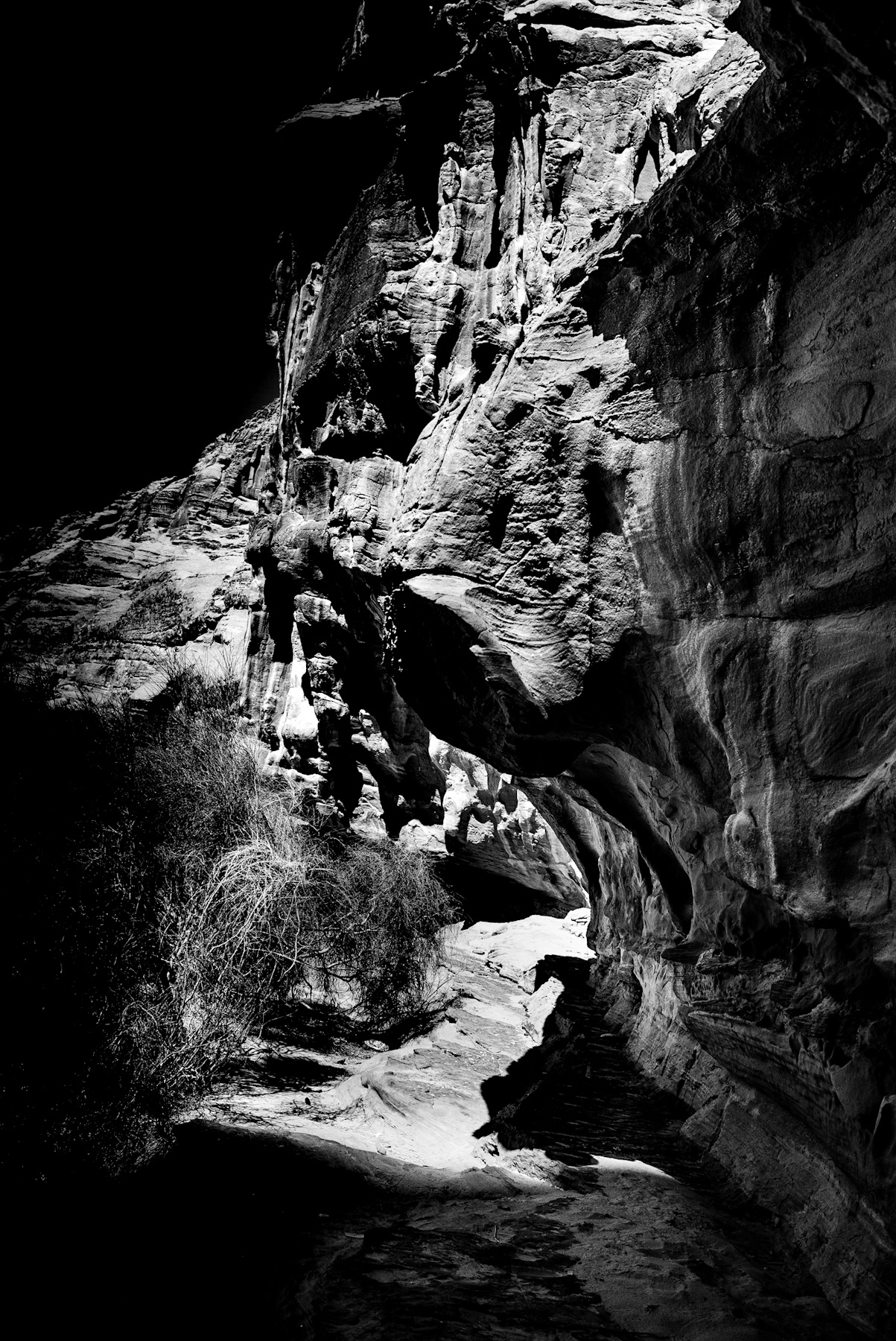
Monochrome photography has a unique ability to strip away distractions and reveal the raw texture, form, and soul of a landscape. The featured black and white photograph captures a dramatic, narrow canyon corridor carved into massive sandstone cliffs. Through a stark play of light and shadow, the image highlights the rugged beauty of these natural formations, which served as the gateways to ancient civilizations.
Understanding the Visual Composition
The photograph displays a deep gorge, characterized by towering rock faces that show signs of centuries of wind and water erosion. The high-contrast rendering emphasizes the layered geological strata of the sandstone. On the left side of the path, sparse, dry desert vegetation clings to the rocky ground, illustrating the arid conditions of the environment.
The composition guides the viewer’s eye through a narrow passage, partially shaded by overhanging rock formations. This dramatic interplay of light—where intense sunlight hits the upper cliffs while deep shadows engulf the canyon floor—creates a sense of mystery and isolation. This specific topography is highly characteristic of the desert regions of the Middle East, most notably the famous „Siq“ leading to the ancient city of Petra in Jordan.
The Historical Significance of Desert Gorges
Canyons like the one depicted in the image were not merely geological wonders; they played a crucial role in human history, particularly during the rise of the Nabataean Kingdom around the 4th century BCE.
For the Nabataeans, a nomadic Arab people who became masters of trade, these narrow gorges served two vital purposes: defense and water management.
1. Natural Fortresses: The narrow, winding paths of canyons made cities like Petra virtually impregnable to foreign invaders. A small force could easily defend the entrance of a gorge against a much larger army, as the high cliffs offered strategic vantage points. 2. Advanced Water Engineering: Despite the arid climate, these canyons were prone to sudden, devastating flash floods. The Nabataeans engineered sophisticated systems of dams, cisterns, and conduits along the canyon walls to harvest rainwater. This allowed them to control the water flow, secure a year-round water supply, and transform a desert outpost into a thriving trade hub.
The Gateway to Ancient Trade Routes
These natural corridors served as vital conduits for the incense and spice trade routes. Caravans laden with precious goods such as frankincense, myrrh, and spices from southern Arabia and India traveled through these passages on their way to the Mediterranean ports.
The sandstone walls witnessed the passage of merchants, travelers, and soldiers from various empires, including the Romans and Byzantines, who later annexed these territories. The inscriptions and niches carved into the rock faces of such canyons elsewhere in the region still stand as historical records of these diverse cultural exchanges.
A Timeless Monument of Nature and History
Today, these desert canyons are recognized globally as significant archaeological and geological sites. The photograph serves as a visual metaphor for the passage of time, where the forces of nature and the remnants of human ingenuity intersect. By capturing the harsh contrasts and ancient textures of the stone, the image invites viewers to contemplate the deep history embedded within these silent, rocky passages.
Understanding the Visual Composition
The photograph displays a deep gorge, characterized by towering rock faces that show signs of centuries of wind and water erosion. The high-contrast rendering emphasizes the layered geological strata of the sandstone. On the left side of the path, sparse, dry desert vegetation clings to the rocky ground, illustrating the arid conditions of the environment.
The composition guides the viewer’s eye through a narrow passage, partially shaded by overhanging rock formations. This dramatic interplay of light—where intense sunlight hits the upper cliffs while deep shadows engulf the canyon floor—creates a sense of mystery and isolation. This specific topography is highly characteristic of the desert regions of the Middle East, most notably the famous „Siq“ leading to the ancient city of Petra in Jordan.
The Historical Significance of Desert Gorges
Canyons like the one depicted in the image were not merely geological wonders; they played a crucial role in human history, particularly during the rise of the Nabataean Kingdom around the 4th century BCE.
For the Nabataeans, a nomadic Arab people who became masters of trade, these narrow gorges served two vital purposes: defense and water management.
1. Natural Fortresses: The narrow, winding paths of canyons made cities like Petra virtually impregnable to foreign invaders. A small force could easily defend the entrance of a gorge against a much larger army, as the high cliffs offered strategic vantage points. 2. Advanced Water Engineering: Despite the arid climate, these canyons were prone to sudden, devastating flash floods. The Nabataeans engineered sophisticated systems of dams, cisterns, and conduits along the canyon walls to harvest rainwater. This allowed them to control the water flow, secure a year-round water supply, and transform a desert outpost into a thriving trade hub.
The Gateway to Ancient Trade Routes
These natural corridors served as vital conduits for the incense and spice trade routes. Caravans laden with precious goods such as frankincense, myrrh, and spices from southern Arabia and India traveled through these passages on their way to the Mediterranean ports.
The sandstone walls witnessed the passage of merchants, travelers, and soldiers from various empires, including the Romans and Byzantines, who later annexed these territories. The inscriptions and niches carved into the rock faces of such canyons elsewhere in the region still stand as historical records of these diverse cultural exchanges.
A Timeless Monument of Nature and History
Today, these desert canyons are recognized globally as significant archaeological and geological sites. The photograph serves as a visual metaphor for the passage of time, where the forces of nature and the remnants of human ingenuity intersect. By capturing the harsh contrasts and ancient textures of the stone, the image invites viewers to contemplate the deep history embedded within these silent, rocky passages.
Schreibe einen Kommentar