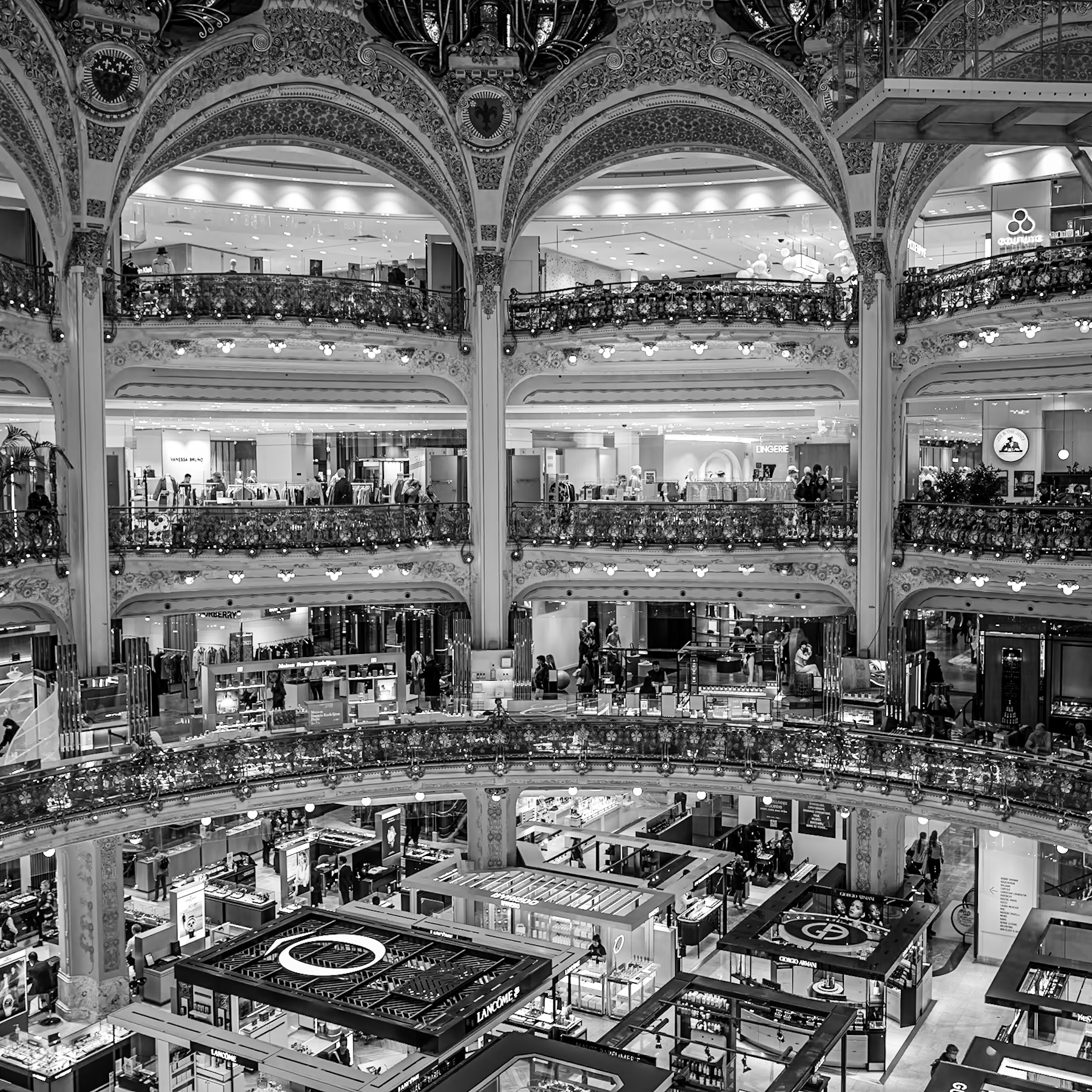
The provided black and white photograph offers a captivating perspective of the interior of a grand department store, specifically capturing the breathtaking view from a high vantage point towards the magnificent Art Nouveau dome. This architectural marvel is not merely a ceiling; it is a testament to a bygone era of opulence and innovation, a central feature of the renowned Galeries Lafayette Haussmann in Paris.
Architectural Splendor and Historical Context
The image showcases the intricate details of the store’s interior, characterized by multiple levels of balconies adorned with ornate railings and decorative moldings. These balconies overlook a bustling retail space, with various displays and shoppers moving about. The very structure of the building, with its soaring ceilings and open atrium, is designed to impress and invite exploration.
The highlight of the scene, however, is the dome itself. While its vibrant stained glass is not visible in this monochromatic rendition, the structure’s impressive scale and the surrounding architectural elements speak volumes about its grandeur. This dome, designed by Ferdinand Chanut and decorated by Jacques Grüber, was completed in 1912 and is considered one of the most beautiful examples of Art Nouveau architecture in Paris. It replaced an earlier, more modest dome and was part of a significant expansion of the department store.
Galeries Lafayette, founded in 1893, quickly became a symbol of Parisian chic and modern commerce. The store’s founders, Théophile Bader and Alphonse Kahn, envisioned a space that was not just for shopping but for experiencing a new way of living and consuming. They embraced innovation, from the use of steel structures to facilitate open spaces to the integration of art and design into the very fabric of the building. The Art Nouveau dome perfectly embodies this philosophy, blending functionality with artistic expression.
The Experience of the Department Store
The photograph captures the essence of the department store as a destination. The presence of shoppers on various levels, browsing merchandise and interacting, suggests a vibrant and dynamic environment. In the late 19th and early 20th centuries, department stores like Galeries Lafayette were revolutionary. They brought together a vast array of goods under one roof, offering convenience and a sense of discovery to consumers. They were also social spaces, places where people could meet, see and be seen, and immerse themselves in the latest trends.
The black and white treatment of the image lends a timeless quality, allowing the viewer to focus on the architectural forms and the interplay of light and shadow. It evokes a sense of historical significance, inviting contemplation of the era when such grand retail establishments were at their zenith. The image serves as a visual reminder of the enduring appeal of beautiful design and the rich history embedded within Parisian landmarks.
Architectural Splendor and Historical Context
The image showcases the intricate details of the store’s interior, characterized by multiple levels of balconies adorned with ornate railings and decorative moldings. These balconies overlook a bustling retail space, with various displays and shoppers moving about. The very structure of the building, with its soaring ceilings and open atrium, is designed to impress and invite exploration.
The highlight of the scene, however, is the dome itself. While its vibrant stained glass is not visible in this monochromatic rendition, the structure’s impressive scale and the surrounding architectural elements speak volumes about its grandeur. This dome, designed by Ferdinand Chanut and decorated by Jacques Grüber, was completed in 1912 and is considered one of the most beautiful examples of Art Nouveau architecture in Paris. It replaced an earlier, more modest dome and was part of a significant expansion of the department store.
Galeries Lafayette, founded in 1893, quickly became a symbol of Parisian chic and modern commerce. The store’s founders, Théophile Bader and Alphonse Kahn, envisioned a space that was not just for shopping but for experiencing a new way of living and consuming. They embraced innovation, from the use of steel structures to facilitate open spaces to the integration of art and design into the very fabric of the building. The Art Nouveau dome perfectly embodies this philosophy, blending functionality with artistic expression.
The Experience of the Department Store
The photograph captures the essence of the department store as a destination. The presence of shoppers on various levels, browsing merchandise and interacting, suggests a vibrant and dynamic environment. In the late 19th and early 20th centuries, department stores like Galeries Lafayette were revolutionary. They brought together a vast array of goods under one roof, offering convenience and a sense of discovery to consumers. They were also social spaces, places where people could meet, see and be seen, and immerse themselves in the latest trends.
The black and white treatment of the image lends a timeless quality, allowing the viewer to focus on the architectural forms and the interplay of light and shadow. It evokes a sense of historical significance, inviting contemplation of the era when such grand retail establishments were at their zenith. The image serves as a visual reminder of the enduring appeal of beautiful design and the rich history embedded within Parisian landmarks.
Schreibe einen Kommentar