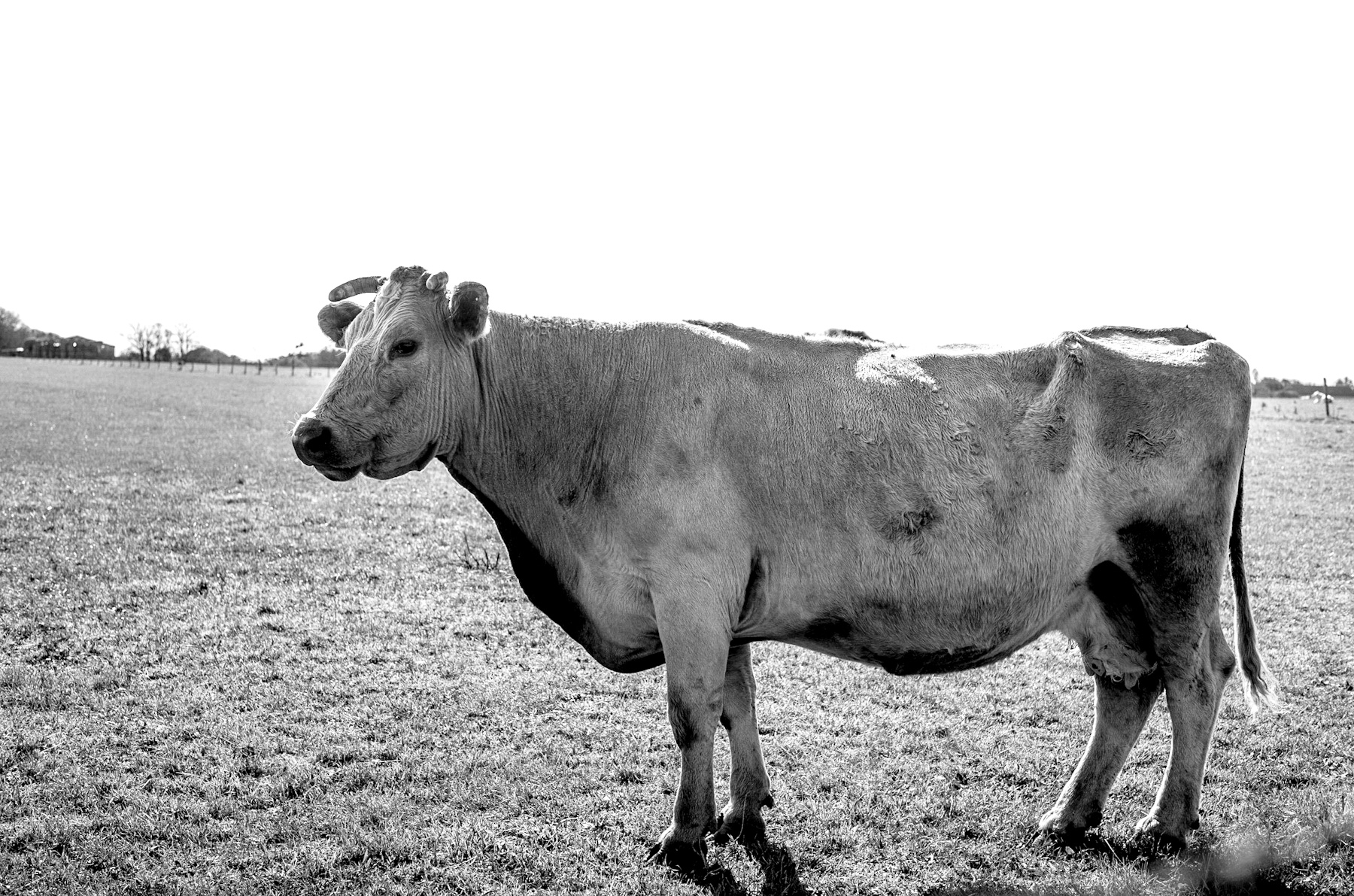
The striking monochrome image presents a solitary cow standing in an expansive, sun-drenched pasture. Captured in stark black and white, the photograph transcends a simple farm scene, inviting viewers to reflect on the profound and enduring relationship between humanity and these majestic creatures. The animal, likely a beef or dairy breed, stands with quiet dignity, its form silhouetted against a bright, almost ethereal sky, grounding us in the timeless narrative of agriculture and coexistence.
Visual Description: A Study in Monochrome
At the heart of the frame, a robust bovine commands attention, positioned in a three-quarter profile facing left. Its head, adorned with small, distinctive horns, is slightly lowered, conveying a sense of calm observation. The cow’s coat, textured and seemingly thick, is rendered with intricate detail through the black and white medium, catching the harsh sunlight that sculpts its contours and casts a sharp shadow beneath its sturdy legs. The vast open field, sparsely covered with short grass, stretches into the background, where distant trees and faint structures hint at a broader rural landscape. The high contrast and absence of color emphasize form and texture, lending a classic, almost documentary feel to the scene, highlighting the animal’s presence in its natural habitat.
The Dawn of Domestication: An Ancient Bond
The image of a cow in a field is deeply rooted in human history, harking back to the Neolithic Revolution, approximately 10,500 years ago. It was during this pivotal era that wild aurochs, the ancestors of modern cattle, were first domesticated. This monumental shift transformed human societies from nomadic hunter-gatherers to settled agricultural communities. Cattle became indispensable, providing not just meat and milk for sustenance but also hides for clothing and shelter, and their strength for plowing fields and transportation. The very foundation of civilization, from settled villages to organized labor, owes a significant debt to the domestication of these animals. Their role as livestock fundamentally altered human development.
Cattle Through the Ages: From Labor to Livelihood
As societies evolved, so did the role and significance of cattle. In many ancient cultures, they were revered, symbolizing wealth, fertility, and divine power – a tradition still evident in some parts of the world today. The agricultural revolution further solidified their importance, with selective breeding leading to the development of distinct breeds optimized for specific purposes, whether for rich dairy production or high-quality beef. This continuous refinement over millennia has shaped the diverse cattle populations we see globally. The cow in this photograph, standing resiliently in its pasture, serves as a living testament to this unbroken chain of husbandry, a link connecting modern farming practices to the earliest human endeavors in food production.
A Timeless Presence in a Changing World
The black and white aesthetic of the photograph itself adds another layer to its historical resonance. It evokes a sense of timelessness, reminiscent of early photography that captured agrarian life with stark authenticity. In an increasingly urbanized and technologically driven world, the sight of a cow grazing in a field remains a powerful symbol of connection to nature, food sources, and traditional livelihoods. This image encourages contemplation of our ongoing relationship with the animal kingdom, the complexities of food production, and the enduring beauty of the rural landscape, reminding us of the foundational role cattle continue to play in human existence.
Conclusion
This photograph, more than a mere snapshot, is a quiet chronicle. It encapsulates millennia of shared history, from the first steps of domestication to the sophisticated agricultural systems of today. The solitary cow, bathed in light, stands as a potent emblem of sustenance, labor, and a bond that has shaped human civilization. It is a powerful reminder of the enduring presence of bovine life in our landscapes and our lives.
Visual Description: A Study in Monochrome
At the heart of the frame, a robust bovine commands attention, positioned in a three-quarter profile facing left. Its head, adorned with small, distinctive horns, is slightly lowered, conveying a sense of calm observation. The cow’s coat, textured and seemingly thick, is rendered with intricate detail through the black and white medium, catching the harsh sunlight that sculpts its contours and casts a sharp shadow beneath its sturdy legs. The vast open field, sparsely covered with short grass, stretches into the background, where distant trees and faint structures hint at a broader rural landscape. The high contrast and absence of color emphasize form and texture, lending a classic, almost documentary feel to the scene, highlighting the animal’s presence in its natural habitat.
The Dawn of Domestication: An Ancient Bond
The image of a cow in a field is deeply rooted in human history, harking back to the Neolithic Revolution, approximately 10,500 years ago. It was during this pivotal era that wild aurochs, the ancestors of modern cattle, were first domesticated. This monumental shift transformed human societies from nomadic hunter-gatherers to settled agricultural communities. Cattle became indispensable, providing not just meat and milk for sustenance but also hides for clothing and shelter, and their strength for plowing fields and transportation. The very foundation of civilization, from settled villages to organized labor, owes a significant debt to the domestication of these animals. Their role as livestock fundamentally altered human development.
Cattle Through the Ages: From Labor to Livelihood
As societies evolved, so did the role and significance of cattle. In many ancient cultures, they were revered, symbolizing wealth, fertility, and divine power – a tradition still evident in some parts of the world today. The agricultural revolution further solidified their importance, with selective breeding leading to the development of distinct breeds optimized for specific purposes, whether for rich dairy production or high-quality beef. This continuous refinement over millennia has shaped the diverse cattle populations we see globally. The cow in this photograph, standing resiliently in its pasture, serves as a living testament to this unbroken chain of husbandry, a link connecting modern farming practices to the earliest human endeavors in food production.
A Timeless Presence in a Changing World
The black and white aesthetic of the photograph itself adds another layer to its historical resonance. It evokes a sense of timelessness, reminiscent of early photography that captured agrarian life with stark authenticity. In an increasingly urbanized and technologically driven world, the sight of a cow grazing in a field remains a powerful symbol of connection to nature, food sources, and traditional livelihoods. This image encourages contemplation of our ongoing relationship with the animal kingdom, the complexities of food production, and the enduring beauty of the rural landscape, reminding us of the foundational role cattle continue to play in human existence.
Conclusion
This photograph, more than a mere snapshot, is a quiet chronicle. It encapsulates millennia of shared history, from the first steps of domestication to the sophisticated agricultural systems of today. The solitary cow, bathed in light, stands as a potent emblem of sustenance, labor, and a bond that has shaped human civilization. It is a powerful reminder of the enduring presence of bovine life in our landscapes and our lives.
Schreibe einen Kommentar