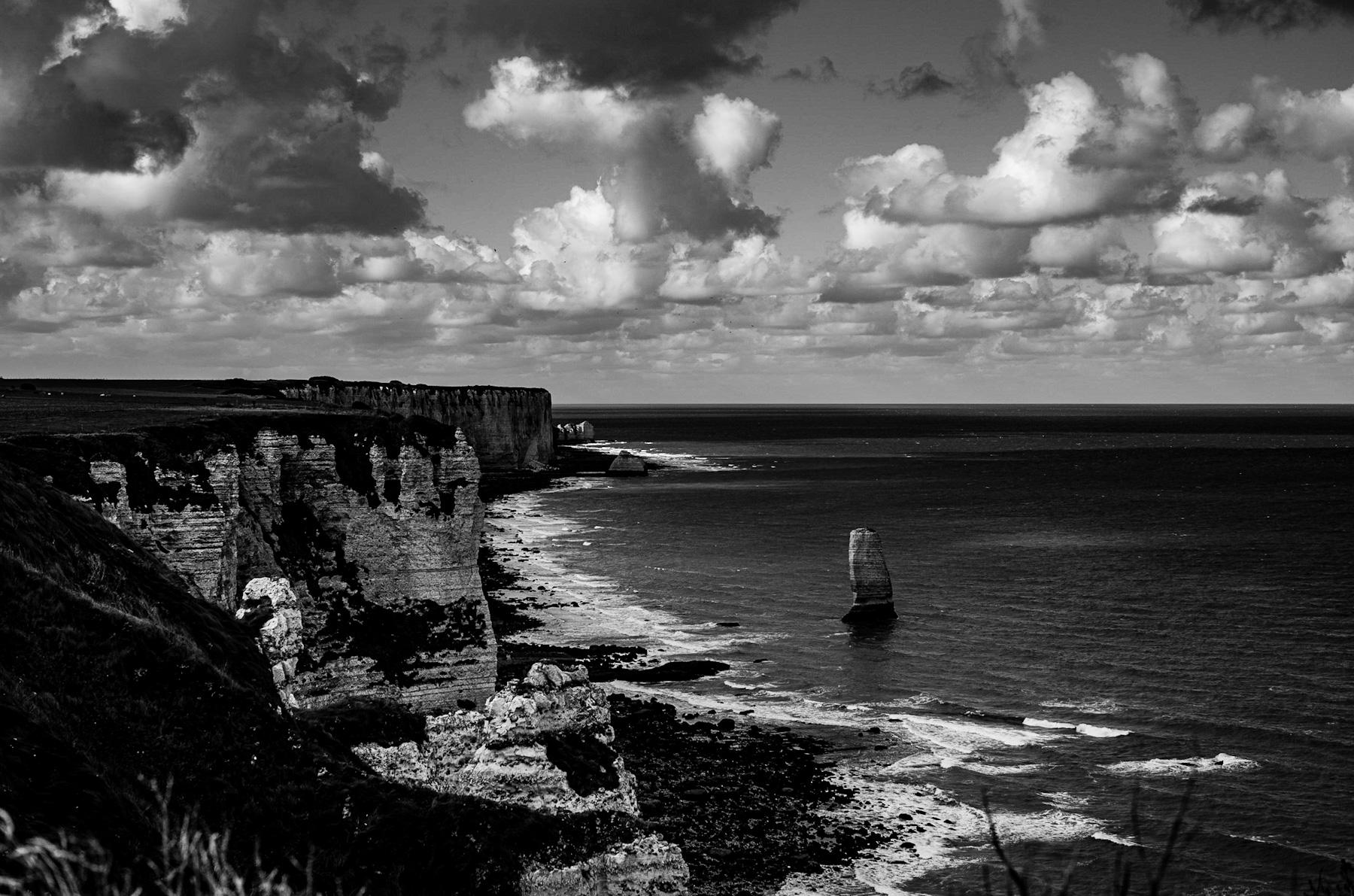
The photograph captures a dramatic expanse of the **Normandy coast**, specifically showcasing the renowned **Étretat cliffs**. Rendered in monochrome, the image profoundly emphasizes the raw power and intricate textures of this natural wonder. A towering **sea stack**, often referred to as L’Aiguille (The Needle), stands sentinel against the vast ocean, a testament to relentless **coastal erosion**. The scene is one of profound natural beauty, where the land meets the sea in an epic, ongoing geological struggle, inviting contemplation on the forces that shape our world.
The choice of **black and white photography** profoundly enhances the visual narrative, accentuating the stark contrasts and deep shadows that define this rugged coastline. The formidable, stratified **chalk cliffs** dominate the left side of the frame, their ancient layers, etched with vertical fissures and horizontal bands, revealing the passage of geological time. Below, the intertidal zone is a chaotic yet beautiful mosaic of dark, wave-battered rocks and the frothing white surf, where the English Channel’s rhythmic embrace continuously reshapes the very edge of the continent. Overhead, a dynamic sky filled with voluminous, textured clouds mirrors the drama below, casting an ethereal light and adding immense depth and mood to the overall composition.
Geologically, the **Étretat cliffs** are a marvel of the Upper Cretaceous period, primarily composed of chalk. This soft, porous rock has been sculpted over millennia by the powerful forces of the English Channel. The iconic natural arches, such as the Porte d’Aval (not prominently in the immediate foreground but part of this famous stretch), and isolated **sea stacks** like L’Aiguille, are erosional remnants, telling a vivid story of continuous natural transformation. They serve as a prime illustration of the Earth’s dynamic processes, showcasing how landforms evolve under the relentless influence of water and wind.
Beyond their geological significance, these cliffs hold a cherished place in cultural history. The dramatic vistas of Étretat have long served as profound **artistic inspiration**, particularly for the **Impressionist painters**. Artists like **Claude Monet**, Gustave Courbet, and Eugène Boudin frequently visited and immortalized these landscapes on canvas, capturing the changing light and moods of the coast with their revolutionary techniques. Their works brought international recognition to Étretat’s unique beauty. Furthermore, the site gained enduring literary fame through Maurice Leblanc’s **Arsène Lupin** series, where „L’Aiguille Creuse“ (The Hollow Needle) plays a central, mysterious role, weaving tales of adventure and intrigue directly into the very fabric of the landscape.
The **Étretat cliffs** remain a powerful draw, captivating visitors and **landscape photographers** who seek to capture their raw essence. They offer a profound connection to both geological deep time and a rich tapestry of human history. This iconic stretch of the **Normandy coast** stands as a testament to nature’s relentless artistry and resilience, a place where the echoes of ancient seas, the vibrant strokes of artistic genius, and the captivating threads of literary intrigue converge. This monochrome image not only presents a stunning natural panorama but also serves as a poignant invitation to explore the enduring legacy of a landscape that has inspired and awed generations.
The choice of **black and white photography** profoundly enhances the visual narrative, accentuating the stark contrasts and deep shadows that define this rugged coastline. The formidable, stratified **chalk cliffs** dominate the left side of the frame, their ancient layers, etched with vertical fissures and horizontal bands, revealing the passage of geological time. Below, the intertidal zone is a chaotic yet beautiful mosaic of dark, wave-battered rocks and the frothing white surf, where the English Channel’s rhythmic embrace continuously reshapes the very edge of the continent. Overhead, a dynamic sky filled with voluminous, textured clouds mirrors the drama below, casting an ethereal light and adding immense depth and mood to the overall composition.
Geologically, the **Étretat cliffs** are a marvel of the Upper Cretaceous period, primarily composed of chalk. This soft, porous rock has been sculpted over millennia by the powerful forces of the English Channel. The iconic natural arches, such as the Porte d’Aval (not prominently in the immediate foreground but part of this famous stretch), and isolated **sea stacks** like L’Aiguille, are erosional remnants, telling a vivid story of continuous natural transformation. They serve as a prime illustration of the Earth’s dynamic processes, showcasing how landforms evolve under the relentless influence of water and wind.
Beyond their geological significance, these cliffs hold a cherished place in cultural history. The dramatic vistas of Étretat have long served as profound **artistic inspiration**, particularly for the **Impressionist painters**. Artists like **Claude Monet**, Gustave Courbet, and Eugène Boudin frequently visited and immortalized these landscapes on canvas, capturing the changing light and moods of the coast with their revolutionary techniques. Their works brought international recognition to Étretat’s unique beauty. Furthermore, the site gained enduring literary fame through Maurice Leblanc’s **Arsène Lupin** series, where „L’Aiguille Creuse“ (The Hollow Needle) plays a central, mysterious role, weaving tales of adventure and intrigue directly into the very fabric of the landscape.
The **Étretat cliffs** remain a powerful draw, captivating visitors and **landscape photographers** who seek to capture their raw essence. They offer a profound connection to both geological deep time and a rich tapestry of human history. This iconic stretch of the **Normandy coast** stands as a testament to nature’s relentless artistry and resilience, a place where the echoes of ancient seas, the vibrant strokes of artistic genius, and the captivating threads of literary intrigue converge. This monochrome image not only presents a stunning natural panorama but also serves as a poignant invitation to explore the enduring legacy of a landscape that has inspired and awed generations.
Schreibe einen Kommentar