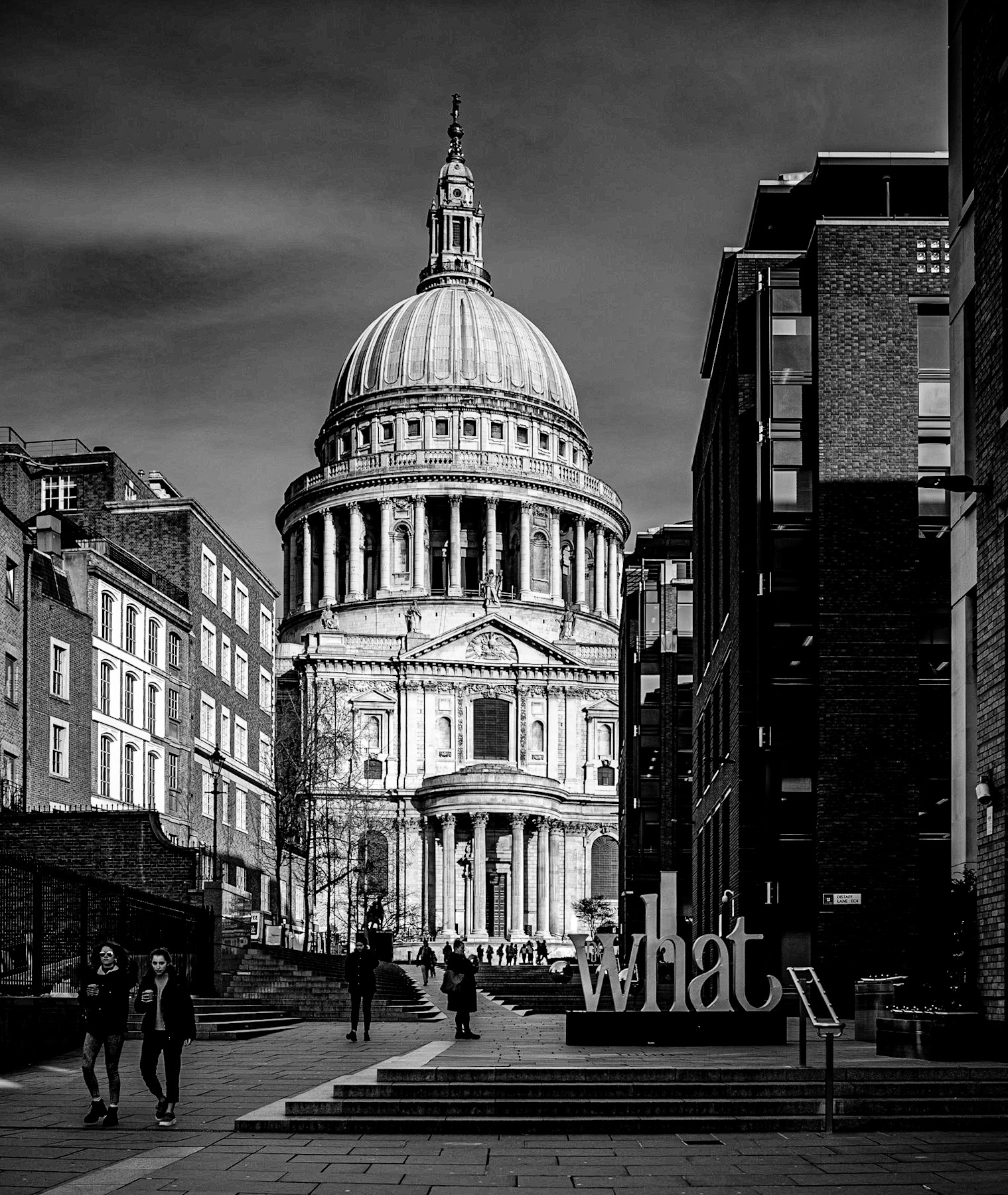
The captured image presents a powerful visual narrative of London, dominated by the majestic presence of St. Paul’s Cathedral. Rendered in a stark black and white palette, the photograph accentuates the architectural grandeur and intricate details of the iconic landmark, while simultaneously highlighting its integration within a dynamic urban landscape. The cathedral’s classical facade and imposing dome rise centrally, framed by a blend of historical and contemporary structures, creating a compelling dialogue between past and present.
The Enduring Legacy of St. Paul’s
At the heart of the composition stands St. Paul’s Cathedral, a masterpiece of English Baroque architecture designed by Sir Christopher Wren. Its history is deeply interwoven with London’s narrative of destruction and rebirth. The current cathedral, completed in 1710, replaced its predecessor, „Old St. Paul’s,“ which was tragically consumed by the Great Fire of London in 1666. Wren’s design, characterized by its iconic dome – one of the largest in the world – represented a beacon of hope and resilience for a city devastated by catastrophe. Over centuries, St. Paul’s has served as the site for significant national events, including royal weddings, state funerals, and jubilees, cementing its status as a pivotal symbol of British identity and endurance.
Architectural Dialogue and Urban Dynamics
The photograph skillfully juxtaposes Wren’s classical edifice with its surroundings. To the left, older, more traditional brick buildings with numerous windows reflect London’s enduring architectural heritage. In contrast, the right side features sleek, modern buildings with darker facades and expansive glass panels, emblematic of contemporary urban development. This framing underscores the continuous evolution of London, where centuries of architectural styles coexist and interact. The interplay of light and shadow, enhanced by the black and white processing, emphasizes the textures and forms of these diverse structures, from the cathedral’s ornate stone carvings to the clean lines of modern brickwork and glass.
Foreground Elements and Contemporary Reflection
In the foreground, the scene unfolds with everyday urban life. Pedestrians traverse the paved area, adding a sense of scale and human activity to the monumental backdrop. Steps lead up towards the cathedral, inviting contemplation and ascent. A notable contemporary sculpture spelling out „what“ stands prominently, serving as a thought-provoking element. This modern art installation, placed before a structure steeped in centuries of history and meaning, prompts reflection on questions of purpose, identity, and the ongoing dialogue between tradition and innovation in a constantly changing city. The choice of black and white photography further unifies these disparate elements, allowing the viewer to focus on form, light, and the profound contrasts and harmonies within the urban fabric.
Conclusion: A Visual Testament to Time
Ultimately, this photograph is more than a mere depiction of a landmark; it is a visual testament to London’s layered history and vibrant present. St. Paul’s Cathedral, with its profound historical resonance and architectural magnificence, remains a steadfast anchor in a city that continually reinvents itself. The image captures this enduring spirit, presenting a scene where the past is not merely preserved but actively participates in the unfolding narrative of modern urban life.
The Enduring Legacy of St. Paul’s
At the heart of the composition stands St. Paul’s Cathedral, a masterpiece of English Baroque architecture designed by Sir Christopher Wren. Its history is deeply interwoven with London’s narrative of destruction and rebirth. The current cathedral, completed in 1710, replaced its predecessor, „Old St. Paul’s,“ which was tragically consumed by the Great Fire of London in 1666. Wren’s design, characterized by its iconic dome – one of the largest in the world – represented a beacon of hope and resilience for a city devastated by catastrophe. Over centuries, St. Paul’s has served as the site for significant national events, including royal weddings, state funerals, and jubilees, cementing its status as a pivotal symbol of British identity and endurance.
Architectural Dialogue and Urban Dynamics
The photograph skillfully juxtaposes Wren’s classical edifice with its surroundings. To the left, older, more traditional brick buildings with numerous windows reflect London’s enduring architectural heritage. In contrast, the right side features sleek, modern buildings with darker facades and expansive glass panels, emblematic of contemporary urban development. This framing underscores the continuous evolution of London, where centuries of architectural styles coexist and interact. The interplay of light and shadow, enhanced by the black and white processing, emphasizes the textures and forms of these diverse structures, from the cathedral’s ornate stone carvings to the clean lines of modern brickwork and glass.
Foreground Elements and Contemporary Reflection
In the foreground, the scene unfolds with everyday urban life. Pedestrians traverse the paved area, adding a sense of scale and human activity to the monumental backdrop. Steps lead up towards the cathedral, inviting contemplation and ascent. A notable contemporary sculpture spelling out „what“ stands prominently, serving as a thought-provoking element. This modern art installation, placed before a structure steeped in centuries of history and meaning, prompts reflection on questions of purpose, identity, and the ongoing dialogue between tradition and innovation in a constantly changing city. The choice of black and white photography further unifies these disparate elements, allowing the viewer to focus on form, light, and the profound contrasts and harmonies within the urban fabric.
Conclusion: A Visual Testament to Time
Ultimately, this photograph is more than a mere depiction of a landmark; it is a visual testament to London’s layered history and vibrant present. St. Paul’s Cathedral, with its profound historical resonance and architectural magnificence, remains a steadfast anchor in a city that continually reinvents itself. The image captures this enduring spirit, presenting a scene where the past is not merely preserved but actively participates in the unfolding narrative of modern urban life.
Schreibe einen Kommentar