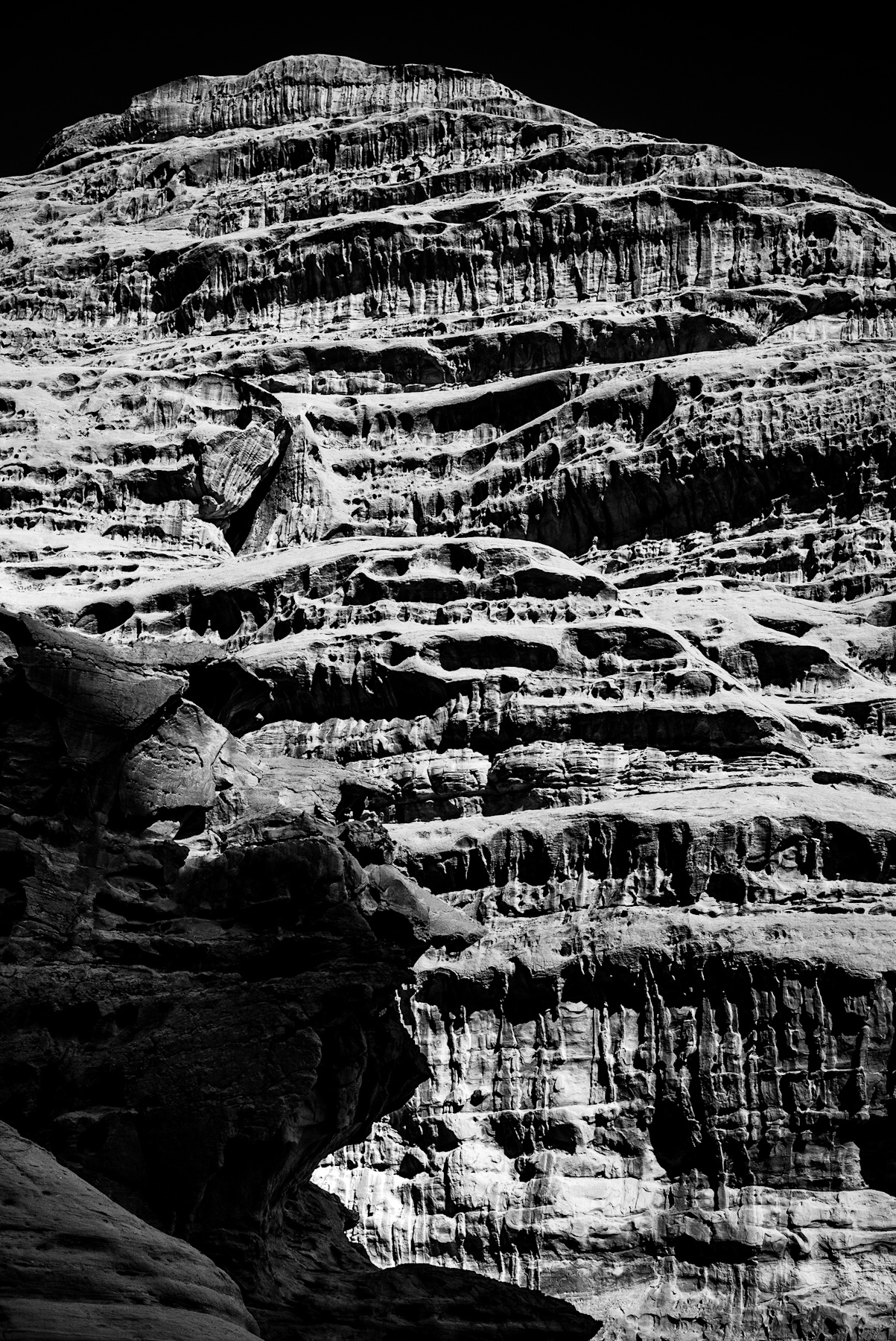
The stark monochrome captured in this image presents an intricate geological masterpiece, a colossal rock face sculpted by millennia of natural forces. Layers upon layers of sedimentary rock, predominantly sandstone, form horizontal strata, each band telling a story of deposition and compression over vast geological timescales. The dramatic interplay of light and shadow accentuates the deep textures, revealing a landscape that is both awe-inspiring in its scale and mesmerizing in its detail.
**Nature’s Masterpiece: A Tapestry of Erosion and Time**
Visually, the photograph highlights the profound impact of erosion. Wind and water have carved countless vertical striations, resembling ancient drapery or the flow of petrified waterfalls down the cliff face. Interspersed within these patterns are numerous small, irregular cavities and larger, cavernous openings. These formations suggest a highly porous and malleable stone, where differential erosion has created a honeycomb effect in some areas, contrasting with more robust, overhanging ledges. The black and white rendition strips away color, emphasizing form, texture, and the raw power of nature’s artistry, transforming the scene into an almost abstract composition of light and dark.
**From Geological Foundations to Ancient Adaptations**
Such magnificent sandstone formations are characteristic of ancient desert environments, particularly those found in regions like the Middle East. Geologically, these cliffs are often composed of various sandstone types, laid down in ancient seas or vast desert plains millions of years ago. The erosion processes observed—aeolian (wind) and fluvial (water)—are typical of arid and semi-arid climates, slowly but relentlessly shaping the landscape into dramatic canyons, mesas, and natural rock shelters. Historically, these natural formations were not merely geological curiosities but vital resources for human civilization. The very cavities and sheltered ledges visible in the photograph would have provided essential refuge from the harsh desert elements. Early nomadic tribes and settled communities alike sought out such natural protection, adapting these spaces for shelter, storage, and even sacred purposes.
**The Enduring Legacy of Rock-Cut Architecture**
The visual evidence in the image strongly resonates with sites like Petra in modern-day Jordan, a UNESCO World Heritage site and a testament to the ingenuity of the ancient Nabataeans. This Semitic people, flourishing from roughly the 4th century BCE, carved an entire city directly into the rose-red sandstone cliffs. They transformed natural caves into elaborate tombs, temples, and dwellings, integrating their architectural prowess with the existing geology. The intricate layering and potential for rock-cut features seen here are hallmarks of such Nabataean engineering. While the specific structures visible in the photograph may be entirely natural, the resemblance to the landscape surrounding Petra is striking. The Nabataeans mastered water collection and management in this arid environment, creating a thriving trade hub by controlling vital routes. Their civilization’s enduring legacy is etched into these very rocks, demonstrating a profound understanding of their environment and an extraordinary ability to adapt and thrive within it.
**Preserving Ancient Narratives for Future Generations**
This image serves as a powerful reminder of the deep connection between geological history and human cultural heritage. The ancient rock formations are not just silent witnesses to time; they are active participants in the narrative of human survival, ingenuity, and spiritual expression. Exploring such landscapes allows us to connect with the distant past, to appreciate the forces that shape our planet, and to marvel at the civilizations that found a way to live in harmony with these monumental natural wonders. Understanding these historical contexts enriches our appreciation for the enduring stories held within the stone, urging us to protect these irreplaceable testaments to both natural and human history.
**Nature’s Masterpiece: A Tapestry of Erosion and Time**
Visually, the photograph highlights the profound impact of erosion. Wind and water have carved countless vertical striations, resembling ancient drapery or the flow of petrified waterfalls down the cliff face. Interspersed within these patterns are numerous small, irregular cavities and larger, cavernous openings. These formations suggest a highly porous and malleable stone, where differential erosion has created a honeycomb effect in some areas, contrasting with more robust, overhanging ledges. The black and white rendition strips away color, emphasizing form, texture, and the raw power of nature’s artistry, transforming the scene into an almost abstract composition of light and dark.
**From Geological Foundations to Ancient Adaptations**
Such magnificent sandstone formations are characteristic of ancient desert environments, particularly those found in regions like the Middle East. Geologically, these cliffs are often composed of various sandstone types, laid down in ancient seas or vast desert plains millions of years ago. The erosion processes observed—aeolian (wind) and fluvial (water)—are typical of arid and semi-arid climates, slowly but relentlessly shaping the landscape into dramatic canyons, mesas, and natural rock shelters. Historically, these natural formations were not merely geological curiosities but vital resources for human civilization. The very cavities and sheltered ledges visible in the photograph would have provided essential refuge from the harsh desert elements. Early nomadic tribes and settled communities alike sought out such natural protection, adapting these spaces for shelter, storage, and even sacred purposes.
**The Enduring Legacy of Rock-Cut Architecture**
The visual evidence in the image strongly resonates with sites like Petra in modern-day Jordan, a UNESCO World Heritage site and a testament to the ingenuity of the ancient Nabataeans. This Semitic people, flourishing from roughly the 4th century BCE, carved an entire city directly into the rose-red sandstone cliffs. They transformed natural caves into elaborate tombs, temples, and dwellings, integrating their architectural prowess with the existing geology. The intricate layering and potential for rock-cut features seen here are hallmarks of such Nabataean engineering. While the specific structures visible in the photograph may be entirely natural, the resemblance to the landscape surrounding Petra is striking. The Nabataeans mastered water collection and management in this arid environment, creating a thriving trade hub by controlling vital routes. Their civilization’s enduring legacy is etched into these very rocks, demonstrating a profound understanding of their environment and an extraordinary ability to adapt and thrive within it.
**Preserving Ancient Narratives for Future Generations**
This image serves as a powerful reminder of the deep connection between geological history and human cultural heritage. The ancient rock formations are not just silent witnesses to time; they are active participants in the narrative of human survival, ingenuity, and spiritual expression. Exploring such landscapes allows us to connect with the distant past, to appreciate the forces that shape our planet, and to marvel at the civilizations that found a way to live in harmony with these monumental natural wonders. Understanding these historical contexts enriches our appreciation for the enduring stories held within the stone, urging us to protect these irreplaceable testaments to both natural and human history.
Schreibe einen Kommentar