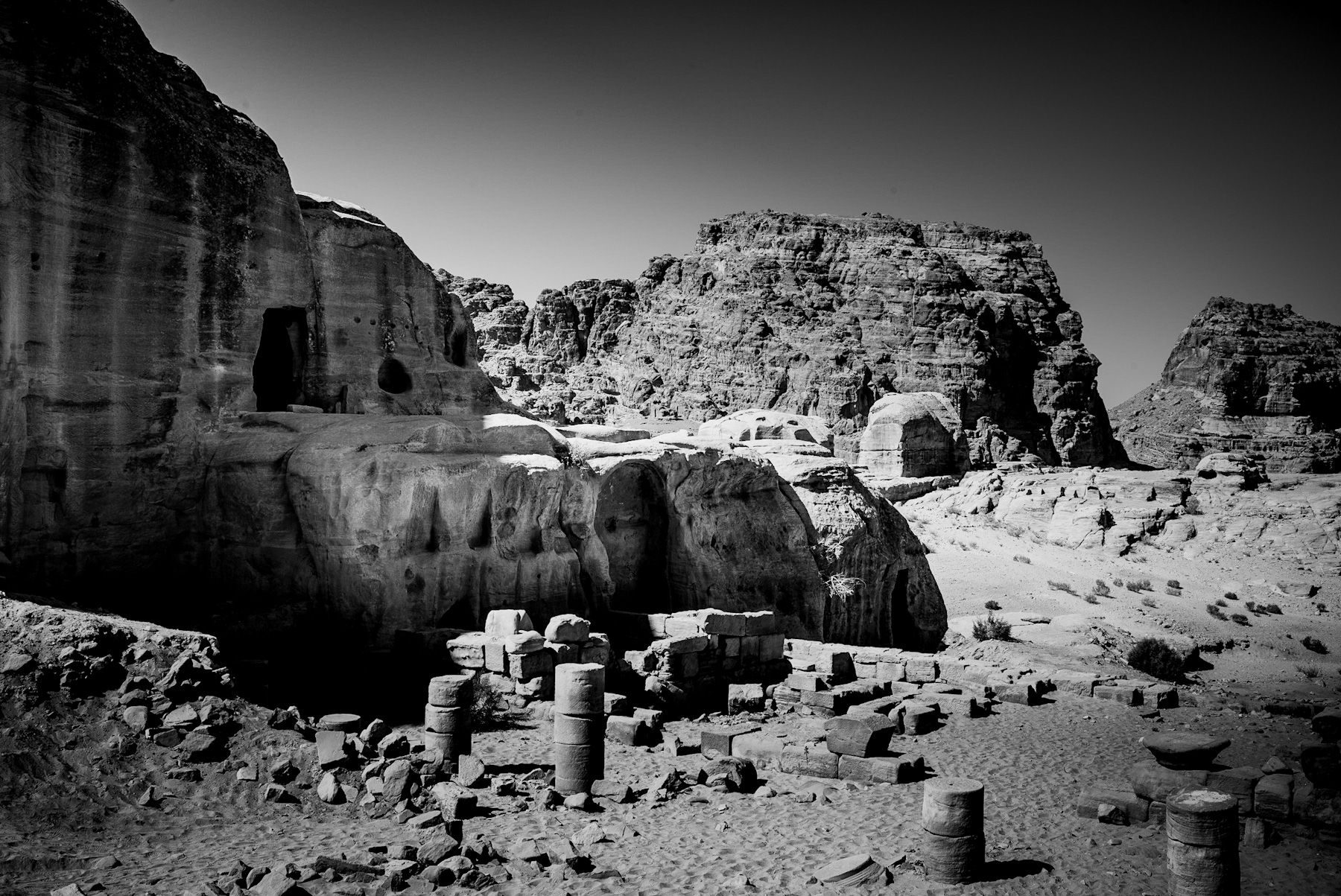
Imagine stepping into a landscape where time seems to stand still, captured in a profound black and white photograph that unveils monumental architectural marvels amidst an arid expanse. This scene is dominated by colossal sandstone cliffs, meticulously shaped by both ancient human hands and the relentless forces of nature itself. In the foreground, scattered remnants of a bygone era dot the sandy terrain – cylindrical column drums and rectangular stone blocks, silent witnesses to a once-thriving metropolis. These fragmented pieces hint at an ancient thoroughfare or the foundational stones of a significant structure, now largely reclaimed by the embracing desert.
To the left, a formidable rock face presents a striking facade, featuring a deep, dark entrance that beckons into the very heart of the mountain. This profound aperture, likely a tomb or a dwelling, is perfectly framed by the natural contours of the rock, showcasing a masterful integration of architecture with its natural surroundings. Smaller, less defined openings are also visible, hinting at a complex network of hidden chambers and passages within. The dramatic interplay of harsh sunlight and deep shadow, intensified by the monochrome palette, accentuates the rugged textures of the weathered sandstone, highlighting both the natural erosion and the precision of ancient craftsmanship.
The midground and background unfold into a vast expanse of rugged, multi-layered rock formations, characteristic of a harsh desert environment. These natural ramparts frame the entire scene, emphasizing the remote and formidable nature of this historical site. The clear, bright sky above contrasts sharply with the shadowed crevices and sun-baked surfaces below, creating an atmosphere of both immense scale and profound solitude. The complete absence of any modern elements reinforces the powerful impression of stepping back into an ancient past, where human ingenuity met the raw power of nature head-on.
This iconic landscape is unmistakably Petra, Jordan, the legendary capital of the Nabataean Kingdom. Flourishing from the 4th century BCE to the 1st century CE, the Nabataeans were an industrious Arab people who masterfully transformed this remote desert valley into a bustling trade hub. Strategically positioned along critical incense and spice routes, Petra evolved into a wealthy and sophisticated city, renowned for its advanced hydraulic engineering and, most notably, its breathtaking rock-cut architecture. The structures seen in the photograph, including what appear to be parts of the Royal Tombs or other significant monumental complexes, perfectly exemplify their unique artistic and engineering prowess, seamlessly blending Hellenistic influences with indigenous styles.
Following its annexation by the Roman Empire in 106 CE, Petra continued to thrive for a period, with Roman architectural elements gracefully integrated into the existing Nabataean fabric. The columns and blocks in the foreground might well represent additions or modifications from this era, or perhaps remnants of a grand colonnaded street that once connected the city’s various sectors. However, shifts in crucial trade routes and a series of devastating earthquakes eventually led to the city’s gradual decline and abandonment. Despite centuries of being „lost“ to the Western world and its eventual rediscovery in the early 19th century, Petra’s unparalleled grandeur endures. Today, as a UNESCO World Heritage site, it stands as a powerful testament to the ingenuity, resilience, and artistic vision of the Nabataean people, inviting us all to contemplate the passage of time and the enduring echoes of ancient civilizations etched forever into stone.
To the left, a formidable rock face presents a striking facade, featuring a deep, dark entrance that beckons into the very heart of the mountain. This profound aperture, likely a tomb or a dwelling, is perfectly framed by the natural contours of the rock, showcasing a masterful integration of architecture with its natural surroundings. Smaller, less defined openings are also visible, hinting at a complex network of hidden chambers and passages within. The dramatic interplay of harsh sunlight and deep shadow, intensified by the monochrome palette, accentuates the rugged textures of the weathered sandstone, highlighting both the natural erosion and the precision of ancient craftsmanship.
The midground and background unfold into a vast expanse of rugged, multi-layered rock formations, characteristic of a harsh desert environment. These natural ramparts frame the entire scene, emphasizing the remote and formidable nature of this historical site. The clear, bright sky above contrasts sharply with the shadowed crevices and sun-baked surfaces below, creating an atmosphere of both immense scale and profound solitude. The complete absence of any modern elements reinforces the powerful impression of stepping back into an ancient past, where human ingenuity met the raw power of nature head-on.
This iconic landscape is unmistakably Petra, Jordan, the legendary capital of the Nabataean Kingdom. Flourishing from the 4th century BCE to the 1st century CE, the Nabataeans were an industrious Arab people who masterfully transformed this remote desert valley into a bustling trade hub. Strategically positioned along critical incense and spice routes, Petra evolved into a wealthy and sophisticated city, renowned for its advanced hydraulic engineering and, most notably, its breathtaking rock-cut architecture. The structures seen in the photograph, including what appear to be parts of the Royal Tombs or other significant monumental complexes, perfectly exemplify their unique artistic and engineering prowess, seamlessly blending Hellenistic influences with indigenous styles.
Following its annexation by the Roman Empire in 106 CE, Petra continued to thrive for a period, with Roman architectural elements gracefully integrated into the existing Nabataean fabric. The columns and blocks in the foreground might well represent additions or modifications from this era, or perhaps remnants of a grand colonnaded street that once connected the city’s various sectors. However, shifts in crucial trade routes and a series of devastating earthquakes eventually led to the city’s gradual decline and abandonment. Despite centuries of being „lost“ to the Western world and its eventual rediscovery in the early 19th century, Petra’s unparalleled grandeur endures. Today, as a UNESCO World Heritage site, it stands as a powerful testament to the ingenuity, resilience, and artistic vision of the Nabataean people, inviting us all to contemplate the passage of time and the enduring echoes of ancient civilizations etched forever into stone.
Schreibe einen Kommentar