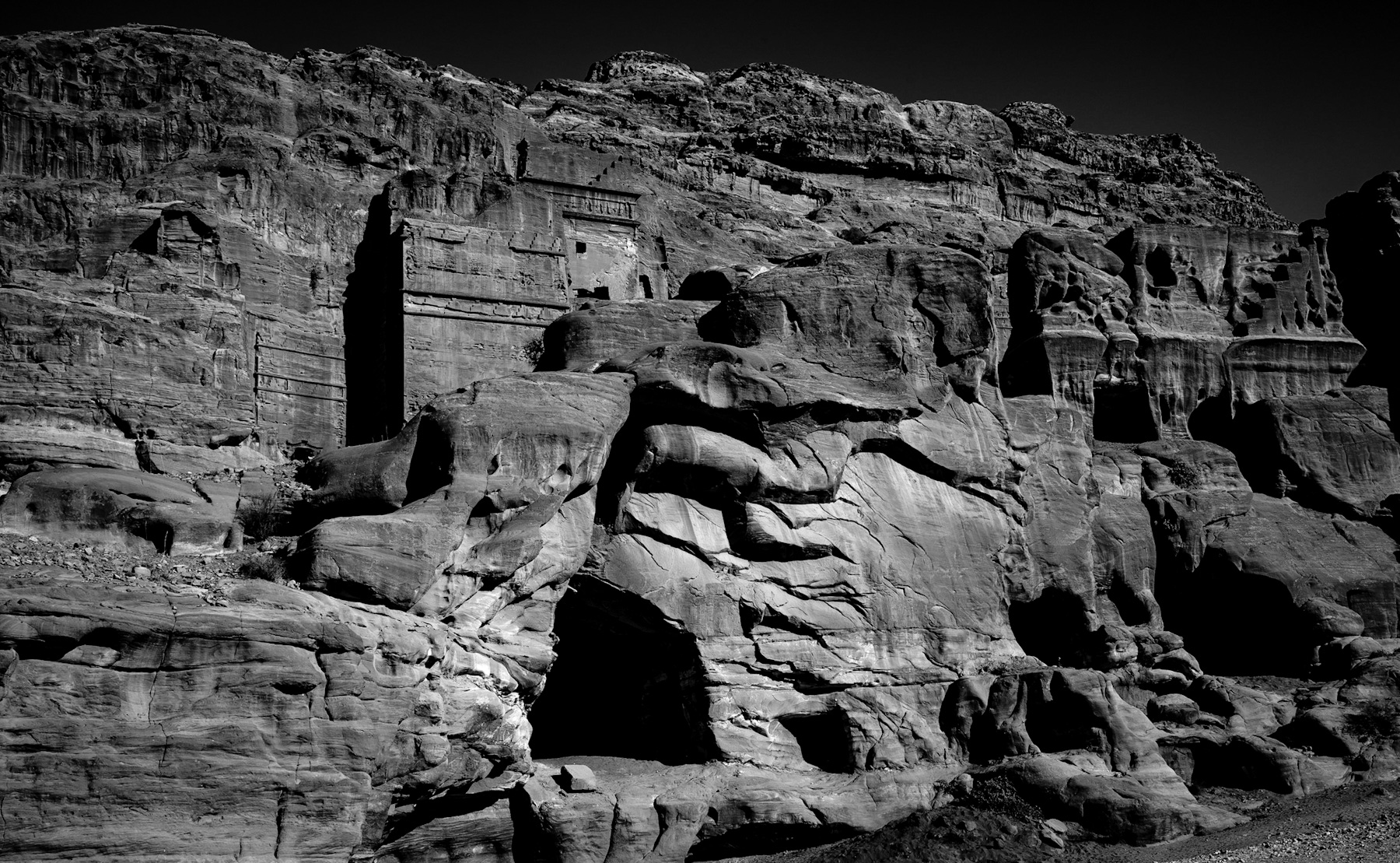
The stark black and white photograph captures a monumental rock face, revealing layers of geological history intertwined with the indelible marks of ancient human ingenuity. Sunlight and deep shadows play across the rugged sandstone, emphasizing the dramatic textures and the sheer scale of the landscape. Dominating the upper left quadrant, an intricately carved structure emerges from the cliff, its weathered facade a testament to a sophisticated bygone era. The precise, geometric lines of the carving stand in striking contrast to the organic, flowing contours of the surrounding natural rock. Below this grand edifice, massive, weathered rock formations undulate, punctuated by dark, cavernous openings that invite speculation about their purpose and the lives once lived within their depths. The overall impression is one of immense age, raw power, and profound human artistry.
The Legacy of the Nabataeans
This awe-inspiring scene is unmistakably part of Petra, the legendary rock-cut city in modern-day Jordan. Carved directly into the vibrant sandstone cliffs, Petra was the capital of the Nabataean kingdom, an ancient Arab people who flourished as master traders from the 4th century BCE until their annexation by the Roman Empire in 106 CE. Their strategic location along key incense and spice routes allowed them to amass vast wealth, which they invested in their remarkable capital. The Nabataeans were not merely merchants; they were brilliant engineers, particularly adept at water management in an arid desert environment, and unparalleled sculptors of stone. Their enduring legacy is etched into the very landscape, a testament to their advanced civilization.
Architectural Wonders of the Desert
The prominent carved structure in the image exemplifies Nabataean funerary architecture, often mistaken for temples due to their grand scale and elaborate detailing. These monumental tombs, such as the Royal Tombs visible in various parts of Petra, were designed to impress and honor the deceased, showcasing Hellenistic influences blended seamlessly with indigenous Nabataean artistic traditions. Notice the precise lines and architectural elements meticulously cut into the living rock, contrasting sharply with the organic, eroded forms of the surrounding cliffs. Each facade tells a story of craftsmanship, religious beliefs, and a profound connection to the natural world. The darker openings at the base of the cliff could be smaller tombs, dwellings, or storage areas, forming part of the extensive network that once constituted this thriving desert metropolis.
A UNESCO World Heritage Site
Today, Petra stands as a UNESCO World Heritage Site and one of the New7Wonders of the World, attracting visitors globally eager to witness its archaeological grandeur. The black and white rendition of this scene further accentuates the timeless quality of Petra, stripping away color to highlight form, shadow, and the enduring power of its architecture. It underscores the immense effort and vision required to transform a natural canyon into a bustling city, a feat of engineering and artistry that continues to captivate archaeologists and historians. The site offers invaluable insights into ancient civilizations, their trade networks, religious practices, and their sophisticated understanding of their environment.
Enduring Echoes of the Past
The image serves as a powerful reminder of human civilization’s ability to leave an indelible mark on the landscape. The interplay of light and shadow across the ancient carvings and natural formations creates a sense of depth and mystery, inviting contemplation on the passage of time and the resilience of human endeavor. Petra remains a symbol of ingenuity and cultural richness, a silent testament to a civilization that mastered its environment and left behind an archaeological wonder for generations to explore and admire. It stands as a profound connection between the natural world and human artistic expression, a truly unique historical site.
The Legacy of the Nabataeans
This awe-inspiring scene is unmistakably part of Petra, the legendary rock-cut city in modern-day Jordan. Carved directly into the vibrant sandstone cliffs, Petra was the capital of the Nabataean kingdom, an ancient Arab people who flourished as master traders from the 4th century BCE until their annexation by the Roman Empire in 106 CE. Their strategic location along key incense and spice routes allowed them to amass vast wealth, which they invested in their remarkable capital. The Nabataeans were not merely merchants; they were brilliant engineers, particularly adept at water management in an arid desert environment, and unparalleled sculptors of stone. Their enduring legacy is etched into the very landscape, a testament to their advanced civilization.
Architectural Wonders of the Desert
The prominent carved structure in the image exemplifies Nabataean funerary architecture, often mistaken for temples due to their grand scale and elaborate detailing. These monumental tombs, such as the Royal Tombs visible in various parts of Petra, were designed to impress and honor the deceased, showcasing Hellenistic influences blended seamlessly with indigenous Nabataean artistic traditions. Notice the precise lines and architectural elements meticulously cut into the living rock, contrasting sharply with the organic, eroded forms of the surrounding cliffs. Each facade tells a story of craftsmanship, religious beliefs, and a profound connection to the natural world. The darker openings at the base of the cliff could be smaller tombs, dwellings, or storage areas, forming part of the extensive network that once constituted this thriving desert metropolis.
A UNESCO World Heritage Site
Today, Petra stands as a UNESCO World Heritage Site and one of the New7Wonders of the World, attracting visitors globally eager to witness its archaeological grandeur. The black and white rendition of this scene further accentuates the timeless quality of Petra, stripping away color to highlight form, shadow, and the enduring power of its architecture. It underscores the immense effort and vision required to transform a natural canyon into a bustling city, a feat of engineering and artistry that continues to captivate archaeologists and historians. The site offers invaluable insights into ancient civilizations, their trade networks, religious practices, and their sophisticated understanding of their environment.
Enduring Echoes of the Past
The image serves as a powerful reminder of human civilization’s ability to leave an indelible mark on the landscape. The interplay of light and shadow across the ancient carvings and natural formations creates a sense of depth and mystery, inviting contemplation on the passage of time and the resilience of human endeavor. Petra remains a symbol of ingenuity and cultural richness, a silent testament to a civilization that mastered its environment and left behind an archaeological wonder for generations to explore and admire. It stands as a profound connection between the natural world and human artistic expression, a truly unique historical site.
Schreibe einen Kommentar