A Monochromatic Scene of Enduring Beauty
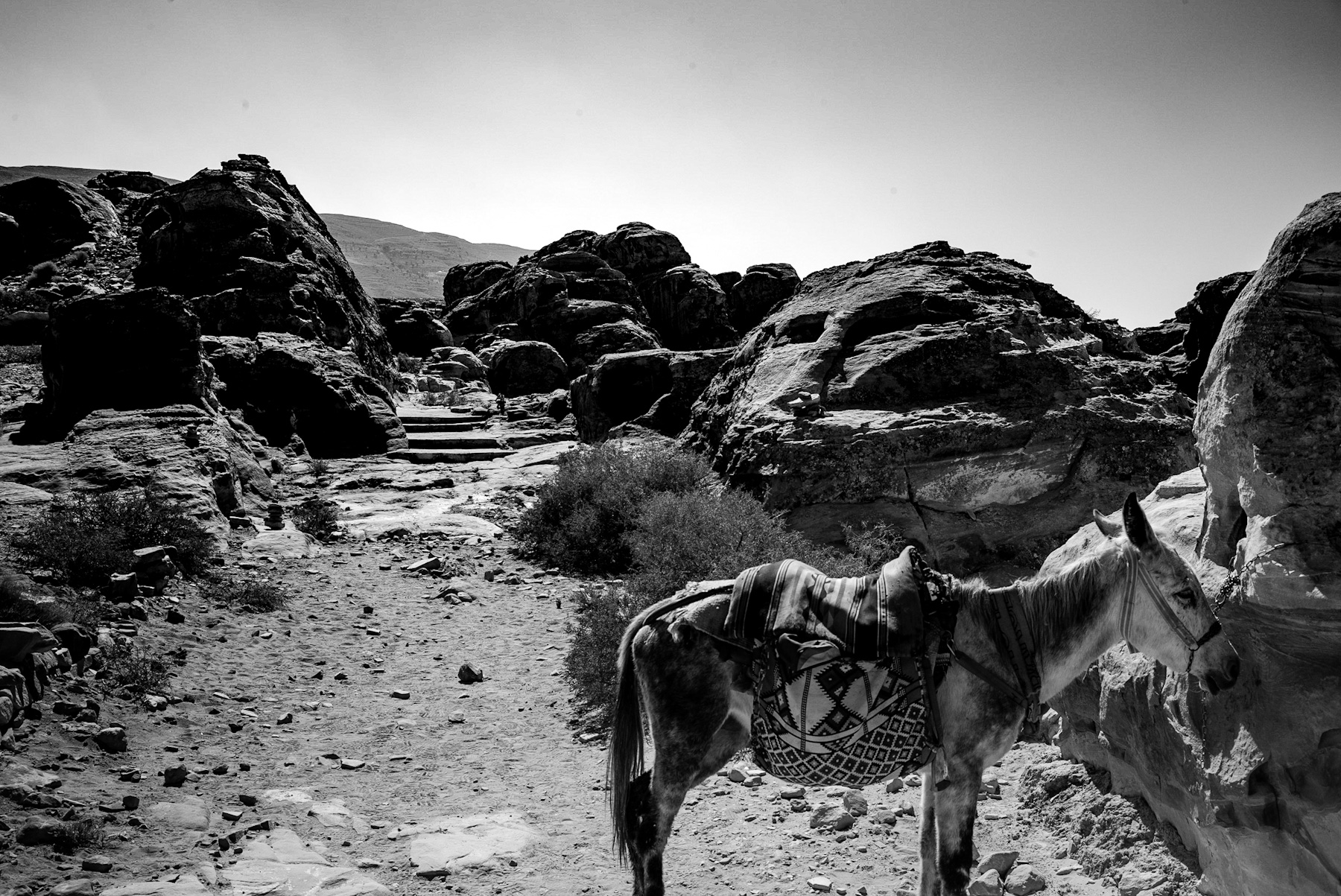
The black and white photograph immediately draws the eye to a solitary donkey, patiently resting by a weathered rock face. Its head is gently bowed, perhaps seeking shade or a moment of respite from the desert sun. The animal is equipped with a richly decorated saddle, featuring bold geometric patterns that speak of local artistry and cultural tradition. This intricate textile work is a striking detail against the raw, natural backdrop. The surrounding landscape is defined by colossal, rugged rock formations, their surfaces etched with the passage of time. In the distance, a path, partially carved into ancient steps, winds its way upwards, hinting at a journey deeper into this remarkable terrain. The monochromatic palette accentuates the dramatic play of light and shadow, highlighting the stark textures of stone and the sparse, resilient desert flora. This visual choice imbues the scene with a profound sense of timelessness, inviting contemplation of the history embedded within every stone.
Echoes of Nabataean Grandeur: The Ancient City of Petra
This distinctive landscape is unmistakably that of Petra, Jordan, a UNESCO World Heritage site renowned globally as one of the new Seven Wonders of the World. Petra was the capital of the Nabataean kingdom, a prosperous Arab people who established a powerful trade empire from the 4th century BC to the 1st century AD. They meticulously carved their magnificent city directly into the vibrant sandstone cliffs, creating an unparalleled architectural marvel. The paths and steps visible in the image are remnants of the extensive network that once connected Petra’s awe-inspiring structures, from the iconic Treasury (Al-Khazneh) to the towering Monastery (Ad Deir) and countless elaborate tombs. The Nabataeans were not only master builders but also ingenious engineers, developing sophisticated water collection and distribution systems that allowed their city to flourish in an arid environment.
The Indispensable Role of Working Animals
For millennia, across the ancient trade routes that converged at Petra, animals like donkeys, mules, and camels were the lifeblood of transportation and commerce. They tirelessly carried precious cargo—frankincense, myrrh, spices, silk, and other exotic goods—across vast and challenging deserts, making possible the immense wealth and cultural exchange that defined the Nabataean empire. These resilient creatures were not merely beasts of burden; they were partners in survival and prosperity, integral to the daily rhythm of life in Petra. Even today, within the sprawling archaeological park, donkeys continue to play a vital role. They assist local Bedouin communities, transport supplies, and offer an authentic, traditional mode of transport for visitors navigating the expansive site’s rugged trails and steep ascents. The donkey in the photograph, with its traditional gear, stands as a direct link to this unbroken chain of history.
A Symbol of Enduring Heritage
The image beautifully captures the essence of Petra: a place where ancient history is not merely preserved but actively lived. The donkey, a humble yet powerful symbol, embodies the continuity of traditional practices within a landscape steeped in monumental history. It represents the quiet resilience required to thrive in such an environment and the enduring connection between humanity, animals, and the land. The black and white aesthetic strips away modern distractions, focusing the viewer’s attention on the raw beauty and historical depth. This photograph invites us to ponder the countless journeys undertaken on these very paths, by traders, pilgrims, and now tourists, all under the watchful gaze of Petra’s majestic, rock-cut formations. It is a powerful reminder of how certain elements of life endure, carrying the echoes of ancient civilizations into our contemporary world.
The black and white photograph immediately draws the eye to a solitary donkey, patiently resting by a weathered rock face. Its head is gently bowed, perhaps seeking shade or a moment of respite from the desert sun. The animal is equipped with a richly decorated saddle, featuring bold geometric patterns that speak of local artistry and cultural tradition. This intricate textile work is a striking detail against the raw, natural backdrop. The surrounding landscape is defined by colossal, rugged rock formations, their surfaces etched with the passage of time. In the distance, a path, partially carved into ancient steps, winds its way upwards, hinting at a journey deeper into this remarkable terrain. The monochromatic palette accentuates the dramatic play of light and shadow, highlighting the stark textures of stone and the sparse, resilient desert flora. This visual choice imbues the scene with a profound sense of timelessness, inviting contemplation of the history embedded within every stone.
Echoes of Nabataean Grandeur: The Ancient City of Petra
This distinctive landscape is unmistakably that of Petra, Jordan, a UNESCO World Heritage site renowned globally as one of the new Seven Wonders of the World. Petra was the capital of the Nabataean kingdom, a prosperous Arab people who established a powerful trade empire from the 4th century BC to the 1st century AD. They meticulously carved their magnificent city directly into the vibrant sandstone cliffs, creating an unparalleled architectural marvel. The paths and steps visible in the image are remnants of the extensive network that once connected Petra’s awe-inspiring structures, from the iconic Treasury (Al-Khazneh) to the towering Monastery (Ad Deir) and countless elaborate tombs. The Nabataeans were not only master builders but also ingenious engineers, developing sophisticated water collection and distribution systems that allowed their city to flourish in an arid environment.
The Indispensable Role of Working Animals
For millennia, across the ancient trade routes that converged at Petra, animals like donkeys, mules, and camels were the lifeblood of transportation and commerce. They tirelessly carried precious cargo—frankincense, myrrh, spices, silk, and other exotic goods—across vast and challenging deserts, making possible the immense wealth and cultural exchange that defined the Nabataean empire. These resilient creatures were not merely beasts of burden; they were partners in survival and prosperity, integral to the daily rhythm of life in Petra. Even today, within the sprawling archaeological park, donkeys continue to play a vital role. They assist local Bedouin communities, transport supplies, and offer an authentic, traditional mode of transport for visitors navigating the expansive site’s rugged trails and steep ascents. The donkey in the photograph, with its traditional gear, stands as a direct link to this unbroken chain of history.
A Symbol of Enduring Heritage
The image beautifully captures the essence of Petra: a place where ancient history is not merely preserved but actively lived. The donkey, a humble yet powerful symbol, embodies the continuity of traditional practices within a landscape steeped in monumental history. It represents the quiet resilience required to thrive in such an environment and the enduring connection between humanity, animals, and the land. The black and white aesthetic strips away modern distractions, focusing the viewer’s attention on the raw beauty and historical depth. This photograph invites us to ponder the countless journeys undertaken on these very paths, by traders, pilgrims, and now tourists, all under the watchful gaze of Petra’s majestic, rock-cut formations. It is a powerful reminder of how certain elements of life endure, carrying the echoes of ancient civilizations into our contemporary world.
Schreibe einen Kommentar