Autor: Ralf Kayser

  • Echoes in Stone: A Journey Through Petra’s Urn Tomb and Nabataean Legacy

    Echoes in Stone: A Journey Through Petra’s Urn Tomb and Nabataean Legacy

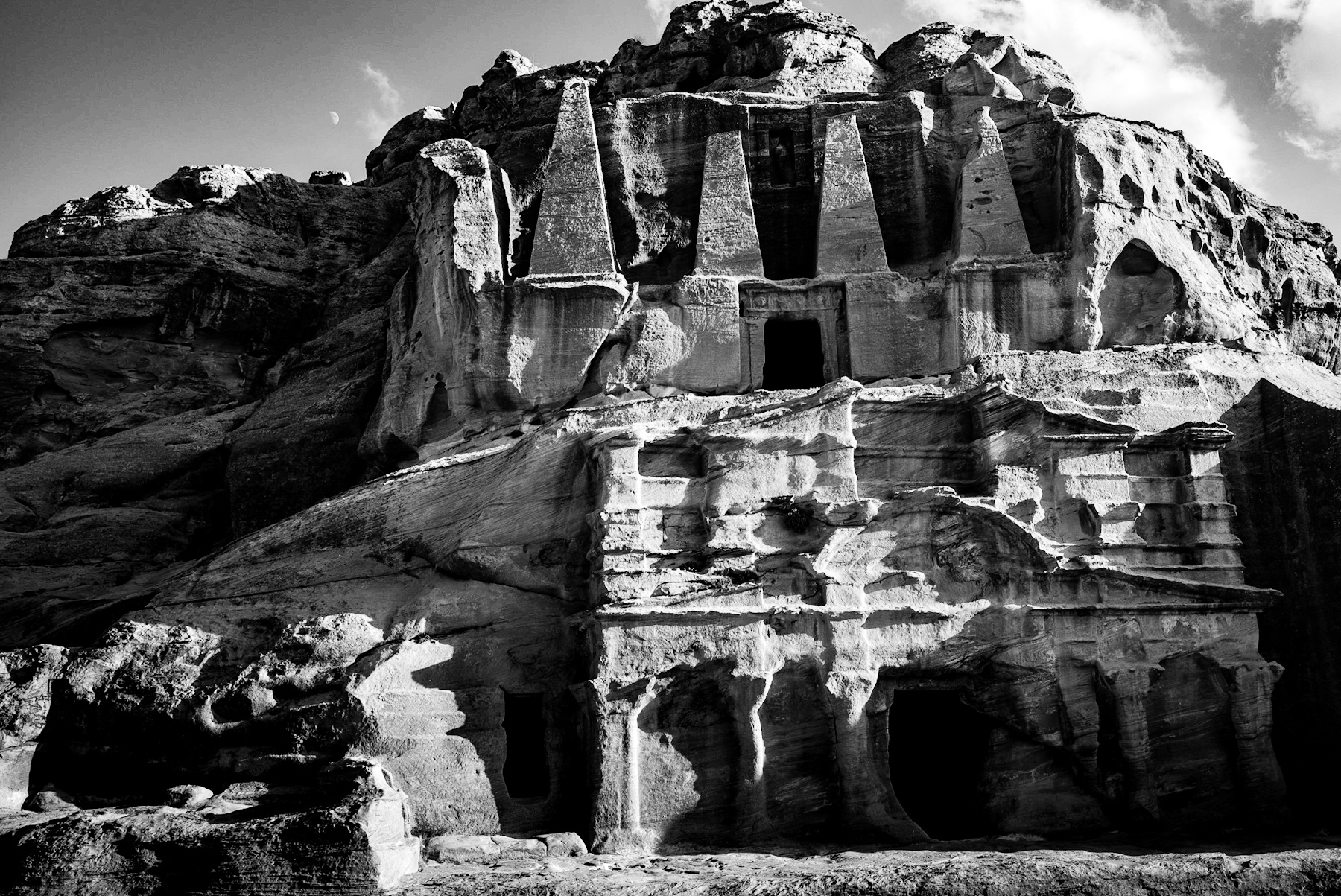
    The striking black and white photograph captures a monumental façade carved directly into the sandstone cliffs of Petra, Jordan. Bathed in a dramatic interplay of light and shadow, the image accentuates the intricate details and colossal scale of ancient rock-cut architecture. Above the rugged peaks, a subtle crescent moon hangs, adding a timeless, almost mystical quality to the scene. This structure, known as the Urn Tomb, stands as a profound testament to the ingenuity and cultural sophistication of the Nabataean civilization.
    Visual Grandeur and Architectural Detail
    The composition immediately draws the eye to the multi-tiered structure dominating the frame. At its apex, four prominent, almost pyramidal or obelisk-like forms (known as *nefesh*) rise, signifying funerary monuments or cultic symbols. Below these, a series of carved recesses and entrances are visible, some appearing as dark voids, inviting contemplation of the secrets within. The main entrance, centrally located on a lower tier, is a deep, shadowed opening. Further down, the rock face reveals multiple levels of carving, featuring architectural elements like pilasters, cornices, and smaller niches, many eroded by centuries of wind and sand. The rough texture of the natural rock contrasts sharply with the relatively smooth, though weathered, surfaces of the carved edifice, highlighting the immense human effort involved in shaping this landscape. The stark monochrome palette emphasizes the architectural forms, textures, and the dramatic depth created by the sun’s angle.
    The Nabataean Legacy: Masters of Rock and Trade
    This magnificent structure is a prime example of the unique rock-cut architecture for which Petra, the ancient capital of the Nabataeans, is globally renowned. The Nabataeans were an ancient Arab people who flourished from roughly the 4th century BCE until their annexation by the Roman Empire in 106 CE. Situated strategically along vital trade routes connecting Arabia, Mesopotamia, and the Mediterranean, Petra became a wealthy and powerful hub. Their mastery of hydraulic engineering, evident in the complex water systems that sustained their desert city, allowed them to thrive in an arid environment.
    The Urn Tomb itself is one of the grandest of Petra’s „Royal Tombs,“ a series of monumental burial sites located on the eastern cliff face of Jabal al-Khubtha. Scholars believe it was likely constructed in the mid-1st century CE, possibly serving as the tomb for a Nabataean king, such as Malichus II, or a prominent royal family. Its design reflects a sophisticated blend of Hellenistic and Roman architectural influences, seamlessly integrated with indigenous Nabataean styles, a characteristic feature of their capital city.
    A Site of Enduring Significance
    Beyond its original function as a tomb, the Urn Tomb underwent a significant transformation in 446 CE when it was converted into a Byzantine church. This adaptation involved the removal of internal burial chambers and the addition of an apse and altar, illustrating the continuous use and repurposing of these ancient structures across different eras and cultures. This historical layering adds another dimension to Petra’s rich narrative, showcasing its enduring importance as a spiritual and civic center.
    Today, Petra stands as a UNESCO World Heritage site and one of the New7Wonders of the World, attracting visitors from across the globe. The Urn Tomb, with its imposing presence and deeply etched history, remains a powerful symbol of Nabataean artistry and their lasting impact on the ancient world. Exploring such sites offers a tangible connection to civilizations past, inviting reflection on human ambition, architectural prowess, and the relentless march of time.
  • Echoes of Ancient Trails: Goats, Rock, and the Enduring Spirit of Desert Herding

    Echoes of Ancient Trails: Goats, Rock, and the Enduring Spirit of Desert Herding

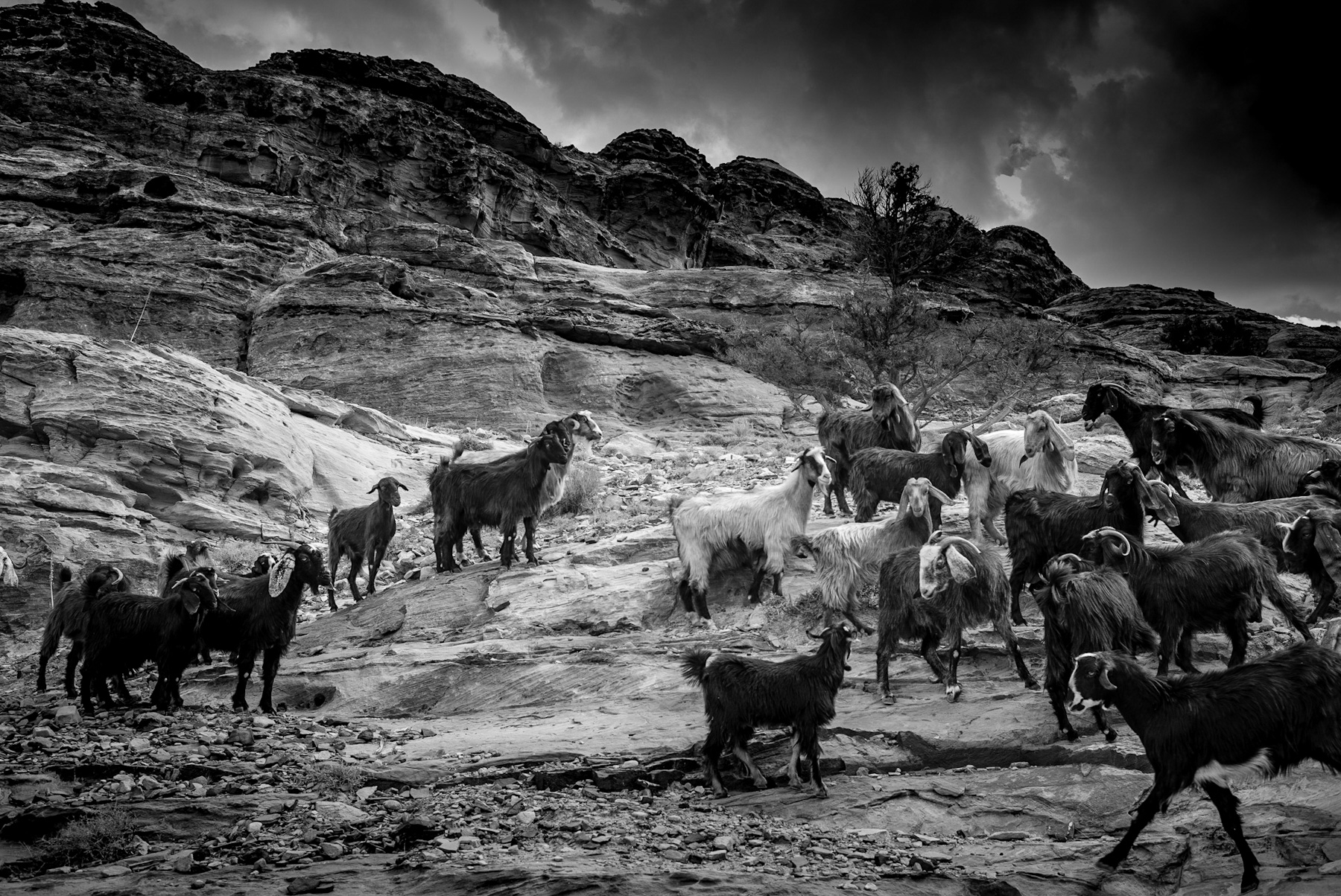
    A stark, monochrome tableau unfolds, presenting a rugged landscape dominated by formidable rock formations and a scattered herd of goats. The dramatic black and white tones emphasize the textures of the weathered stone and the varied coats of the animals, from shaggy dark to lighter shades, all navigating the uneven terrain under a brooding, cloudy sky. This visual narrative speaks to resilience and adaptation in an environment that appears both ancient and unforgiving.
    ### The Goats and Their Arid Habitat
    The goats, numbering over a dozen, are central to this scene. Their sturdy build and agile forms are perfectly suited to the rocky slopes, an environment where sparse vegetation offers sustenance. Their presence is not merely incidental; it is a testament to an ancient symbiotic relationship between humans and animals in arid regions. Each animal, with its distinct features and watchful gaze, appears intrinsically linked to the wild beauty of its surroundings, almost a living extension of the landscape itself. The barrenness of the land, punctuated by the resilient scrub and the distant, craggy peaks, underscores the harsh realities of life in such an ecosystem.
    ### A Glimpse into Historical Pastoralism
    Historically, the sight of goats grazing amidst rocky outcrops is deeply embedded in the cultural tapestry of the Middle East and North Africa. These regions, characterized by vast deserts and mountainous terrains, have been home to nomadic and semi-nomadic communities for millennia. Goats were among the earliest domesticated animals, revered for providing milk, meat, fiber, and hides – essential resources for survival in challenging climates. This image vividly captures a practice that dates back to the Neolithic era, showcasing the enduring legacy of pastoralism and its pivotal role in human development across arid lands.
    ### The Bedouin Connection and Ancient Civilizations
    This particular scene strongly evokes the traditional way of life of the Bedouin people, who have historically inhabited areas like the deserts of Jordan, including the vicinity of the ancient city of Petra. The Nabataeans, who carved Petra into the rose-red cliffs, were themselves adept at managing resources in an arid environment, and animal husbandry, including goat herding, would have been integral to their society. For centuries, Bedouin tribes have maintained these ancestral practices, moving their flocks through wadis and over mountains, much like their forebears. The goats in this photograph are not just livestock; they are living symbols of a continuous cultural heritage, embodying a connection to the land that spans thousands of years.
    ### Enduring Traditions in a Modern World
    Even in the 21st century, these pastoral traditions persist. While modern influences are undeniable, the sight of a goat herd traversing a desert landscape remains a powerful reminder of a way of life deeply rooted in sustainability and an intimate understanding of nature. It highlights the ingenuity and resilience required to thrive in harsh conditions, a narrative that continues to shape the identity of many communities in these regions. The photograph, with its timeless black and white aesthetic, beautifully encapsulates this enduring saga, bridging the past with the present and offering a window into a heritage that continues to adapt and survive.
    Ultimately, this image is more than a simple depiction of animals; it is a profound visual commentary on history, survival, and the unbreakable bond between culture and environment. It invites contemplation on the deep historical roots of human interaction with nature and the steadfast spirit of those who continue to live off the land, echoing the ancient trails their ancestors once trod.
  • The Siq of Petra: A Timeless Passage in Black and White

    The Siq of Petra: A Timeless Passage in Black and White

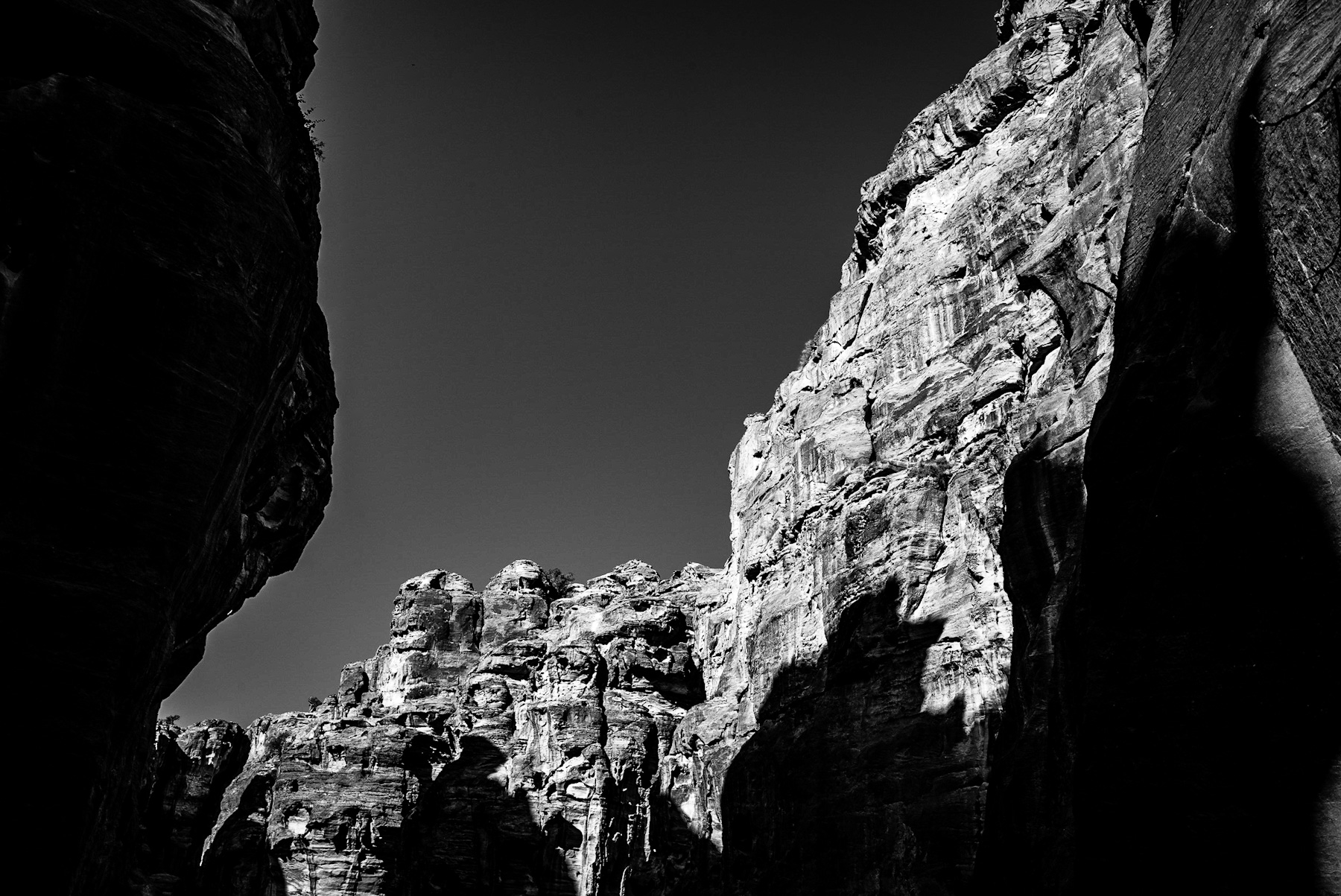
    The accompanying image captures a dramatic vista within a narrow canyon, presented in stark black and white. Towering rock formations frame a sliver of sky, with sunlight illuminating the distant walls of the gorge while the immediate foreground remains shrouded in deep shadow. This interplay of light and dark accentuates the immense scale and rugged texture of the sandstone, creating a profound sense of depth and natural grandeur. The monochromatic palette strips away the distractions of color, focusing the viewer’s attention on the geological forms, the intricate patterns carved by millennia of erosion, and the powerful contrast that defines this ancient pathway. It is a visual representation of an entrance, hinting at wonders beyond.
    A Gateway to Antiquity: The Siq’s Historical Significance
    This captivating scene is characteristic of the Siq, the primary entrance to the ancient city of Petra in modern-day Jordan. Carved by natural tectonic forces and further shaped by water erosion, the Siq is a winding gorge approximately 1.2 kilometers long, with cliffs rising up to 80 meters on either side. It served as the monumental approach to Petra, the capital of the Nabataean kingdom.
    The Nabataeans, an industrious Arab people, established their dominion in this arid region around the 4th century BCE. They were masters of water management and excelled in trade, controlling vital routes that connected the Arabian Peninsula with the Mediterranean. Petra, strategically located within a network of canyons, was not only a formidable fortress but also a thriving commercial hub. The Siq itself was a crucial part of this defense and infrastructure, featuring channels carved into its walls to direct water into the city, showcasing the Nabataeans‘ advanced hydraulic engineering.
    The Journey Through Stone: An Enduring Experience
    For centuries, travelers, traders, and invaders alike have passed through the Siq, experiencing its awe-inspiring natural beauty and the gradual unveiling of Petra’s architectural marvels. The journey through this narrow passage is an integral part of the Petra experience, building anticipation for the iconic Treasury (Al-Khazneh) that dramatically appears at the Siq’s conclusion. The shifting light, the echoing sounds, and the sheer scale of the rock formations combine to create an immersive, almost spiritual, passage.
    The black and white rendition of this scene emphasizes the timelessness of the Siq. It transcends specific historical periods, connecting the modern viewer directly with the raw geological power and the enduring human ingenuity that defined Petra. The absence of color highlights the intrinsic beauty of the sandstone, its varied strata, and the way light plays across its surfaces, revealing details that might otherwise be overlooked. This artistic choice underscores the monumental and eternal aspects of this UNESCO World Heritage site.
    Preserving Petra’s Legacy
    Today, Petra remains a testament to the Nabataean civilization and a global symbol of natural and cultural heritage. The Siq, as its majestic entrance, continues to draw visitors from around the world, inviting them to step back in time. The photograph serves as a powerful reminder of the delicate balance between natural forces and human history, urging appreciation and preservation of such invaluable sites for future generations. The dramatic light and shadow captured in this image are not merely photographic elements; they are an echo of the countless sunrises and sunsets that have illuminated this historic passage, guiding millions through its ancient embrace.
  • Petra’s Enduring Stone Canvas: A Glimpse into Nabataean Majesty

    Petra’s Enduring Stone Canvas: A Glimpse into Nabataean Majesty

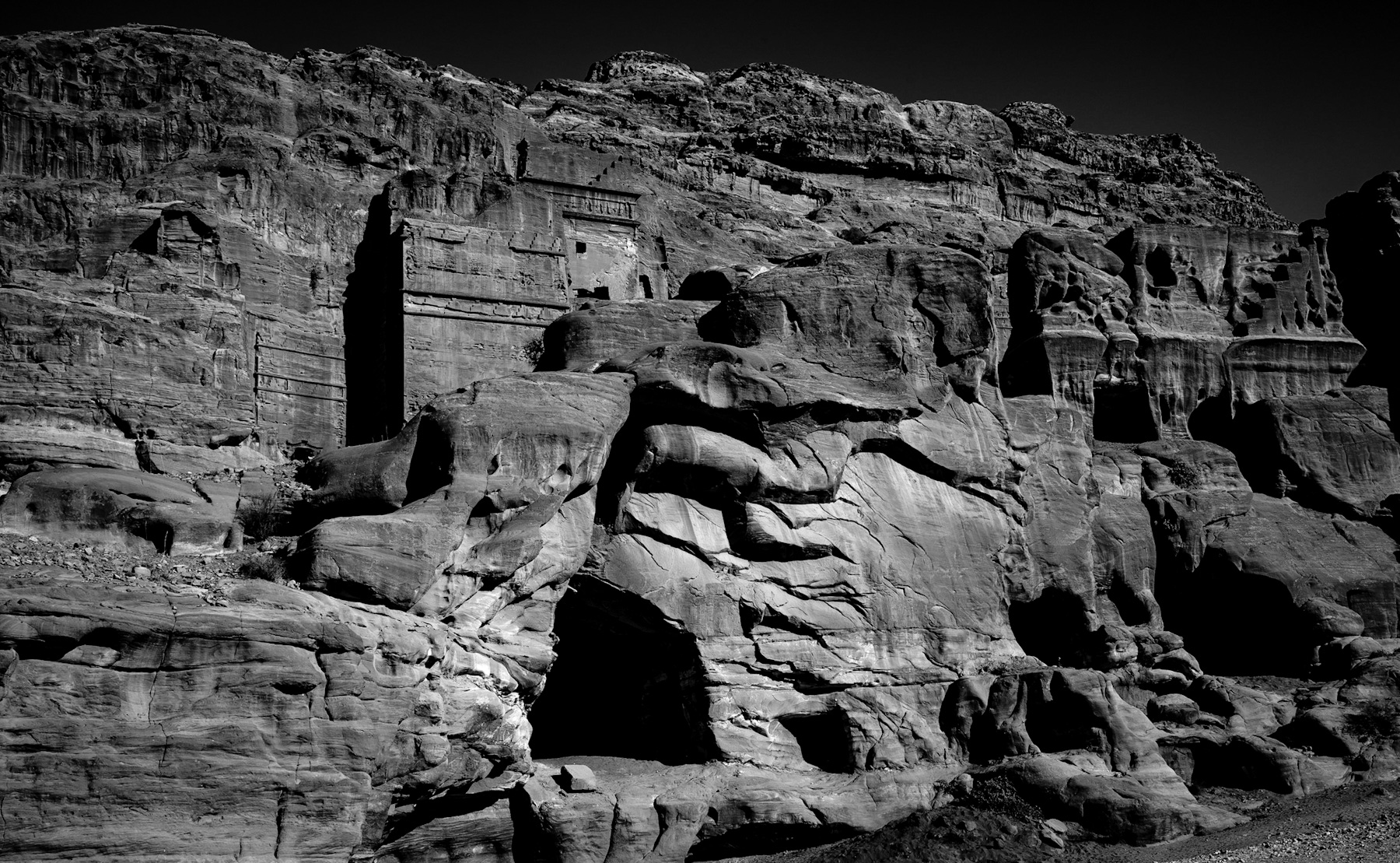
    The stark black and white photograph captures a monumental rock face, revealing layers of geological history intertwined with the indelible marks of ancient human ingenuity. Sunlight and deep shadows play across the rugged sandstone, emphasizing the dramatic textures and the sheer scale of the landscape. Dominating the upper left quadrant, an intricately carved structure emerges from the cliff, its weathered facade a testament to a sophisticated bygone era. The precise, geometric lines of the carving stand in striking contrast to the organic, flowing contours of the surrounding natural rock. Below this grand edifice, massive, weathered rock formations undulate, punctuated by dark, cavernous openings that invite speculation about their purpose and the lives once lived within their depths. The overall impression is one of immense age, raw power, and profound human artistry.
    The Legacy of the Nabataeans
    This awe-inspiring scene is unmistakably part of Petra, the legendary rock-cut city in modern-day Jordan. Carved directly into the vibrant sandstone cliffs, Petra was the capital of the Nabataean kingdom, an ancient Arab people who flourished as master traders from the 4th century BCE until their annexation by the Roman Empire in 106 CE. Their strategic location along key incense and spice routes allowed them to amass vast wealth, which they invested in their remarkable capital. The Nabataeans were not merely merchants; they were brilliant engineers, particularly adept at water management in an arid desert environment, and unparalleled sculptors of stone. Their enduring legacy is etched into the very landscape, a testament to their advanced civilization.
    Architectural Wonders of the Desert
    The prominent carved structure in the image exemplifies Nabataean funerary architecture, often mistaken for temples due to their grand scale and elaborate detailing. These monumental tombs, such as the Royal Tombs visible in various parts of Petra, were designed to impress and honor the deceased, showcasing Hellenistic influences blended seamlessly with indigenous Nabataean artistic traditions. Notice the precise lines and architectural elements meticulously cut into the living rock, contrasting sharply with the organic, eroded forms of the surrounding cliffs. Each facade tells a story of craftsmanship, religious beliefs, and a profound connection to the natural world. The darker openings at the base of the cliff could be smaller tombs, dwellings, or storage areas, forming part of the extensive network that once constituted this thriving desert metropolis.
    A UNESCO World Heritage Site
    Today, Petra stands as a UNESCO World Heritage Site and one of the New7Wonders of the World, attracting visitors globally eager to witness its archaeological grandeur. The black and white rendition of this scene further accentuates the timeless quality of Petra, stripping away color to highlight form, shadow, and the enduring power of its architecture. It underscores the immense effort and vision required to transform a natural canyon into a bustling city, a feat of engineering and artistry that continues to captivate archaeologists and historians. The site offers invaluable insights into ancient civilizations, their trade networks, religious practices, and their sophisticated understanding of their environment.
    Enduring Echoes of the Past
    The image serves as a powerful reminder of human civilization’s ability to leave an indelible mark on the landscape. The interplay of light and shadow across the ancient carvings and natural formations creates a sense of depth and mystery, inviting contemplation on the passage of time and the resilience of human endeavor. Petra remains a symbol of ingenuity and cultural richness, a silent testament to a civilization that mastered its environment and left behind an archaeological wonder for generations to explore and admire. It stands as a profound connection between the natural world and human artistic expression, a truly unique historical site.
  • Ancient Echoes: A Timeless Glimpse into a Layered Cityscape

    Ancient Echoes: A Timeless Glimpse into a Layered Cityscape

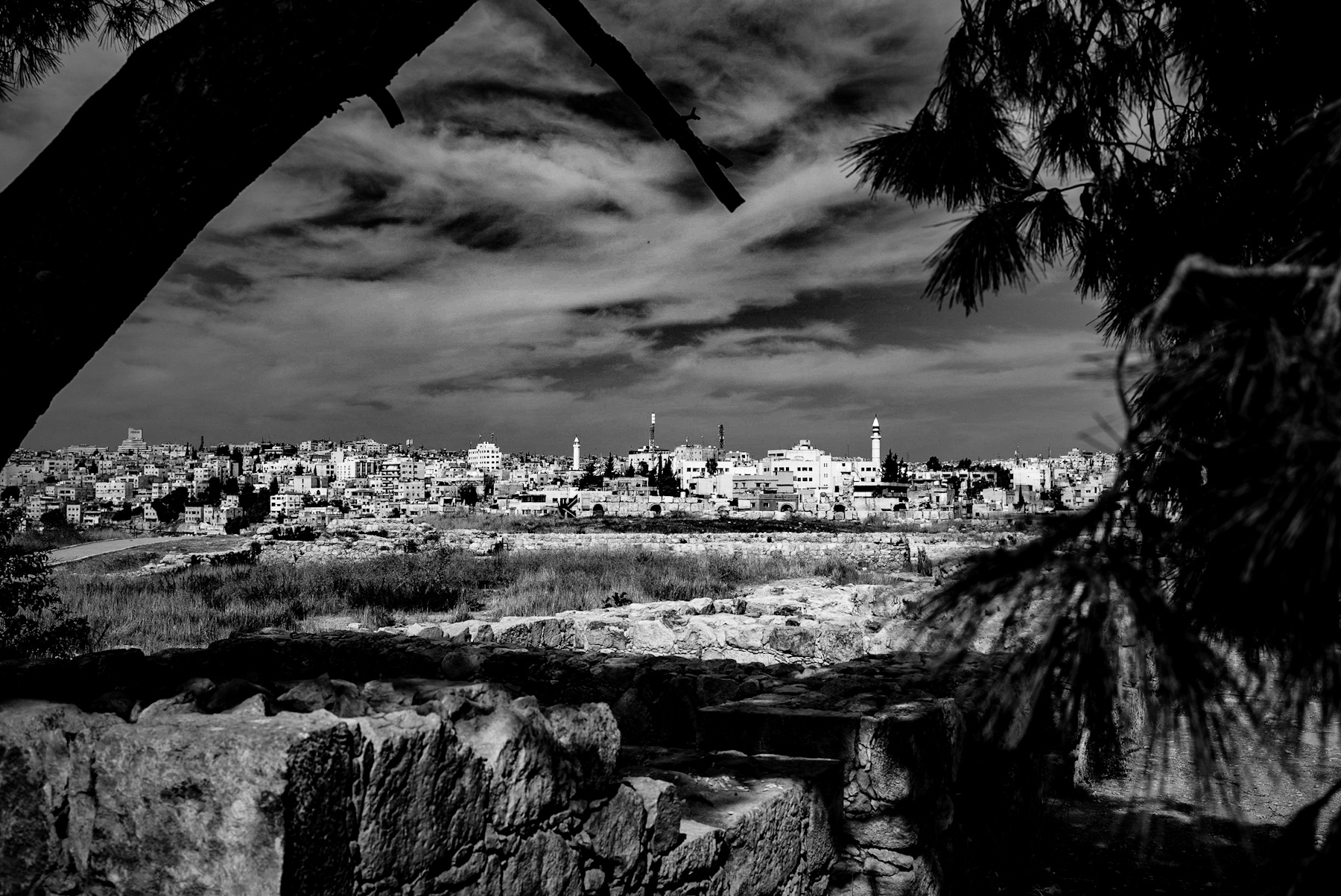
    Step into a black and white panorama where history unfurls before your eyes. Through the gnarled embrace of an ancient tree trunk and the delicate lace of pine branches, a dense urban landscape emerges. This monochromatic lens isn’t just a filter; it’s a powerful tool, stripping away the superficial to reveal textures, contrasts, and a profound sense of depth. Above it all, a dramatic, cloud-streaked sky adds a timeless quality, inviting us to ponder millennia of human endeavor.
    What the Ancient Stones Whisper
    In the immediate foreground, the rugged stone foundations and scattered remnants of an earlier civilization dominate. These aren’t just rocks; they’re the skeletal remains of significant buildings, perhaps a grand temple, a Roman forum, or a Byzantine fortification. Weathered by countless seasons, these substantial blocks tell stories of empires long past. Dry, sparse vegetation weaves through them, underscoring their age and the countless lives that have walked these grounds. This archaeological layer is a powerful reminder: beneath our modern cities often lie the secrets and foundations of distant pasts.
    The Enduring Heartbeat of the City
    Beyond the ancient ruins, the landscape gently slopes upwards to a sprawling cityscape. Here, tightly packed, light-colored buildings climb the distant hills, forming a vibrant tapestry of generations. Their architecture, while contemporary in some aspects, clearly retains a traditional Middle Eastern aesthetic – think flat roofs and cuboid forms. Rising elegantly towards the heavens are several slender minarets, unmistakable markers of Islamic heritage and worship. They signify a centuries-old Muslim presence that has shaped the city’s cultural and spiritual identity. To the far left, a distinct, perhaps more recent, building with a stepped or pyramidal roof stands out, symbolizing the ongoing evolution and architectural diversity within this ancient setting.
    Where Centuries Converge: A Living History Lesson
    This photograph masterfully illustrates the profound interplay between past and present. The juxtaposition of ancient ruins in the foreground with a vibrant, living city in the background encapsulates the continuous narrative of human settlement. Many cities in the Levant and wider Middle East, from Amman to Jerusalem or Damascus, are built upon successive layers of civilizations. Roman, Byzantine, Umayyad, Abbasid, Ottoman, and modern eras have each left their indelible mark, often literally building upon the foundations of their predecessors. This image isn’t just a view; it’s an invitation to contemplate how historical events, architectural styles, and cultural shifts have collectively shaped the urban landscape we observe today. It powerfully conveys the resilience of these cities, their ability to adapt and thrive through successive empires and societal changes.
    Beyond Color: The Power of Monochrome
    The choice of black and white photography here is more than an aesthetic preference; it’s a narrative device. It strips away the distractions of color, allowing us to focus intensely on form, texture, and light. The dramatic contrast between the dark, textured foreground and the brighter, more reflective city buildings enhances the sense of depth and historical weight. The starkness of the monochrome palette underscores the timelessness of the scene, suggesting that while specific details may change, the fundamental experience of an ancient city enduring through time remains constant. This visual approach transforms a mere geographical location into a profound meditation on human legacy and the passage of epochs.
  • The Ancient Grandeur of Petra’s Siq: A Monochromatic Journey Through Time

    The Ancient Grandeur of Petra’s Siq: A Monochromatic Journey Through Time

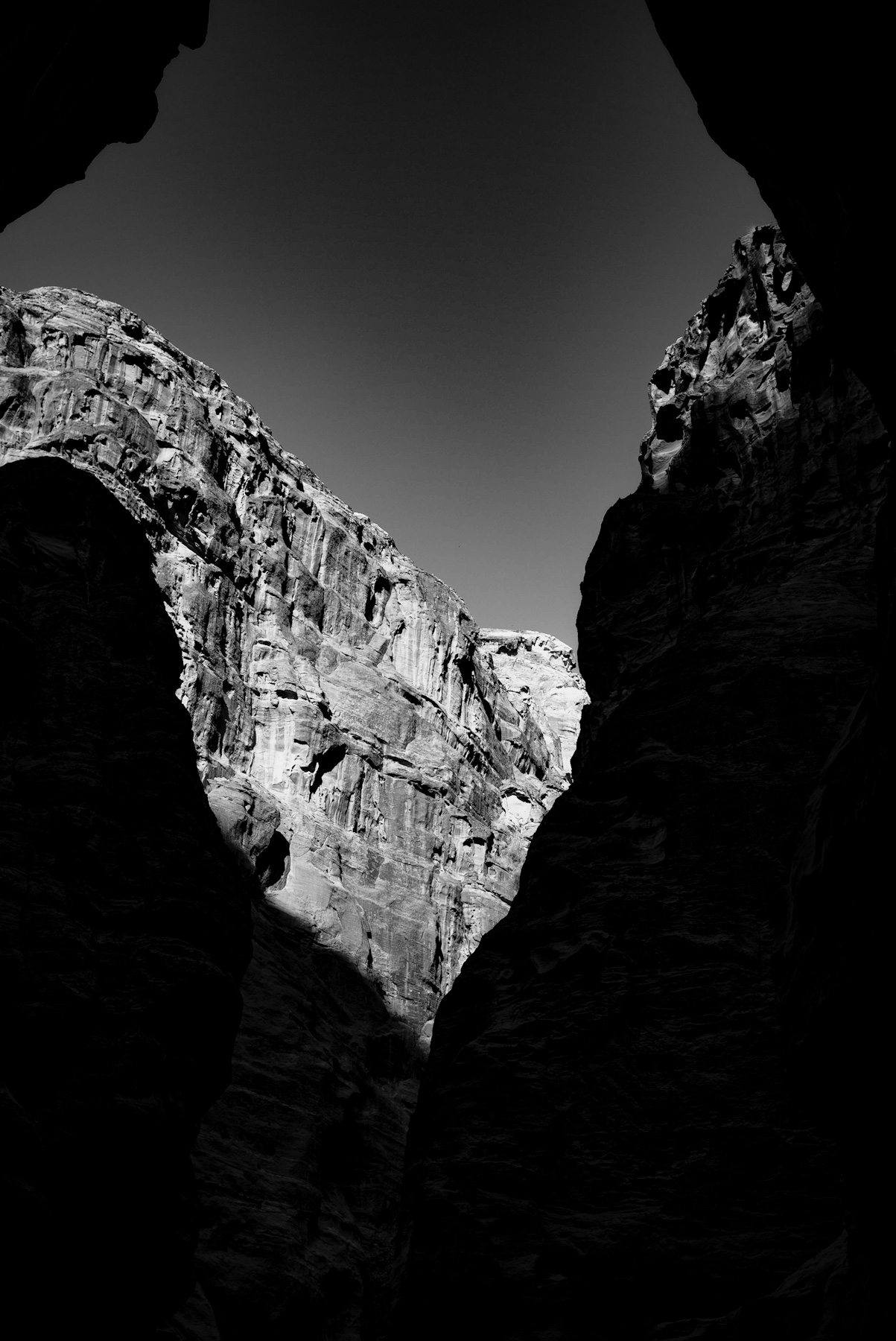
    The captured image transports viewers into a realm of profound geological and historical significance. Rendered in striking black and white, it showcases colossal rock formations that dwarf the observer, creating an immediate sense of awe and ancient mystery. This visual narrative is a testament to nature’s enduring power and the silent echoes of a once-thriving civilization.
    ### Visual Majesty: Light, Shadow, and Texture
    The photograph meticulously frames a narrow passage, defined by towering sandstone cliffs on both sides. The monochromatic palette accentuates the dramatic interplay of light and shadow, carving deep contours and highlighting the rugged textures of the rock face. On the left, a colossal cliff looms, almost entirely shrouded in deep shadow, its formidable presence creating a powerful silhouette against the lighter expanse of the sky. Conversely, the right-hand cliff reveals intricate geological layers and erosion patterns, bathed in dappled sunlight and punctuated by sharp, angular shadows that underscore its immense scale. In the distance, a series of smaller, craggy peaks hint at the vastness of the landscape beyond. The high contrast and absence of color distill the scene to its fundamental forms, emphasizing the raw power and enduring beauty of nature’s architecture. Every ridge and crevice tells a story of millennia of geological processes, sculpted by wind and water.
    ### The Historic Gateway to Petra: The Siq
    This visual narrative is unmistakably set within the legendary Siq, the principal entrance to the ancient city of Petra in modern-day Jordan. Far more than a mere geological feature, the Siq served as the grand ceremonial gateway for the Nabataeans, an ingenious Arab people who established Petra as their thriving capital around the 4th century BC. This narrow, winding gorge, reaching heights of up to 80 meters, was not only a natural defensive barrier but also a vital artery for the lucrative frankincense, myrrh, and spice trade routes that crisscrossed the ancient world. The journey through the Siq was designed to build anticipation, slowly revealing glimpses of the magnificent rock-cut architecture that defines Petra, culminating in the breathtaking sight of Al-Khazneh (The Treasury).
    ### A Legacy Carved in Stone: The Nabataean Civilization
    The Nabataeans were not only master traders but also ingenious engineers, developing sophisticated hydraulic systems to harness precious water in this arid region, allowing their civilization to flourish. Their architectural prowess is magnificently displayed in the intricate facades carved directly into the sandstone cliffs, turning the very landscape into monumental art. Traversing the Siq today is an immersive journey, echoing the footsteps of countless merchants, pilgrims, and Roman legionaries from millennia past. The imposing scale of the canyon and the quiet grandeur of the cliffs evoke a profound connection to this „lost city,“ which remained hidden from the Western world until its rediscovery in 1812 by Swiss explorer Johann Ludwig Burckhardt. The black and white rendition of this iconic passage enhances its timeless quality, stripping away modern distractions to reveal the enduring spirit of a civilization deeply intertwined with its natural environment. It is a powerful reminder of human ingenuity and nature’s majestic power, converging in a place of unparalleled historical and aesthetic value, inviting contemplation on the passage of time and the echoes of ancient civilizations. Petra, a UNESCO World Heritage Site and one of the New7Wonders of the World, continues to captivate and inspire, with the Siq standing as its dramatic, unforgettable prelude.
  • Echoes in Stone: Exploring the Ancient Wonders of Petra’s Rock-Cut Legacy

    Echoes in Stone: Exploring the Ancient Wonders of Petra’s Rock-Cut Legacy

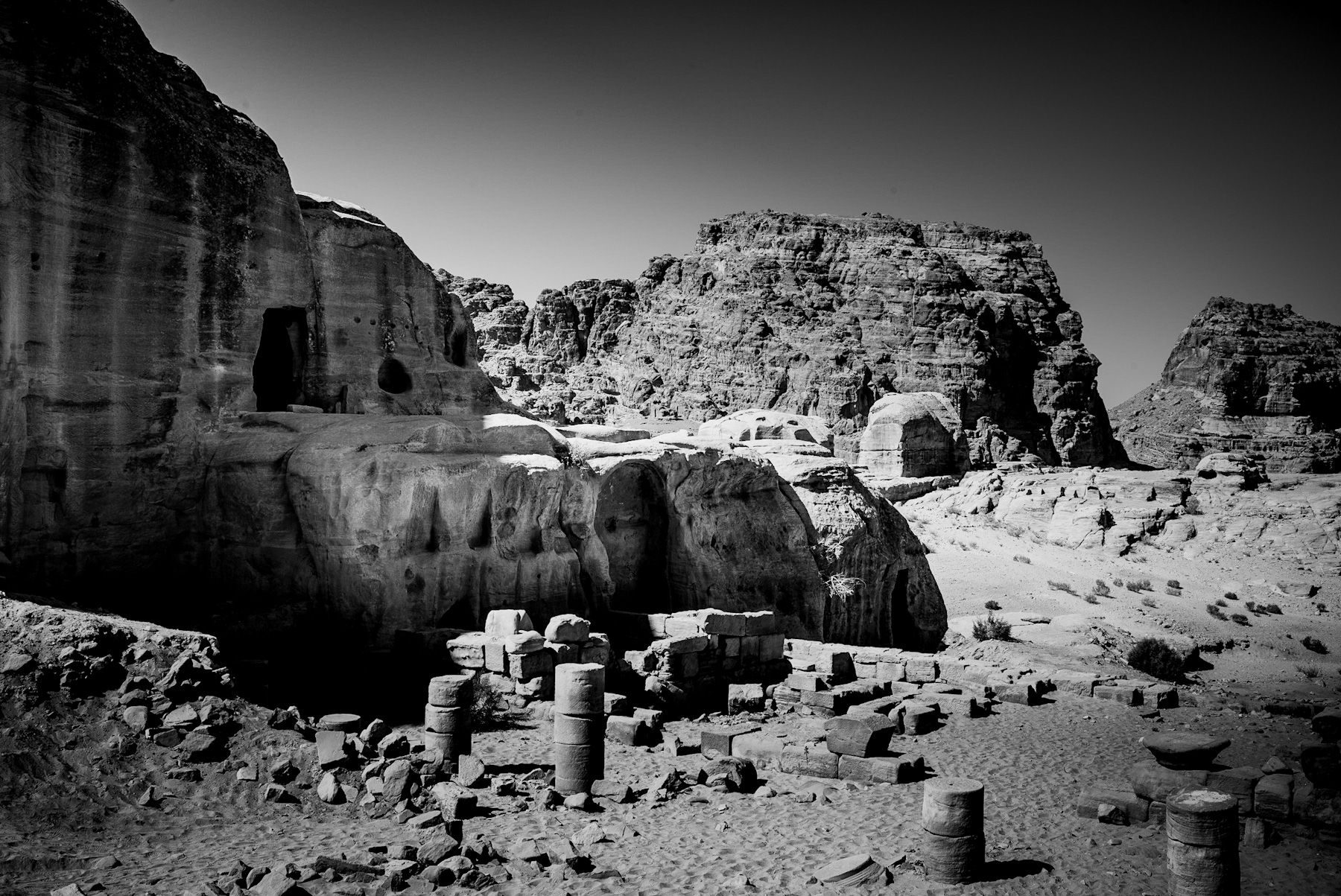
    Imagine stepping into a landscape where time seems to stand still, captured in a profound black and white photograph that unveils monumental architectural marvels amidst an arid expanse. This scene is dominated by colossal sandstone cliffs, meticulously shaped by both ancient human hands and the relentless forces of nature itself. In the foreground, scattered remnants of a bygone era dot the sandy terrain – cylindrical column drums and rectangular stone blocks, silent witnesses to a once-thriving metropolis. These fragmented pieces hint at an ancient thoroughfare or the foundational stones of a significant structure, now largely reclaimed by the embracing desert.
    To the left, a formidable rock face presents a striking facade, featuring a deep, dark entrance that beckons into the very heart of the mountain. This profound aperture, likely a tomb or a dwelling, is perfectly framed by the natural contours of the rock, showcasing a masterful integration of architecture with its natural surroundings. Smaller, less defined openings are also visible, hinting at a complex network of hidden chambers and passages within. The dramatic interplay of harsh sunlight and deep shadow, intensified by the monochrome palette, accentuates the rugged textures of the weathered sandstone, highlighting both the natural erosion and the precision of ancient craftsmanship.
    The midground and background unfold into a vast expanse of rugged, multi-layered rock formations, characteristic of a harsh desert environment. These natural ramparts frame the entire scene, emphasizing the remote and formidable nature of this historical site. The clear, bright sky above contrasts sharply with the shadowed crevices and sun-baked surfaces below, creating an atmosphere of both immense scale and profound solitude. The complete absence of any modern elements reinforces the powerful impression of stepping back into an ancient past, where human ingenuity met the raw power of nature head-on.
    This iconic landscape is unmistakably Petra, Jordan, the legendary capital of the Nabataean Kingdom. Flourishing from the 4th century BCE to the 1st century CE, the Nabataeans were an industrious Arab people who masterfully transformed this remote desert valley into a bustling trade hub. Strategically positioned along critical incense and spice routes, Petra evolved into a wealthy and sophisticated city, renowned for its advanced hydraulic engineering and, most notably, its breathtaking rock-cut architecture. The structures seen in the photograph, including what appear to be parts of the Royal Tombs or other significant monumental complexes, perfectly exemplify their unique artistic and engineering prowess, seamlessly blending Hellenistic influences with indigenous styles.
    Following its annexation by the Roman Empire in 106 CE, Petra continued to thrive for a period, with Roman architectural elements gracefully integrated into the existing Nabataean fabric. The columns and blocks in the foreground might well represent additions or modifications from this era, or perhaps remnants of a grand colonnaded street that once connected the city’s various sectors. However, shifts in crucial trade routes and a series of devastating earthquakes eventually led to the city’s gradual decline and abandonment. Despite centuries of being „lost“ to the Western world and its eventual rediscovery in the early 19th century, Petra’s unparalleled grandeur endures. Today, as a UNESCO World Heritage site, it stands as a powerful testament to the ingenuity, resilience, and artistic vision of the Nabataean people, inviting us all to contemplate the passage of time and the enduring echoes of ancient civilizations etched forever into stone.
  • Timeless Stone and Enduring Life: A Glimpse into Ancient Landscapes

    Timeless Stone and Enduring Life: A Glimpse into Ancient Landscapes

    The monochromatic lens transforms a rugged landscape into a study of enduring strength and silent history. This striking black and white photograph captures a majestic rock face, its textures and forms sculpted by millennia of natural forces, providing a profound visual narrative that transcends mere scenery.
    **A Tapestry of Rock and Resilience**
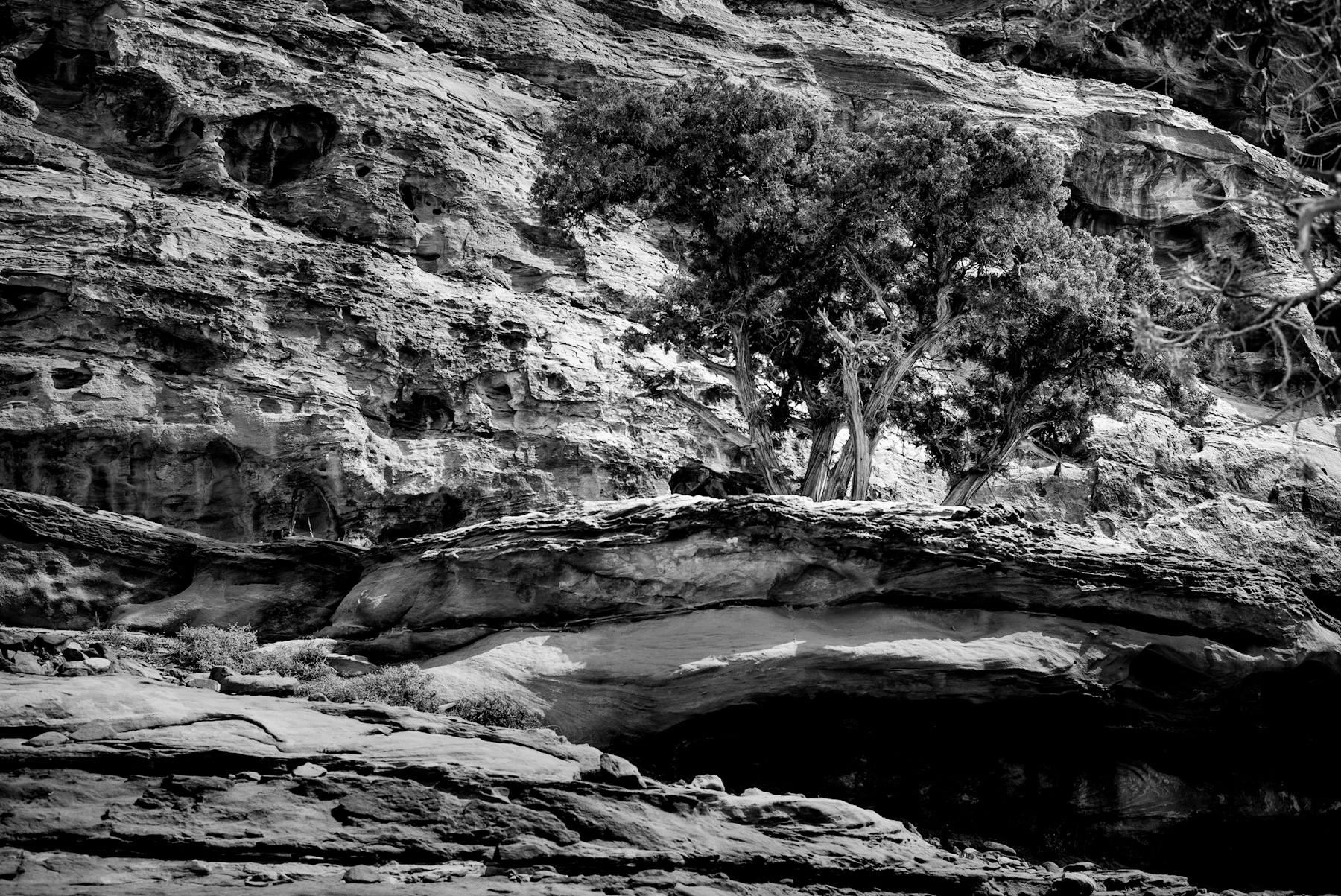
    The image is dominated by an expansive, weathered cliff, likely composed of sedimentary rock such as sandstone, revealing layers formed over geological epochs. Its surface is a rich tapestry of deep cracks, intricate erosion patterns, and numerous natural cavities and overhangs. These features are not merely aesthetic; they speak of relentless wind, water, and temperature fluctuations, carving out a landscape that testifies to Earth’s dynamic history. The high contrast of the black and white medium accentuates every ridge, shadow, and crevice, transforming the rock into a sculptural masterpiece where light and shade play a vital role in defining its ancient character.
    Midway up this monumental rock face, a cluster of resilient trees takes root on a narrow ledge. Their gnarled trunks and dense foliage, rendered in deep, dark tones, stand in stark contrast to the lighter rock, symbolizing life’s tenacity in harsh, arid environments. These trees, possibly junipers or similar desert-adapted species, are not just elements of flora; they are markers of survival, thriving where conditions are challenging, their roots finding purchase in the seemingly impenetrable stone. Their presence adds a crucial layer of living history to the geological backdrop, hinting at the delicate balance between barrenness and life.
    **Echoes of Ancient Civilizations and Geological Time**
    The landscape depicted resonates deeply with historical narratives. Such rock formations, particularly those featuring natural caves and shelters, have historically served as crucial havens for early human populations. From the prehistoric cave dwellings of indigenous communities worldwide to the more elaborate rock-cut architecture of ancient civilizations like the Nabataeans in Petra or the cliff dwellings of the Ancestral Puebloans, these natural shelters offered protection from the elements and predators. The visible cavities in the rock face could have provided temporary refuge or even permanent homes, making this scene a potential silent witness to millennia of human ingenuity and adaptation.
    Geologically, the stratified rock layers tell a story of deposition and lithification, where sediments accumulated over vast periods, compressed and cemented into solid rock. Subsequent tectonic activity and erosion by wind and water have then exposed and sculpted these layers, revealing the deep time of the Earth. Understanding these processes helps to appreciate the immense scale of natural forces that shaped not only the physical environment but also influenced the patterns of human migration and settlement in arid regions.
    **An Enduring Legacy of Nature and Heritage**
    This photograph serves as a powerful reminder of nature’s timeless beauty and the profound historical connections embedded within our landscapes. It invites contemplation on the resilience of life, both plant and human, in the face of environmental challenges. The stark black and white palette strips away modern distractions, allowing the viewer to focus solely on the interplay of form, texture, and light, and to ponder the enduring legacy of both geological evolution and human heritage. Such places are not merely natural wonders; they are open-air museums, preserving stories of the past and continuing to inspire awe in the present.
  • Untamed Paths: A Monochrome Journey Through Time

    Untamed Paths: A Monochrome Journey Through Time

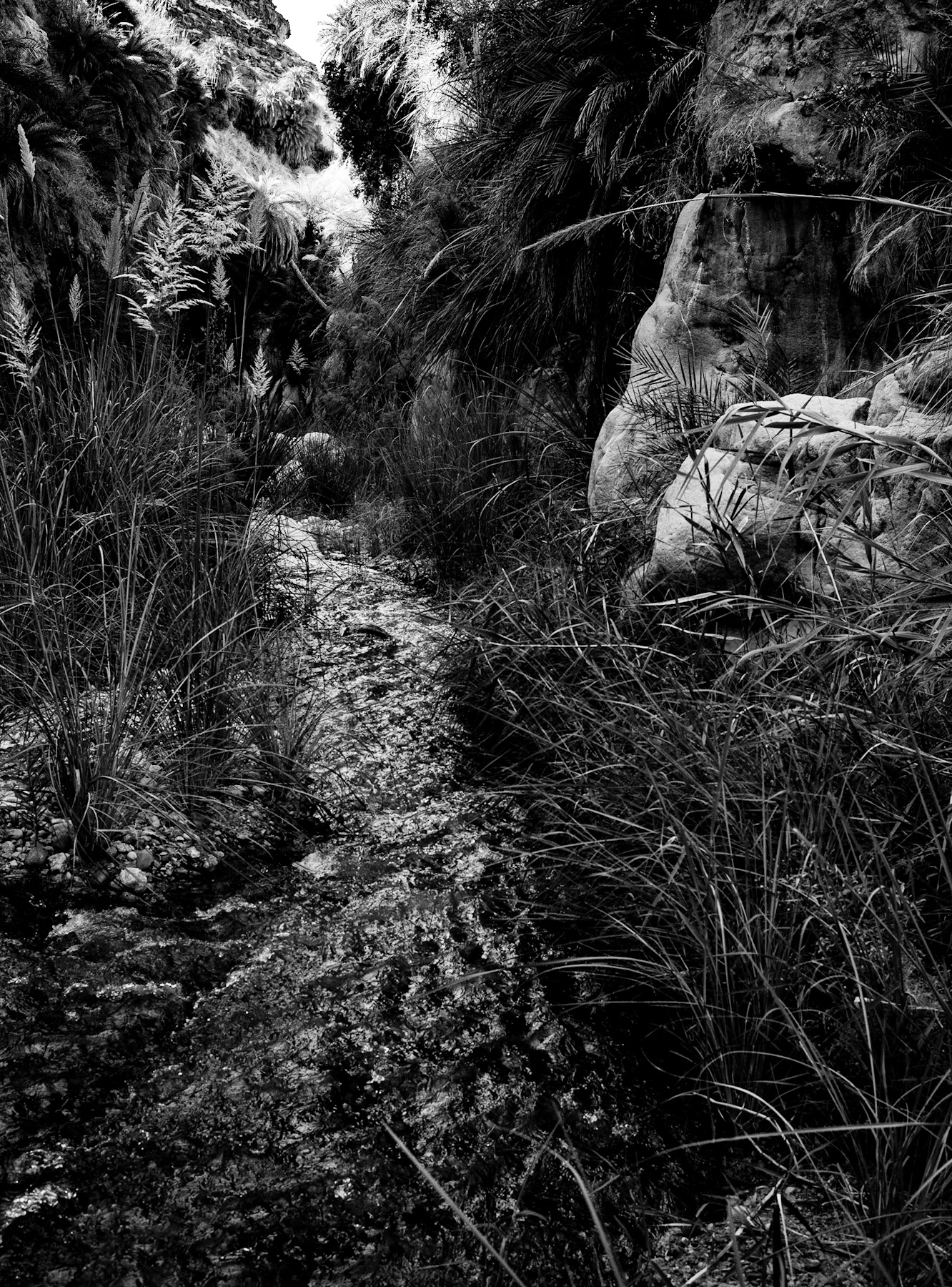
    The stark beauty of this monochrome image transports the viewer into a secluded natural world, a place where time seems to stand still. A narrow, winding passage, possibly a dried riverbed or an ancient trail, recedes into the distance, framed by dense, untamed vegetation and imposing geological formations. The absence of color accentuates the intricate textures and dynamic interplay of light and shadow, inviting a deeper contemplation of the scene’s inherent power and mystery.
    On either side of the path, a riot of flora thrives. Tall, reedy grasses with feathery plumes reach skyward, their delicate forms captured in exquisite detail, creating a sense of movement and wildness. Interspersed among them are broad-leafed ferns and what appear to be palm-like fronds, their varying shapes and densities adding layers to the visual tapestry. To the right, massive, weathered boulders rise from the earth, their ancient surfaces smoothed by millennia of erosion, partially obscured by the encroaching greenery. These natural guardians lend a sense of permanence and formidable strength to the landscape. The path itself, a mosaic of small stones and pebbles, hints at the passage of water, even if only seasonally, shaping the terrain over countless ages.
    This visual narrative extends beyond mere aesthetic appeal; it resonates with a profound historical echo. Such natural corridors have been intrinsic to human existence since the dawn of civilization. Before the advent of modern infrastructure, these winding paths and riverbeds served as vital arteries for movement, trade, and survival. Imagine the footsteps of early hominids navigating these very passages, seeking water, hunting game, or migrating to new territories. Ancient civilizations often thrived along such natural conduits, relying on them for resources and as defensive boundaries. This particular setting, with its dense cover and the potential for a hidden water source, could have offered refuge to travelers, a clandestine route for traders, or a sacred sanctuary for rituals. It speaks to a shared human history of exploration, adaptation, and an enduring connection to the raw power of the natural world.
    The choice of black and white photography is particularly evocative, stripping away the vibrancy of color to focus on the essential forms, contrasts, and the timeless quality of the scene. It encourages the viewer to look beyond the immediate moment and ponder the countless stories etched into these rocks and whispered by the wind through the ancient grasses. These natural landscapes are not just geographical features; they are living archives, holding the silent histories of geological shifts, climatic changes, and the ceaseless march of life and human endeavor. They remind us of the enduring cycles of nature and our own place within them.
    Ultimately, this image is a powerful invitation to introspection. It is a portal to an older world, a testament to the untamed beauty that has shaped our planet and our collective past. It compels us to consider the pathways our ancestors trod and to appreciate the profound, often overlooked, connection between the natural environment and the unfolding saga of human civilization.
  • Echoes in Stone: A Journey Through Ancient Desert Vistas

    Echoes in Stone: A Journey Through Ancient Desert Vistas

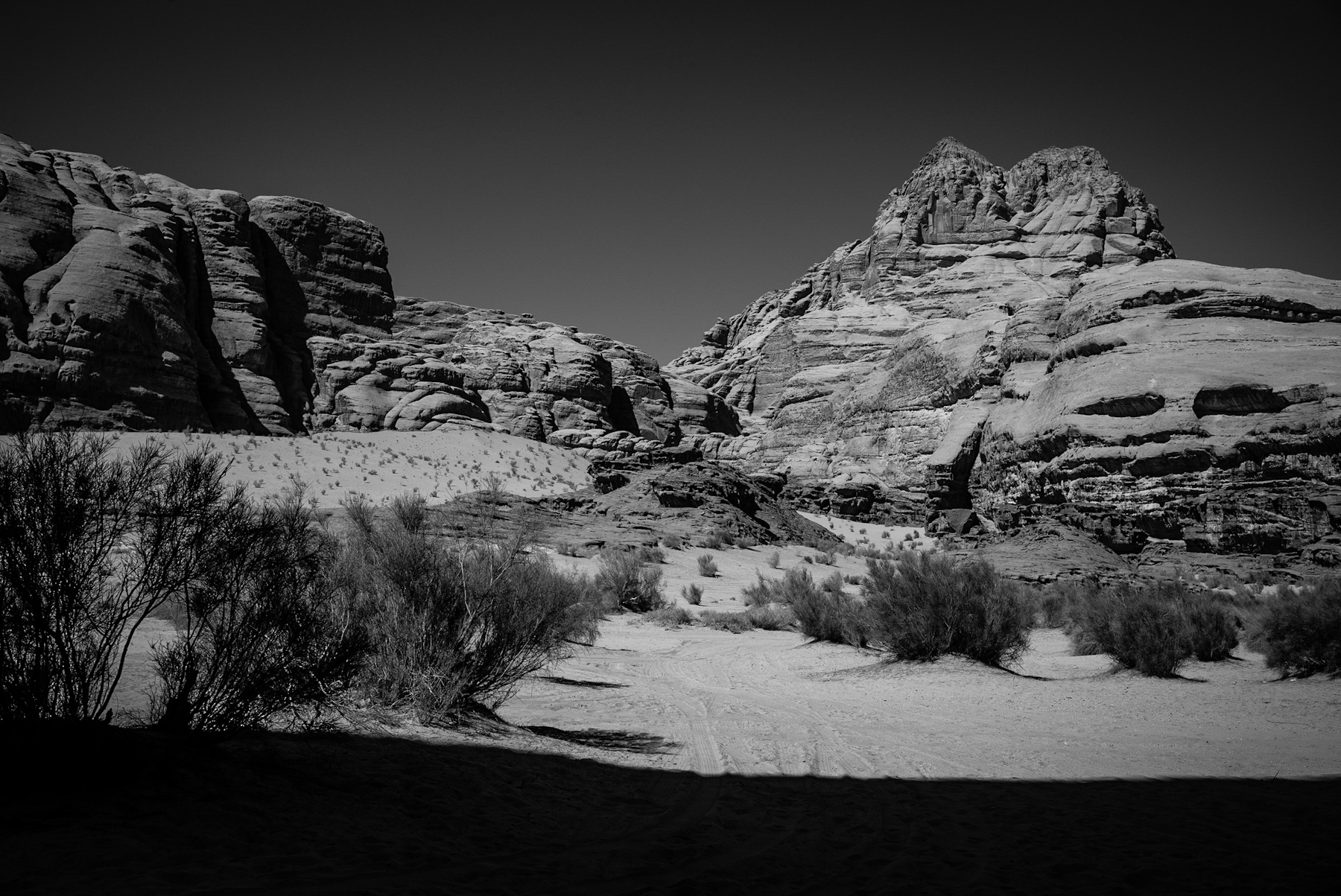
    The stark beauty captured in this monochromatic image presents a profound study of an arid landscape, where geological grandeur meets historical resonance. Dominated by immense rock formations, the scene unfolds under a vast, clear sky, rendered in a striking palette of grays, blacks, and whites that accentuate texture, form, and the dramatic interplay of light and shadow.
    This is a landscape forged by time itself. In the foreground, scattered desert shrubs, their branches intricate and bare, cast elongated shadows that anchor the viewer to the sandy terrain. These resilient plants, adapted to extreme conditions, symbolize life’s perseverance in a challenging environment. The middle ground reveals an expanse of fine sand, subtly marked by faint tracks, hinting at recent passage – perhaps by vehicles or desert dwellers. These imprints are transient, destined to be erased by the next gust of wind, yet they speak to an enduring human presence. Rising majestically in the background are colossal sandstone mountains, their surfaces deeply grooved and sculpted by millennia of wind and water erosion. These formations exhibit layered strata, a testament to their ancient geological history, revealing the slow, deliberate work of natural forces. The contrasting tones in the black and white rendition emphasize the rugged contours, the deep crevices, and the sheer scale of these natural monuments, evoking a sense of timelessness and immense power. The composition draws the eye inward, creating a pathway between these imposing natural walls, suggesting a hidden valley or a route through an otherwise impenetrable terrain.
    Beyond their geological magnificence, these landscapes whisper of ancient passage and enduring cultures. Regions characterized by these dramatic sandstone formations, often found in the Arabian Peninsula like Wadi Rum in Jordan, have served as critical arteries for civilizations and cultures for millennia. These valleys and canyons were integral parts of ancient trade networks, most notably the Incense Route. Caravans laden with precious spices, frankincense, myrrh, and other goods traversed these challenging paths, connecting the Arabian South with the Mediterranean world. The tracks in the sand, however faint, echo the countless journeys undertaken by merchants, pilgrims, and armies over centuries.
    For indigenous nomadic peoples, such as the Bedouins, these deserts are not barren wastelands but homelands rich in resources and knowledge. They possess an intimate understanding of the wadis, water sources, and shelters provided by the rock formations, skills honed over generations of living in harmony with the harsh environment. Their history is interwoven with the very fabric of these mountains, from ancient rock carvings to the oral traditions passed down through time. Historically, these landscapes also held strategic significance. During periods like the Arab Revolt (1916-1918), led in part by T.E. Lawrence, these formidable natural fortresses provided cover and tactical advantages. The labyrinthine canyons and hidden passages offered ideal conditions for guerrilla warfare, allowing smaller forces to outmaneuver larger, conventional armies.
    This photograph transcends a simple depiction of nature; it is a portal to a world where geological processes and human narratives converge. The enduring rock formations stand as silent witnesses to countless stories of survival, trade, conflict, and adaptation. The black and white aesthetic further enhances this sense of historical depth, stripping away modern distractions to reveal the raw, powerful essence of a landscape that has profoundly shaped, and been shaped by, human civilization. It invites contemplation on the resilience of both nature and humanity in the face of time.