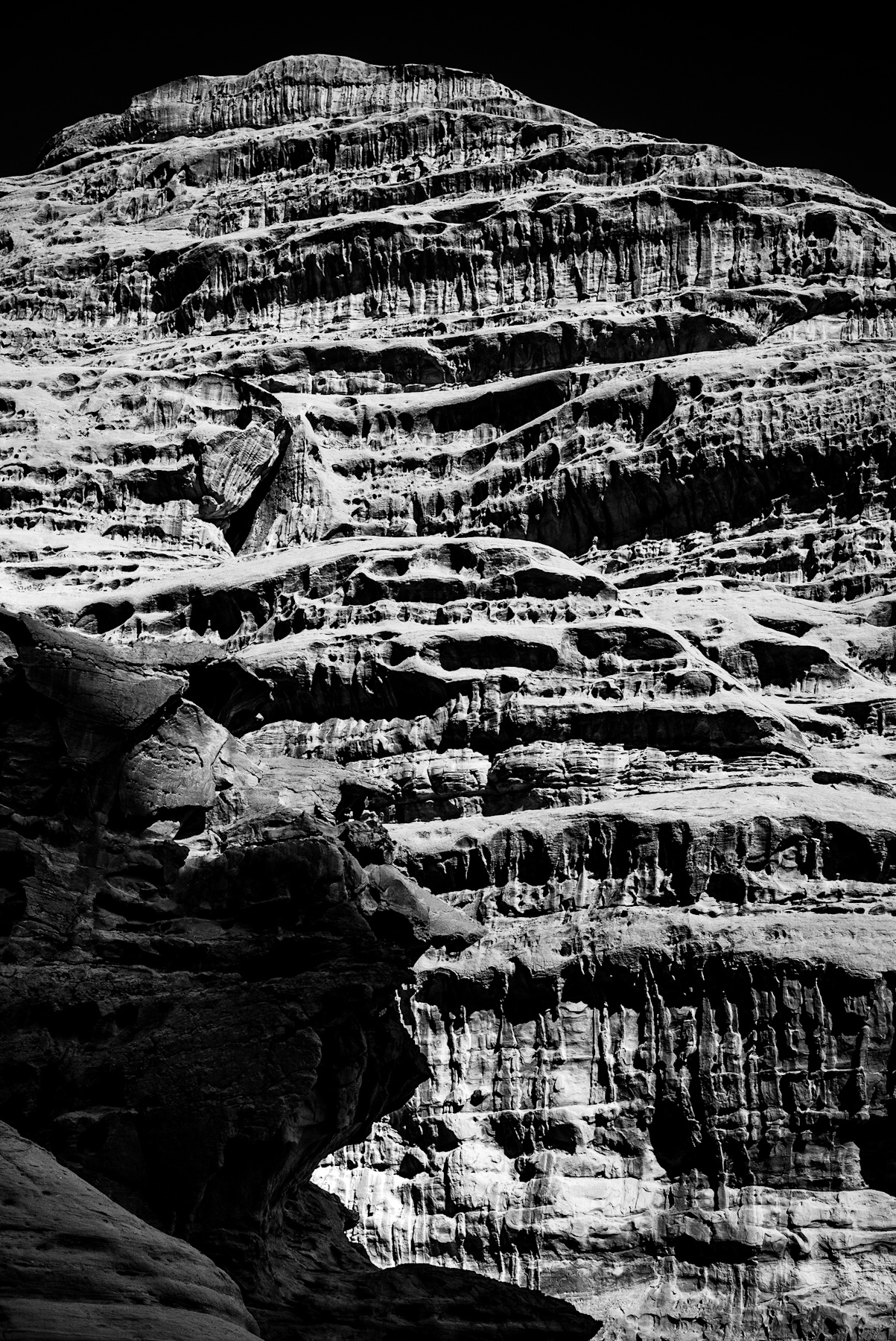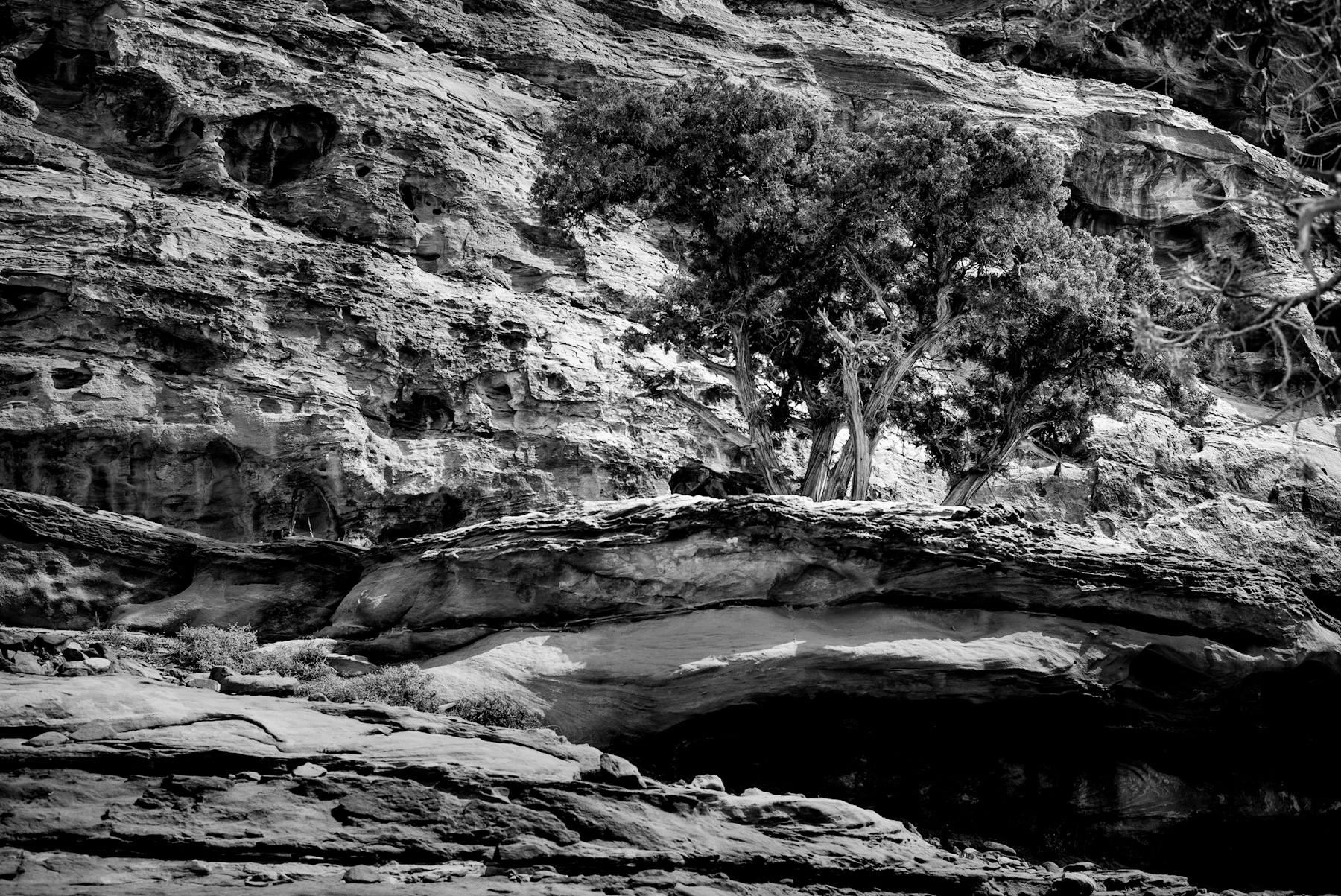
The monochromatic lens transforms a rugged landscape into a study of enduring strength and silent history. This striking black and white photograph captures a majestic rock face, its textures and forms sculpted by millennia of natural forces, providing a profound visual narrative that transcends mere scenery.
**A Tapestry of Rock and Resilience**
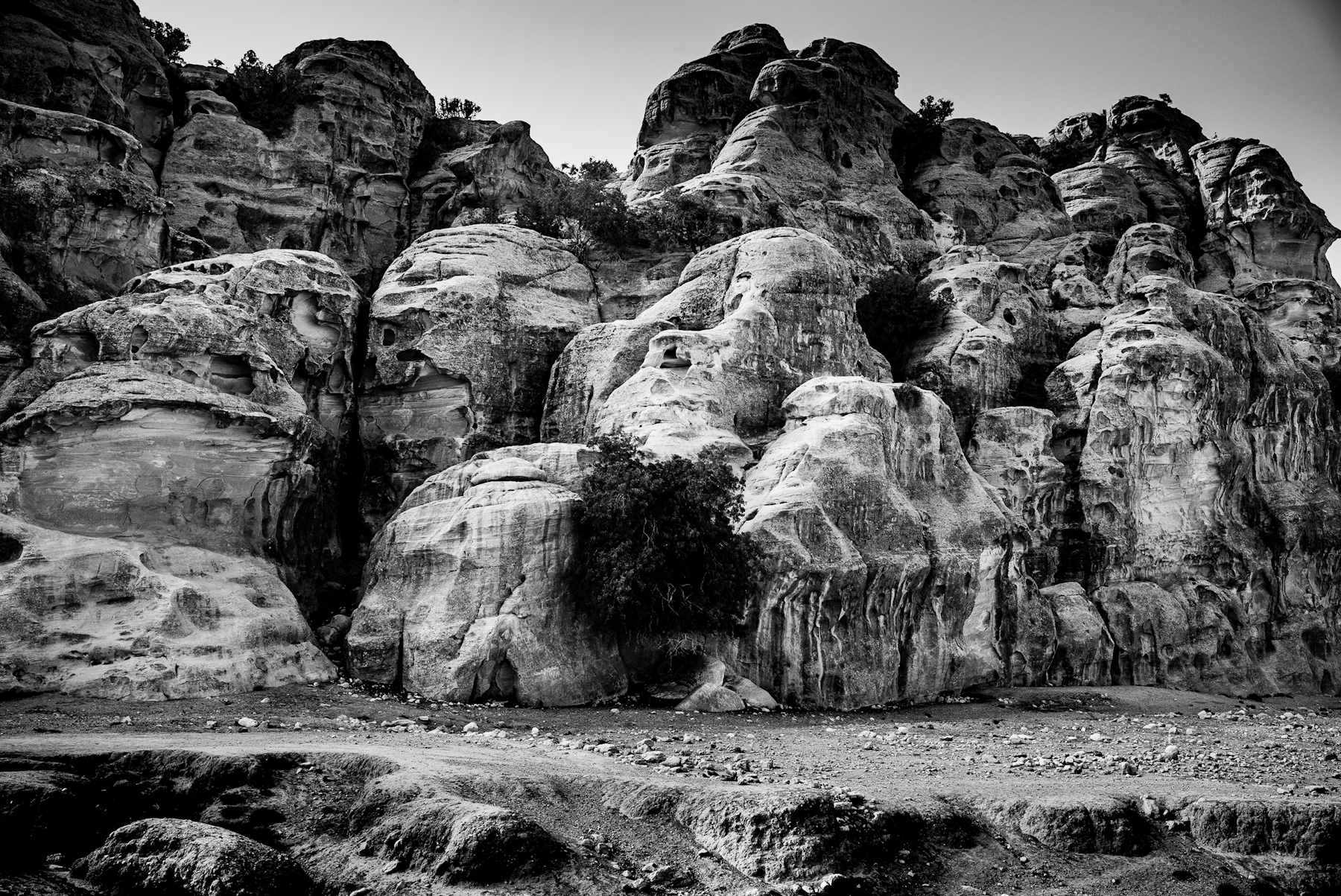
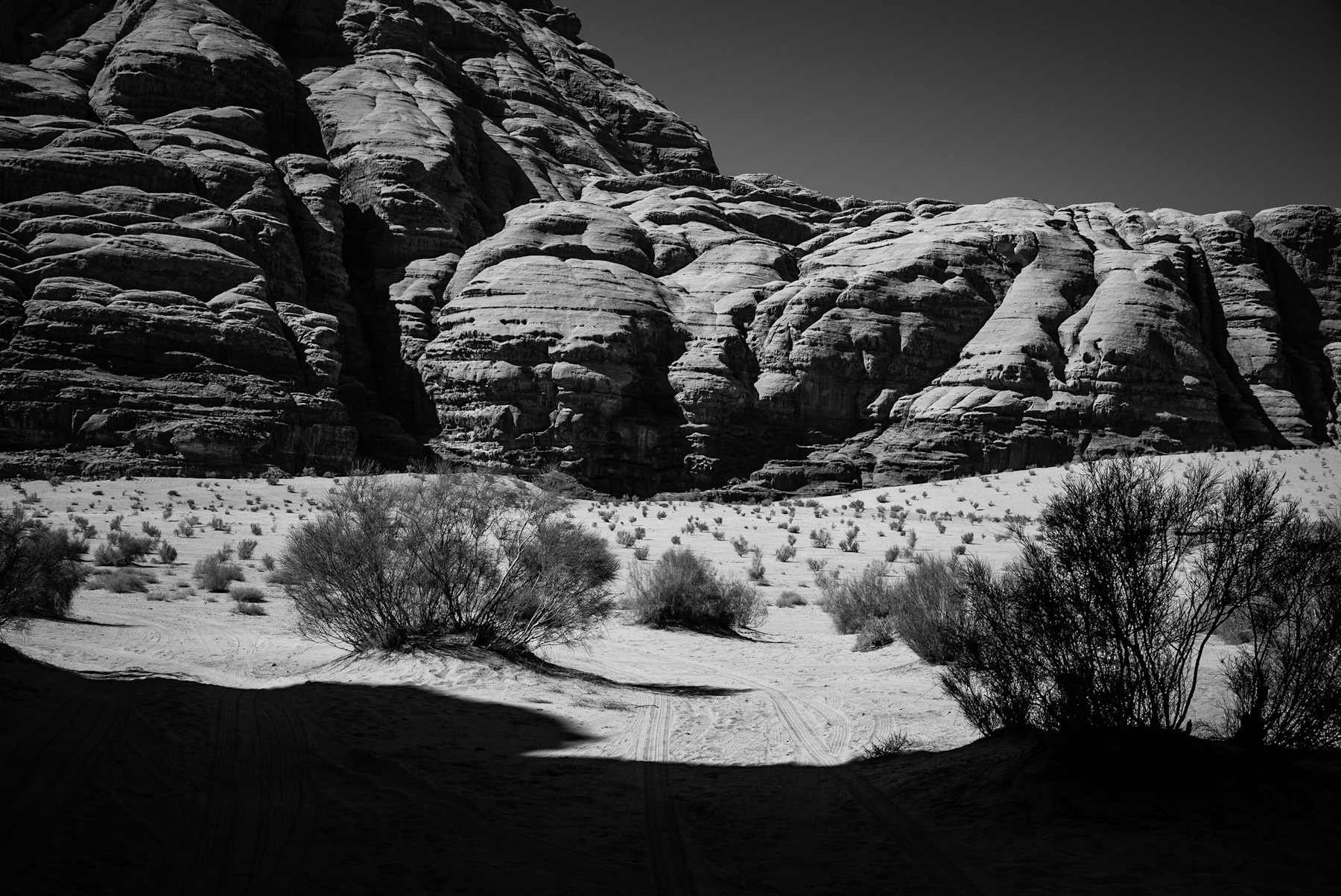
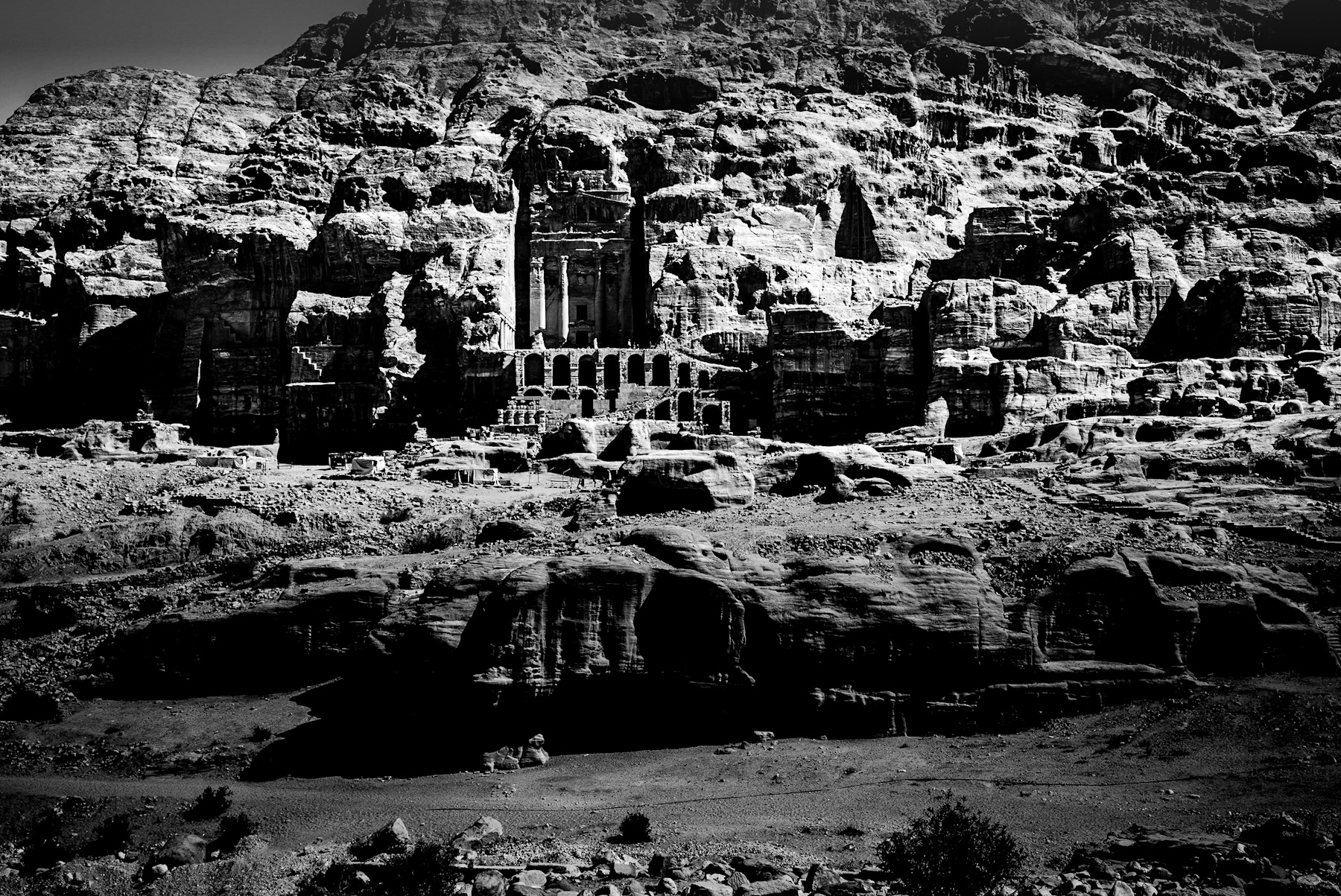
The image is dominated by an expansive, weathered cliff, likely composed of sedimentary rock such as sandstone, revealing layers formed over geological epochs. Its surface is a rich tapestry of deep cracks, intricate erosion patterns, and numerous natural cavities and overhangs. These features are not merely aesthetic; they speak of relentless wind, water, and temperature fluctuations, carving out a landscape that testifies to Earth’s dynamic history. The high contrast of the black and white medium accentuates every ridge, shadow, and crevice, transforming the rock into a sculptural masterpiece where light and shade play a vital role in defining its ancient character.
Midway up this monumental rock face, a cluster of resilient trees takes root on a narrow ledge. Their gnarled trunks and dense foliage, rendered in deep, dark tones, stand in stark contrast to the lighter rock, symbolizing life’s tenacity in harsh, arid environments. These trees, possibly junipers or similar desert-adapted species, are not just elements of flora; they are markers of survival, thriving where conditions are challenging, their roots finding purchase in the seemingly impenetrable stone. Their presence adds a crucial layer of living history to the geological backdrop, hinting at the delicate balance between barrenness and life.
**Echoes of Ancient Civilizations and Geological Time**
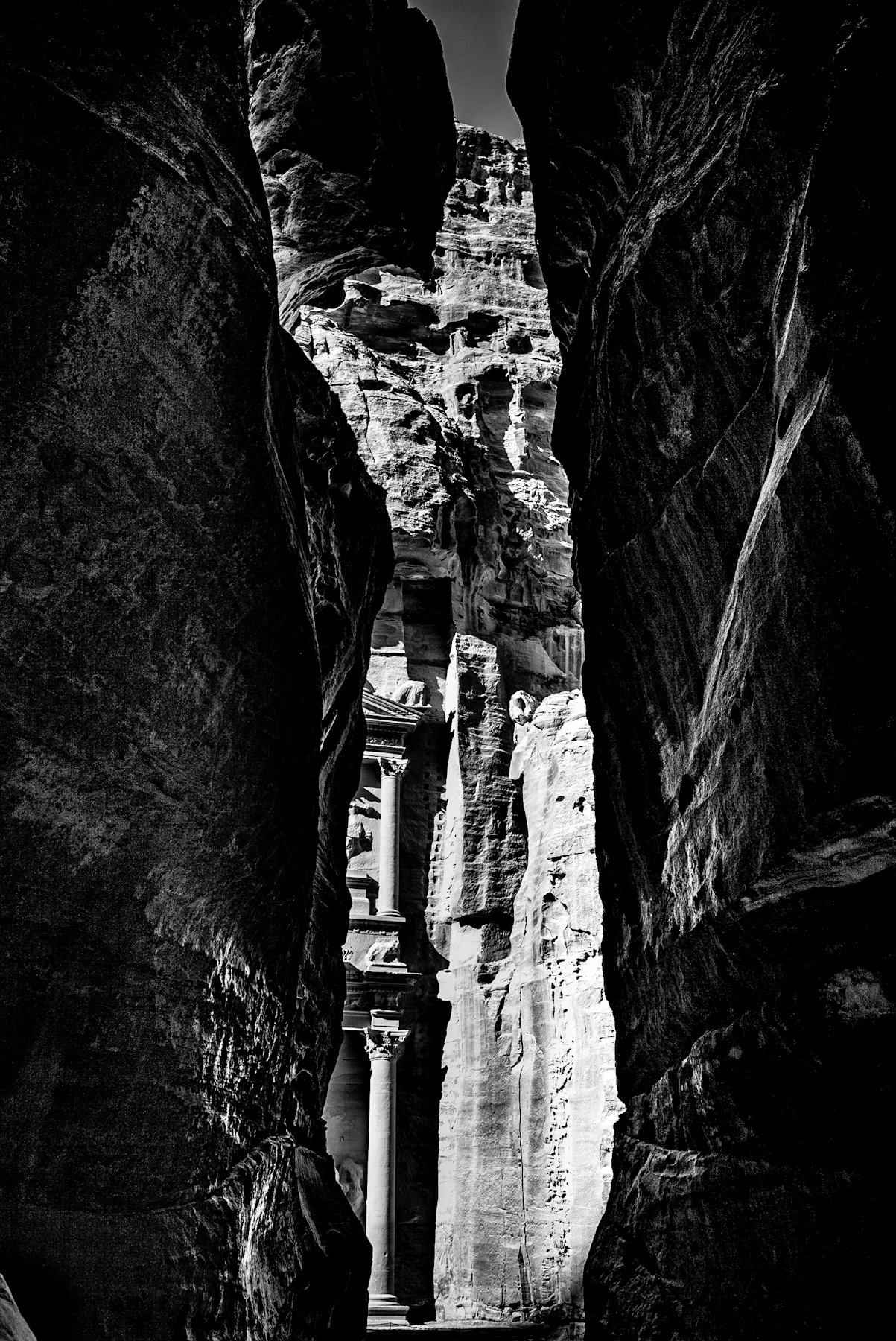
The landscape depicted resonates deeply with historical narratives. Such rock formations, particularly those featuring natural caves and shelters, have historically served as crucial havens for early human populations. From the prehistoric cave dwellings of indigenous communities worldwide to the more elaborate rock-cut architecture of ancient civilizations like the Nabataeans in Petra or the cliff dwellings of the Ancestral Puebloans, these natural shelters offered protection from the elements and predators. The visible cavities in the rock face could have provided temporary refuge or even permanent homes, making this scene a potential silent witness to millennia of human ingenuity and adaptation.
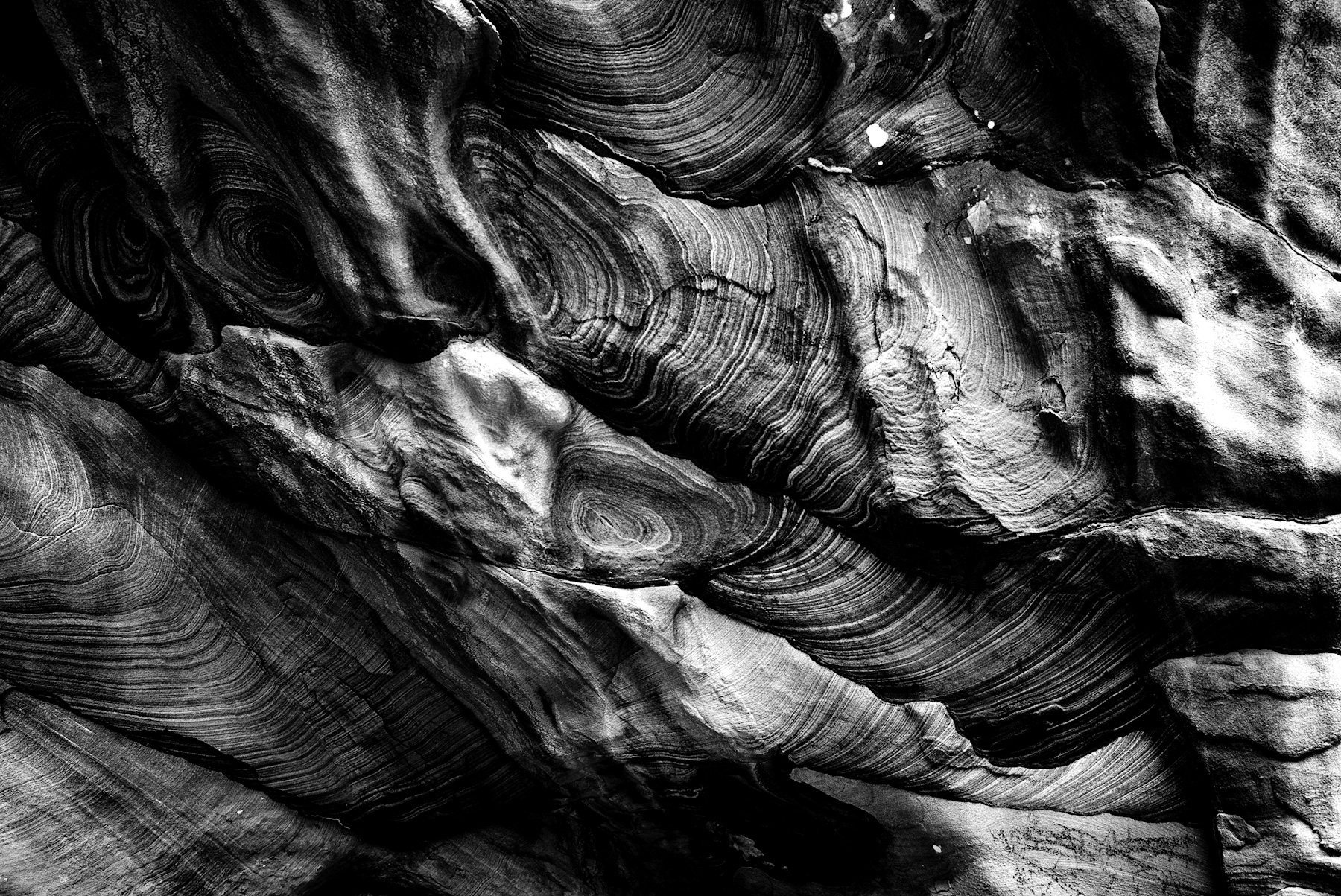
Geologically, the stratified rock layers tell a story of deposition and lithification, where sediments accumulated over vast periods, compressed and cemented into solid rock. Subsequent tectonic activity and erosion by wind and water have then exposed and sculpted these layers, revealing the deep time of the Earth. Understanding these processes helps to appreciate the immense scale of natural forces that shaped not only the physical environment but also influenced the patterns of human migration and settlement in arid regions.
**An Enduring Legacy of Nature and Heritage**
This photograph serves as a powerful reminder of nature’s timeless beauty and the profound historical connections embedded within our landscapes. It invites contemplation on the resilience of life, both plant and human, in the face of environmental challenges. The stark black and white palette strips away modern distractions, allowing the viewer to focus solely on the interplay of form, texture, and light, and to ponder the enduring legacy of both geological evolution and human heritage. Such places are not merely natural wonders; they are open-air museums, preserving stories of the past and continuing to inspire awe in the present.
**A Tapestry of Rock and Resilience**
The image is dominated by an expansive, weathered cliff, likely composed of sedimentary rock such as sandstone, revealing layers formed over geological epochs. Its surface is a rich tapestry of deep cracks, intricate erosion patterns, and numerous natural cavities and overhangs. These features are not merely aesthetic; they speak of relentless wind, water, and temperature fluctuations, carving out a landscape that testifies to Earth’s dynamic history. The high contrast of the black and white medium accentuates every ridge, shadow, and crevice, transforming the rock into a sculptural masterpiece where light and shade play a vital role in defining its ancient character.
Midway up this monumental rock face, a cluster of resilient trees takes root on a narrow ledge. Their gnarled trunks and dense foliage, rendered in deep, dark tones, stand in stark contrast to the lighter rock, symbolizing life’s tenacity in harsh, arid environments. These trees, possibly junipers or similar desert-adapted species, are not just elements of flora; they are markers of survival, thriving where conditions are challenging, their roots finding purchase in the seemingly impenetrable stone. Their presence adds a crucial layer of living history to the geological backdrop, hinting at the delicate balance between barrenness and life.
**Echoes of Ancient Civilizations and Geological Time**
The landscape depicted resonates deeply with historical narratives. Such rock formations, particularly those featuring natural caves and shelters, have historically served as crucial havens for early human populations. From the prehistoric cave dwellings of indigenous communities worldwide to the more elaborate rock-cut architecture of ancient civilizations like the Nabataeans in Petra or the cliff dwellings of the Ancestral Puebloans, these natural shelters offered protection from the elements and predators. The visible cavities in the rock face could have provided temporary refuge or even permanent homes, making this scene a potential silent witness to millennia of human ingenuity and adaptation.
Geologically, the stratified rock layers tell a story of deposition and lithification, where sediments accumulated over vast periods, compressed and cemented into solid rock. Subsequent tectonic activity and erosion by wind and water have then exposed and sculpted these layers, revealing the deep time of the Earth. Understanding these processes helps to appreciate the immense scale of natural forces that shaped not only the physical environment but also influenced the patterns of human migration and settlement in arid regions.
**An Enduring Legacy of Nature and Heritage**
This photograph serves as a powerful reminder of nature’s timeless beauty and the profound historical connections embedded within our landscapes. It invites contemplation on the resilience of life, both plant and human, in the face of environmental challenges. The stark black and white palette strips away modern distractions, allowing the viewer to focus solely on the interplay of form, texture, and light, and to ponder the enduring legacy of both geological evolution and human heritage. Such places are not merely natural wonders; they are open-air museums, preserving stories of the past and continuing to inspire awe in the present.