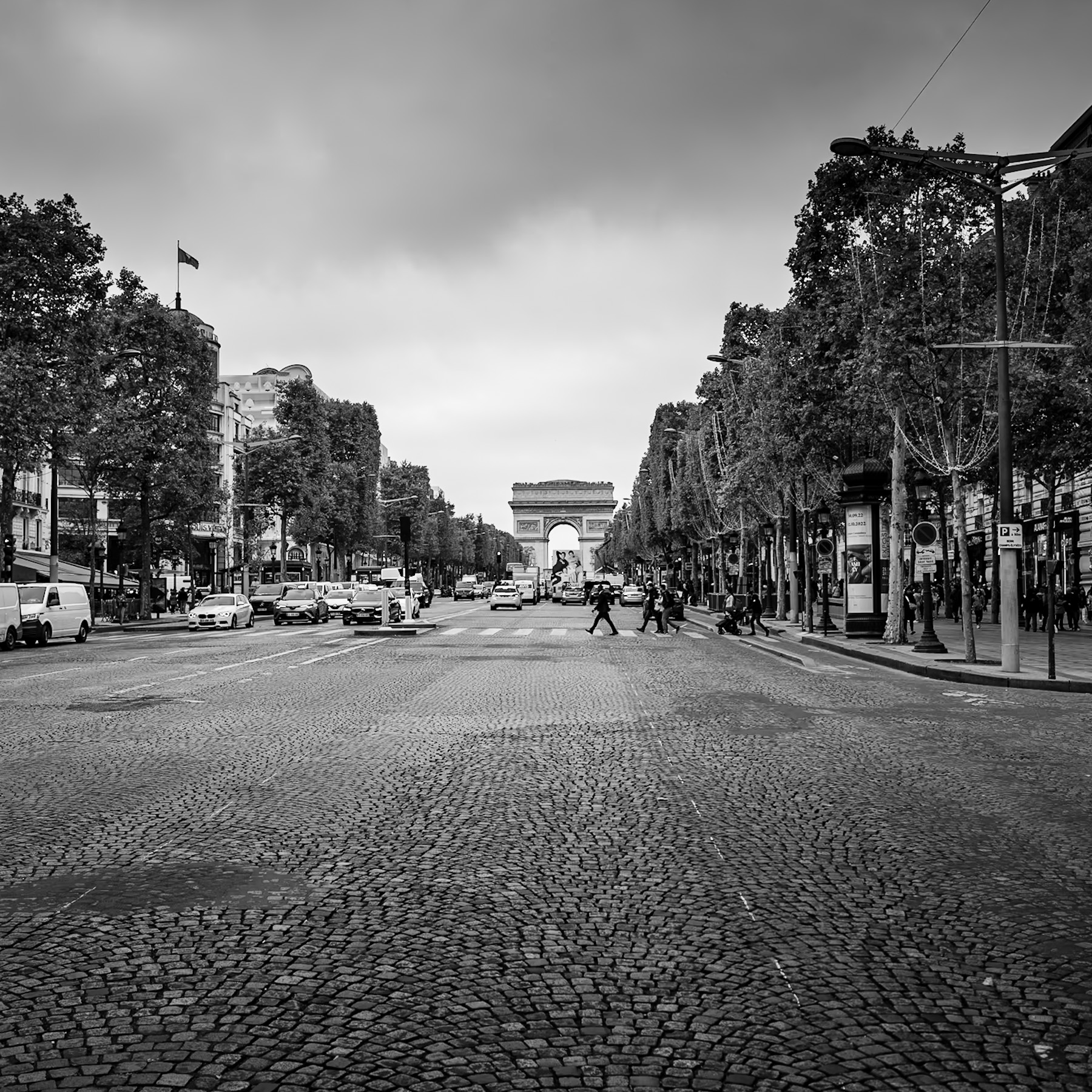
Imagine strolling down one of the world’s most iconic avenues, the legendary Champs-Élysées in Paris. Our gaze sweeps west, drawn irresistibly towards its majestic anchor: the Arc de Triomphe. This isn’t just a postcard view; it’s a window into history, grandeur, and the vibrant pulse of Parisian life, where every cobblestone tells a story.
The Champs-Élysées is far more than just a wide road; it’s the beating heart of the *Axe Historique*, Paris’s grand historical axis stretching from the Louvre to the Grande Arche de la Défense. Conceived in the 17th century, this „Triumphal Way“ was built for royalty and later became the stage for France’s most significant military parades. From celebrating World War victories to the annual Bastille Day processions, this avenue has witnessed pivotal moments in French history. Today, while the parades continue, it serves as a bustling corridor for locals and visitors alike, a continuous flow of modern life against a backdrop of centuries-old splendor.
Dominating the western end of the avenue is the awe-inspiring Arc de Triomphe de l’Étoile. Commissioned by Napoleon Bonaparte in 1806 after his triumph at Austerlitz, it was designed to honor the *Grande Armée* and the brave soldiers of France. Its monumental scale and intricate reliefs depicting scenes from the French Revolutionary and Napoleonic Wars were a powerful statement of imperial might. Today, its role has deepened. Beneath its grand vault lies the Tomb of the Unknown Soldier from World War I, where an eternal flame has burned since 1923. The Arc stands not only as a symbol of victory but also as a poignant memorial to the unidentified fallen, a powerful reminder of both glory and solemn remembrance.
Look closer at the foreground of this classic Parisian scene, and you’ll notice the distinctive *pavés* – the famous cobblestones. While much of Paris has been modernized with asphalt, sections of the Champs-Élysées proudly retain this historic surface. These stones are more than just part of the road; they are embedded in the city’s revolutionary spirit, famously torn up to build barricades during 19th-century uprisings and the student protests of May 1968. Here, they provide a textured, historical foundation upon which the modern world moves. Pedestrians cross, their contemporary fashion a striking contrast to the neoclassical magnificence surrounding them. This image beautifully captures how Paris effortlessly weaves its profound history into the fabric of everyday life, a place where Roman-inspired arches, 19th-century boulevards, and 21st-century bustle perfectly coexist.
The Champs-Élysées is far more than just a wide road; it’s the beating heart of the *Axe Historique*, Paris’s grand historical axis stretching from the Louvre to the Grande Arche de la Défense. Conceived in the 17th century, this „Triumphal Way“ was built for royalty and later became the stage for France’s most significant military parades. From celebrating World War victories to the annual Bastille Day processions, this avenue has witnessed pivotal moments in French history. Today, while the parades continue, it serves as a bustling corridor for locals and visitors alike, a continuous flow of modern life against a backdrop of centuries-old splendor.
Dominating the western end of the avenue is the awe-inspiring Arc de Triomphe de l’Étoile. Commissioned by Napoleon Bonaparte in 1806 after his triumph at Austerlitz, it was designed to honor the *Grande Armée* and the brave soldiers of France. Its monumental scale and intricate reliefs depicting scenes from the French Revolutionary and Napoleonic Wars were a powerful statement of imperial might. Today, its role has deepened. Beneath its grand vault lies the Tomb of the Unknown Soldier from World War I, where an eternal flame has burned since 1923. The Arc stands not only as a symbol of victory but also as a poignant memorial to the unidentified fallen, a powerful reminder of both glory and solemn remembrance.
Look closer at the foreground of this classic Parisian scene, and you’ll notice the distinctive *pavés* – the famous cobblestones. While much of Paris has been modernized with asphalt, sections of the Champs-Élysées proudly retain this historic surface. These stones are more than just part of the road; they are embedded in the city’s revolutionary spirit, famously torn up to build barricades during 19th-century uprisings and the student protests of May 1968. Here, they provide a textured, historical foundation upon which the modern world moves. Pedestrians cross, their contemporary fashion a striking contrast to the neoclassical magnificence surrounding them. This image beautifully captures how Paris effortlessly weaves its profound history into the fabric of everyday life, a place where Roman-inspired arches, 19th-century boulevards, and 21st-century bustle perfectly coexist.
Schreibe einen Kommentar