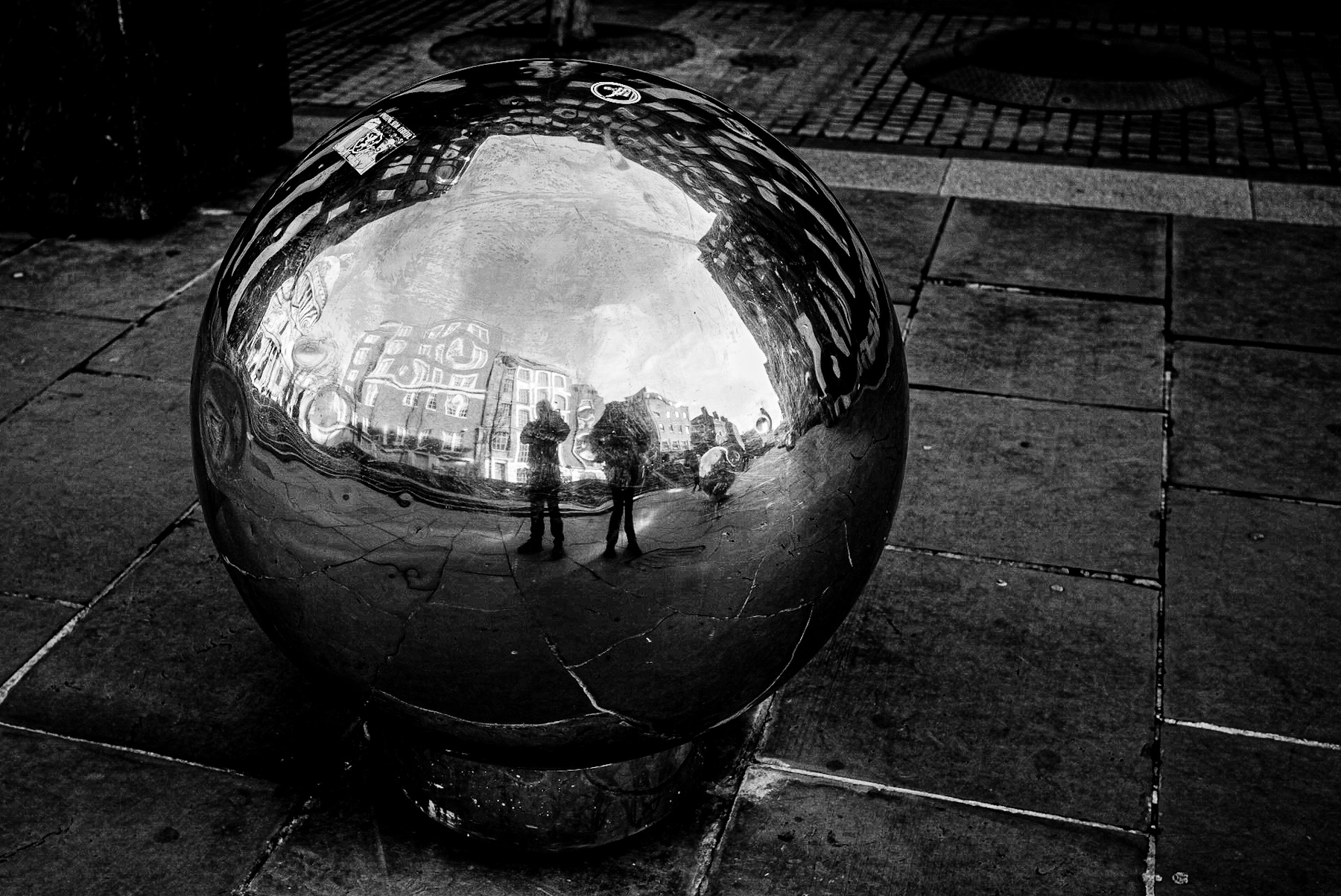
The striking black and white photograph presents a large, highly polished spherical object dominating the foreground, acting as a captivating focal point. Positioned on a textured paved surface, likely a city sidewalk or plaza, this metallic sphere functions as an impromptu mirror, offering a distorted yet rich reflection of its urban surroundings. The monochrome palette accentuates the contrasts, shadows, and intricate details, lending the scene a timeless quality.
Within the sphere’s curved surface, the world outside is warped into a compelling visual narrative. Prominently reflected are architectural structures, characterized by multiple windows and a classical or perhaps early modern European design, suggesting a setting steeped in history. The buildings appear substantial and well-established, their facades echoing stories of past eras. Interspersed with these structural reflections are the silhouettes of two individuals, seemingly captured in a moment of observation or photography. One figure appears to be holding a device, possibly a camera or smartphone, engaging directly with the reflective surface, becoming both subject and observer in the same frame. Their presence grounds the image in the contemporary, creating a bridge between the historical backdrop and the immediate moment.
The use of black and white photography is particularly impactful here. It strips away the distractions of color, compelling the viewer to focus on light, shadow, form, and texture. This aesthetic choice enhances the sense of depth and accentuates the metallic sheen of the sphere, making its reflective properties even more pronounced. The subtle imperfections on the sphere’s surface, whether natural wear or artistic texture, add character and a tactile quality, preventing the object from appearing sterile or entirely artificial. The surrounding pavement, with its visible lines and variations in tone, further emphasizes the urban context and the sphere’s integration into its environment.
Historically, the concept of reflection has fascinated humanity, from ancient polished obsidian mirrors to the sophisticated glass mirrors of the Renaissance. These objects have always offered a glimpse of the self and the world, albeit often altered or inverted. In contemporary urban design, reflective spheres and similar public art installations serve a similar purpose, inviting interaction and providing unique perspectives on familiar landscapes. They act as modern-day scrying tools, momentarily capturing and reinterpreting the dynamic life of a city. This particular sphere, reflecting historical architecture alongside modern individuals, encapsulates the ongoing dialogue between a city’s past and its present. It symbolizes how urban spaces constantly evolve, retaining their historical essence while embracing new forms and interactions.
This image transcends a simple depiction of a street scene; it is a meditation on perception, presence, and the passage of time. The distorted reflections challenge conventional viewing, inviting viewers to consider multiple realities within a single frame. It highlights how public art can subtly influence our interaction with and understanding of our environment, prompting moments of introspection and visual discovery. The monochrome treatment further solidifies its artistic merit, making it a compelling piece of visual storytelling that resonates with themes of city life, historical continuity, and the subjective nature of observation.
Within the sphere’s curved surface, the world outside is warped into a compelling visual narrative. Prominently reflected are architectural structures, characterized by multiple windows and a classical or perhaps early modern European design, suggesting a setting steeped in history. The buildings appear substantial and well-established, their facades echoing stories of past eras. Interspersed with these structural reflections are the silhouettes of two individuals, seemingly captured in a moment of observation or photography. One figure appears to be holding a device, possibly a camera or smartphone, engaging directly with the reflective surface, becoming both subject and observer in the same frame. Their presence grounds the image in the contemporary, creating a bridge between the historical backdrop and the immediate moment.
The use of black and white photography is particularly impactful here. It strips away the distractions of color, compelling the viewer to focus on light, shadow, form, and texture. This aesthetic choice enhances the sense of depth and accentuates the metallic sheen of the sphere, making its reflective properties even more pronounced. The subtle imperfections on the sphere’s surface, whether natural wear or artistic texture, add character and a tactile quality, preventing the object from appearing sterile or entirely artificial. The surrounding pavement, with its visible lines and variations in tone, further emphasizes the urban context and the sphere’s integration into its environment.
Historically, the concept of reflection has fascinated humanity, from ancient polished obsidian mirrors to the sophisticated glass mirrors of the Renaissance. These objects have always offered a glimpse of the self and the world, albeit often altered or inverted. In contemporary urban design, reflective spheres and similar public art installations serve a similar purpose, inviting interaction and providing unique perspectives on familiar landscapes. They act as modern-day scrying tools, momentarily capturing and reinterpreting the dynamic life of a city. This particular sphere, reflecting historical architecture alongside modern individuals, encapsulates the ongoing dialogue between a city’s past and its present. It symbolizes how urban spaces constantly evolve, retaining their historical essence while embracing new forms and interactions.
This image transcends a simple depiction of a street scene; it is a meditation on perception, presence, and the passage of time. The distorted reflections challenge conventional viewing, inviting viewers to consider multiple realities within a single frame. It highlights how public art can subtly influence our interaction with and understanding of our environment, prompting moments of introspection and visual discovery. The monochrome treatment further solidifies its artistic merit, making it a compelling piece of visual storytelling that resonates with themes of city life, historical continuity, and the subjective nature of observation.
Schreibe einen Kommentar