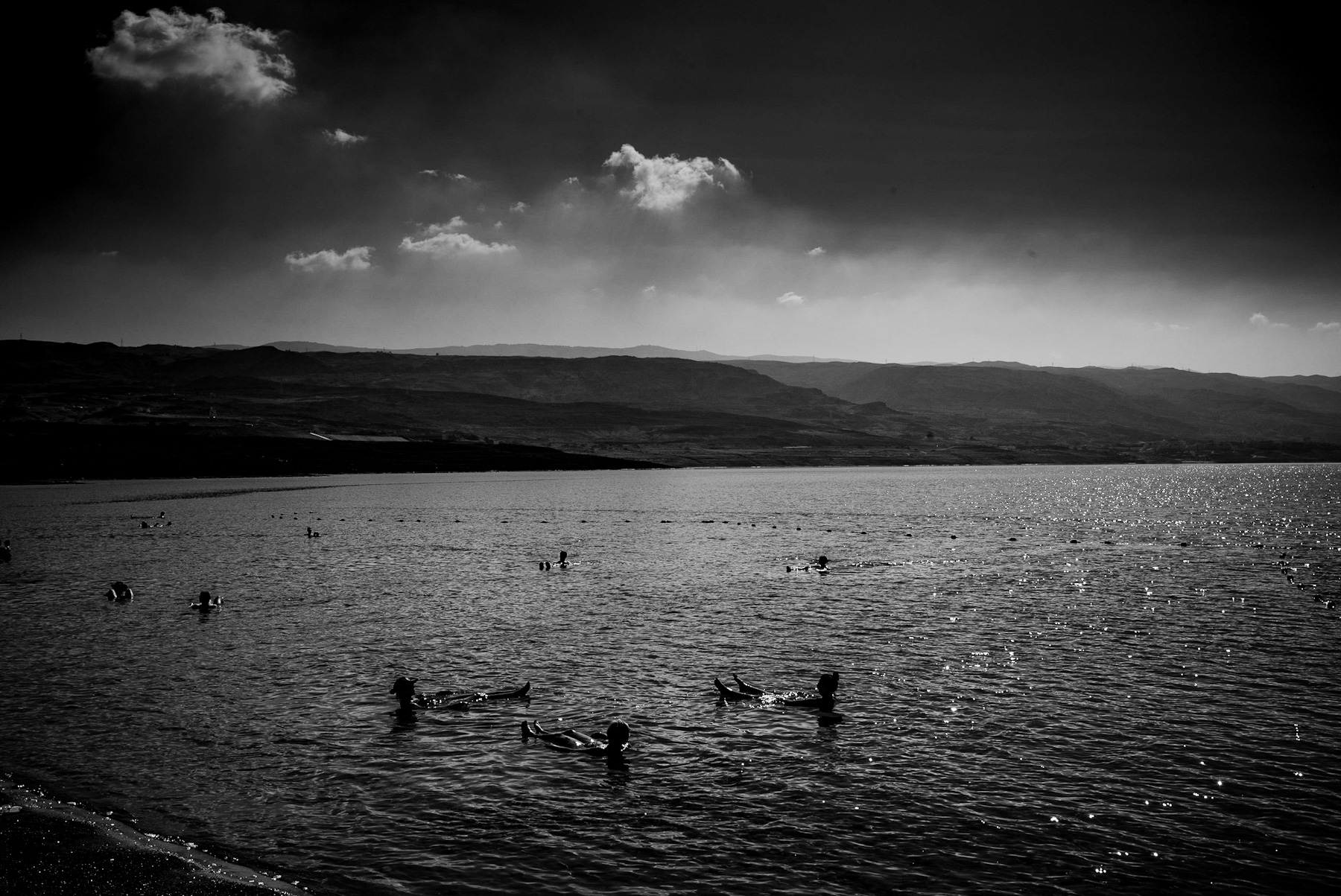
Imagine a scene frozen in time: a striking black and white photograph capturing individuals effortlessly suspended, almost weightless, on a vast expanse of water. The monochromatic palette enhances the dramatic play of light and shadow, from the dark, rippling surface to distant, layered hills and a sky dotted with scattered clouds. It’s a moment of serene suspension, an ethereal quality that immediately transports you to one of the world’s most unique natural wonders: the Dead Sea.
Here, bodies are buoyed by an unseen force, reflecting the extraordinary properties of this inland lake. The expansive horizon, framed by undulating terrain, whispers tales of an ancient and enduring landscape, inviting us to delve into its marvels.
The Dead Sea Phenomenon
The secret to this effortless floating lies in the Dead Sea’s exceptionally high salinity. With a salt concentration around 34.2%—nearly ten times saltier than the ocean—its water density is so high that human bodies are naturally buoyant, making it virtually impossible to sink. This unique physical property has captivated visitors for millennia, offering a distinctive and often therapeutic experience. Beyond the novelty of floating, the mineral-rich waters and mud are renowned for their purported healing and cosmetic benefits, echoing ancient wellness practices.
Echoes of Antiquity
But the Dead Sea is more than just a natural marvel; it’s a profound historical and cultural nexus. This region, famously the lowest point on Earth, has been a silent witness to pivotal moments in human history, making the act of floating here a tangible connection to a rich, unfolding past.
Biblical Narratives: The Dead Sea weaves through countless biblical texts. The infamous cities of Sodom and Gomorrah, often linked to the Dead Sea’s southern basin, serve as stark reminders of ancient tales of judgment and transformation—like Lot’s wife becoming a pillar of salt. King David himself sought refuge in the surrounding wilderness, notably in Ein Gedi, a verdant oasis near the Dead Sea’s western shore, while fleeing King Saul.
Ancient Civilizations and Fortresses: The region held strategic importance for various ancient civilizations. Herod the Great, the Roman-appointed King of Judea, erected formidable fortresses overlooking the Dead Sea, including the iconic Masada. This UNESCO World Heritage site stands as a powerful testament to Jewish rebellion against Roman rule, symbolizing enduring resilience and sacrifice.
The Dead Sea Scrolls: One of the most significant archaeological discoveries of the 20th century unfolded in the Qumran Caves, nestled in the cliffs along the Dead Sea’s northwestern shore. The Dead Sea Scrolls, ancient Hebrew and Aramaic manuscripts, offer invaluable insights into Judaism and early Christianity, dating back over two millennia. These texts provide a rare glimpse into the religious and daily life of communities like the Essenes.
A Timeless Experience
The photograph, with its stark beauty and serene subject matter, beautifully encapsulates an experience that transcends time. To float in the Dead Sea today is to echo the experiences of those who sought its waters centuries ago—whether for healing, refuge, or simply pure wonder. It serves as a powerful visual and experiential link to a landscape that has shaped narratives, witnessed empires rise and fall, and continues to offer a unique interaction with nature. The black and white rendering further accentuates this timeless quality, inviting contemplation on the enduring allure and deep historical roots of this remarkable place.
Here, bodies are buoyed by an unseen force, reflecting the extraordinary properties of this inland lake. The expansive horizon, framed by undulating terrain, whispers tales of an ancient and enduring landscape, inviting us to delve into its marvels.
The Dead Sea Phenomenon
The secret to this effortless floating lies in the Dead Sea’s exceptionally high salinity. With a salt concentration around 34.2%—nearly ten times saltier than the ocean—its water density is so high that human bodies are naturally buoyant, making it virtually impossible to sink. This unique physical property has captivated visitors for millennia, offering a distinctive and often therapeutic experience. Beyond the novelty of floating, the mineral-rich waters and mud are renowned for their purported healing and cosmetic benefits, echoing ancient wellness practices.
Echoes of Antiquity
But the Dead Sea is more than just a natural marvel; it’s a profound historical and cultural nexus. This region, famously the lowest point on Earth, has been a silent witness to pivotal moments in human history, making the act of floating here a tangible connection to a rich, unfolding past.
Biblical Narratives: The Dead Sea weaves through countless biblical texts. The infamous cities of Sodom and Gomorrah, often linked to the Dead Sea’s southern basin, serve as stark reminders of ancient tales of judgment and transformation—like Lot’s wife becoming a pillar of salt. King David himself sought refuge in the surrounding wilderness, notably in Ein Gedi, a verdant oasis near the Dead Sea’s western shore, while fleeing King Saul.
Ancient Civilizations and Fortresses: The region held strategic importance for various ancient civilizations. Herod the Great, the Roman-appointed King of Judea, erected formidable fortresses overlooking the Dead Sea, including the iconic Masada. This UNESCO World Heritage site stands as a powerful testament to Jewish rebellion against Roman rule, symbolizing enduring resilience and sacrifice.
The Dead Sea Scrolls: One of the most significant archaeological discoveries of the 20th century unfolded in the Qumran Caves, nestled in the cliffs along the Dead Sea’s northwestern shore. The Dead Sea Scrolls, ancient Hebrew and Aramaic manuscripts, offer invaluable insights into Judaism and early Christianity, dating back over two millennia. These texts provide a rare glimpse into the religious and daily life of communities like the Essenes.
A Timeless Experience
The photograph, with its stark beauty and serene subject matter, beautifully encapsulates an experience that transcends time. To float in the Dead Sea today is to echo the experiences of those who sought its waters centuries ago—whether for healing, refuge, or simply pure wonder. It serves as a powerful visual and experiential link to a landscape that has shaped narratives, witnessed empires rise and fall, and continues to offer a unique interaction with nature. The black and white rendering further accentuates this timeless quality, inviting contemplation on the enduring allure and deep historical roots of this remarkable place.
Schreibe einen Kommentar