Kategorie: Travel

  • Spain’s Culinary Soul: Jamón Ibérico and Modern Tradition

    Spain’s Culinary Soul: Jamón Ibérico and Modern Tradition

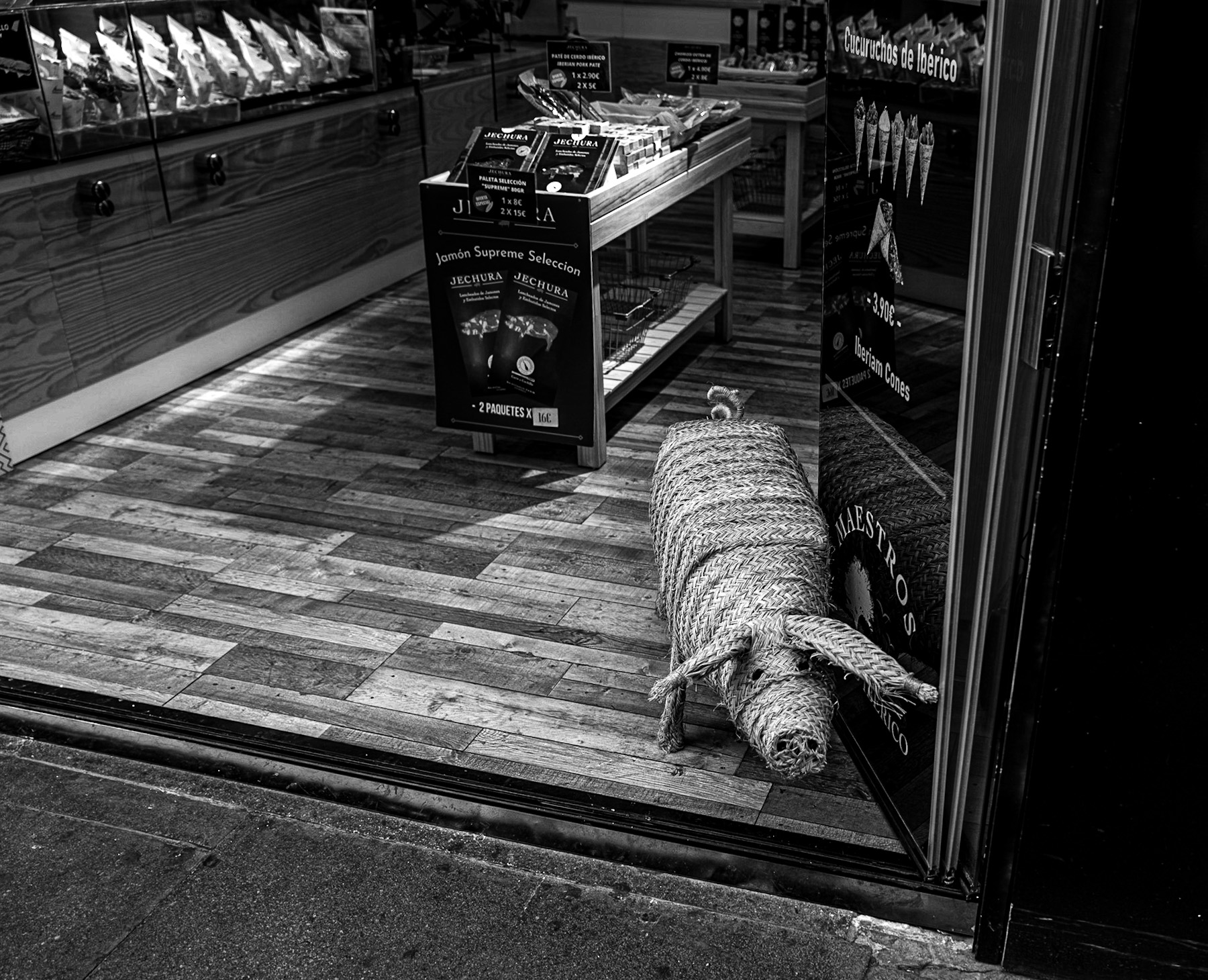
    Step into a world where light dances on rustic wooden floors, framing the entrance to a quintessential Spanish delicatessen. Here, more than just cured meats are sold; it’s a portal to Spain’s rich gastronomic heritage. Guarding the threshold stands a remarkable figure: a pig, meticulously woven from natural fibers, a silent, beautiful tribute to the very heart of the treasures found within. This single, evocative scene perfectly captures centuries of agriculture, meticulous craftsmanship, and unparalleled culinary excellence.
    The Enduring Legacy of Jamón Ibérico
    At the core of such establishments lies one of Spain’s most celebrated culinary gems: Jamón Ibérico. You’ll spot packages labeled „Jamon Supreme Selección“ and „Paleta Selección,“ representing not merely cured meats, but the culmination of a sacred, age-old tradition. This delicacy originates from the magnificent Black Iberian Pig, or *Cerdo Ibérico*, a breed native to the Iberian Peninsula. The highest echelon, **Jamón Ibérico de Bellota**, comes from free-range pigs that roam the breathtaking, oak-studded meadows known as the *dehesa*. During the autumn *montanera* season, these privileged animals feast almost exclusively on acorns (*bellotas*), imbuing the ham with its signature rich, nutty flavor and a uniquely marbled fat that literally melts in your mouth.
    The creation of Jamón Ibérico is nothing short of an art form. Following the initial salting phase, these precious hams are meticulously hung to cure in special cellars (*bodegas*) for an astonishing period—sometimes up to four years. Here, under the natural ebb and flow of temperature and humidity, a slow, patient metamorphosis unfolds, allowing profoundly complex flavors to develop. This tradition, stretching back centuries, began as a method of preservation and has since evolved into a powerful symbol of Spanish cultural identity and culinary prestige.
    Tradition Embraces Modern Convenience
    While deeply steeped in history, the shop pictured brilliantly showcases a seamless fusion of tradition and contemporary convenience. The rustic wooden displays and the artisanal woven pig proudly evoke a sense of heritage and authenticity. Yet, the presentation is unmistakably modern. The exquisite ham is neatly vacuum-packed, guaranteeing optimal quality and freshness for today’s discerning consumer.
    Perhaps most telling is the sign on the glass door: „**Cucuruchos de Ibérico**“ – Iberian Cones. This ingenious adaptation transforms an ancient delicacy into a perfect offering for our fast-paced world. For just a few euros, customers can savor freshly sliced, world-class ham, elegantly served in a convenient paper cone. It elevates a gourmet experience into an accessible, sophisticated street food snack. It’s a stellar example of how Spain’s culinary traditions are not merely static relics, but vibrant, continuously evolving practices that remain relevant and beloved.
    This beautiful juxtaposition of old and new—the ancient craft of curing exceptional ham presented in a convenient, modern format—is precisely the secret to its enduring appeal. It honors the rich tapestry of the past while enthusiastically embracing the present, ensuring that the remarkable legacy of **Jamón Ibérico** continues to thrive for generations to come. The woven pig at the door stands as a silent, powerful testament to this delicate balance, a symbol of the craft that reveres both the animal and the very land from which this exceptional product springs.
  • Tuscany’s Silent Guardians: The Timeless Story of Cypress Trees

    Tuscany’s Silent Guardians: The Timeless Story of Cypress Trees

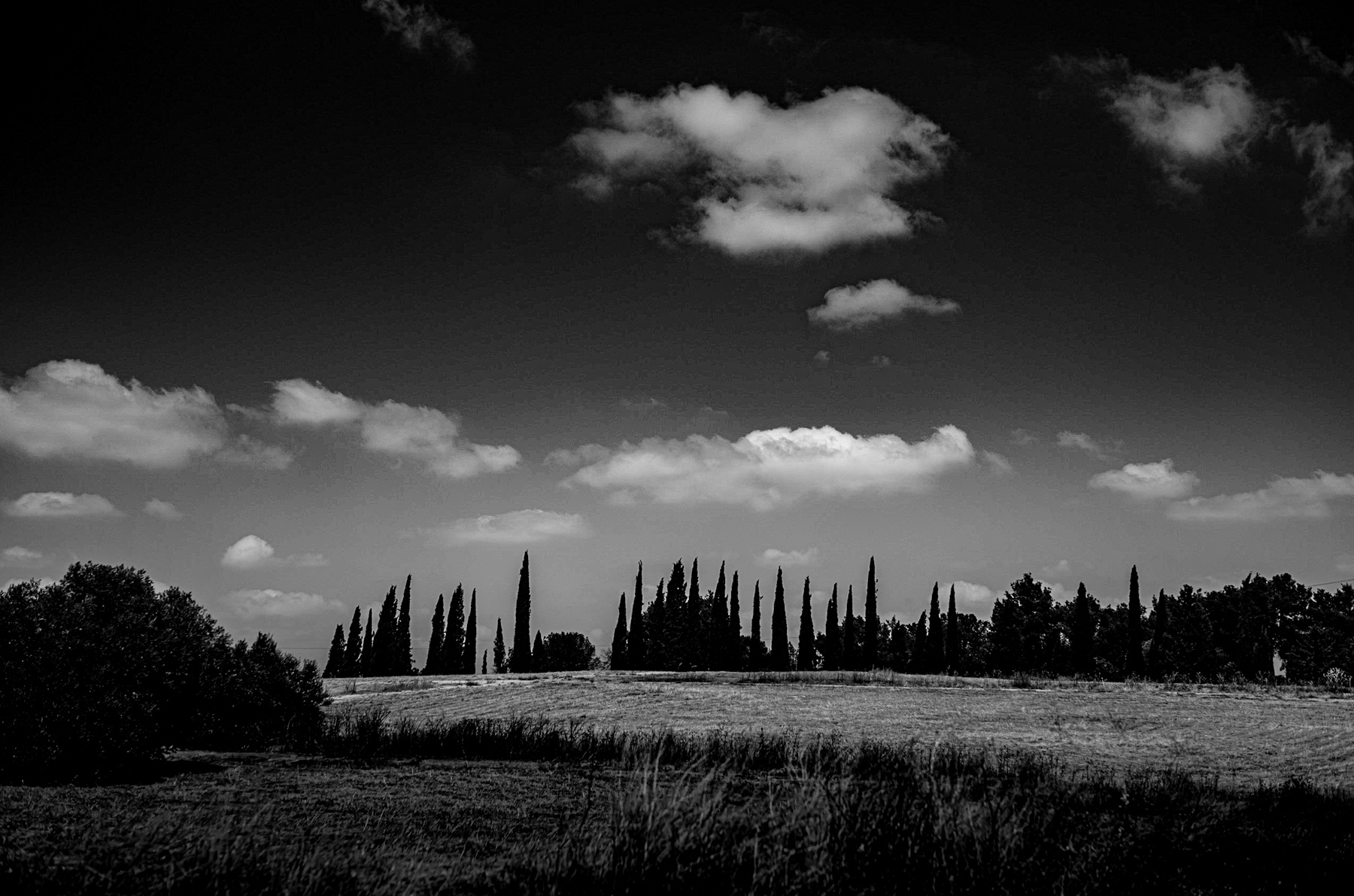
    A stark, black and white photograph captures a scene of profound tranquility and timelessness. Before us lies a classic Mediterranean vista, likely from the rolling hills of Tuscany, Italy. This image is a study in contrast and form, where the absence of color amplifies the dramatic interplay of light and shadow. In the foreground, wild grasses give way to a gently sloping, harvested field. It is the horizon, however, that commands attention. A dense line of Italian Cypress trees stands like dark spires against a luminous sky, their sharp, vertical silhouettes breaking the soft curves of the land.
    **A Masterpiece of Monochrome: Light, Shadow, and Dramatic Composition**
    The power of this image lies in its dramatic composition and high-contrast monochrome palette. The sky is not a gentle grey but a deep, almost black canvas, against which brilliant white clouds drift. This high-contrast rendering gives the scene a powerful, almost theatrical quality. The cypress trees, rendered in deep black, become powerful graphic elements. They are not merely trees but symbols, guardians standing watch over the land. Their varying heights and dense grouping create a rhythmic pattern along the horizon, drawing the viewer’s eye across the frame. The choice of black and white strips the Tuscan landscape of its potentially vibrant greens and blues, forcing the viewer to focus on the fundamental shapes, textures, and the profound history embedded within the scene.
    **The Ancient Roots of the Italian Cypress**
    These are not just any trees. The slender, dark spires are the iconic **Italian Cypress trees** (*Cupressus sempervirens*), and they are deeply woven into the cultural and historical fabric of the Mediterranean. Their story stretches back to antiquity, where they held significant symbolic meaning for ancient civilizations.
    * **Etruscan and Roman Symbolism:** Long before the Roman Empire, the Etruscans, who inhabited ancient Tuscany, associated the cypress with death and the afterlife. This connection was adopted and continued by the Romans, who frequently planted cypress trees at gravesites and cemeteries. Its evergreen nature symbolized eternal life after death, and its straight, upward growth was seen as a connection between the earth and the heavens. The somber, contemplative mood of the photograph echoes this ancient, funerary association of these magnificent trees.
    * **A Renaissance Icon:** The legacy of the cypress tree extends far beyond antiquity. During the Renaissance, the rolling hills of Tuscany, punctuated by these elegant trees, became a favored backdrop for painters. Artists like Leonardo da Vinci and Piero della Francesca immortalized this landscape, cementing its status as the archetypal image of Italian beauty and harmony. The cypress tree transitioned from a symbol of mourning to one of elegance, permanence, and idyllic nature, becoming synonymous with the quintessential Mediterranean landscape.
    This photograph, therefore, does more than just document a beautiful view. It presents a landscape saturated with millennia of human history and symbolism. The silent **cypress trees** are sentinels that have witnessed the rise and fall of civilizations. The stark, black and white treatment freezes this moment, making it feel both ancient and immediate—a powerful reminder of the enduring connection between land, history, and art.
  • El Rinconcillo: A Timeless Portrait of Seville’s Oldest Tapas Bar, Captured in Stillness

    El Rinconcillo: A Timeless Portrait of Seville’s Oldest Tapas Bar, Captured in Stillness

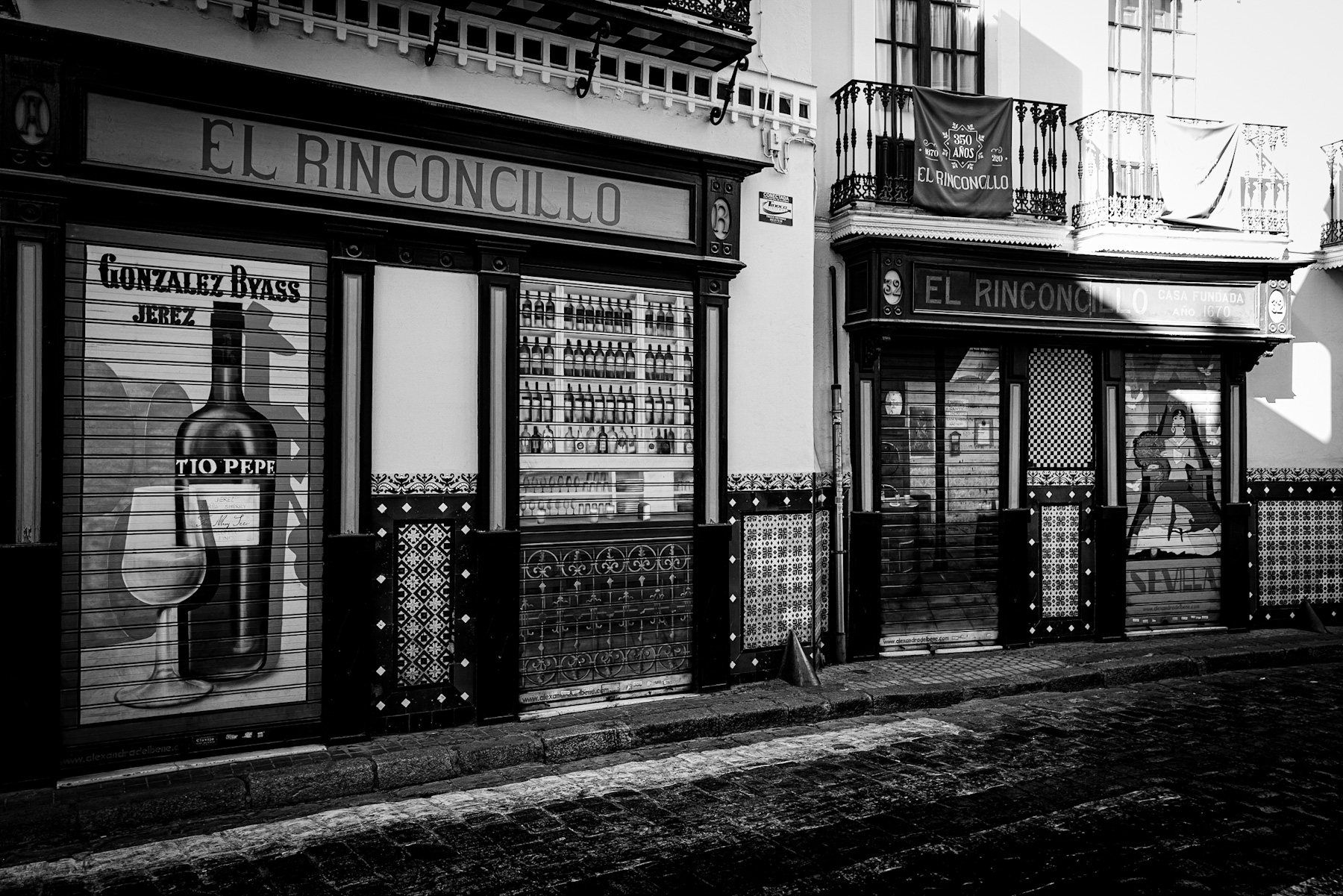
    This black and white photograph captures the historic facade of El Rinconcillo, a cultural and culinary institution nestled in the heart of Seville, Spain. The image, devoid of color, emphasizes the textures and timeless quality of the scene: the worn cobblestones of the street, the intricate patterns of the ceramic tiles, and the aged wood of the storefront. The bar’s shutters are down, suggesting a quiet moment in the early morning or after closing, a pause in the life of a place that has witnessed centuries of activity.
    The visual composition speaks volumes about traditional Andalusian architecture. The lower half of the facade is adorned with classic *azulejos*, the glazed ceramic tiles that are a hallmark of the region. Their geometric and floral patterns provide a decorative contrast to the dark, carved woodwork that frames the windows and doors. Above, a wrought-iron balcony adds to the building’s historic character. The name „EL RINCONCILLO“ is painted in elegant, classic lettering, a signifier of its long-standing presence. The banner hanging from the balcony proudly proclaims „350 AÑOS“ (350 Years), celebrating a milestone anniversary from its founding in 1670. This detail firmly places the establishment not just as a business, but as a historical landmark.
    El Rinconcillo holds the distinguished title of being the oldest bar in Seville and one of the most ancient in all of Spain. Founded in 1670, it began as a *taverna* and has since evolved while retaining its authentic soul. For over three and a half centuries, it has served as a gathering place for locals and a point of pilgrimage for visitors seeking an authentic taste of Sevillian culture. The advertisements on the shutters are also significant. The prominent display for **Tio Pepe**, a world-renowned brand of Fino sherry from the **Gonzalez Byass** cellars in Jerez, is a direct link to the bar’s culinary offerings. Sherry is intrinsic to the Andalusian tapas experience, and El Rinconcillo is celebrated for its selection of local wines and classic dishes. The image of the sherry bottle and *copita* (the traditional glass for sherry) reinforces the bar’s deep connection to the region’s gastronomic traditions.
    While many images of El Rinconcillo depict its bustling interior—with its mahogany bar, hanging cured hams, and patrons enjoying tapas—this photograph offers a different perspective. The closed shutters create a sense of anticipation and reverence. The building itself seems to be at rest, holding within its walls countless stories and conversations from generations past. The strong contrast and deep shadows, characteristic of the bright Spanish sun, carve out the details of the scene, allowing the viewer to appreciate the structure’s enduring beauty without the distraction of modern-day crowds. It is a portrait of a legend in a moment of quiet contemplation, a silent testament to its incredible longevity.
  • Silent Sentinels: Ancient Ruins Guarding a Rocky Ridge

    Silent Sentinels: Ancient Ruins Guarding a Rocky Ridge

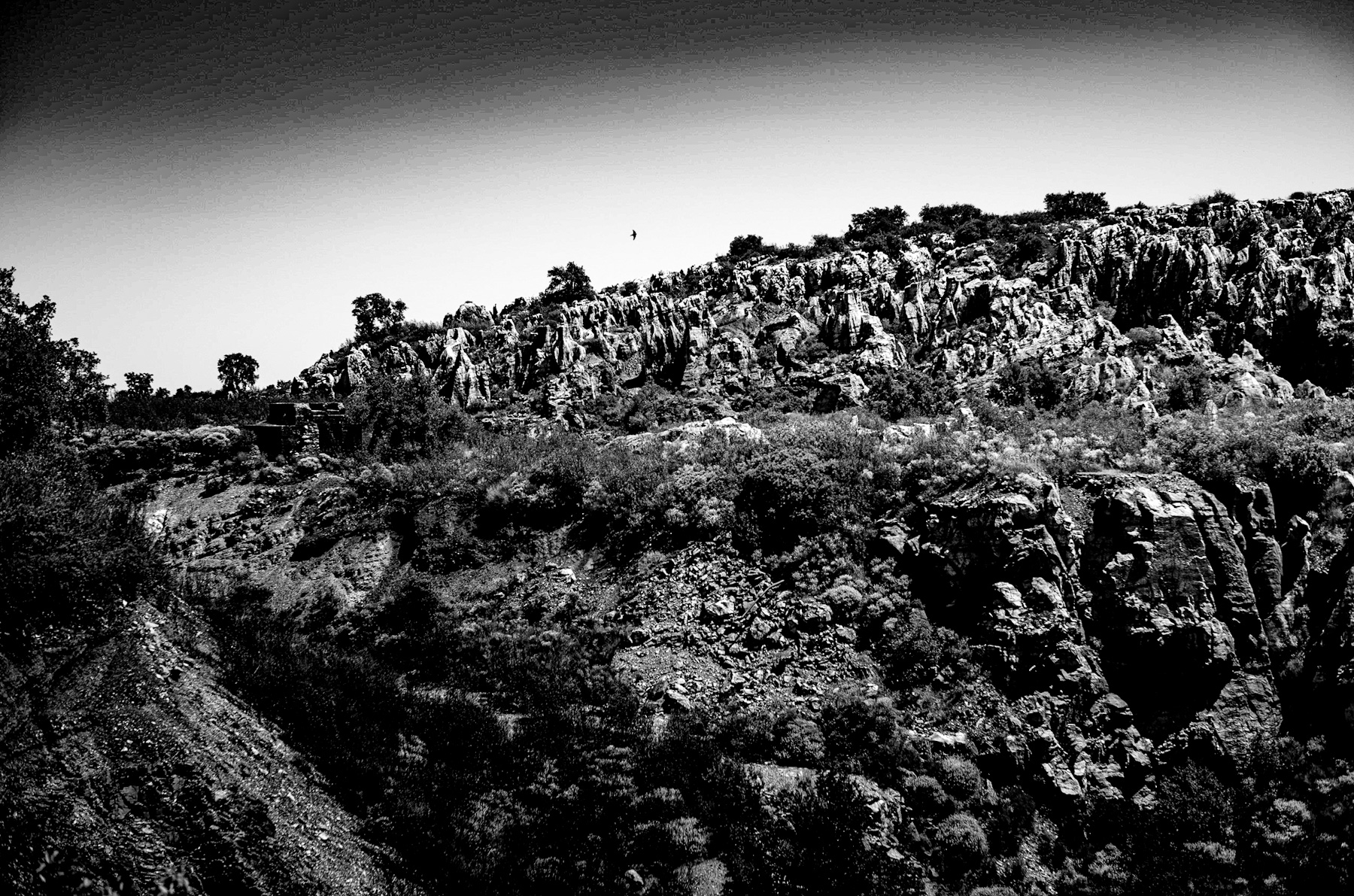
    This stark, black-and-white photograph transports us to a landscape both timeless and deeply etched with history’s scars. It captures a rugged, sun-drenched hillside where nature and the enduring remnants of human ambition exist in a delicate, powerful balance. More than just an image, it’s a profound meditation on resilience, memory, and the silent stories embedded in stone.
    A Landscape Carved by Time
    The dominant feature here is the formidable, rocky terrain. The high-contrast monochrome treatment masterfully emphasizes the texture and form of the geological formations. Every crevice and jagged edge is sharply defined, a testament to millennia of wind and weather shaping this incredible vista. Yet, the rock face isn’t barren; it’s dotted with hardy, low-lying scrub and scattered trees that cling tenaciously to life in what appears to be an unforgiving environment. Their dark silhouettes stand out against the brighter tones of the rock and the smooth, gradient sky. A lone bird, captured mid-flight, adds a sense of scale and transient life to this otherwise permanent-seeming panorama. It soars above a world that has remained largely unchanged for centuries.
    Whispers of a Forgotten Past
    Nestled within this natural fortress are the subtle but unmistakable signs of human history. Partially obscured by tenacious vegetation, the angular lines of a stone structure emerge from the hillside. These aren’t the grand columns of a sprawling temple but the humble, functional ruins of what might have been a watchtower, a small fortification, or even a simple shepherd’s shelter.
    Given the almost Mediterranean feel of the landscape, one can speculate on its origins. Could it be a Roman *castellum*, a small fort built to oversee a vital valley or a strategic route? Perhaps it’s a Moorish *atalaya*, a watchtower from the period of Islamic rule in the Iberian Peninsula, designed to communicate with other fortifications via smoke or light signals. Alternatively, it could be a far older, prehistoric settlement, its original purpose now lost to the sands of time.
    Whatever its specific function, the structure unequivocally speaks of a primal human need for security and vantage. The people who built it chose this high ground for a reason: to see and not be seen, to protect themselves from threats, and to survey the land that sustained them. These ancient stones are a silent testament to their lives, their struggles, and their eventual departure, leaving the structure to be slowly reclaimed by the very nature it was once built to dominate.
    The Power of Monochrome
    The deliberate choice to render this powerful scene in black and white is an artistic stroke that significantly enhances its historical resonance. Stripped of the potential distractions of color, the viewer is compelled to focus on the fundamental elements: light, shadow, texture, and form. The deep blacks in the crevices of the rocks and the shadows of the bushes suggest mystery and the unknown depths of time. Meanwhile, the bright, almost-white highlights on the sun-bleached stones convey the intense heat and dry climate. This beautiful lack of color lends the photograph a documentary quality, as if it were a historical record itself, powerfully connecting the present moment of its capture to the deep past it depicts. The image transcends being merely a photograph of a place; it becomes a profound portrait of time itself.
  • Echoes in the Alleys: A Timeless Glimpse into Seville’s Historic Heart

    Echoes in the Alleys: A Timeless Glimpse into Seville’s Historic Heart

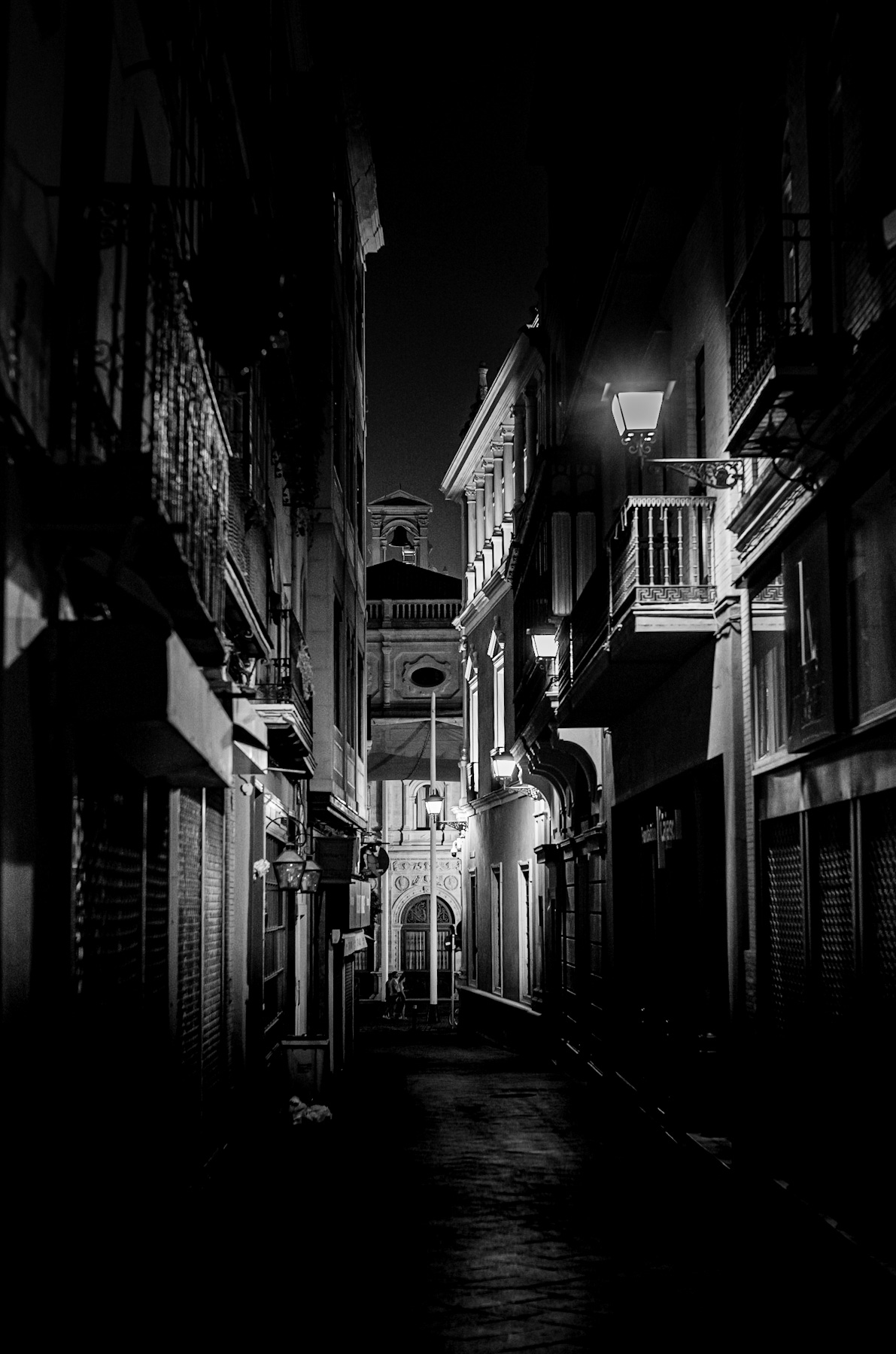
    A narrow passage cuts through the deep Andalusian night, illuminated only by the soft, intermittent glow of ornate streetlamps. This black and white photograph captures more than just a street; it freezes a moment in a place where centuries of history converge. The dramatic play of light and shadow, a technique known as chiaroscuro, strips the scene of modern distractions, revealing the timeless textures of stone, iron, and plaster. It is an invitation to walk through a living museum, where every corner holds a story.
    **The Anatomy of a Timeless Scene**
    The composition leads the eye down a cobblestone path, worn smooth by generations of footsteps. On either side, the walls of historic buildings rise steeply, creating an intimate, canyon-like effect. Wrought-iron balconies, a signature of Spanish architecture, jut out into the darkness, their intricate metalwork silhouetted against the lit windows and walls behind them. The buildings themselves are a tapestry of styles—some with the simple, stark facades of residential homes, others hinting at grandeur with classical columns and decorative cornices. At the far end of the alley, framed perfectly by the towering walls, a Baroque bell tower stands as a focal point, its presence a constant reminder of the city’s deep-rooted faith and artistic heritage.
    **A Street Forged by Sun and Strategy**
    This labyrinthine layout is not an accident of time but a deliberate design, a legacy of the city’s Moorish past. When Seville, then known as *Isbiliya*, was a major capital in Al-Andalus, its streets were engineered to combat the fierce summer sun. The narrowness of the alleys ensures they remain in shadow for most of the day, creating a cooler microclimate. This design also served a defensive purpose, creating a confusing maze for potential invaders that was easily defended by those who knew its secrets. What we see in this photograph is the enduring result of climate-responsive and strategic urban planning from over a thousand years ago.
    **Layers of History Etched in Stone**
    While the blueprint of the street is Moorish, the architectural details tell a story of subsequent eras. Following the *Reconquista* in the 13th century, Christian culture began to layer itself onto the existing city. Churches and convents were built, often on the sites of former mosques. The bell tower visible in the distance is a prime example of this transition. Its Baroque style, popular in the 17th and 18th centuries, speaks to the city’s immense wealth during Spain’s Golden Age, when it held a monopoly on trade with the Americas. The ornate doorways and classical elements seen on the buildings are further testaments to this period of prosperity.
    This single photograph, therefore, encapsulates the complex identity of a city like Seville. It is a visual representation of a cultural palimpsest, where a Moorish foundation is adorned with Renaissance and Baroque artistry. The darkness conceals the noise of the 21st century, allowing the whispers of the past to emerge from the stones, telling a silent, powerful story of conquest, faith, and artistry.
  • Kopfsteinpflaster-Chroniken: Entdecke die zeitlosen Gassen Andalusiens

    Kopfsteinpflaster-Chroniken: Entdecke die zeitlosen Gassen Andalusiens

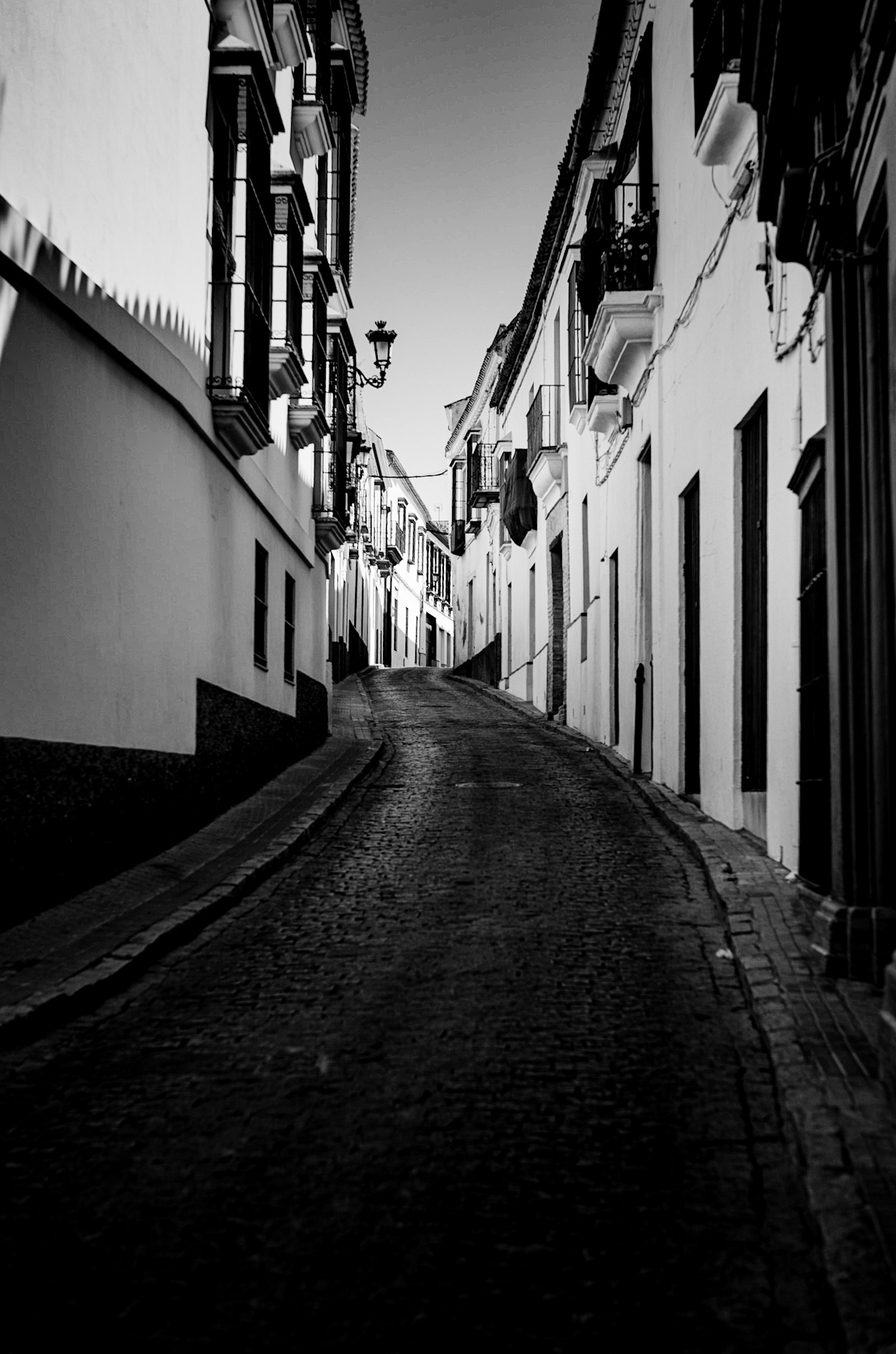
    Dieses faszinierende Foto entführt uns direkt in das Herz südeuropäischer Urbanität. In tiefem Schwarz-Weiß gehalten, betont es die historische Tiefe und die feinen architektonischen Nuancen einer Szene, die schon Tausende von Jahren alt sein könnte. Eine enge, gewundene Kopfsteinpflasterstraße schlängelt sich sanft bergauf, gesäumt von imposanten, weiß getünchten Gebäuden. Die monochromatische Darstellung blendet alle modernen Ablenkungen aus und lädt uns ein, uns ganz auf Textur, Licht, Schatten und die unzähligen Geschichten zu konzentrieren, die sich in diese alten Pfade eingeschrieben haben.
    Visuelle Symphonie aus Licht und Schatten
    Das gesamte Bild wird von einem dramatischen Spiel aus Licht und Schatten beherrscht. Sonnenlicht, vermutlich von einem tief stehenden Winkel, streift über die Szene und taucht die makellosen weißen Fassaden auf der rechten Seite in helles Licht. Gleichzeitig wirft es tiefe, gezackte Schatten auf die linke Wand. Dieser faszinierende Kontrast schafft nicht nur eine atemberaubende Ästhetik, sondern hebt auch jedes architektonische Detail hervor: die robusten schmiedeeisernen Gitter, die die Fenster im Erdgeschoss schützen, die zarten Balkone mit ihren kunstvollen Eisenarbeiten und die subtilen Texturen der verputzten Wände. Eine klassische Straßenlaterne, die von einem der Gebäude hängt, thront wie ein einsamer Wächter und erinnert an vergangene Abendspaziergänge, als solche Lichtquellen unentbehrliche Wegweiser waren.
    Das Kopfsteinpflaster selbst ist ein zentraler Fokuspunkt. Seine unebene Oberfläche reflektiert einen sanften Glanz, der auf Feuchtigkeit oder vielleicht einfach auf den glatten Glanz hindeutet, der durch Jahrhunderte von Fußgängerverkehr entstanden ist. Die Perspektive zieht den Blick nach oben und in die Ferne, was Kontinuität und eine Reise tief in das Herz der Altstadt verspricht. Die Gebäude, deren Terrakotta-Dachziegel nur knapp an der Oberkante sichtbar sind, scheinen sich leicht zueinander zu neigen. Dies schafft ein Gefühl von Geborgenheit und Intimität – ein Merkmal, das typisch für historische Stadtplanung ist.
    Echos der Geschichte: Al-Andalus und darüber hinaus
    Dieses Straßenbild erinnert stark an das reiche historische Erbe Andalusiens, insbesondere an seine maurische und römische Vergangenheit. Die hier erkennbaren Designprinzipien – enge, gewundene Straßen und dicht aneinandergereihte Häuser – waren nicht nur ästhetische Entscheidungen. Sie waren vielmehr praktische Lösungen, die aus Jahrhunderten der Anpassung an das mediterrane Klima und die verschiedenen kulturellen Einflüsse entstanden sind.
    Während der Epoche von Al-Andalus (711-1492 n. Chr.), als ein Großteil der Iberischen Halbinsel unter muslimischer Herrschaft stand, erblühten Städte wie Sevilla, Córdoba und Granada zu blühenden Zentren des Lernens und der Kultur. Die Stadtplanung dieser Zeit legte großen Wert auf Schatten und natürliche Belüftung. Enge Gassen minimierten die direkte Sonneneinstrahlung und sorgten dafür, dass die Innenräume der Häuser auch in den glühend heißen Sommern kühl blieben. Der weiße Kalkanstrich der Gebäude, eine Tradition, die bis heute fortbesteht, diente einem ähnlichen Zweck, indem er Sonnenlicht und Hitze reflektierte.
    Doch auch nach der maurischen Ära entwickelten sich diese Straßen kontinuierlich weiter und wurden Zeugen der Reconquista sowie nachfolgender Jahrhunderte spanischer Geschichte. Die schmiedeeisernen Balkone und Fenstergitter, wenngleich mit einigen maurischen Vorläufern, wurden in späteren Epochen, oft unter dem Einfluss von Renaissance und Barock, stärker ausgeprägt. Sie boten Privatsphäre und Sicherheit und ermöglichten den Bewohnern gleichzeitig, das lebhafte Treiben auf der Straße zu beobachten. Die oft von Hand verlegten Kopfsteinpflaster erzählen von einer Zeit vor dem Asphalt, als Langlebigkeit und lokale Materialien die Infrastruktur bestimmten. Sie sind eine greifbare Verbindung zur römischen Ingenieurskunst, die viele dieser Pflastertechniken in die Region einführte.
    Ein zeitloses urbanes Erlebnis
    Durch den bewussten Einsatz von Schwarz-Weiß geht dieses Foto weit über bloße Dokumentation hinaus. Es verwandelt die Szene in eine tiefe Meditation über Zeit, Erbe und den unvergänglichen Geist von Orten, die von der Geschichte geformt wurden. Es lädt uns ein, über die unzähligen Schritte nachzudenken, die diese Steine schon getragen haben, über die Gespräche, die in diesen Mauern geflüstert wurden, und über den unaufhörlichen Lebensfluss, der sich durch diese historischen urbanen Arterien schlängelt. Solche Straßen sind weit mehr als nur Wege; sie sind lebendige Museen. Sie bieten eine tiefgreifende Verbindung zur Vergangenheit und ein authentisches Erlebnis der südeuropäischen Kultur. Sie erinnern uns daran, dass manche Designs, aus Notwendigkeit und Tradition geboren, eine zeitlose Schönheit besitzen, die uns weiterhin fasziniert und inspiriert.
    Keywords: Andalusische Architektur, historische Gasse, Kopfsteinpflasterstraße, Schwarz-Weiß-Fotografie, Al-Andalus, maurisches Erbe, Stadtgeschichte, spanische Kultur, traditionelle Stadtplanung, europäisches Erbe, Reisefotografie, Licht und Schatten, zeitlose Schönheit. :status publish
  • The Giralda: Seville’s Architectural Masterpiece Through Time and Shadow

    The Giralda: Seville’s Architectural Masterpiece Through Time and Shadow

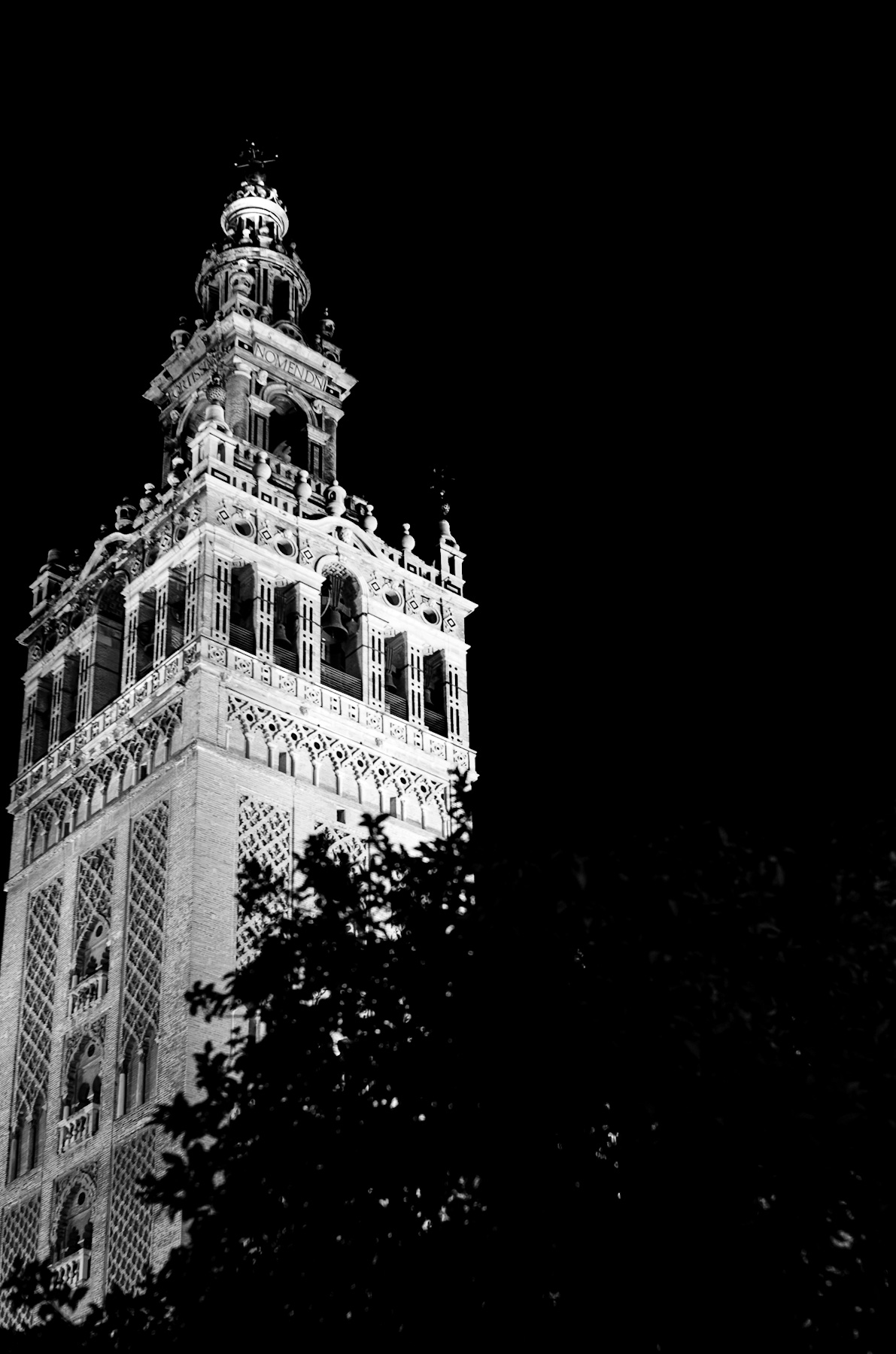
    The accompanying photograph captures the iconic Giralda tower of Seville in a striking black and white composition, presenting an almost ethereal vision against the inky darkness of night. The low-angle perspective emphasizes its towering height and architectural grandeur, while the monochrome palette accentuates the intricate textures and forms of its multifaceted design. Silhouetted foliage in the foreground adds a layer of depth and mystery, framing the illuminated structure and drawing the viewer’s eye upwards to its historic pinnacle.
    Every arch, every patterned brick, and every sculpted detail of the Giralda is brought into sharp relief by the stark contrast of light and shadow. The upper sections, particularly the elaborate bell chamber, reveal a complexity of design that speaks volumes of the craftsmanship across different eras. The absence of color strips away modern distractions, allowing the observer to truly appreciate the tower’s structural elegance and the historical narratives etched into its very stone. This visual approach transforms the landmark into a timeless monument, a silent observer of centuries.
    **From Minaret to Bell Tower**
    The Giralda’s history is as layered and rich as its intricate facade. Its origins trace back to the **Almohad caliphate** in the late 12th century, when it was conceived as the minaret for the Great Mosque of Seville. Designed by the esteemed architect Ahmad ibn Baso, the minaret was a masterpiece of Islamic engineering and artistry, intended to rival the Koutoubia Mosque in Marrakesh. Its robust brickwork and delicate geometric patterns, including the *sebka* or rhomboid network, are hallmarks of Almohad architecture, reflecting a period of significant cultural and intellectual flourishing in Al-Andalus. This original section, constituting the main body of the tower, served as a beacon for the faithful, calling them to prayer five times a day.
    Following the **Reconquista** in 1248, when Seville fell to Christian forces, the Great Mosque was consecrated as a cathedral. Remarkably, the minaret was preserved, a testament to its architectural brilliance and structural integrity. However, its purpose was transformed. In the 16th century, the tower underwent a significant metamorphosis with the addition of a new, distinctly **Renaissance-style bell chamber**, designed by Hernán Ruiz II. This masterful integration saw the original Islamic minaret crowned with a series of ornate balconies, arches, and a domed structure, culminating in the installation of the **Giraldillo**, a bronze weather vane depicting Faith, which gave the tower its popular name. This fusion of Islamic and Christian architectural styles makes the Giralda a unique symbol of Seville’s cultural synthesis.
    **A Timeless Icon**
    Today, the Giralda stands as the bell tower of the **Seville Cathedral**, a **UNESCO World Heritage site**, and an enduring emblem of the city. It represents a fascinating dialogue between different civilizations, a physical manifestation of Seville’s evolving identity through centuries of Moorish rule and Christian reconquest. The photograph, with its dramatic interplay of light and dark, powerfully conveys this historical depth, inviting reflection on the monumental shifts that shaped not only this architectural marvel but the very fabric of Spanish history. It is a compelling visual narrative, a silent testament to the enduring power of design and the indelible marks left by time.
    :status publish :post_status publish
  • Tapas, Licht & Schatten: Das Zeitlose Geheimnis Europäischer Nächte

    Tapas, Licht & Schatten: Das Zeitlose Geheimnis Europäischer Nächte

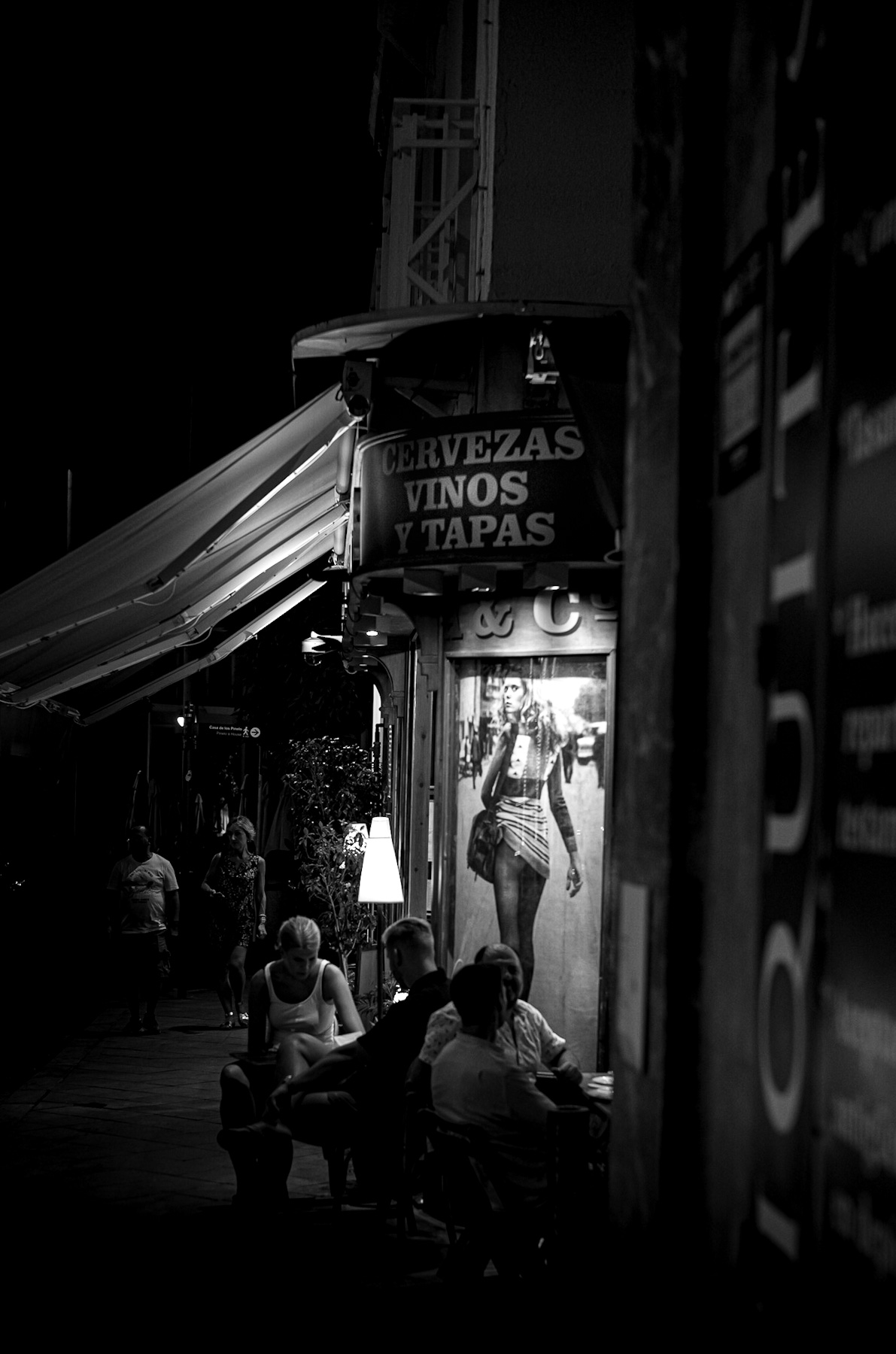
    Stell dir vor: Eine laue Südeuropäische Nacht, das sanfte Gemurmel von Gesprächen, der Duft von frisch zubereiteten Tapas in der Luft. Ein Schwarz-Weiß-Foto kann mehr erzählen als tausend Worte – und dieses eine entführt uns direkt in das Herz eines solchen zeitlosen Moments. Die monochromen Töne ziehen den Betrachter sofort in eine nächtliche Szene, die so charakteristisch für das urbane Leben in Südeuropa ist.
    ### Wo das Leben im Schatten tanzt
    Gebadet im Wechselspiel von künstlichem Licht und tiefen Schatten, fängt das Bild eine lebendige Straßenecke ein, an der sich soziale Interaktionen unter dem Mantel der Nacht entfalten. Einladend leuchtet das Schild „CERVEZAS VINOS Y TAPAS“ aus der Dunkelheit hervor, ein wahrer Leuchtturm für gesellige Stunden. Es ist die Essenz einer spanischen Erfahrung, destilliert in einem einzigen Bild, das uns einlädt, Teil dieser Tradition zu werden.
    Die Szene lebt von den Menschen, die draußen sitzen, vertieft in Gespräche, die Abendstimmung genießend. Ihre entspannten Haltungen erzählen Geschichten von gemeinsamen Momenten, von der Verbundenheit, die das **europäische Nachtleben** so einzigartig macht. Das weiche Licht einer modernen Straßenlampe und der warme Schein des Lokals formen Gesichter und Texturen, fangen ehrliche Ausdrücke und Gesten ein. Im Hintergrund verschwimmen andere Passanten in den Schatten, ein subtiler Hinweis auf die geschäftige Straße, der die Intimität des Vordergrunds nur noch verstärkt.
    ### Die Geschichte hinter der Tapa: Mehr als nur ein Snack
    Die **Tapas-Kultur** ist tief in der spanischen Gesellschaft verwurzelt, eine Tradition, die sich über Jahrhunderte entwickelt hat. Ursprünglich vielleicht einfache „Deckel“ (Tapa bedeutet Deckel), um Insekten von Getränken fernzuhalten, sind diese kleinen Gerichte zu einem aufwändigen kulinarischen und sozialen Ritual geworden.
    Tapas sind mehr als nur Essen; sie verkörpern eine Lebensweise – Gemeinschaft, Teilen und ausgedehnte soziale Interaktion an öffentlichen Orten. Dieses Foto fängt diese Tradition perfekt ein: Menschen kommen zusammen, nicht nur um zu essen, sondern um sich zu verbinden. Eine Praxis, die Generationen überdauert und den **mediterranen Lebensstil** bis heute prägt.
    ### Schwarz-Weiß: Zeitlose Kunst trifft moderne Welt
    Ein faszinierender Kontrast: Das große Plakat einer Frau im Schaufenster des Lokals. Ihr stilisiertes Bild, ein Produkt zeitgenössischer Werbung, steht im subtilen Gegensatz zur organischen, jahrhundertealten Tradition des Essens auf der Straße. Es zeigt, wie urbane Umgebungen sich ständig weiterentwickeln, wo kommerzielle Kunst und alte Bräuche nebeneinander existieren.
    Die Wahl der **Schwarz-Weiß-Street-Fotografie** verstärkt diesen Sinn für Zeitlosigkeit. Sie lenkt von Farbablenkungen ab und konzentriert sich auf Form, Licht und die rohen Emotionen des Augenblicks. Diese Ästhetik ist eine Hommage an die Meister der urbanen Fotografie, die verstanden, dass Schatten und Lichter Geschichten viel tiefer erzählen können als lebhafte Farbtöne.
    Dieses meisterhafte Spiel von Licht und Schatten, dieser Fokus auf menschliche Verbindung, macht das Foto zu weit mehr als nur einer Momentaufnahme. Es ist ein visuelles Zeugnis der anhaltenden Anziehungskraft **historischer Esstraditionen** und des pulsierenden **urbanen sozialen Lebens**, das sie fördern. Es erinnert uns daran, dass trotz der neuen Technologien der einfache Akt des Zusammenseins mit anderen bei Speis und Trank ein grundlegendes menschliches Bedürfnis bleibt und ein Eckpfeiler des kulturellen Erbes, besonders dort, wo der Geist der Straße eine Erweiterung des Zuhauses ist.
    Diese **Nachtfotografie** fängt nicht nur einen Moment ein, sondern das Echo jahrhundertelanger gemeinsamer Erfahrungen. Welchen Ort fällt Ihnen ein, der diese zeitlose Geselligkeit am besten verkörpert?
  • Verborgene Geschichten im Sand: Ein zeitloser Blick auf Spaniens historische Plaza de Toros

    Verborgene Geschichten im Sand: Ein zeitloser Blick auf Spaniens historische Plaza de Toros

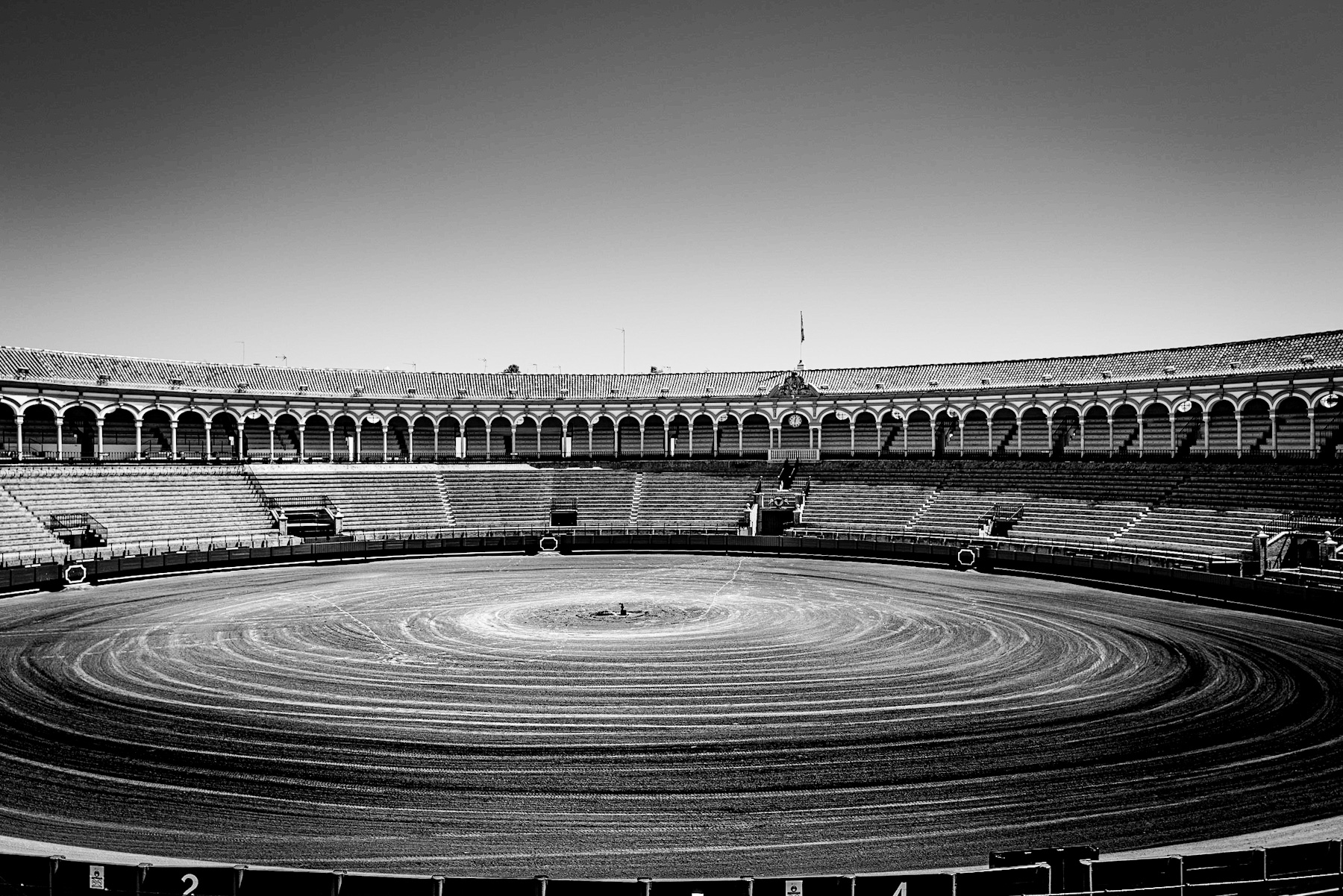
    Die eindringliche Schwarz-Weiss-Fotografie fängt die tiefe Leere und die dauerhafte Erhabenheit einer traditionellen spanischen Stierkampfarena, einer **Plaza de Toros**, ein. Ohne ihre lebhaften Farben betont das Bild die architektonischen Linien, den starken Kontrast von Licht und Schatten und die texturierten Oberflächen. Es lädt zur Betrachtung der Jahrhunderte von Geschichte ein, die in ihren Mauern eingeschlossen sind. Die Abwesenheit einer Menschenmenge, des Spektakels selbst, verwandelt die Arena in eine monumentale Skulptur, ein Zeugnis eines reichen, komplexen kulturellen Erbes.
    **Die stille Bühne: Arena und Tribünen**
    Im Herzen des Bildes liegt der akribisch geharkte Sand der Arena, gezeichnet von konzentrischen Kreisen, die von jüngsten Vorbereitungen oder vergangenen Ereignissen erzählen. Diese Muster, in die Erde geätzt, sind stille Zeugen unzähliger Momente von Drama, Geschick und Tradition. Die weitläufigen, gestuften Tribünen, scheinbar endlos in ihrer Ausdehnung, erheben sich um die zentrale Bühne. Jede Steinbank, jetzt leer, vibrierte einst mit der kollektiven Energie Tausender von Zuschauern – ein Mikrokosmos der Gesellschaft, versammelt, um ein tief verwurzeltes kulturelles Ritual zu erleben. Die Grösse der Sitzplätze unterstreicht die Bedeutung, die diese **historischen Arenen** einst hatten, konzipiert, um ganze Gemeinschaften zu beherbergen.
    **Architektonische Pracht und kulturelles Erbe**
    Oberhalb der Sitzplätze rahmt eine elegante Arkade den oberen Rand der Stierkampfarena. Dieses architektonische Merkmal, gekennzeichnet durch eine Reihe anmutiger Bögen, die von Säulen getragen werden, ist ein Markenzeichen vieler historischer spanischer Gebäude und spiegelt oft **maurische** und **neoklassizistische Einflüsse** wider. Das Dach mit Ziegeln, sichtbar auf der Struktur, fügt eine weitere Ebene traditioneller Handwerkskunst hinzu. Solche aufwendigen Details verwandeln die Stierkampfarena von einem blossen funktionalen Raum in ein bedeutendes architektonisches Wahrzeichen, das oft in das Stadtbild integriert ist. Die Anwesenheit eines Zifferblatts und einer Flagge deutet zudem auf einen zentralen, vielleicht zeremoniellen Eingang oder einen historisch wichtigen Abschnitt der Struktur hin. Diese Elemente unterstreichen gemeinsam den Status der Stierkampfarena nicht nur als Veranstaltungsort, sondern als Gebäude von bürgerlichem und **spanischem Kulturerbe**.
    **Ein Erbe voller Tradition: Die Geschichte des Stierkampfes**
    Die **Plaza de Toros** ist untrennbar mit dem **Stierkampf** oder der *Tauromaquia* verbunden, einer Tradition, deren Wurzeln bis zu alten iberischen Ritualen und mittelalterlichen Reitwettkämpfen zurückreichen. Die ersten permanenten Stierkampfarenen, wie die abgebildete, entstanden im Spanien des 18. Jahrhunderts und formalisierten, was zuvor Strassenspektakel gewesen waren. Diese Arenen wurden zu Epizentren des kulturellen Lebens und beherbergten nicht nur Stierkämpfe, sondern auch Reitershows, Theateraufführungen und öffentliche Versammlungen.
    Der Stierkampf, oft eher als Kunstform denn als blossen Sport betrachtet, verkörpert ein komplexes Zusammenspiel von Mut, Geschick, Tradition und Symbolik. Er hat unzählige Kunstwerke, Literatur und Musik inspiriert und wurde jahrhundertelang zu einem starken Symbol der spanischen Identität. Während moderne Perspektiven auf den Tierschutz zu erheblichen Debatten und sogar Verboten in einigen Regionen geführt haben, bleibt die historische und kulturelle Wirkung der Stierkampfarena unbestreitbar. Viele dieser Strukturen sind heute als Nationaldenkmäler geschützt, gefeiert für ihre architektonische Schönheit und ihre Rolle bei der Gestaltung des **spanischen Kulturerbes**.
    **Die anhaltende Mystik der leeren Arena**
    Die monochrome Farbpalette der Fotografie verstärkt das Gefühl der Zeitlosigkeit und ermöglicht es dem Betrachter, die rohen Formen und das historische Gewicht der Struktur zu würdigen. Sie lädt zur Reflexion über die Echos vergangener Spektakel ein, den Jubel der Menge, die Spannung und die Kunstfertigkeit, die diesen Raum einst erfüllten. Die leere Arena, ihrer gewohnten Dramatik beraubt, betont paradoxerweise ihre Kraft als Gefäss kollektiver Erinnerung und als Symbol einer dauerhaften Tradition. Sie steht als stilles, majestätisches Denkmal da, ihre Geschichte in jeden Bogen und jedes Sandkorn geätzt.
    **SEO Keywords:** Plaza de Toros, spanische Stierkampfarena, Stierkampfgeschichte, spanische Architektur, kulturelles Erbe, historische Arenen, traditionelle Spektakel, monochrome Fotografie, Kulturtourismus Spanien.
  • Timeless Terraces: Andalusia’s Enduring Cafe Culture in Monochrome

    Timeless Terraces: Andalusia’s Enduring Cafe Culture in Monochrome

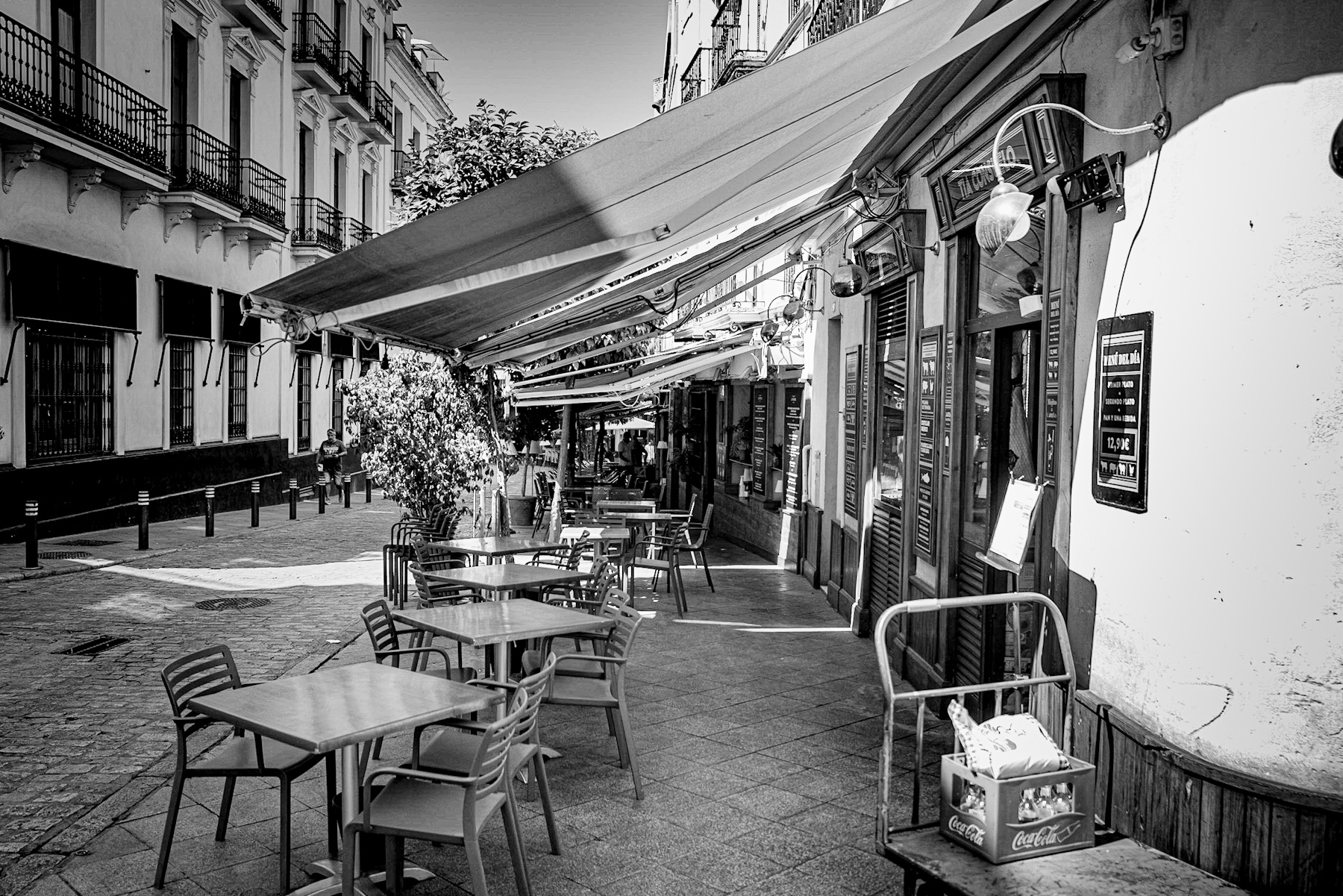
    The striking black and white photograph captures a quintessential Spanish street scene, inviting contemplation of both its immediate charm and its deep historical roots. A narrow, sun-drenched lane in what appears to be Southern Spain, likely Andalusia, is dominated by the inviting expanse of an outdoor cafe. The monochrome palette accentuates the interplay of light and shadow, highlighting architectural details and the enduring appeal of **Spanish cafe culture**.
    ### A Glimpse into Andalusian Street Life
    This image unfolds with a clear visual hierarchy, painting a vivid picture of daily life. To the left, a row of multi-story buildings stands tall, their facades adorned with elegant, wrought-iron balconies – a signature element of **historic European streets**. These intricate patterns hint at a rich past, offering glimpses into private lives above the public thoroughfare. Below them, barred windows speak of security and tradition. The cobblestone street, well-worn and uneven, guides the eye towards the vanishing point, where a lone figure walks, adding a sense of scale and a fleeting human presence.
    On the right, the heart of the scene is the cafe itself. Long, retractable awnings stretch across the pavement, casting deep shadows and providing essential respite from the intense Mediterranean sun. Beneath these awnings, numerous tables and chairs are neatly arranged, patiently awaiting patrons. The cafe’s entrance, with its wooden shutters and glass doors, features framed menus. One sign prominently displays „PRIMER PLATO,“ „SEGUNDO PLATO,“ and „BEBIDA“ for „12,90€,“ a familiar and welcome offering in Spanish eateries. Another subtle sign, „Tia Consuelo,“ personalizes the establishment with a touch of local charm. In the foreground, a handcart laden with Coca-Cola crates adds a touch of modern commerce to this otherwise timeless tableau, a gentle juxtaposition of old and new.
    ### The Historical Tapestry of Spanish Public Spaces
    This scene is far more than a simple depiction of **outdoor dining in Spain**; it is a living testament to centuries of cultural evolution. The tradition of the *terraza* or outdoor cafe is deeply embedded in the **Andalusian lifestyle**, serving as a vital social and economic hub. Historically, public squares and open-air markets were the epicenters of community life, a legacy that beautifully evolved into the vibrant cafe and bar culture seen across Spain today. These inviting spaces have always facilitated conversation, commerce, and celebration.
    The **Andalusian architecture** visible in the photograph reflects a complex and fascinating history. The stucco walls and ornate ironwork on the balconies bear the imprint of various influences, from the profound Moorish aesthetic that shaped Southern Spain for nearly eight centuries, to subsequent Renaissance and Baroque styles. These elements contribute to the distinct character of iconic cities like Seville, Granada, and Córdoba. The **cobblestone streets** themselves are remnants of ancient urban planning, meticulously designed for durability and efficient drainage, enduring through countless generations. This robust infrastructure supports a way of life where the lines between indoor and outdoor living are often delightfully blurred, fostering a strong sense of community. The very concept of **tapas culture**, believed to have originated in Andalusia, is intrinsically linked to these very establishments, encouraging patrons to linger and socialize over small plates and drinks.
    ### Monochrome’s Enduring Appeal
    The choice of **monochrome photography** for this image is particularly poignant and powerful. By thoughtfully removing color, the photograph emphasizes texture, form, and the dramatic interplay of light and shadow, allowing the viewer to focus on the timeless essence of the scene. This aesthetic lends a nostalgic quality, beautifully blurring the temporal boundaries and highlighting the continuous thread of history that runs through these captivating **European street scenes**. The quiet dignity of the black and white rendition underscores the enduring appeal of these communal spaces, where history is not merely preserved in stone, but actively lived and experienced with every shared meal and conversation. This photograph beautifully encapsulates the soul of a culture where tradition, community, and daily life converge under the enchanting Andalusian sky.