Kategorie: Travel

  • A Parisian Pastry Experience: Eric Kayser’s Artisan Boulangerie on the Go

    A Parisian Pastry Experience: Eric Kayser’s Artisan Boulangerie on the Go

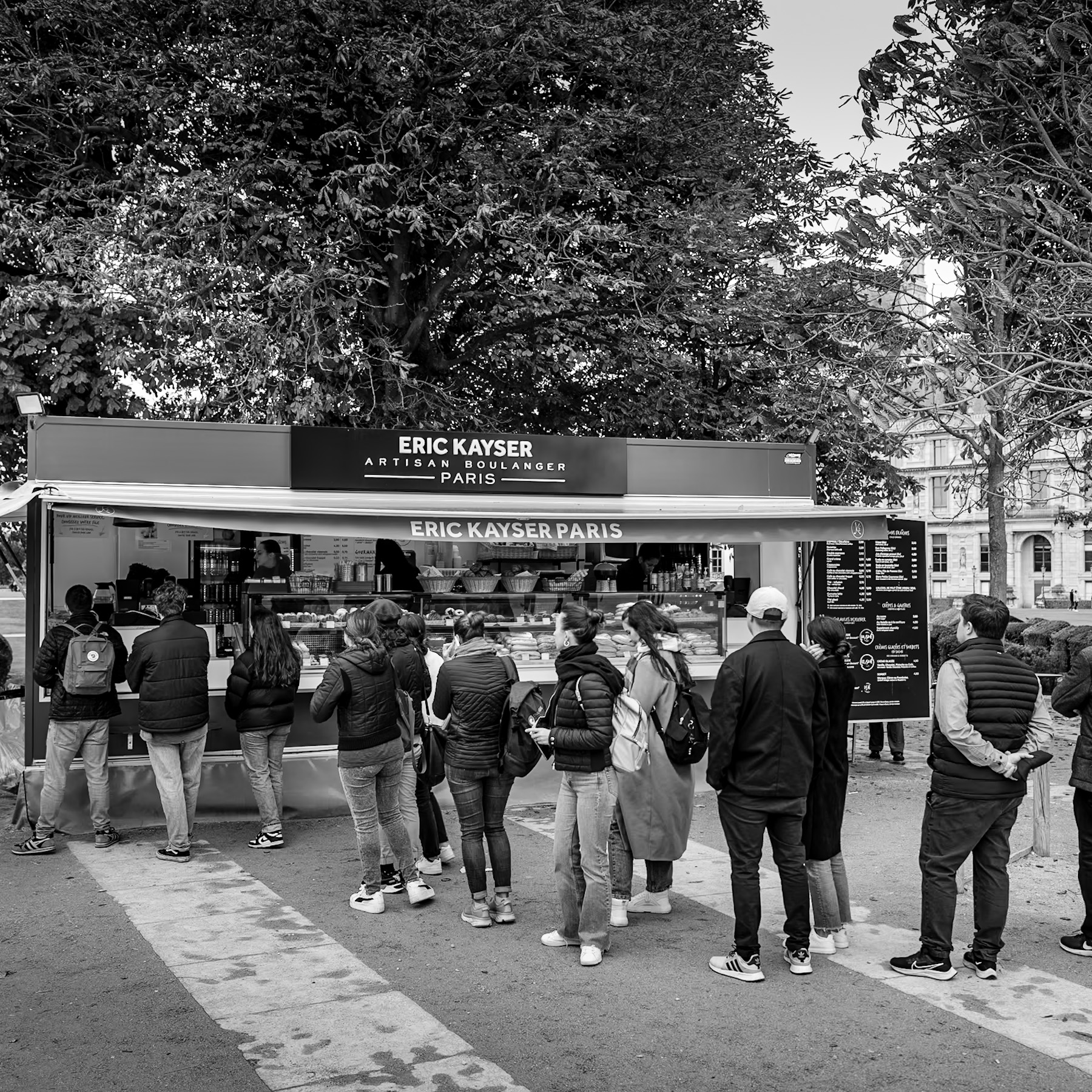
    The image captures a scene that is quintessentially Parisian, yet with a modern twist. A queue of people, clad in casual attire, patiently waits outside a sleek, contemporary food truck branded with „ERIC KAYSER ARTISAN BOULANGER PARIS.“ The black and white aesthetic of the photograph lends a timeless quality, evoking a sense of enduring tradition against the backdrop of a bustling city.
    The food truck itself is a testament to the evolution of culinary businesses. Gone are the days when artisan bakers were confined to brick-and-mortar establishments. This mobile unit brings the renowned Eric Kayser experience directly to the public, offering a convenient way to access high-quality baked goods. The display inside the truck, visible through the large windows, showcases an array of tempting pastries, breads, and possibly sandwiches, hinting at the meticulous craftsmanship associated with the Eric Kayser name.
    The presence of a queue signifies the popularity and desirability of the brand. People are willing to wait, a common sight in Paris, for a taste of authentic French baking. The diverse group of individuals suggests that this offering appeals to a broad demographic, from locals seeking their daily bread to tourists eager to sample Parisian delights. The backdrop, with its hint of stately architecture and mature trees, further anchors the scene within a recognizable Parisian setting, perhaps a park or a public square.
    The Eric Kayser brand itself carries significant historical weight in the world of French baking. Founded by Éric Kayser, a baker with a deep respect for traditional methods and the finest ingredients, the boulangerie has earned international acclaim for its commitment to quality. Kayser’s philosophy centers on reviving the authentic taste and texture of bread, using natural leavening agents and carefully selected flours. This dedication to heritage is what likely draws customers to his establishments, whether they are traditional bakeries or this modern mobile iteration.
    The concept of a food truck, while seemingly contemporary, has roots in the historical need for accessible food. Street vendors have been a part of urban life for centuries, providing sustenance to city dwellers. This Eric Kayser truck, however, elevates the street food experience to a new level, offering gourmet products typically associated with fine dining. It represents a fusion of historical culinary traditions with modern entrepreneurial spirit and consumer demand for convenience and quality.
    The black and white treatment of the photograph enhances the focus on form, texture, and human interaction. The crisp lines of the truck contrast with the organic shapes of the trees, and the silhouetted figures in the queue create a sense of shared anticipation. It’s a snapshot of everyday life in Paris, where the simple pleasure of a well-made pastry can be enjoyed in a dynamic, urban environment. This image serves as a visual narrative of how classic French culinary excellence continues to adapt and thrive in the 21st century.
  • A Timeless Parisian Scene: Barges on the Seine

    A Timeless Parisian Scene: Barges on the Seine

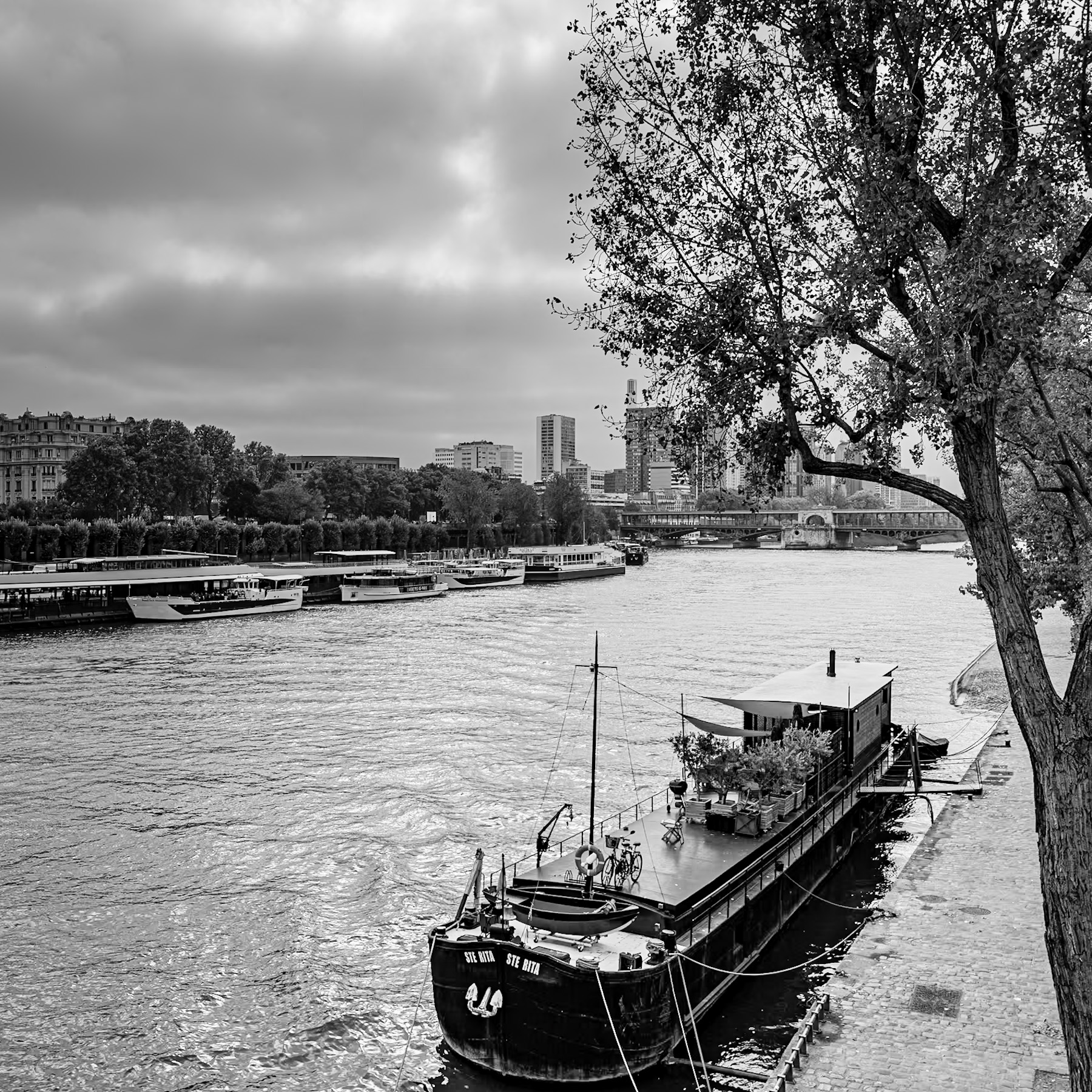
    The image captures a quintessential Parisian vista, a moment frozen in time along the iconic Seine River. The scene is rendered in striking black and white, imbuing it with a classic, almost nostalgic quality that resonates with the city’s rich history.
    The Heart of the Composition: The Barge
    Dominating the foreground is a long, flat-bottomed barge, a vessel that has been a workhorse of Parisian commerce and life for centuries. Its weathered hull, bearing the name „STE RITA“ twice, speaks of countless journeys and the vital role such boats played in transporting goods through the heart of the city. The deck of the barge is a microcosm of life, featuring a small, habitable structure that hints at a dwelling or a unique living space. Lush potted plants add a touch of unexpected greenery, contrasting with the industrial nature of the vessel. Bicycles are parked neatly, suggesting a mode of personal transport for the barge’s inhabitants, and a small dinghy is secured on deck, ready for use. The overall impression is one of quiet resilience and a life lived in harmony with the river.
    The Seine: A Lifeline Through History
    The Seine River itself is more than just a body of water; it is the lifeblood of Paris, a constant presence that has witnessed the city’s evolution from a Roman settlement to a global metropolis. For centuries, these barges were instrumental in the city’s development, bringing raw materials and distributing finished goods, thus fueling its economic growth. The riverbanks, paved with cobblestones in the foreground, have long served as bustling ports and pathways for trade.
    The Parisian Backdrop: A Blend of Old and New
    Beyond the barge, the river opens up to reveal a panorama of Parisian architecture. Along the far bank, a line of elegant, traditional buildings stands testament to the city’s Haussmannian past, characterized by their mansard roofs and ornate facades. Interspersed with these historical structures are more modern, taller buildings, their clean lines and geometric forms representing contemporary Paris. A bridge, a common feature of the Seine, arches gracefully over the water, connecting the urban fabric and hinting at the constant flow of movement and connection that defines the city. The presence of multiple other vessels, likely tour boats, further emphasizes the Seine’s enduring importance as a thoroughfare and a tourist attraction.
    An Enduring Atmosphere
    The overcast sky, rendered in dramatic shades of grey, adds to the contemplative mood of the photograph. The dappled light on the water creates a sense of gentle movement, contrasting with the stillness of the moored barge and the solid embankment. The branches of a large tree in the right foreground frame the scene, its leaves providing a natural, organic counterpoint to the man-made structures. This black and white treatment strips away the colors of the present, allowing the viewer to focus on the forms, textures, and the timeless spirit of Paris. It’s a scene that could have been captured decades ago, yet it remains vibrantly alive today, a testament to the enduring charm and historical depth of the French capital. The „STE RITA“ and its surroundings offer a poignant glimpse into a way of life that has adapted to the passage of time, yet remains intrinsically linked to the historic artery of the Seine.
  • Parisian Streetscape: A Glimpse into Haussmannian Architecture and Urban Life

    Parisian Streetscape: A Glimpse into Haussmannian Architecture and Urban Life

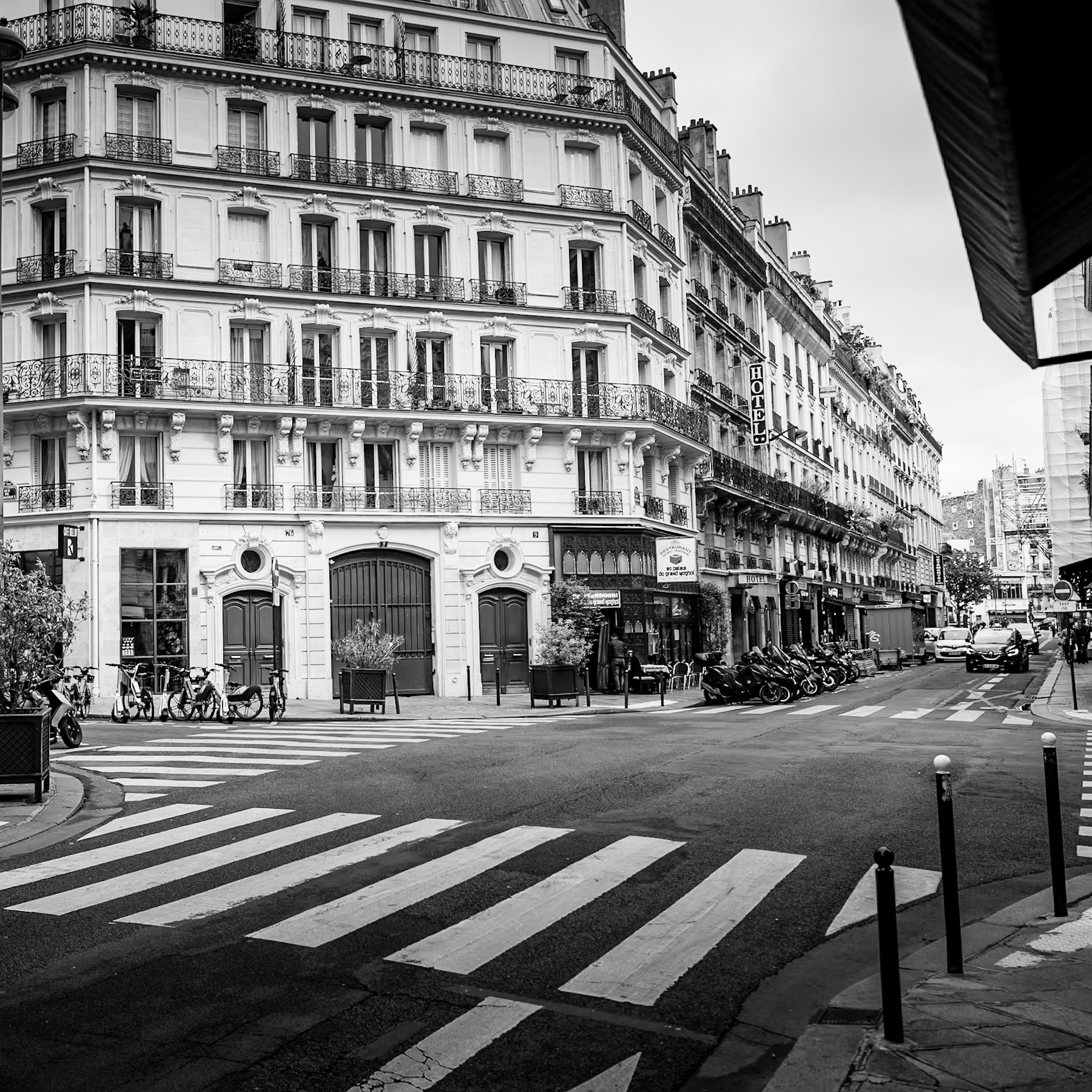
    This black and white photograph captures a quintessential Parisian street scene, offering a window into the city’s enduring architectural heritage and its dynamic urban rhythm. The image is dominated by the elegant facades of Haussmannian buildings, a style that defines the visual identity of Paris and was a result of a grand urban renewal project undertaken in the mid-19th century under Baron Haussmann.
    The buildings featured showcase the characteristic features of this architectural period: tall, multi-story structures with cream-colored stone facades, mansard roofs adorned with dormer windows, and ornate wrought-iron balconies that punctuate each level. The repeating rhythm of windows and balconies creates a sense of order and grandeur. The detailed stonework, the decorative cornices, and the classic proportions speak to a period of deliberate urban planning aimed at transforming Paris into a modern, aesthetically pleasing metropolis.
    The street itself is a busy thoroughfare, indicated by the presence of a pedestrian crossing (zebra crossing) prominently in the foreground, a universal symbol of urban mobility. The black and white treatment of the photograph lends a timeless quality, making it difficult to pinpoint an exact era, yet the presence of parked motorcycles and scooters, alongside a car, suggests a more contemporary setting within this historic context. The contrast between the old-world architecture and the modern modes of transport highlights the continuous evolution of Parisian life.
    The ground floors of the buildings reveal glimpses of commercial activity. A sign indicating „HOTEL“ vertically placed on one facade clearly points to the hospitality sector, a cornerstone of Paris’s global appeal. Below, shopfronts with large windows suggest cafes, restaurants, or boutiques, hinting at the vibrant street-level life that characterises the city. The presence of outdoor seating further reinforces this impression of a lively, engaging urban environment.
    The composition of the photograph, with its strong lines and geometric shapes, draws the viewer’s eye along the street, creating a sense of depth and perspective. The interplay of light and shadow, particularly on the building facades and the road surface, adds a dramatic and artistic dimension to the scene. The overcast sky, common in Paris, contributes to the soft, diffused light, which further accentuates the architectural details without harsh contrasts.
    Historically, the Haussmannian renovations aimed to improve sanitation, facilitate movement, and create a more unified and imposing urban landscape. The wide boulevards, uniform building heights, and elegant facades were intended to instill a sense of order and prestige. While these changes were met with some resistance at the time, they have become an indelible part of Paris’s character and are a major draw for tourists and residents alike. This photograph, therefore, is not just an image of a street; it is a visual narrative of Parisian history, urban development, and the enduring allure of its iconic architecture.
    Keywords: Paris, Haussmannian Architecture, Parisian Streets, Urban Landscape, Architecture Photography, Black and White Photography, Travel Photography, Historical Paris, Cityscape, European Cities, Hotel, Restaurant, Pedestrian Crossing.
  • Parisian Street Scene: A Glimpse of Timeless Urban Life

    Parisian Street Scene: A Glimpse of Timeless Urban Life

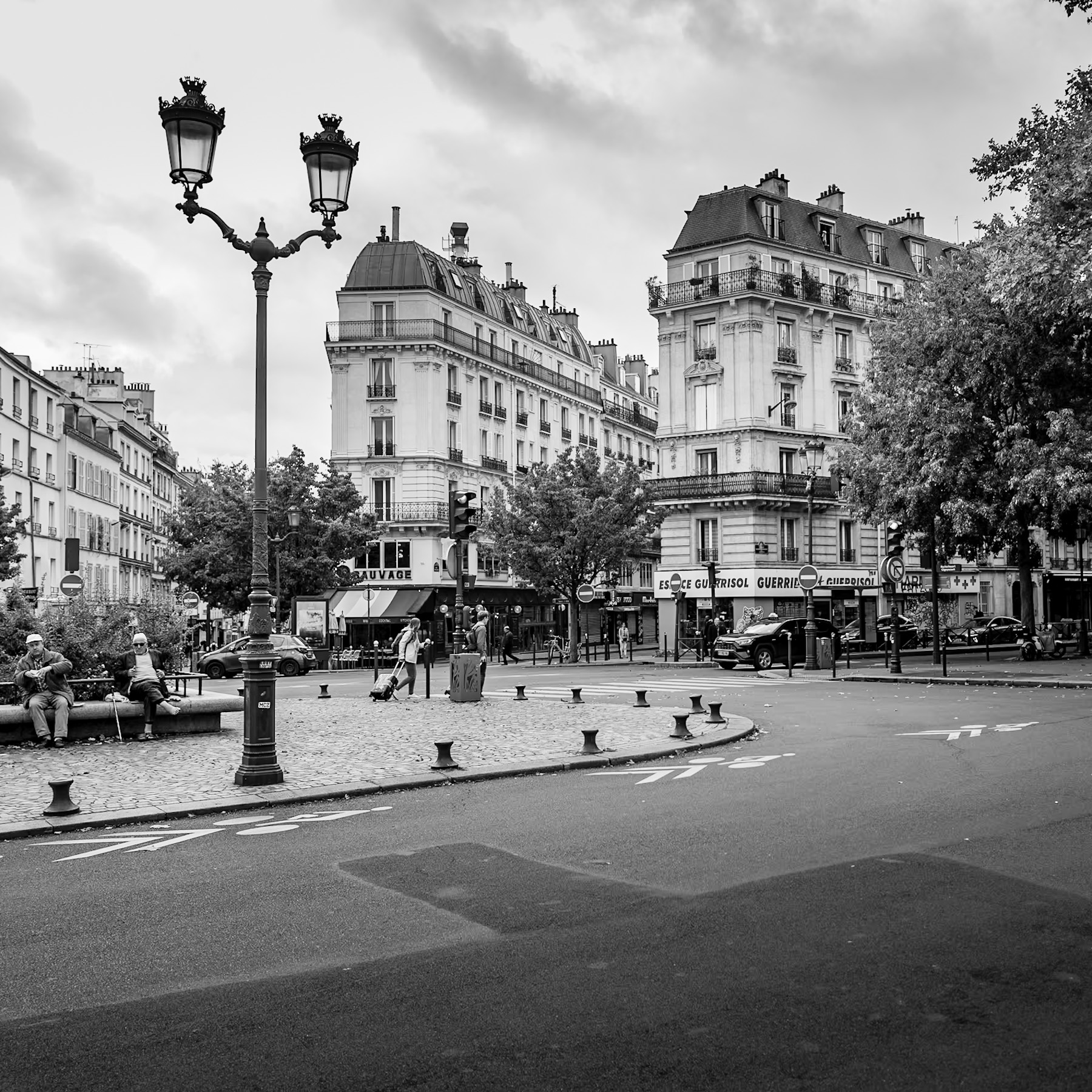
    This monochrome photograph captures a quintessential Parisian street corner, offering a window into the enduring charm and daily rhythm of the city. The scene is dominated by elegant Haussmannian buildings, their ornate facades and mansard roofs characteristic of the architectural transformations that shaped Paris in the late 19th century under Baron Haussmann. These structures, with their repetitive window patterns and wrought-iron balconies, speak to a period of grand urban planning and a desire for aesthetic uniformity that still defines much of Paris’s visual identity.
    At the forefront, a classic Parisian lamppost stands tall, its intricate design a testament to the city’s dedication to public beautification. The dual lamps, crowned with decorative elements, evoke a sense of nostalgia, hinting at the gaslight era that once illuminated these very streets. The cobblestone pavement and the low bollards add to the historic ambiance, suggesting a location that has witnessed generations of Parisian life unfold.
    In the foreground, two gentlemen are seated on a stone bench, engaged in quiet conversation or perhaps simply enjoying a moment of respite. Their presence adds a human element to the scene, grounding the architectural grandeur in everyday reality. Their relaxed posture and the presence of a walking stick imply a leisurely pace, a stark contrast to the hurried lives often associated with modern urban environments.
    Further into the frame, the bustling nature of the city becomes more apparent. A traffic light signals the flow of vehicles, while pedestrians navigate the crosswalk. The signage on the buildings, though partially obscured, hints at shops and businesses, suggesting a vibrant commercial street. The name „SAUVAGE“ is visible on one awning, a detail that adds a touch of local flavor and invites speculation about the establishment’s history.
    The presence of a woman with a rolling suitcase on the right side of the image introduces a contemporary element, reminding viewers that while the architecture may evoke the past, the scene is very much alive and in motion today. This juxtaposition of old and new, the static beauty of the buildings and the dynamic movement of people and traffic, is a hallmark of Parisian urban landscapes.
    The historical context of this scene is deeply rooted in the 19th-century urban renewal of Paris. The Haussmannian style, characterized by wide boulevards, uniform building facades, and grand public spaces, was a deliberate effort to modernize the city, improve sanitation, and facilitate troop movement. The street furniture, like the lampposts and benches, were also integral to this vision of a functional yet aesthetically pleasing urban environment.
    This photograph, through its skillful composition and monochromatic rendering, transcends a simple depiction of a street. It becomes a meditation on the passage of time, the enduring appeal of Parisian architecture, and the continuous flow of human activity that breathes life into these historic settings. It invites the viewer to imagine the stories held within these buildings and the countless moments of everyday life that have transpired on this very spot over the decades.
    Keywords: Paris, Haussmannian architecture, Parisian street, lamppost, cobblestone, urban life, historical background, monochrome photography, street scene, timeless, city, France.
  • Sacré-Cœur: A Parisian Landmark Steeped in History and Serenity

    Sacré-Cœur: A Parisian Landmark Steeped in History and Serenity

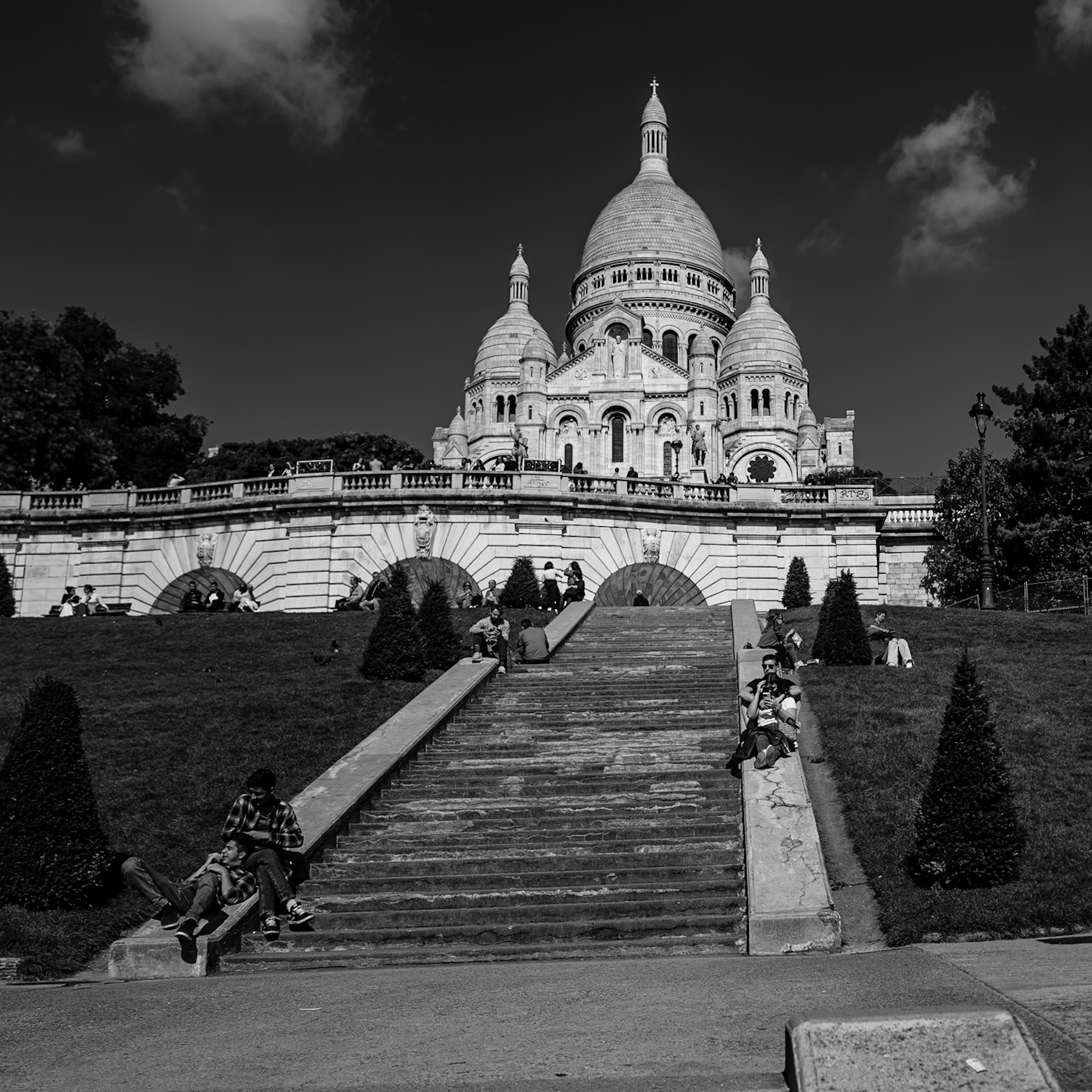
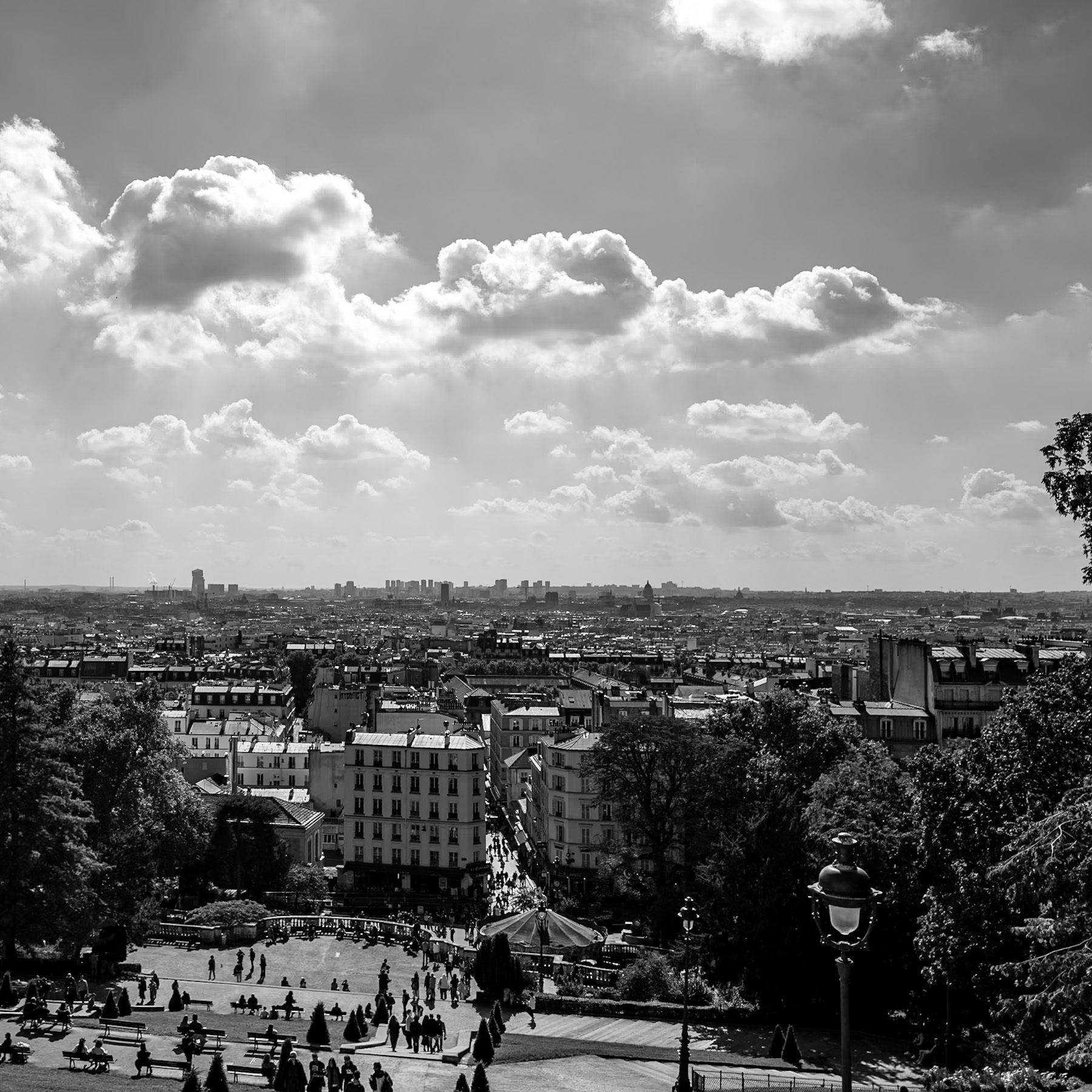
    The iconic silhouette of the Sacré-Cœur Basilica, bathed in the stark contrast of a black and white photograph, commands the skyline of Paris. This image captures a moment of quiet contemplation and leisure on the grand staircase leading to the basilica, a place that is as much a historical monument as it is a spiritual sanctuary. The monochromatic treatment lends a timeless quality to the scene, emphasizing the architectural grandeur of the basilica and the enduring appeal of this beloved Parisian landmark.
    A Symbol of Resilience and Faith
    The Sacré-Cœur Basilica, perched atop the Butte Montmartre, is more than just a beautiful building. Its construction was a response to the tumultuous events of the late 19th century in France, including the Franco-Prussian War and the Paris Commune. Consecrated in 1919, it stands as a testament to national reconciliation and a symbol of unwavering faith. The basilica’s Roman-Byzantine architecture, with its distinctive domes and white travertine stone, offers a striking visual contrast to the Haussmannian buildings that characterize much of Paris.
    A Gathering Place for Parisians and Visitors
    In the photograph, the wide stone steps of the basilica serve as a natural amphitheater. People are seen scattered across the steps and the grassy slopes, enjoying the panoramic views of the city that unfold below. Some are seated, engaged in conversation or simply soaking in the atmosphere. Others are captured in moments of quiet reflection, perhaps contemplating the history and significance of the sacred site. The presence of individuals enjoying the space highlights its dual role as a place of worship and a popular public gathering spot.
    The Artistic Heart of Montmartre
    The Butte Montmartre, where the Sacré-Cœur stands, has long been associated with art and bohemian culture. Historically, it was a hub for artists like Picasso, Van Gogh, and Toulouse-Lautrec. While the basilica itself is a religious edifice, its surroundings retain a certain artistic allure. The image, with its dramatic lighting and composition, evokes a sense of artistic sensibility, mirroring the creative spirit that has long defined this Parisian hilltop.
    Architectural Details and Symbolism
    The detailed rendering of the basilica’s facade in the black and white image reveals the intricate stonework and the many statues adorning its exterior. The central dome, crowned by a cross, is a dominant feature, symbolizing the basilica’s religious purpose. The flanking domes and the overall symmetrical design contribute to its majestic appearance. The steps, worn by time and countless footsteps, tell their own story of the millions who have ascended this sacred path over the years.
    A Timeless Perspective
    The black and white medium strips away the colors of the present, allowing the viewer to connect with the enduring essence of the Sacré-Cœur and its historical context. It encourages a focus on form, light, and shadow, drawing attention to the architectural details and the emotional resonance of the scene. This photograph serves as a powerful reminder of Paris’s rich history, its spiritual heart, and the timeless beauty of one of its most recognizable landmarks. The Sacré-Cœur, through its enduring presence and the stories it holds, continues to captivate and inspire.
  • Subterranean Echoes: A Journey Through Ancient Stone Arches

    Subterranean Echoes: A Journey Through Ancient Stone Arches

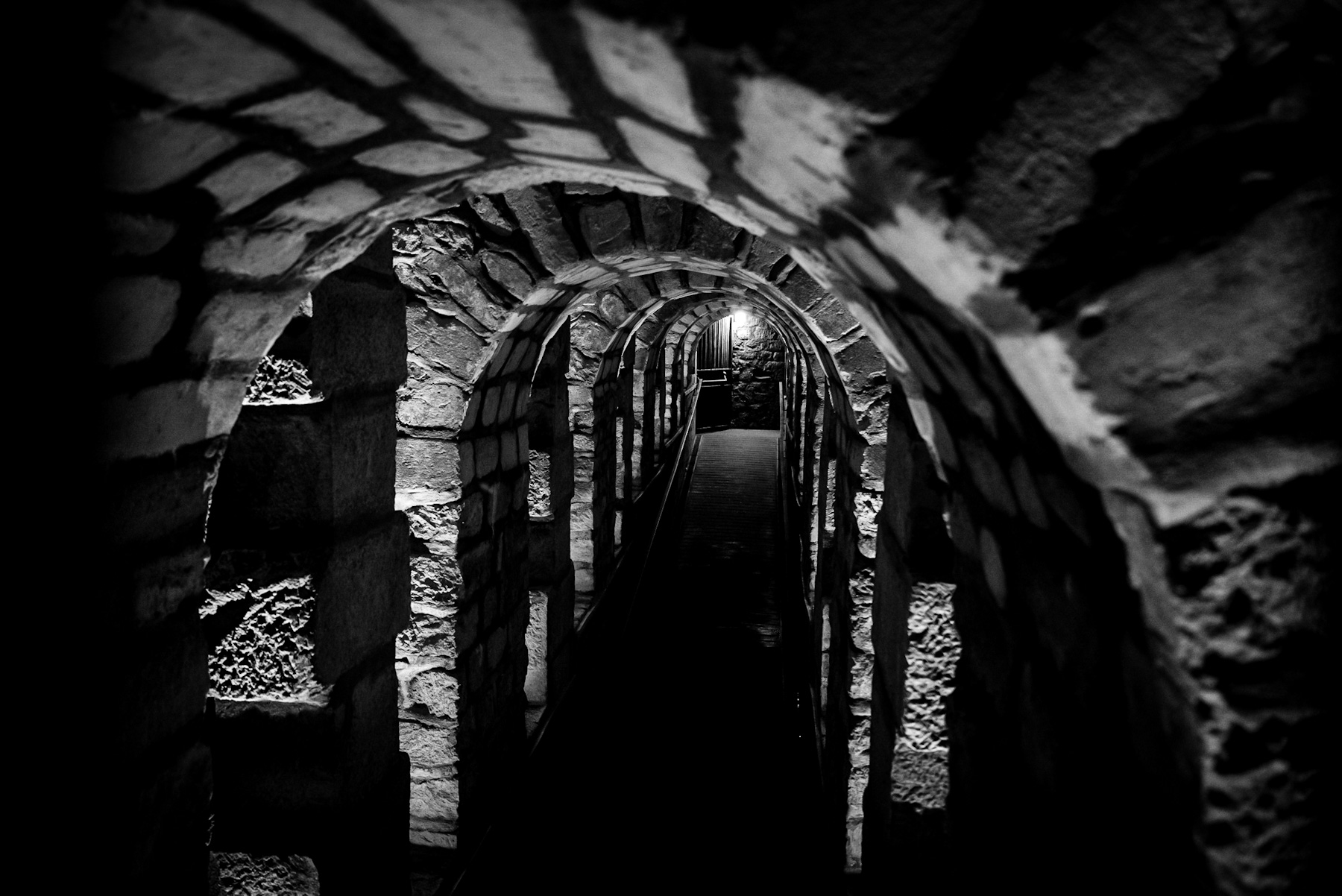
    The monochrome photograph captures a deep, arched passageway, inviting viewers into a world steeped in history and shadow. The image’s high contrast and black and white palette emphasize the textures of ancient stone and the dramatic interplay of light and darkness, creating an atmosphere of profound solemnity and timelessness.
    **Architectural Grandeur and Subterranean Design**
    This impressive structure is a powerful example of historical subterranean architecture. Robust stone blocks form a series of repetitive arches that recede into the distance, creating a strong sense of depth and perspective. These arches are supported by sturdy pillars, also constructed from rough-hewn stone, showcasing the durability and exceptional craftsmanship of ancient builders. The irregular, organic texture of the stone walls and ceiling speaks to centuries of existence, bearing the indelible marks of time and human endeavor.
    A modern, slightly inclined walkway with a handrail guides the path through the tunnel, indicating that this historical site is carefully preserved and made accessible for contemporary visitors. This thoughtful blend of ancient construction and modern infrastructure highlights the ongoing effort to connect with and understand our past. A single visible light source at the far end acts as a beacon, drawing the eye deeper into the passage while simultaneously emphasizing the vastness of the surrounding darkness.
    **Whispers of History: Crypts and Catacombs**
    The visual evidence within the image, particularly the architectural style and specific details, strongly suggests the site functions as a historical crypt or **catacombs**. On the left wall, several niches are visible, containing what appear to be carefully stacked elements. While the monochrome rendering makes definitive identification challenging, these elements bear a striking resemblance to ossuaries or stacked skeletal remains—a common and poignant feature in historical burial grounds.
    Throughout history, **underground tunnels** and chambers like these served various critical purposes. **Catacombs**, derived from the Greek meaning „among the tombs,“ are ancient subterranean cemeteries, famously utilized by early Christians and later by cities like Paris and Rome to manage growing populations and limited burial space. These vast networks often housed the remains of millions, offering a tangible link to past populations and their funerary practices. Similarly, crypts, typically found beneath churches or basilicas, were designated spaces for the interment of religious figures, nobility, or prominent citizens.
    **The Enduring Legacy of Underground Spaces**
    The existence of such **historical sites** underscores humanity’s long-standing relationship with the subterranean world, not just for practical reasons like shelter or storage, but also for spiritual and commemorative purposes. Exploring these **ancient tunnels** offers a unique perspective on the customs, beliefs, and engineering prowess of bygone eras. Visitors traversing these ancient paths are invited to reflect on the passage of time, the cycle of life and death, and the enduring human desire to honor and remember those who came before.
    This photograph, with its deep shadows and illuminated arches, captures more than just stone; it encapsulates the essence of a place where history resonates through every arch and along every stone, inviting contemplation on the profound narratives held within these **subterranean depths**. It serves as a powerful reminder of the importance of **archaeological preservation** and the continuous relevance of our shared heritage.
  • Parisian Echoes: A Timeless Glimpse into Art and Architecture

    Parisian Echoes: A Timeless Glimpse into Art and Architecture

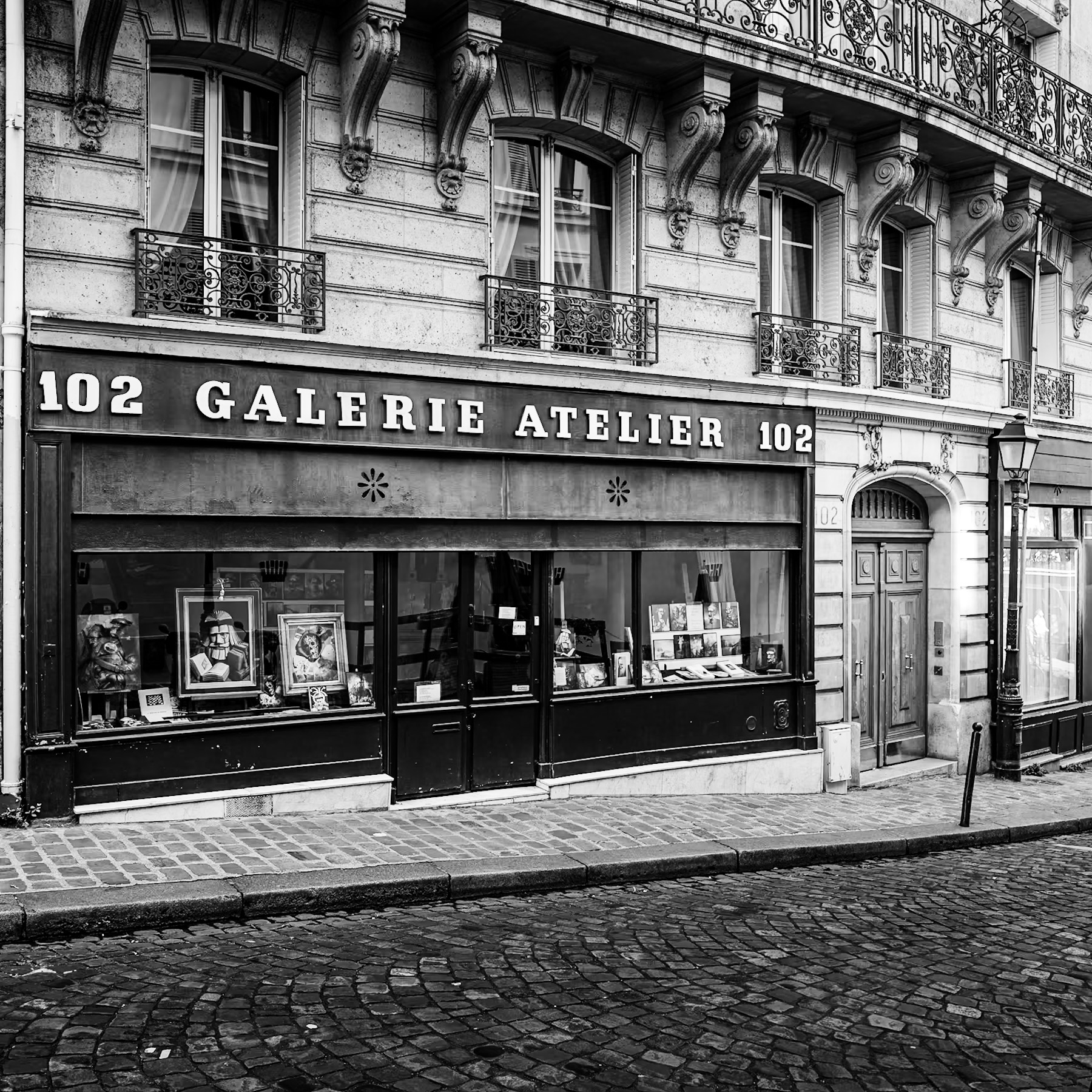
    Step into a classic Parisian street scene, where history and contemporary art beautifully converge. The monochromatic lens captures a striking interplay of venerable architecture and modern artistic expression. At its heart is „102 Galerie Atelier 102,“ a welcoming shopfront that declares its dual identity as both an art gallery and an artist’s studio. Through its expansive display windows, you can glimpse a curated collection of framed artworks, prints, and perhaps art books or smaller unique objects, inviting passersby into a world of creativity nestled within this historic urban landscape. The scene is firmly grounded by a classic cobblestone street, its irregular patterns adding texture and a profound sense of enduring history to the foreground.
    Haussmannian Grandeur: The Architectural Backbone
    The building housing the atelier stands as a prime example of Haussmannian architecture, a style intrinsically linked with the dramatic transformation of Paris during the Second Empire under Baron Haussmann in the mid-19th century. This monumental period saw a radical overhaul of the city, replacing its medieval, labyrinthine streets with wide boulevards and a meticulously standardized aesthetic. Key features clearly evident in the photograph include the robust stone facade, most likely limestone, a material quarried locally and emblematic of Parisian construction. Above the ground-floor shop, the upper stories boast elegant windows adorned with intricate wrought-iron balconies and decorative corbels. These architectural elements, while uniform, are richly detailed, speaking to an era of grand urban planning and a deliberate effort to create the harmonious and imposing cityscape that defines so much of modern Paris.
    The Artistic Pulse: Galerie Atelier
    The very presence of a „Galerie Atelier“ at street level is deeply rooted in Paris’s unwavering identity as a global art capital. For centuries, the city has been a magnet for artists, thinkers, and innovators, fostering a vibrant ecosystem of creative production and exhibition. From the refined salons of the 18th century to the groundbreaking avant-garde movements of the 19th and 20th centuries – be it Impressionism, Cubism, or Surrealism – Paris has consistently served as a crucible for artistic development. An atelier historically refers to an artist’s studio, the hallowed space where creations come to life, while a galerie serves as a vital showcase, bridging the artist with the admiring public. This establishment at number 102 proudly continues this rich tradition, suggesting an ongoing, dynamic dialogue between artistic creation and public appreciation, a powerful testament to the city’s enduring artistic spirit.
    A Journey Through Time: Cobblestones and Black & White
    The street itself, paved with cobblestones (or *pavé* in French), offers yet another tangible link to Paris’s storied past. Before the widespread adoption of asphalt, these hand-laid stones formed the vital arteries of European cities. They evoke vivid images of horse-drawn carriages, pivotal historical events, and countless footsteps echoing through generations. Adjacent to the building, a traditional street lamp stands sentinel, its design a poignant reminder of the gas lamps that once illuminated Parisian nights, marking the gradual evolution of urban infrastructure.
    The deliberate decision to render this iconic Parisian street scene in black and white photography further amplifies its timeless quality. Without the potential distraction of color, the viewer’s attention is powerfully drawn to the rich textures of the stone, the intricate ironwork, the subtle variations in light and shadow, and the intriguing depth visible within the shop window. This aesthetic choice imbues the image with a profound sense of nostalgia, directly connecting the present moment to the city’s illustrious past and emphasizing the pure architectural forms and historical essence that characterize this iconic setting. It’s a visual narrative of beautiful continuity, where history and art gracefully converge on a single, evocative street corner.
  • Paris in Monochrome: A Timeless View of the Eiffel Tower and Haussmann’s Legacy

    Paris in Monochrome: A Timeless View of the Eiffel Tower and Haussmann’s Legacy

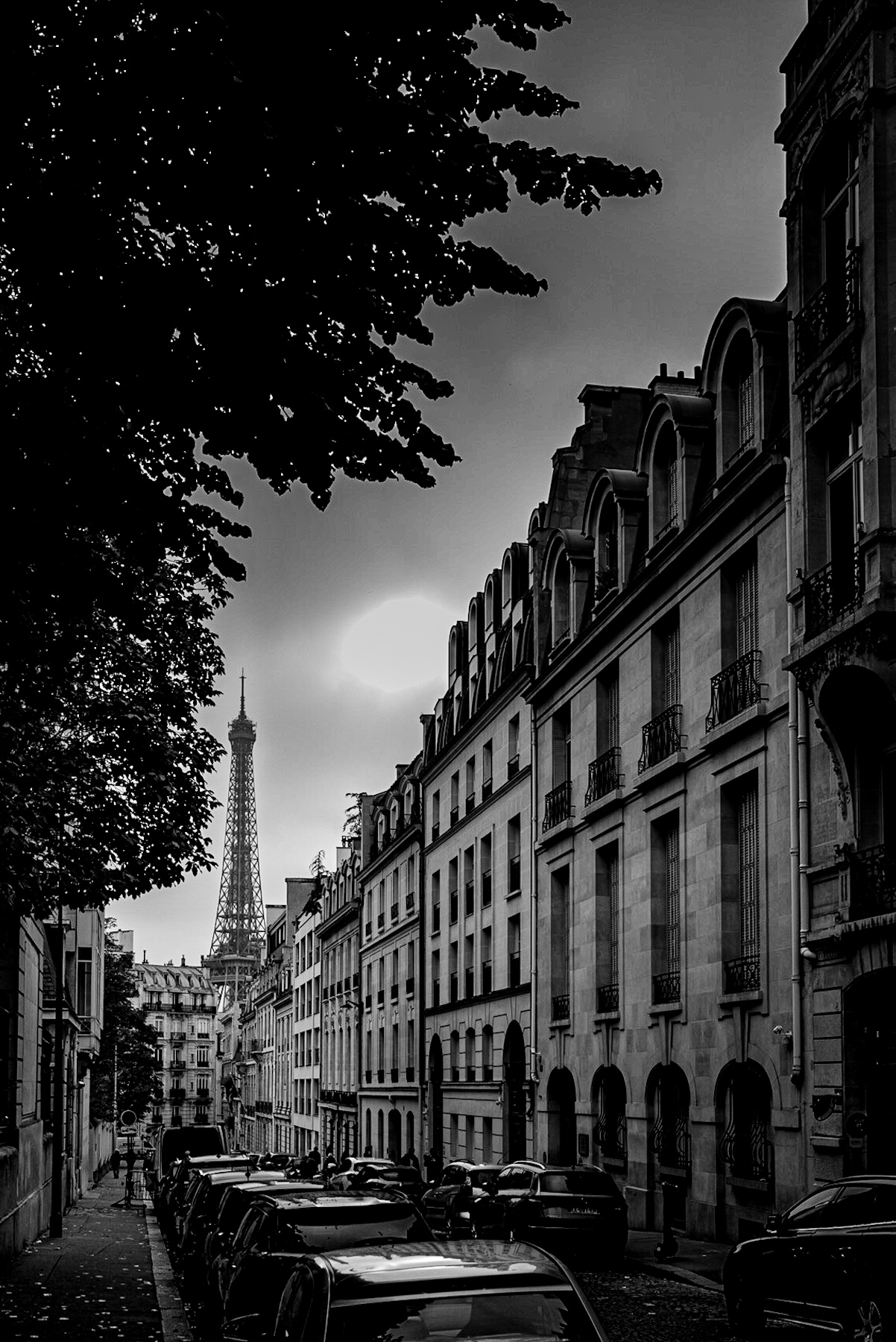
    This striking black and white photograph captures more than just a street in Paris; it encapsulates a dialogue between eras. The composition draws the eye down a narrow, cobblestoned lane, flanked by classic Parisian apartment buildings, culminating in a perfectly framed view of the iconic Eiffel Tower.
    The monochrome palette strips the scene of temporal distractions, focusing our attention on the interplay of light, shadow, texture, and form. This creates a profound sense of timelessness and nostalgia.
    **The Enduring Architecture of Haussmann**
    The dominant features of the streetscape are the stately buildings lining the road. Their uniform stone facades, rhythmic placement of windows, and elegant wrought-iron balconies are hallmarks of the architectural style implemented by **Baron Georges-Eugène Haussmann** during the Second French Empire (1852-1870). Under the direction of Napoleon III, Haussmann’s renovation of Paris was one of the most ambitious urban planning projects in history.
    The goal was to transform the dark, crowded, and unsanitary medieval streets into a modern capital with wide avenues, parks, and improved infrastructure. The buildings seen here, with their distinct mansard roofs dotted with dormer windows, are a direct result of this transformation. They were designed to create a harmonious and visually cohesive urban environment—a philosophy that continues to define the aesthetic of central Paris to this day. The photograph highlights the grandeur and order of this design, with the strong vertical and horizontal lines creating a powerful sense of structure.
    **An Iron Icon Against the Sky**
    Peeking through the urban canyon is the **Eiffel Tower**, the undeniable symbol of Paris. When it was erected as the entrance arch for the 1889 Exposition Universelle (World’s Fair), it was a marvel of modern engineering. However, it was met with considerable criticism from Paris’s artistic and literary elite, who viewed the iron lattice structure as a monstrous blight on the city’s elegant skyline.
    History, of course, has rendered a different verdict. The tower, initially intended to be a temporary structure, has become a beloved global icon. In this image, it stands not as an industrial intrusion but as an integral part of the cityscape. Its delicate latticework contrasts beautifully with the solid stone of the Haussmannian buildings. Its presence anchors the photograph, providing a famous point of reference within an otherwise anonymous, intimate street scene.
    **A Living History**
    While the architecture and the tower speak of the 19th century, the line of parked cars firmly places the scene in the contemporary world. This juxtaposition is key to the photograph’s narrative. It shows that Paris is not a static museum but a vibrant, living city where daily life unfolds against a backdrop of immense historical weight.
    The modern vehicles on the weathered cobblestones serve as a quiet reminder that history and modernity are not mutually exclusive. They coexist, creating the unique and enduring charm of **Parisian street photography**. This image is a testament to that seamless blend—a single frame capturing the soul of a city shaped by grand visions and lived in by ordinary people.
  • Echoes of Effervescence: The Timeless Appeal of Antique Seltzer Bottles

    Echoes of Effervescence: The Timeless Appeal of Antique Seltzer Bottles

    A window display, captured in monochrome, offers a portal to a bygone era. Through the reflective glass, a collection of antique seltzer bottles stands in silent procession, their elegant forms arranged on tiered glass shelves. Framed by delicate lace curtains and illuminated by classic pendant lights, this scene is more than mere decoration; it is a curated piece of history, celebrating an object that was once a cornerstone of social and domestic life: the soda siphon.
    The Anatomy of a Classic
    The objects at the heart of this image are instantly recognizable yet increasingly rare in modern homes. Known as soda siphons or seltzer bottles, these vessels were designed for one specific, delightful purpose: to dispense carbonated water with a satisfying psst.
    * Construction: Typically made of thick, heavy glass, they were built to withstand the internal pressure of carbonation. Their design often featured elegant fluting or etching, transforming a utilitarian object into a piece of decorative art. * The Siphon Head: The distinctive metal head with its lever mechanism is the functional core. A press of the lever released the pressurized water, adding effervescence to everything from spirits to fruit juices. * A Symbol of Quality: Before the age of disposable plastic bottles and aluminum cans, the reusable seltzer bottle represented a touch of class. It was a permanent fixture in upscale bars, sophisticated homes, and the burgeoning soda fountains of the early 20th century.
    A Carbonated History: From Innovation to Nostalgia
    The soda siphon’s story begins in the early 19th century, but its golden age spanned from the late 1800s through the 1940s. This was a time before mass-produced soft drinks dominated the market. Families and establishments would receive regular deliveries from a „seltzer man,“ who would exchange empty bottles for freshly charged ones.
    This system made carbonated water an accessible luxury. It became integral to the burgeoning cocktail culture, providing the essential fizz for classic drinks like the whiskey highball or the Tom Collins. The soda siphon was a tool of the trade for any respectable bartender and a sign of a well-appointed home bar.
    The rise of automated bottling plants and single-use containers after World War II led to the gradual decline of the seltzer bottle. What was once a common household item slowly transitioned into a relic. Today, these bottles are sought-after collectibles, cherished for their craftsmanship and the sense of nostalgia they evoke.
    A Scene Framed in Time
    The photograph masterfully captures this sense of history. The choice of black and white strips away modern distractions, focusing the viewer’s attention on form, light, and texture. The soft lace of the curtains, a decorative element popular in the same era as the siphons, reinforces the vintage aesthetic. Reflections of the outside world—trees and buildings—merge with the interior display, creating a layered image that seems to suspend these objects between past and present. They are not just sitting in a window; they are artifacts on display, silent storytellers of a time when a simple splash of soda was an occasion in itself.
  • Echoes in Monochrome: A Parisian Scene Through a Timeless Lens

    Echoes in Monochrome: A Parisian Scene Through a Timeless Lens

    In the stark contrast of black and white, an ordinary urban moment is elevated into a scene rich with texture and narrative. The photograph captures a slice of life in what appears to be a European city, most likely Paris, where the natural world intersects with the built environment. In the foreground, a single crow stands alert, its gaze fixed on the viewer, establishing an immediate and compelling connection. The ground beneath it is a mosaic of gravel and earth, each pebble defined by the sharp, dramatic light.
    **The Historical Stage: Architecture and Nature**
    The background provides a deep historical context. A classic Haussmann-style building, with its stone facade and wrought-iron balconies, anchors the scene in 19th-century urban planning. These structures are the enduring legacy of Baron Haussmann’s radical transformation of Paris, designed to create wide boulevards, open spaces, and a sense of monumental grandeur. The trees themselves, likely London Planes (*Platanus x acerifolia*), are also part of this history. They were planted extensively during this era to line the new avenues, offering shade and softening the stone cityscape. Today, their gnarled, textured bark, prominently featured in the photograph, stands as a living testament to over a century of the city’s history. They are silent witnesses to the passage of time, from the Belle Époque to the modern day.
    **The Ancient Observers: The Symbolism of the Crow**
    The choice of subjects—the crows—is equally significant. Corvids have been entwined with human history and mythology for millennia. In many cultures, they are not merely birds but symbols of profound meaning. In Norse mythology, the god Odin was accompanied by two ravens, Huginn (thought) and Muninn (memory), who flew across the world to bring him information. In Celtic lore, they were associated with prophecy and transformation.
    Viewed through this lens, the crows in the image are more than just urban wildlife foraging for food. They are the city’s timeless inhabitants, intelligent observers perched on the edge of human activity. The crow in the foreground, separated from its flock, takes on the role of a sentinel or a narrator. Its direct gaze challenges the viewer, suggesting a knowledge and awareness that transcends the fleeting moment captured by the camera. They are a constant presence in a city that is always changing, their dark forms a stark silhouette against the backdrop of history.
    **The Photographic Language: A Nod to Street Photography**
    The decision to render the image in monochrome is a deliberate artistic choice that connects it to the rich tradition of European street photography. It strips away the distraction of color, forcing the viewer to focus on form, light, shadow, and texture. This aesthetic recalls the work of masters like Henri Cartier-Bresson and Robert Doisneau, who chronicled the poetic, everyday moments of Parisian life. The photograph captures a *decisive moment*—not of human action, but of animal consciousness within the human world. It freezes a narrative, leaving the viewer to ponder the story behind the crow’s confident stance and the quiet drama of the urban park. This single frame encapsulates a dialogue between nature, architecture, and the enduring spirit of the city.