A Monument Forged in Controversy
To understand the Eiffel Tower is to look back to the late 19th century, a period of immense industrial and technological advancement. Designed by the engineering firm of Gustave Eiffel, the tower was erected as the grand entrance to the 1889 Exposition Universelle (World's Fair), an event organized to celebrate the 100th anniversary of the French Revolution.
Its construction was a marvel of engineering, utilizing over 18,000 individual wrought-iron parts and 2.5 million rivets. At 300 meters (today 330 meters with its antennas), it dwarfed every other man-made structure on Earth, holding the title of the world's tallest for 41 years. However, its revolutionary design was not universally celebrated. A committee of prominent artists and intellectuals, including author Guy de Maupassant, vehemently protested its construction, decrying it as a „useless and monstrous“ factory smokestack that would dishonor the architectural beauty of Paris.
From Temporary Exhibit to Eternal Icon
Originally intended to stand for only 20 years, the tower's salvation came from its utility. Its height made it an invaluable platform for scientific experiments and, crucially, a transmission tower for the new science of radiotelegraphy. It played a vital role in communications during World War I, solidifying its importance to the nation beyond mere spectacle.
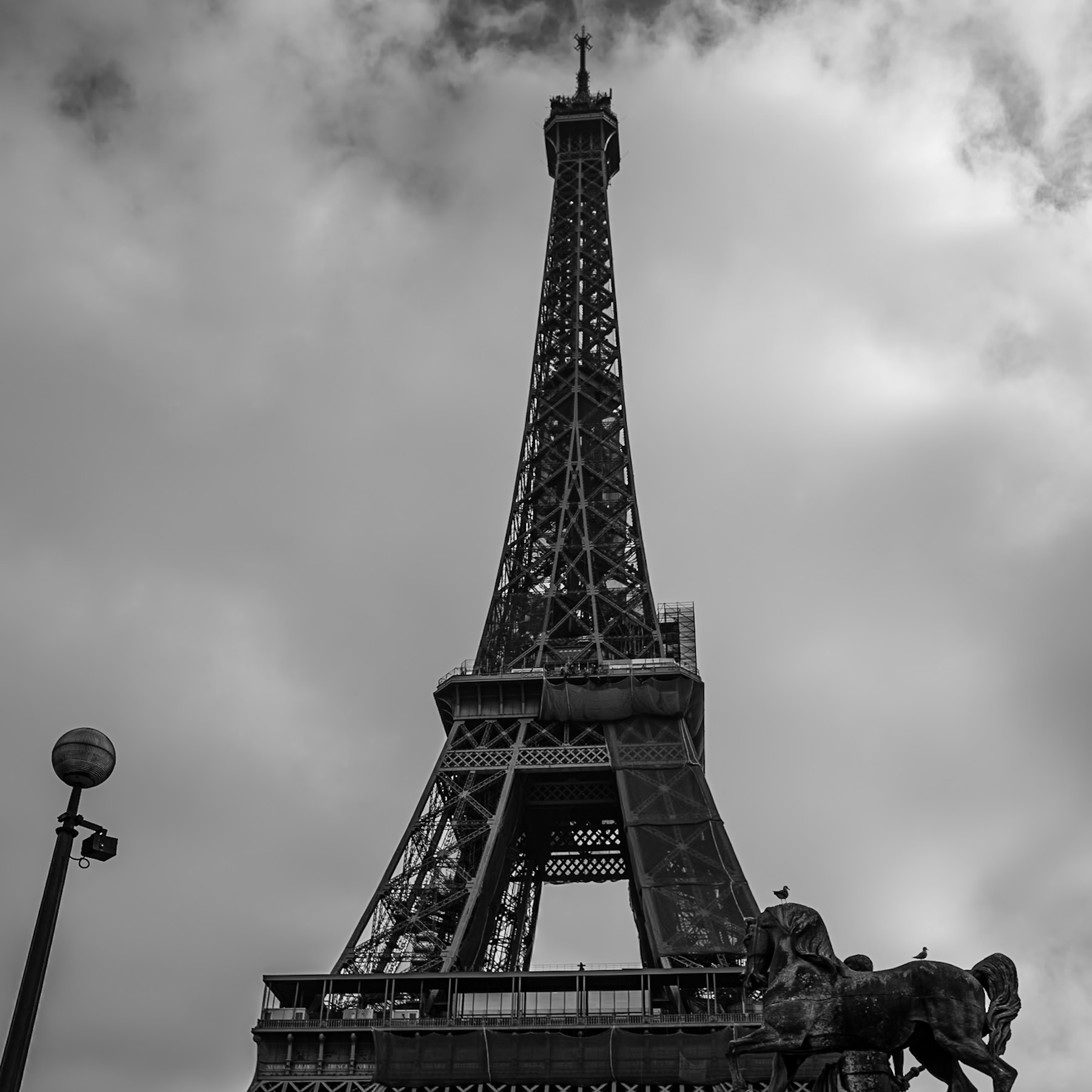
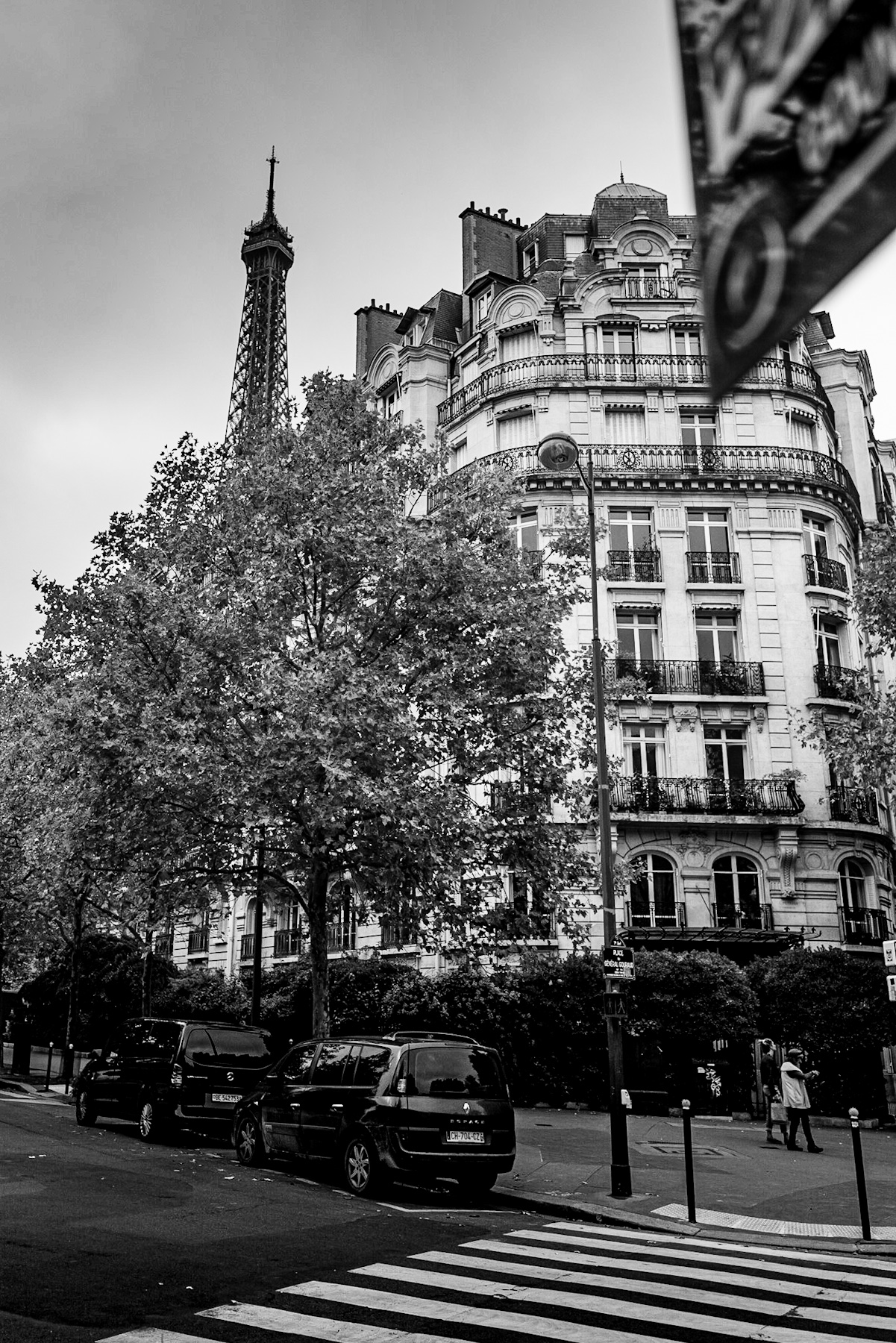
The photograph captures this sense of permanence and strength. The monochrome palette strips away the distraction of color, forcing the viewer to focus on the form, texture, and sheer ambition of Eiffel's vision. The visible scaffolding and netting, a subtle detail in the image, speak to the constant care and restoration required to preserve this icon for future generations. It is a reminder that the tower is not a static relic but a living piece of history, continually maintained to withstand the test of time.
This image, with its dramatic composition and timeless feel, does more than just depict a landmark. It captures a narrative of bold innovation, initial rejection, and ultimate triumph. The Eiffel Tower stands not just as a symbol of Paris, but as a monument to human ingenuity and the power of a visionary idea to endure and inspire.

The Queue for a Legacy: The Enduring Allure of Louis Vuitton in Paris
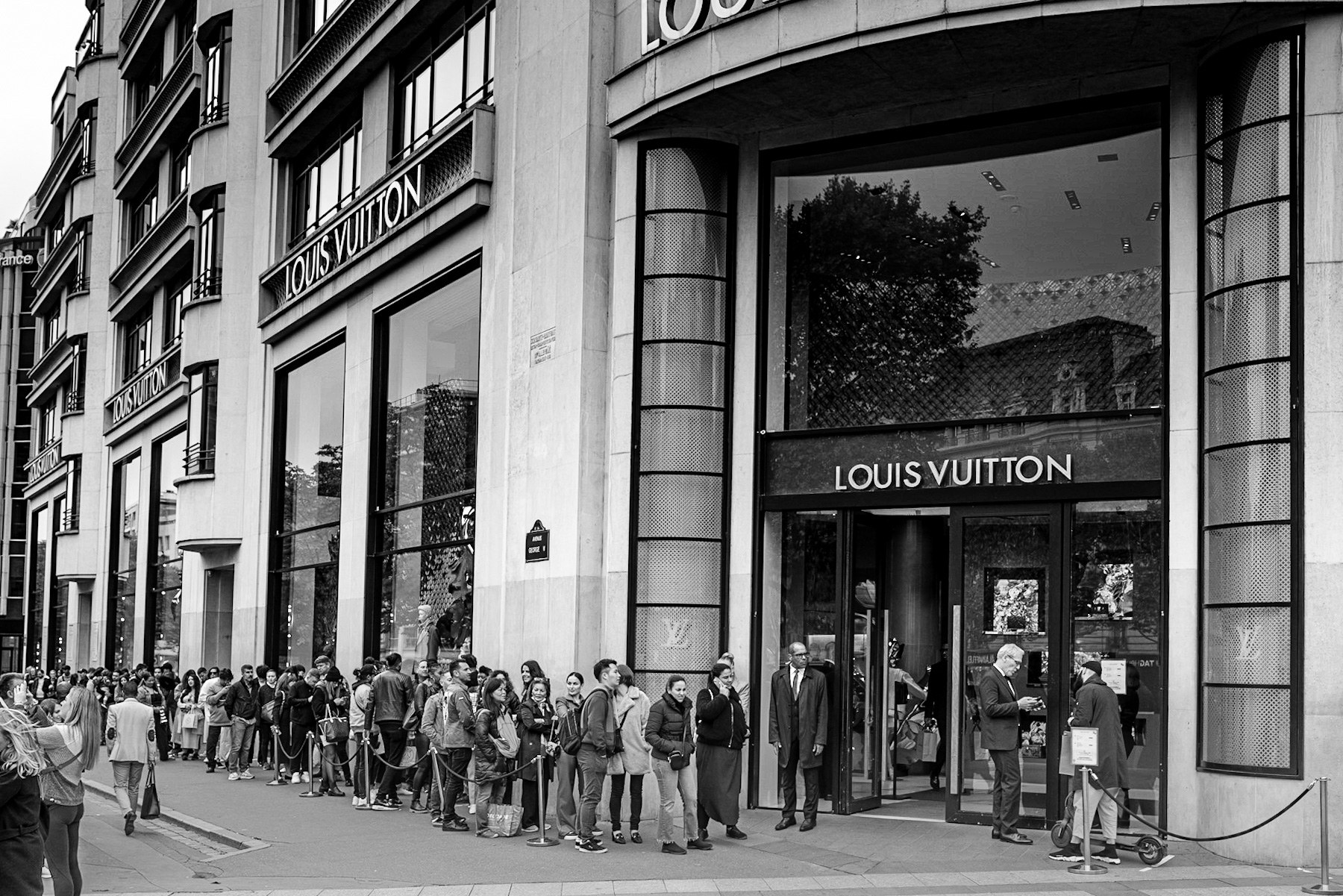
A monochrome cityscape captures a familiar scene on one of Paris's most prestigious avenues. A patient procession of people forms a long line, guided by velvet ropes, their gazes fixed on the entrance of the Louis Vuitton maison. This black and white photograph, taken on Avenue George V, does more than just document a moment of modern commerce; it encapsulates a story that is over 170 years in the making. The image is a testament to the enduring power of a brand that has masterfully woven itself into the fabric of luxury, travel, and history.
A Modern Pilgrimage on Avenue George V
The scene depicted is one of contemporary luxury culture. The queue is not for a fleeting sale, but for the experience of entering a temple of high fashion. Each person in line is participating in a modern-day pilgrimage, waiting for access to a world of exclusivity and craftsmanship. The building's imposing, clean-lined architecture serves as a stark, powerful backdrop. The large glass windows offer a glimpse into an immaculately curated interior, while the iconic Louis Vuitton logotype, repeated along the facade, acts as a beacon for enthusiasts and tourists alike. This line of anticipation is a powerful visual symbol of consumer desire and the brand's immense cultural capital in the 21st century.
From Parisian Trunk-Maker to Global Icon
To understand the significance of this queue, one must look back to the brand's origins. In 1854, Louis Vuitton opened his first shop in Paris on Rue Neuve des Capucines. He was not a fashion designer but a master craftsman—a malletier, or trunk-maker. His innovation was revolutionary for its time: he created flat-topped, waterproof canvas trunks that were easily stackable. This was a stark departure from the rounded-top trunks of the era, which were designed to shed water but were impractical for the burgeoning age of train and steamship travel.
Vuitton's trunks were designed for the new, mobile elite of the Second French Empire. They were a symbol of status, practicality, and an adventurous spirit. The brand was built on the very idea of travel, of carrying one's precious belongings across the world in style and security. This foundational identity of functional luxury and expert craftsmanship is the bedrock upon which the entire LV empire stands today.
The Legacy Continues
The people waiting outside the Avenue George V store are the direct cultural descendants of Louis Vuitton's original clientele. While the product has evolved from travel trunks to include everything from the iconic Speedy handbag to ready-to-wear collections, the core promise remains the same: a piece of a storied legacy. The queue in the photograph is not just about purchasing a product; it is about acquiring a tangible connection to this history. It represents the successful transformation of a 19th-century artisan's workshop into a global symbol of aspirational luxury, proving that the desire for exceptionalism and a connection to the past is as strong today as it was in the golden age of travel.

The Timeless Glow: A Glimpse into Parisian Café Culture
A Stage for Urban Life
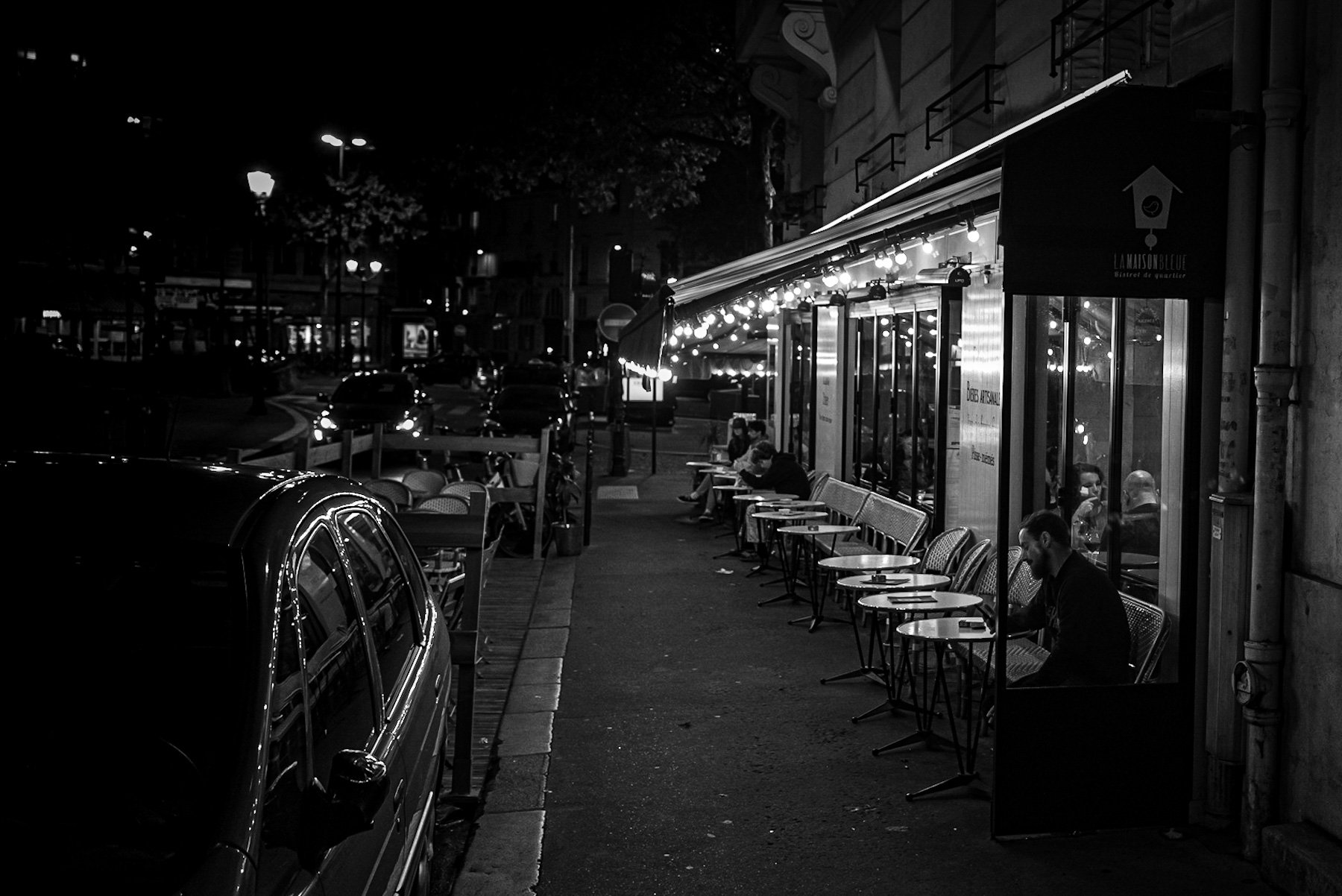
The composition draws the eye along a row of small, round tables and classic wicker chairs lining the sidewalk. Some are empty, waiting for future conversations, while others are occupied by solitary figures or quiet couples. A man in the foreground sits alone, absorbed in his own world, while further down, others are silhouetted against the bright interior of the bistro. The contrast between the warm, inviting light of the café and the deep shadows of the street creates a powerful sense of atmosphere. The reflection of the city on the parked car in the foreground serves as a reminder that while this scene feels intimate and contained, it is part of a larger, bustling metropolis.
Echoes of a Bygone Era: The Historical Soul of the Café
To understand this image is to understand the history of Paris itself. The sidewalk café, or *terrasse de café*, became a prominent feature of Parisian life in the 19th century, particularly after Baron Haussmann’s radical redesign of the city. His creation of wide, tree-lined boulevards provided the perfect stage for these outdoor establishments.
Cafés quickly evolved from simple coffee houses into vital social hubs. They were the „parliament of the people,“ where ideas were debated, revolutions were plotted, and art was born. In the 20th century, legendary establishments like Les Deux Magots and Café de Flore became the haunts of intellectuals, writers, and artists. Figures like **Jean-Paul Sartre, Simone de Beauvoir, Albert Camus, and Ernest Hemingway** did more than just drink here; they wrote, argued, and shaped the cultural movements of their time. The simple act of sitting at a café table, as the people in this photograph are doing, connects them to this profound intellectual and artistic lineage.
The Modern Flâneur and the Enduring Tradition
The scene also evokes the concept of the ***flâneur***, the 19th-century figure of the urban wanderer, an observer of city life. The lone patrons on the terrace can be seen as modern-day *flâneurs*, participating in the life of the city simply by being present, watching the world go by.
The sign „Bistrot de quartier“ is significant. It designates this not as a tourist trap, but as a local institution, a cornerstone of its community. This is where neighbors meet, where daily life unfolds, and where the spirit of Paris is kept alive. The photograph, in its quiet, observational style, captures the enduring appeal of this tradition. It shows that even in the 21st century, the Parisian café remains a vital space for contemplation, conversation, and connection—a timeless beacon in the city of light.

**Parisian Grandeur: A Monochrome Journey from the Seine to the Louvre’s Heart**
**Life Along the Seine’s Edge**
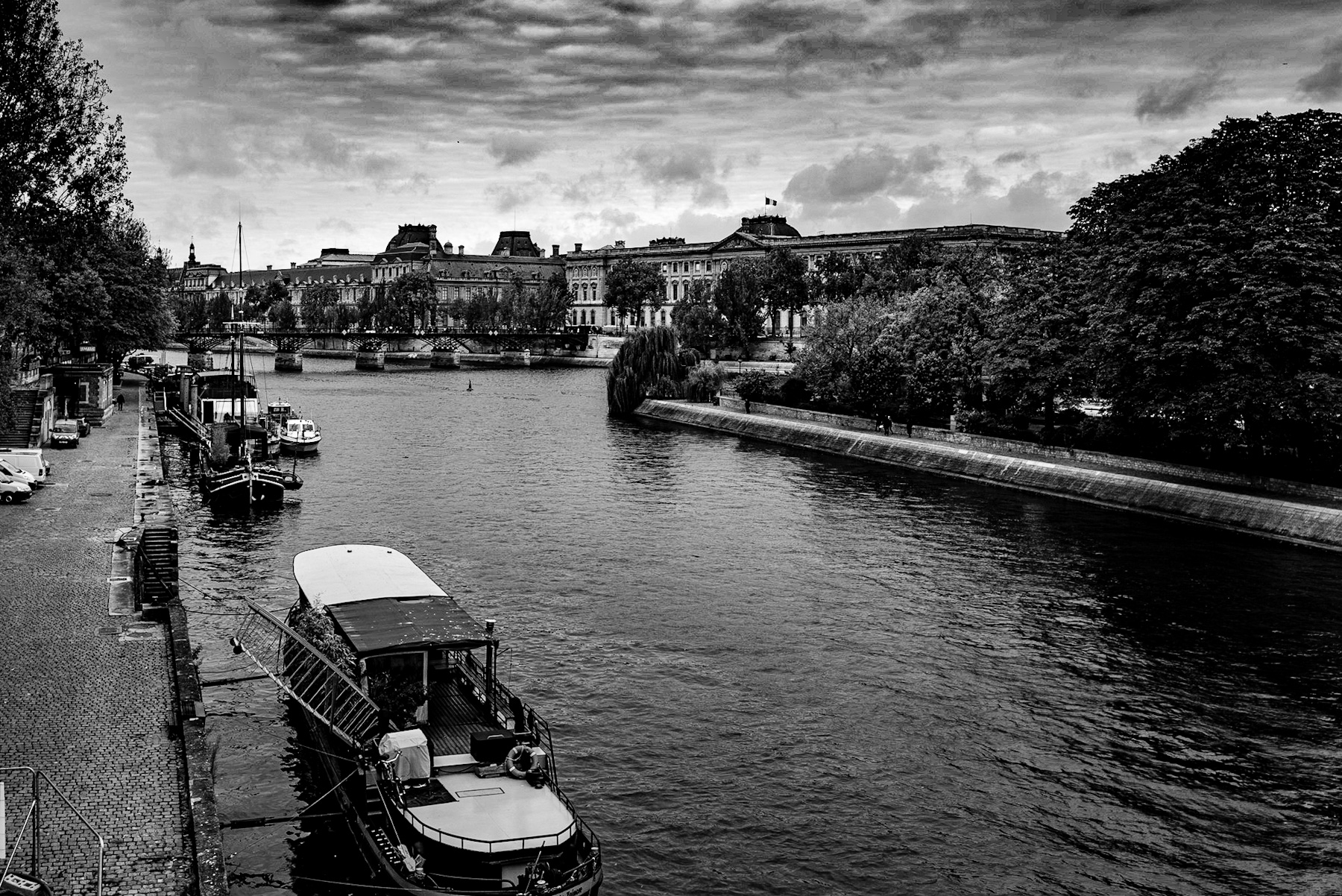
In the foreground, the vibrant pulse of river life is palpable. A traditional French houseboat, a *péniche*, is gracefully moored along the cobbled quay. These vessels are more than mere boats; they are cherished homes, a living testament to a unique Parisian lifestyle that has endured for generations.
To the left, the stone quay buzzes with a quiet charm. Parked vehicles and other moored boats hint at the continuous flow of commerce and daily routines that have always characterized the banks of the Seine. This area, once a bustling hub for transporting goods into the very heart of Paris, now seamlessly blends residential tranquility with leisurely pursuits, perfectly embodying the city’s remarkable ability to adapt while fiercely preserving its unique character.
**The Enduring Legacy of the Louvre Palace**
Dominating the far bank is the unmistakable and majestic silhouette of the Louvre Palace. Its long, classical facade stretches majestically across the horizon, a powerful symbol of French influence, artistic innovation, and profound history. What we admire today is the culmination of centuries of dedicated construction and thoughtful transformation.
The Louvre’s extraordinary story began in the late 12th century as a formidable fortress, built by King Philip Augustus to defend Paris. Over the centuries, it was meticulously transformed by successive monarchs into an increasingly lavish royal residence. It was during the French Renaissance that the Louvre truly began to take on the palatial form we recognize today. King Francis I and his successors meticulously tore down the old fortress, replacing it with a grand palace befitting their elevated status. The magnificent building in the photograph, with its rhythmic arrangement of windows, columns, and ornate roofline, is a direct product of this long architectural evolution.
After the royal court relocated to Versailles in the 17th century, the Louvre’s destiny shifted dramatically. During the tumultuous French Revolution, it was decreed that this former symbol of monarchy should be reborn as a public museum, a sacred place to display the nation’s invaluable artistic treasures for all citizens. Today, the Louvre Museum stands proudly as the world’s largest art museum, its historic walls guarding masterpieces from across human history. The French flag, proudly visible atop the roof, boldly asserts its status as a quintessential national monument.
**Beyond Color: A Glimpse into Paris’s Soul**
The monochrome palette of this captivating photograph profoundly enhances its historical resonance. By thoughtfully removing the distraction of color, the image compels the viewer to focus intently on texture, form, and light. The rugged cobblestones, the dark, reflective water, the intricate details of the palace, and the dramatic, brooding clouds all gain a heightened sense of presence and depth. This deliberate artistic choice effortlessly bridges the gap between the present moment and the countless historical photographs taken from this very same iconic vantage point. It serves as a poignant reminder that while the boats may evolve and people may come and go, the fundamental character of this iconic Parisian vista—the timeless interplay between the flowing River Seine and the stoic Louvre—remains eternally captivating.

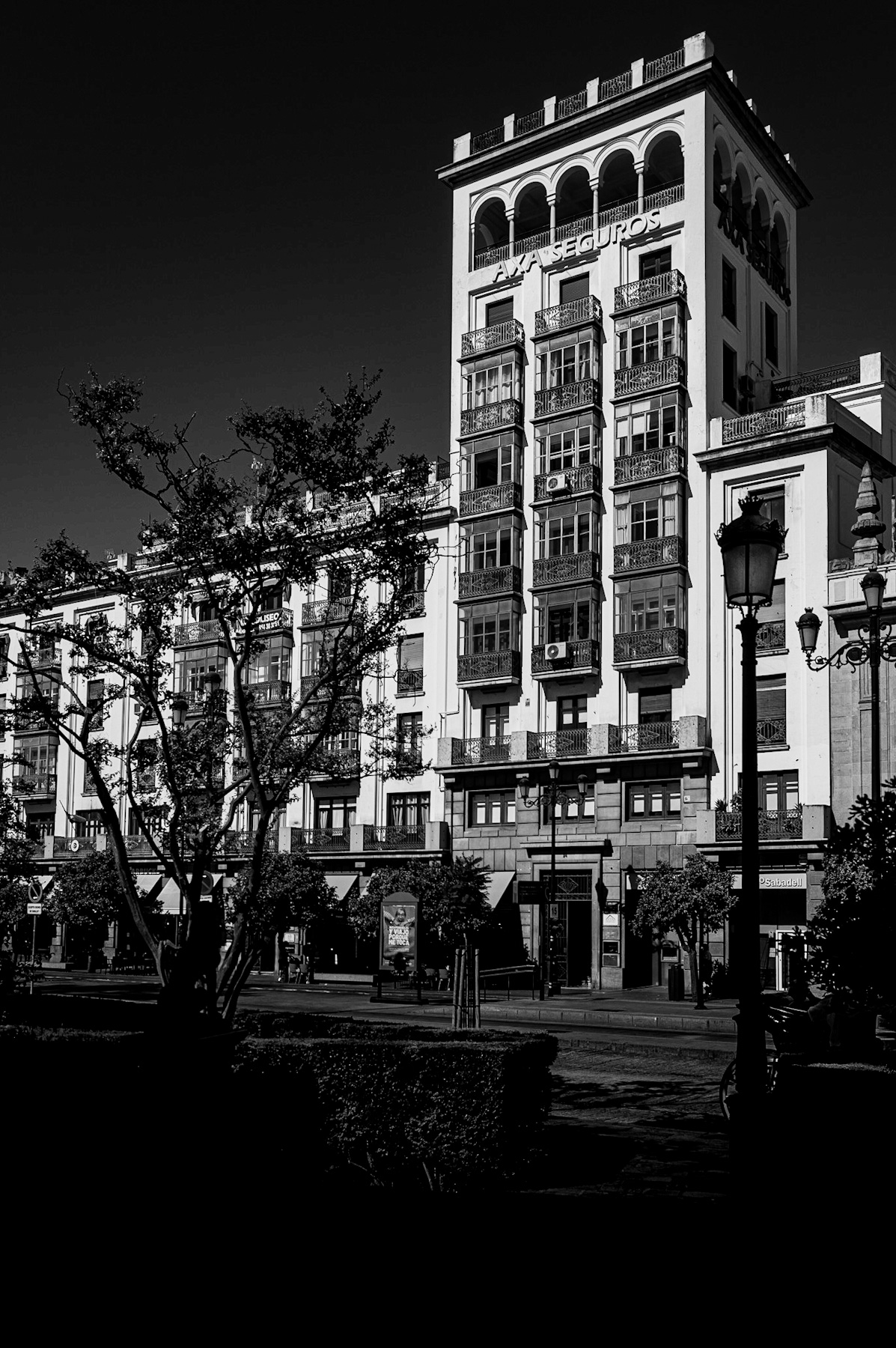
Discover Edificio La Adriática: Seville’s Iconic Regionalist Masterpiece

Spain’s Culinary Soul: Jamón Ibérico and Modern Tradition
The Enduring Legacy of Jamón Ibérico
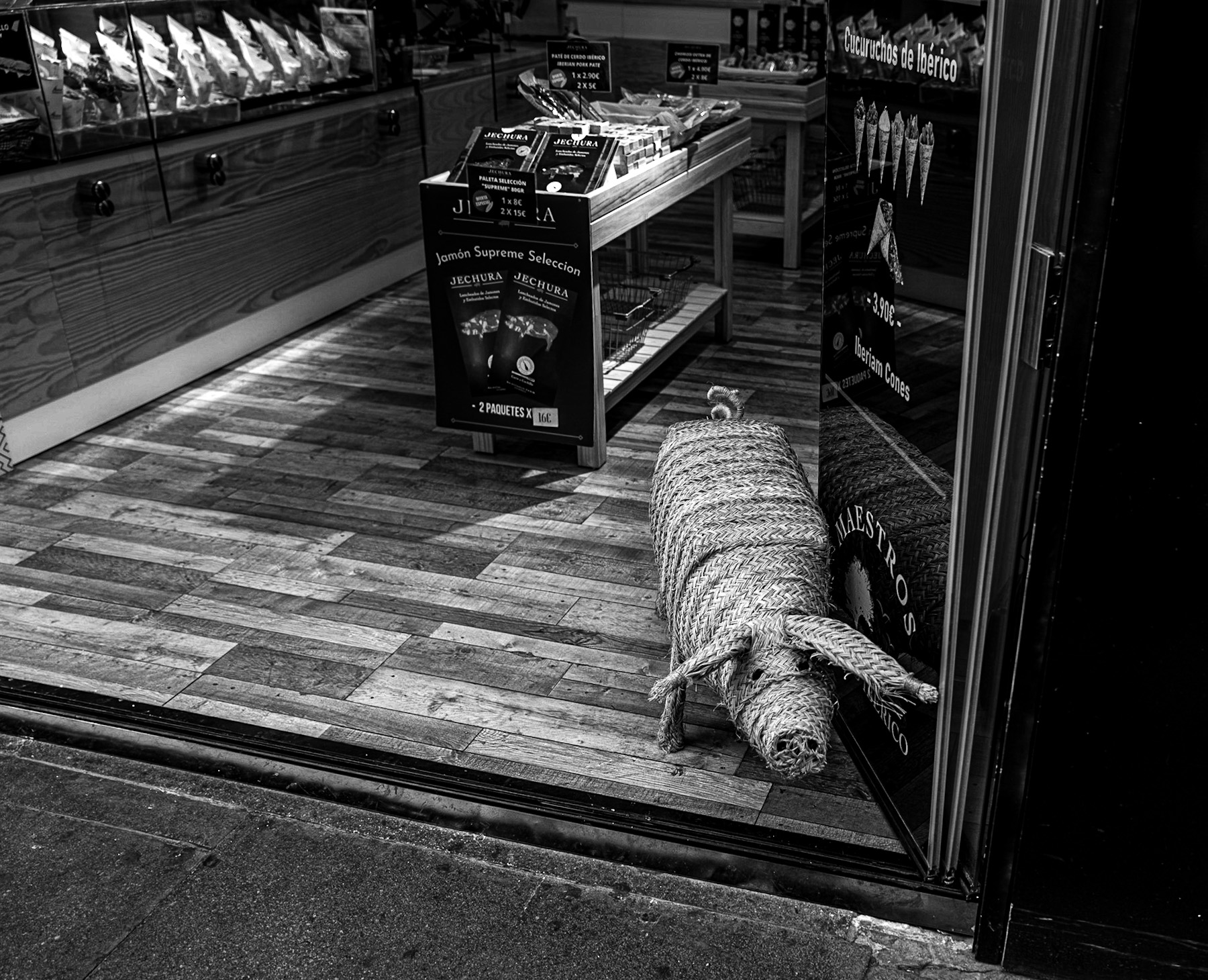
At the core of such establishments lies one of Spain’s most celebrated culinary gems: Jamón Ibérico. You’ll spot packages labeled „Jamon Supreme Selección“ and „Paleta Selección,“ representing not merely cured meats, but the culmination of a sacred, age-old tradition. This delicacy originates from the magnificent Black Iberian Pig, or *Cerdo Ibérico*, a breed native to the Iberian Peninsula. The highest echelon, **Jamón Ibérico de Bellota**, comes from free-range pigs that roam the breathtaking, oak-studded meadows known as the *dehesa*. During the autumn *montanera* season, these privileged animals feast almost exclusively on acorns (*bellotas*), imbuing the ham with its signature rich, nutty flavor and a uniquely marbled fat that literally melts in your mouth.
The creation of Jamón Ibérico is nothing short of an art form. Following the initial salting phase, these precious hams are meticulously hung to cure in special cellars (*bodegas*) for an astonishing period—sometimes up to four years. Here, under the natural ebb and flow of temperature and humidity, a slow, patient metamorphosis unfolds, allowing profoundly complex flavors to develop. This tradition, stretching back centuries, began as a method of preservation and has since evolved into a powerful symbol of Spanish cultural identity and culinary prestige.
Tradition Embraces Modern Convenience
While deeply steeped in history, the shop pictured brilliantly showcases a seamless fusion of tradition and contemporary convenience. The rustic wooden displays and the artisanal woven pig proudly evoke a sense of heritage and authenticity. Yet, the presentation is unmistakably modern. The exquisite ham is neatly vacuum-packed, guaranteeing optimal quality and freshness for today’s discerning consumer.
Perhaps most telling is the sign on the glass door: „**Cucuruchos de Ibérico**“ – Iberian Cones. This ingenious adaptation transforms an ancient delicacy into a perfect offering for our fast-paced world. For just a few euros, customers can savor freshly sliced, world-class ham, elegantly served in a convenient paper cone. It elevates a gourmet experience into an accessible, sophisticated street food snack. It’s a stellar example of how Spain’s culinary traditions are not merely static relics, but vibrant, continuously evolving practices that remain relevant and beloved.
This beautiful juxtaposition of old and new—the ancient craft of curing exceptional ham presented in a convenient, modern format—is precisely the secret to its enduring appeal. It honors the rich tapestry of the past while enthusiastically embracing the present, ensuring that the remarkable legacy of **Jamón Ibérico** continues to thrive for generations to come. The woven pig at the door stands as a silent, powerful testament to this delicate balance, a symbol of the craft that reveres both the animal and the very land from which this exceptional product springs.

Tuscany’s Silent Guardians: The Timeless Story of Cypress Trees
**A Masterpiece of Monochrome: Light, Shadow, and Dramatic Composition**
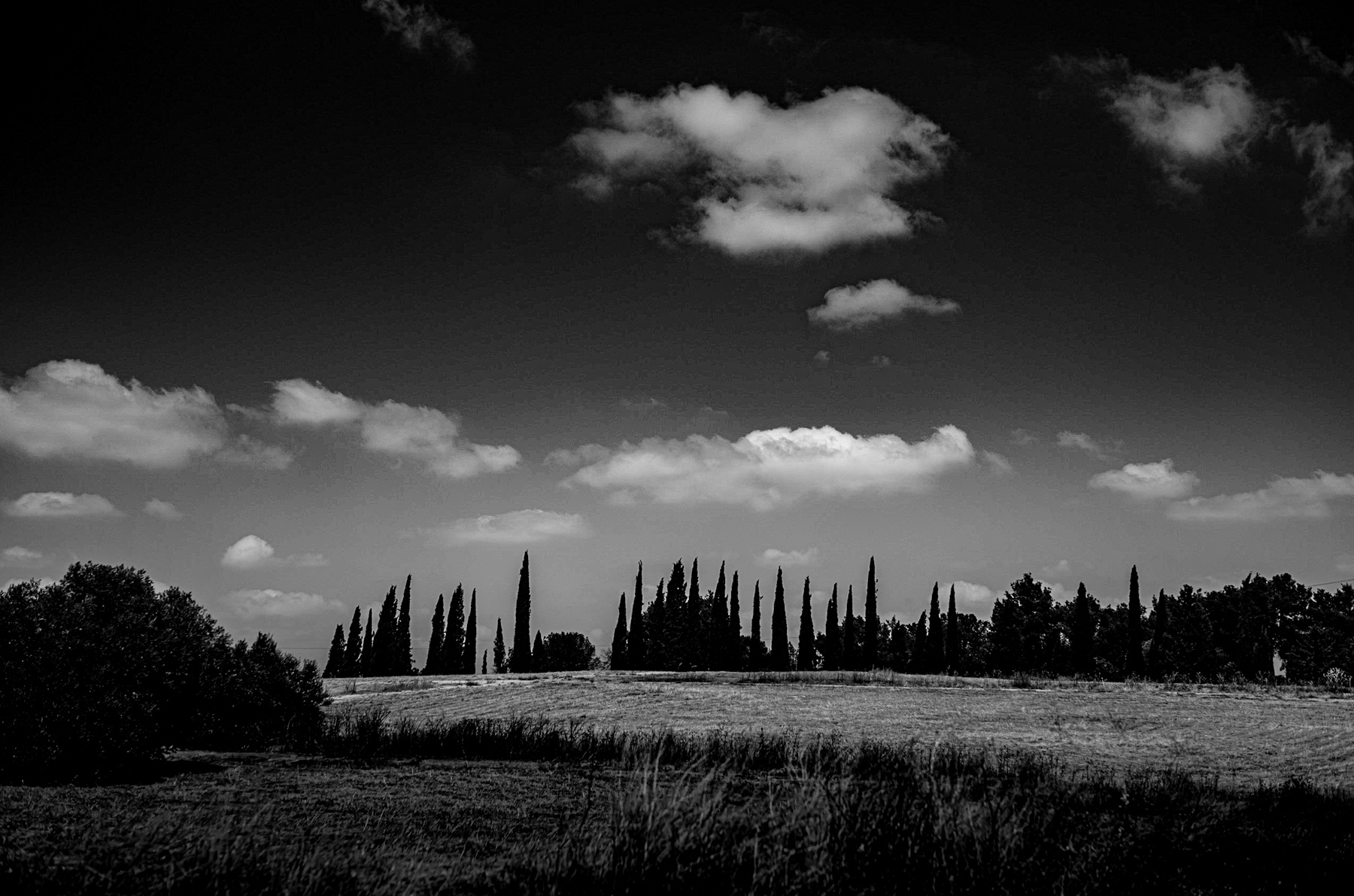
The power of this image lies in its dramatic composition and high-contrast monochrome palette. The sky is not a gentle grey but a deep, almost black canvas, against which brilliant white clouds drift. This high-contrast rendering gives the scene a powerful, almost theatrical quality. The cypress trees, rendered in deep black, become powerful graphic elements. They are not merely trees but symbols, guardians standing watch over the land. Their varying heights and dense grouping create a rhythmic pattern along the horizon, drawing the viewer’s eye across the frame. The choice of black and white strips the Tuscan landscape of its potentially vibrant greens and blues, forcing the viewer to focus on the fundamental shapes, textures, and the profound history embedded within the scene.
**The Ancient Roots of the Italian Cypress**
These are not just any trees. The slender, dark spires are the iconic **Italian Cypress trees** (*Cupressus sempervirens*), and they are deeply woven into the cultural and historical fabric of the Mediterranean. Their story stretches back to antiquity, where they held significant symbolic meaning for ancient civilizations.
* **Etruscan and Roman Symbolism:** Long before the Roman Empire, the Etruscans, who inhabited ancient Tuscany, associated the cypress with death and the afterlife. This connection was adopted and continued by the Romans, who frequently planted cypress trees at gravesites and cemeteries. Its evergreen nature symbolized eternal life after death, and its straight, upward growth was seen as a connection between the earth and the heavens. The somber, contemplative mood of the photograph echoes this ancient, funerary association of these magnificent trees.
* **A Renaissance Icon:** The legacy of the cypress tree extends far beyond antiquity. During the Renaissance, the rolling hills of Tuscany, punctuated by these elegant trees, became a favored backdrop for painters. Artists like Leonardo da Vinci and Piero della Francesca immortalized this landscape, cementing its status as the archetypal image of Italian beauty and harmony. The cypress tree transitioned from a symbol of mourning to one of elegance, permanence, and idyllic nature, becoming synonymous with the quintessential Mediterranean landscape.
This photograph, therefore, does more than just document a beautiful view. It presents a landscape saturated with millennia of human history and symbolism. The silent **cypress trees** are sentinels that have witnessed the rise and fall of civilizations. The stark, black and white treatment freezes this moment, making it feel both ancient and immediate—a powerful reminder of the enduring connection between land, history, and art.

El Rinconcillo: A Timeless Portrait of Seville’s Oldest Tapas Bar, Captured in Stillness
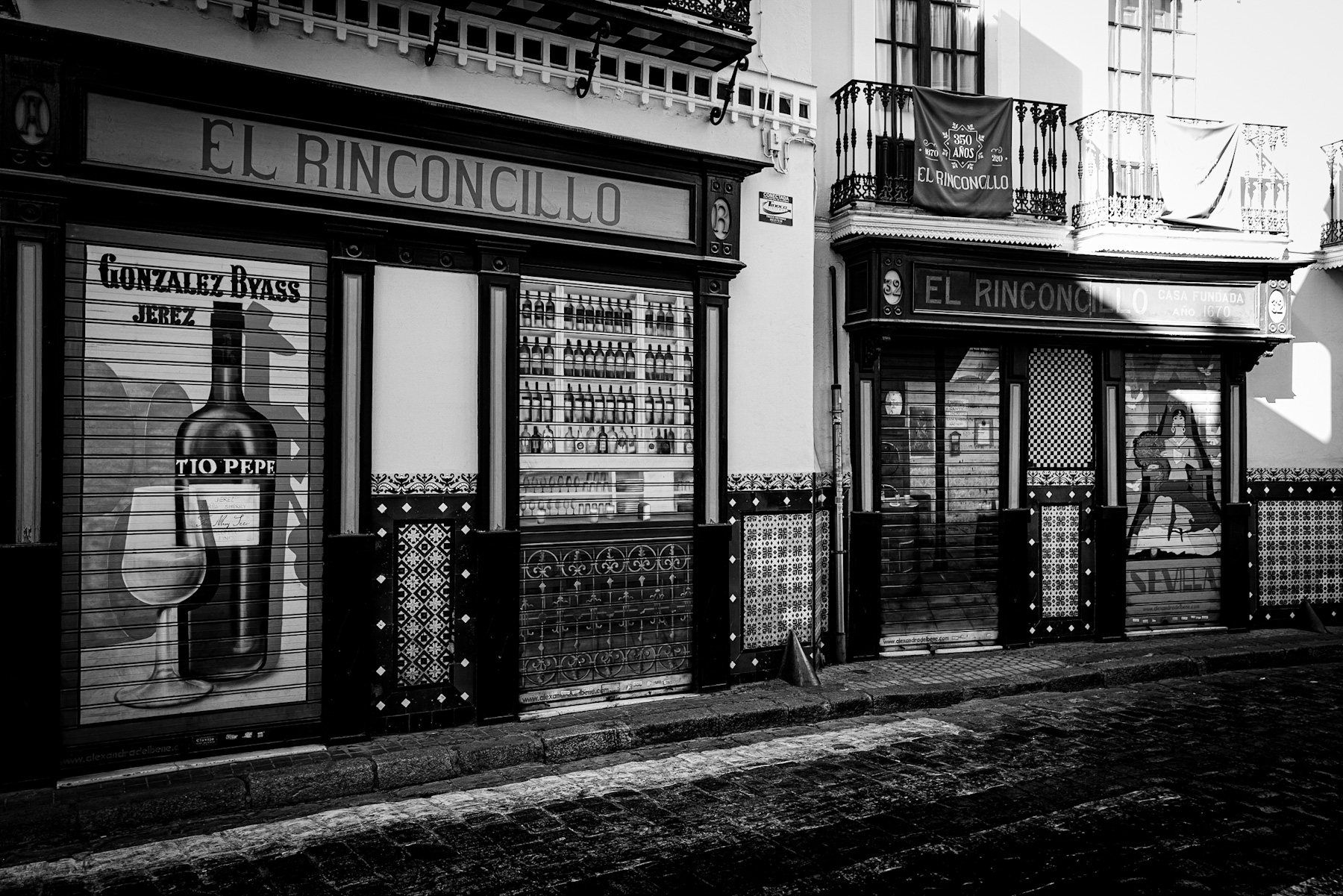
The visual composition speaks volumes about traditional Andalusian architecture. The lower half of the facade is adorned with classic *azulejos*, the glazed ceramic tiles that are a hallmark of the region. Their geometric and floral patterns provide a decorative contrast to the dark, carved woodwork that frames the windows and doors. Above, a wrought-iron balcony adds to the building’s historic character. The name „EL RINCONCILLO“ is painted in elegant, classic lettering, a signifier of its long-standing presence. The banner hanging from the balcony proudly proclaims „350 AÑOS“ (350 Years), celebrating a milestone anniversary from its founding in 1670. This detail firmly places the establishment not just as a business, but as a historical landmark.
El Rinconcillo holds the distinguished title of being the oldest bar in Seville and one of the most ancient in all of Spain. Founded in 1670, it began as a *taverna* and has since evolved while retaining its authentic soul. For over three and a half centuries, it has served as a gathering place for locals and a point of pilgrimage for visitors seeking an authentic taste of Sevillian culture. The advertisements on the shutters are also significant. The prominent display for **Tio Pepe**, a world-renowned brand of Fino sherry from the **Gonzalez Byass** cellars in Jerez, is a direct link to the bar’s culinary offerings. Sherry is intrinsic to the Andalusian tapas experience, and El Rinconcillo is celebrated for its selection of local wines and classic dishes. The image of the sherry bottle and *copita* (the traditional glass for sherry) reinforces the bar’s deep connection to the region’s gastronomic traditions.
While many images of El Rinconcillo depict its bustling interior—with its mahogany bar, hanging cured hams, and patrons enjoying tapas—this photograph offers a different perspective. The closed shutters create a sense of anticipation and reverence. The building itself seems to be at rest, holding within its walls countless stories and conversations from generations past. The strong contrast and deep shadows, characteristic of the bright Spanish sun, carve out the details of the scene, allowing the viewer to appreciate the structure’s enduring beauty without the distraction of modern-day crowds. It is a portrait of a legend in a moment of quiet contemplation, a silent testament to its incredible longevity.

Silent Sentinels: Ancient Ruins Guarding a Rocky Ridge
A Landscape Carved by Time
The dominant feature here is the formidable, rocky terrain. The high-contrast monochrome treatment masterfully emphasizes the texture and form of the geological formations. Every crevice and jagged edge is sharply defined, a testament to millennia of wind and weather shaping this incredible vista. Yet, the rock face isn’t barren; it’s dotted with hardy, low-lying scrub and scattered trees that cling tenaciously to life in what appears to be an unforgiving environment. Their dark silhouettes stand out against the brighter tones of the rock and the smooth, gradient sky. A lone bird, captured mid-flight, adds a sense of scale and transient life to this otherwise permanent-seeming panorama. It soars above a world that has remained largely unchanged for centuries.
Whispers of a Forgotten Past
Nestled within this natural fortress are the subtle but unmistakable signs of human history. Partially obscured by tenacious vegetation, the angular lines of a stone structure emerge from the hillside. These aren’t the grand columns of a sprawling temple but the humble, functional ruins of what might have been a watchtower, a small fortification, or even a simple shepherd’s shelter.
Given the almost Mediterranean feel of the landscape, one can speculate on its origins. Could it be a Roman *castellum*, a small fort built to oversee a vital valley or a strategic route? Perhaps it’s a Moorish *atalaya*, a watchtower from the period of Islamic rule in the Iberian Peninsula, designed to communicate with other fortifications via smoke or light signals. Alternatively, it could be a far older, prehistoric settlement, its original purpose now lost to the sands of time.
Whatever its specific function, the structure unequivocally speaks of a primal human need for security and vantage. The people who built it chose this high ground for a reason: to see and not be seen, to protect themselves from threats, and to survey the land that sustained them. These ancient stones are a silent testament to their lives, their struggles, and their eventual departure, leaving the structure to be slowly reclaimed by the very nature it was once built to dominate.
The Power of Monochrome
The deliberate choice to render this powerful scene in black and white is an artistic stroke that significantly enhances its historical resonance. Stripped of the potential distractions of color, the viewer is compelled to focus on the fundamental elements: light, shadow, texture, and form. The deep blacks in the crevices of the rocks and the shadows of the bushes suggest mystery and the unknown depths of time. Meanwhile, the bright, almost-white highlights on the sun-bleached stones convey the intense heat and dry climate. This beautiful lack of color lends the photograph a documentary quality, as if it were a historical record itself, powerfully connecting the present moment of its capture to the deep past it depicts. The image transcends being merely a photograph of a place; it becomes a profound portrait of time itself.

Echoes in the Alleys: A Timeless Glimpse into Seville’s Historic Heart
**The Anatomy of a Timeless Scene**
The composition leads the eye down a cobblestone path, worn smooth by generations of footsteps. On either side, the walls of historic buildings rise steeply, creating an intimate, canyon-like effect. Wrought-iron balconies, a signature of Spanish architecture, jut out into the darkness, their intricate metalwork silhouetted against the lit windows and walls behind them. The buildings themselves are a tapestry of styles—some with the simple, stark facades of residential homes, others hinting at grandeur with classical columns and decorative cornices. At the far end of the alley, framed perfectly by the towering walls, a Baroque bell tower stands as a focal point, its presence a constant reminder of the city’s deep-rooted faith and artistic heritage.
**A Street Forged by Sun and Strategy**
This labyrinthine layout is not an accident of time but a deliberate design, a legacy of the city’s Moorish past. When Seville, then known as *Isbiliya*, was a major capital in Al-Andalus, its streets were engineered to combat the fierce summer sun. The narrowness of the alleys ensures they remain in shadow for most of the day, creating a cooler microclimate. This design also served a defensive purpose, creating a confusing maze for potential invaders that was easily defended by those who knew its secrets. What we see in this photograph is the enduring result of climate-responsive and strategic urban planning from over a thousand years ago.
**Layers of History Etched in Stone**
While the blueprint of the street is Moorish, the architectural details tell a story of subsequent eras. Following the *Reconquista* in the 13th century, Christian culture began to layer itself onto the existing city. Churches and convents were built, often on the sites of former mosques. The bell tower visible in the distance is a prime example of this transition. Its Baroque style, popular in the 17th and 18th centuries, speaks to the city’s immense wealth during Spain’s Golden Age, when it held a monopoly on trade with the Americas. The ornate doorways and classical elements seen on the buildings are further testaments to this period of prosperity.
This single photograph, therefore, encapsulates the complex identity of a city like Seville. It is a visual representation of a cultural palimpsest, where a Moorish foundation is adorned with Renaissance and Baroque artistry. The darkness conceals the noise of the 21st century, allowing the whispers of the past to emerge from the stones, telling a silent, powerful story of conquest, faith, and artistry.