Kategorie: Travel

  • Coastal Pastures: A Timeless Black and White Narrative of Land, Sea, and Livestock

    Coastal Pastures: A Timeless Black and White Narrative of Land, Sea, and Livestock

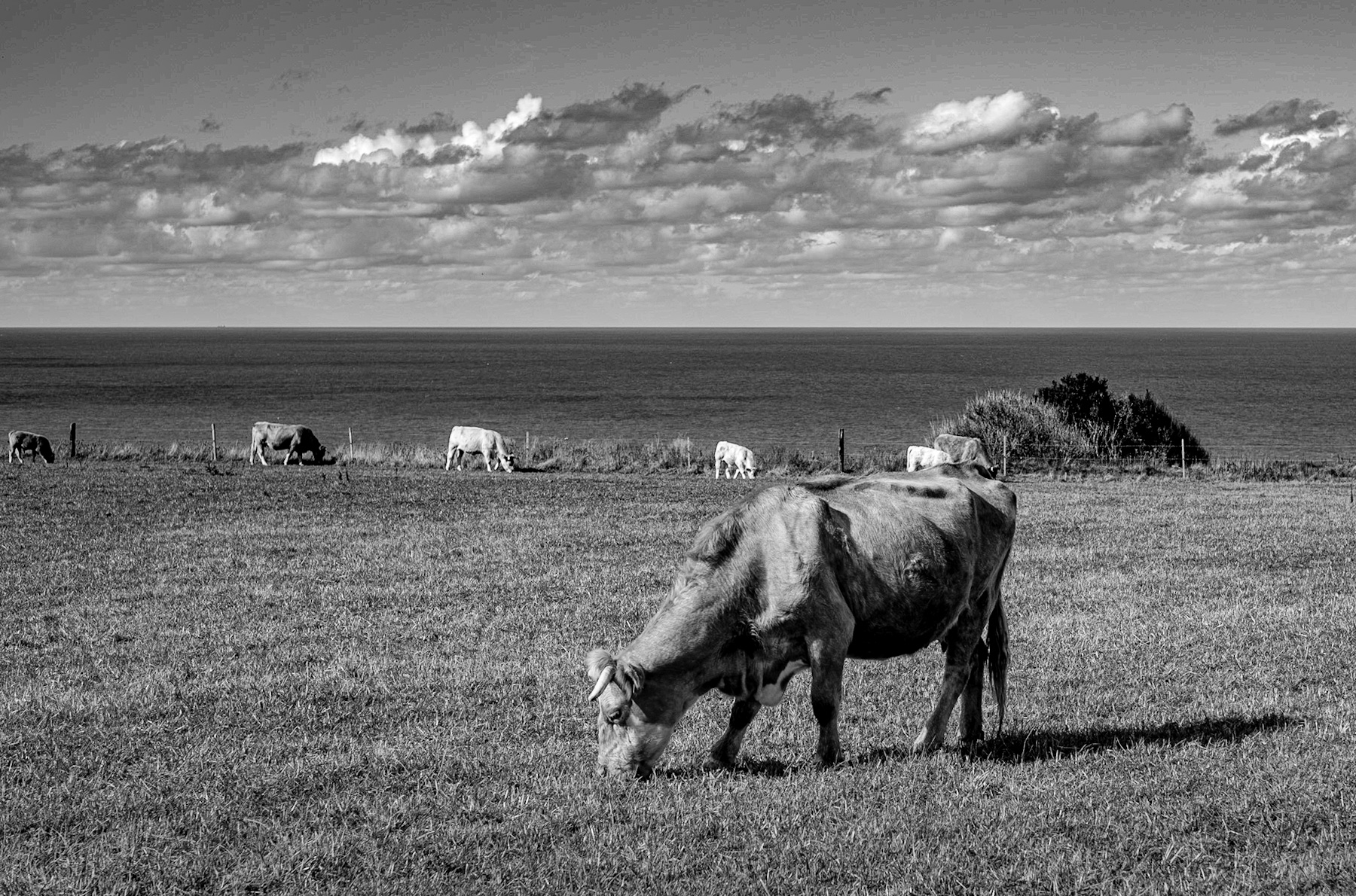
    Die Fotografie entführt uns in eine ruhige Küstenlandschaft, die in eindringlichem Schwarz-Weiß gehalten ist. Diese bewusste Wahl betont Textur, Licht und Schatten und verleiht der Szene eine klassische, beinahe malerische Qualität.
    **Ein visueller Tanz von Licht und Schatten**
    Im Vordergrund dominiert eine robuste Kuh den unteren rechten Bildbereich, ihren Kopf gesenkt, während sie fleißig auf dem saftigen Grün weidet. Die monochrome Darstellung hebt die Konturen ihres muskulösen Körpers und die feinen Variationen ihres Fells hervor, die scharf mit dem fein texturierten Gras unter ihren Hufen kontrastieren. Ihr Schatten erstreckt sich hinter ihr, eine scharfe Silhouette vor dem sonnenbeschienenen Feld, die auf die Tageszeit und den klaren, wenn auch bewölkten, Himmel darüber hinweist.
    Weiter im Mittelgrund setzt eine kleine Herde weiterer Rinder ihr friedliches Grasen fort, über das sanft geschwungene Feld verstreut. Ihre helleren Felle heben sich vom dunkleren Gras ab und schaffen visuelle Anker, die das Auge zum weiten Horizont führen. Eine einfache Zaunlinie, markiert durch Pfosten, grenzt subtil den Rand der Weide ab und schafft eine Grenze zwischen dem kultivierten Land und der Weite jenseits davon. Rechts fügt eine Ansammlung niedrig wachsender Büsche oder kleiner Bäume einen Hauch wilderer Vegetation hinzu und unterbricht die glatte Linie der fernen Landschaft.
    **Wo Ozean und Himmel sich treffen**
    Jenseits des Feldes erstreckt sich ein dunkles, ununterbrochenes Band des Ozeans über die Mitte des Bildes, dessen Oberfläche ruhig und tief erscheint. Die Horizontlinie ist scharf und klar und trennt Land vom Meer und Meer vom Himmel. Darüber bildet der Himmel eine dramatische Leinwand aus verstreuten Wolken, deren voluminöse Formen das Licht einfangen und ein dynamisches Zusammenspiel von leuchtendem Weiß und tiefem Grau erzeugen. Dieses himmlische Drama verleiht der ansonsten ruhigen Szene eine Note von Grandeur und verbindet die unmittelbare pastorale Aktivität mit den umfassenderen Kräften der Natur.
    **Ein Blick in die Vergangenheit: Die ewige Verbindung von Mensch und Tier**
    Historisch gesehen zeugt die Präsenz von Rindern in einer solchen Küstenlandschaft von Jahrtausenden menschlich-tierischer Interaktion und landwirtschaftlicher Entwicklung. Die Domestizierung von Rindern, die vor etwa 10.500 Jahren in Regionen wie Anatolien und dem Fruchtbaren Halbmond begann, hat die menschlichen Gesellschaften grundlegend verändert. Diese Tiere wurden zentral für die Subsistenz, lieferten Milch, Fleisch, Häute und entscheidende Arbeitskraft für das Pflügen und den Transport. Die Szene von Kühen, die friedlich auf einer Weide grasen, ist ein direktes Echo des Pastoralismus, einer alten Wirtschafts- und Kulturpraxis, die Landschaften und Gemeinschaften auf allen Kontinenten über Tausende von Jahren geprägt und eine tiefe, dauerhafte Bindung zwischen Menschen und Nutztieren gefördert hat.
    **Schwarz-Weiß: Zeitlosigkeit im Fokus**
    Die Wahl der Schwarz-Weiß-Fotografie verstärkt die historische Resonanz des Bildes zusätzlich. Von den frühesten Tagen der Fotografie im 19. Jahrhundert war Monochrom die einzige Option, und sie wird auch heute noch verwendet, um Farbablenkungen zu eliminieren und den Betrachter auf Komposition, Form und die rohe Emotion oder Zeitlosigkeit eines Motivs zu konzentrieren. Diese ästhetische Wahl verwandelt hier eine zeitgenössische Szene in eine, die sich archetypisch anfühlt und uns mit Generationen von Bauern und ihren Herden verbindet.
    Die Kühe selbst, Symbole für Nahrung, Reichtum und oft sakrale Verehrung in verschiedenen historischen Kulturen, stehen als lebendige Verbindungen zu einem Erbe, das tief im Land und seinen Ressourcen verwurzelt ist. Diese Fotografie ist daher nicht nur ein Schnappschuss, sondern eine visuelle Erzählung, die natürliche Schönheit, landwirtschaftliche Geschichte und die dauerhafte menschliche Verbindung zu Land und Meer miteinander verwebt. Sie lädt uns ein, über die tiefen Wurzeln unserer Beziehung zur Natur und zu den Tieren nachzudenken, die unsere Zivilisationen geformt haben.
  • # Echoes in Silhouette: A Timeless Dance of Nature and History

    # Echoes in Silhouette: A Timeless Dance of Nature and History

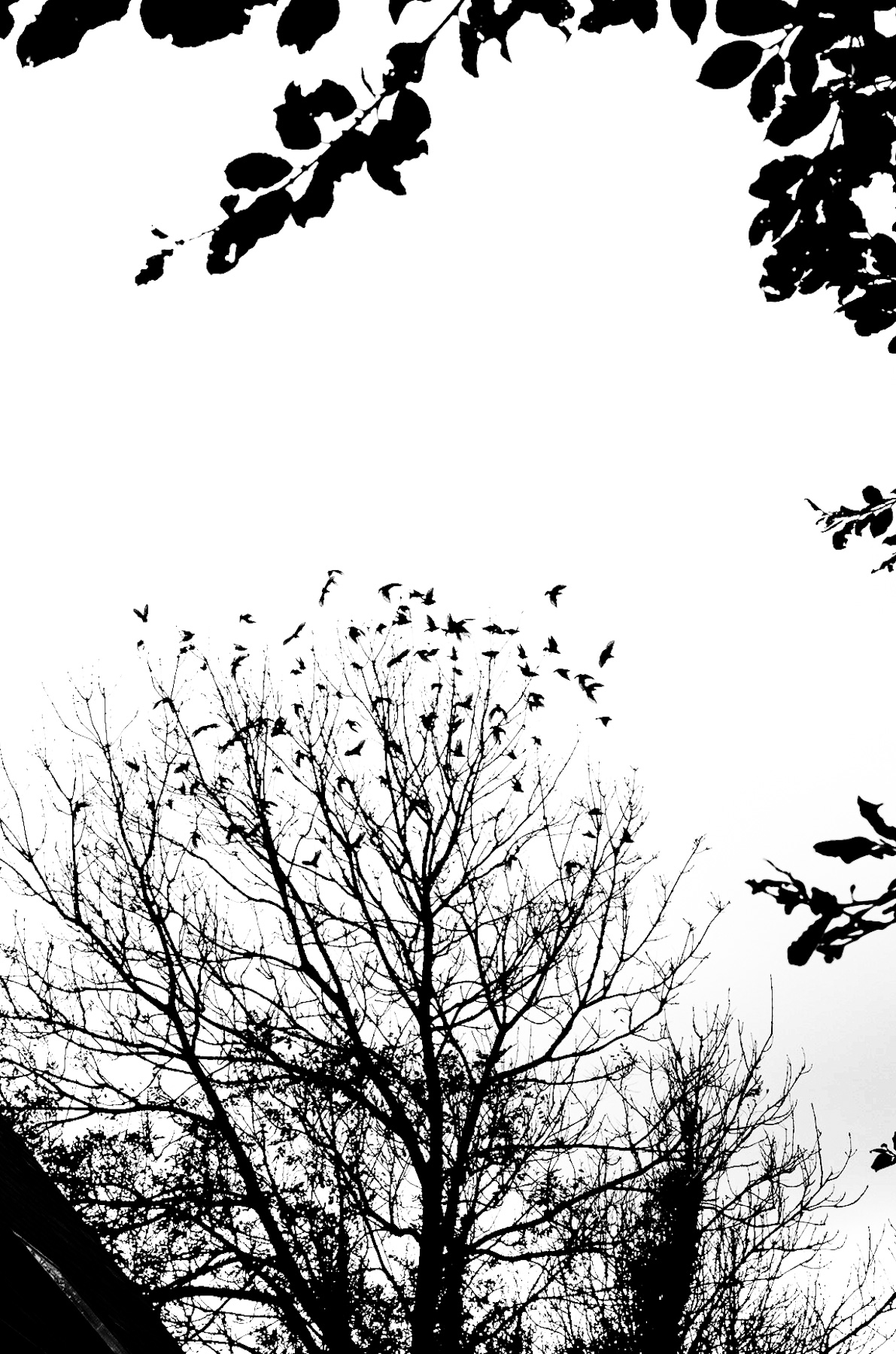
    Against a stark, luminous sky, a dramatic tableau unfolds, captured in the timeless purity of **black and white**. The image presents a powerful **silhouette** of a bare, deciduous tree, its intricate network of branches reaching upwards like a complex vascular system. This skeletal form dominates the lower and central frame, its delicate structure a testament to winter’s embrace or the dormancy of a seasonal cycle. In the upper corners, leafy branches, also in deep shadow, frame the scene, suggesting a broader natural environment, yet maintaining focus on the central subject.
    A dynamic **flock of birds** animates the upper canopy of the tree, some perched amidst the branches, others in various stages of flight, creating a swirling vortex of motion against the static backdrop. Their collective presence adds a vital, almost sentient energy to the otherwise serene composition. The high contrast treatment strips away color, emphasizing form, texture, and the interplay of light and shadow, inviting a deeper contemplation of the scene’s inherent symbolism.
    ## The Enduring Power of the Silhouette
    Historically, the **silhouette**, as an artistic technique, holds a rich legacy. From ancient shadow plays to the popular portraiture of the 18th and 19th centuries, the art of capturing form purely through outline against a contrasting background has always conveyed a sense of mystery, **timelessness**, and essential truth. This photographic rendition echoes those **historical applications**, distilling the natural world to its fundamental shapes and movements, transcending specific time or location. It’s a masterclass in **silhouette art**, leveraging the inherent drama of form against light.
    ## The Bare Tree: A Symbol of Resilience and Renewal
    The **bare tree** itself carries profound historical and cultural weight. Across diverse civilizations, deciduous trees losing their leaves have symbolized **cycles of death, dormancy, and eventual rebirth**. In many ancient mythologies and folklore, the „World Tree“ or „Tree of Life“ often underwent seasonal transformations, reflecting cosmic cycles of creation and destruction. A bare tree can represent **resilience**, **endurance through hardship**, and the **promise of renewal**, a concept deeply ingrained in human narratives from agricultural societies to spiritual traditions. Its starkness can also evoke introspection, a moment to reflect on life’s transient nature and **seasonal change**.
    ## Avian Messages: Interpreting the Flight of Birds
    Furthermore, the **avian collective** within the frame offers another layer of **historical interpretation**. **Flocks of birds** have, for millennia, been observed with fascination and attributed significant meaning. In ancient Rome, the practice of *augury* involved interpreting the flight patterns and calls of birds to divine the will of the gods and predict future events. Throughout various cultures, birds have been seen as messengers between worlds, symbols of freedom, community, or even harbingers of change. A large gathering, like the one depicted, can evoke a sense of collective consciousness, a shared journey, or the intricate social structures within the natural world that humans have long sought to understand and emulate. This rich tradition is part of **avian folklore**.
    ## A Visual Dialogue with History and Nature’s Narratives
    This image, therefore, is more than a mere depiction of nature; it is a visual dialogue with history and symbolism. The silent interplay of bare branches and dynamic birds, rendered in a stark black and white, invites viewers to connect with universal themes of **nature’s cycles**, resilience, communication, and the enduring human quest for meaning within the natural world. It is a timeless moment, frozen, yet pulsating with historical echoes and profound natural narratives, making it a compelling piece for **photo analysis** and **timeless art**.
  • Ait Ben Haddou, Morocco

    Marokko 2024 27

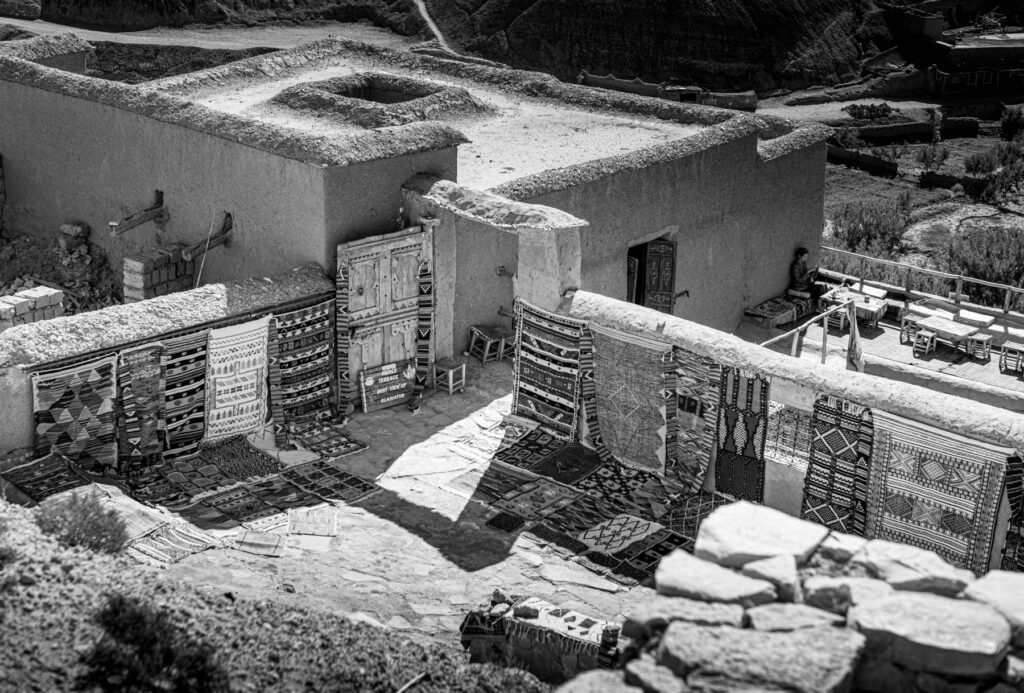
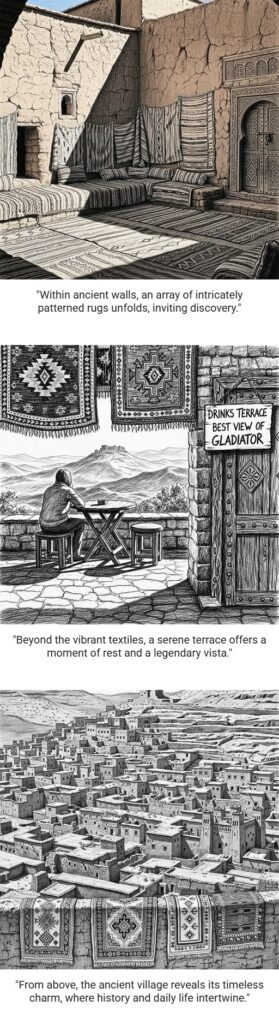
    Walking through Ait Ben Haddou, every corner held a story, every shadow a secret. As a photographer, it’s these moments I live for – a place where time seems to slow, allowing the light to paint scenes of profound beauty. This particular morning, the sun was just beginning its ascent, casting long, dramatic shadows across the ancient ksar. I found myself drawn to this elevated perspective, looking down into a small, sun-drenched courtyard. What immediately captivated me were the patterns. Rows upon rows of handwoven rugs, their intricate designs a testament to generations of craftsmanship, hung from a low wall and lay sprawled across the dusty ground. The stark black and white treatment felt right for this scene; it stripped away the distractions of color, allowing the textures – the rough plaster walls, the soft wool of the carpets, the worn wooden doors – to truly sing. The light was phenomenal, creating deep, rich shadows that gave the scene a sculptural quality, emphasizing the architectural lines and the folds of the textiles. In the background, a person sat quietly on a terrace, almost becoming part of the ancient structure, sipping tea perhaps, or simply gazing at the valley below. This human element, so unobtrusive, added a layer of quiet contemplation to the scene, a sense of everyday life continuing amidst the grandeur of history. I remember waiting for the light to hit just so, for the perfect interplay of brightness and shadow, wanting to capture not just a place, but a feeling – the enduring spirit of this remarkable fortified village. It was a moment of profound peace and visual richness, a slice of life rendered timeless by the monochrome lens.

    Ait Ben Haddou, a majestic fortified village (ksar) nestled in the Ounila Valley in Morocco, stands as a remarkable example of pre-Saharan earthen architecture. Designated a UNESCO World Heritage site in 1987, its origins date back to the 11th century, serving as a strategic stop along the ancient trans-Saharan trade route between Marrakech and the Sahara Desert. The ksar’s traditional mud-brick structures, including houses, towers, and defensive walls, are built into the hillside, offering breathtaking views and natural protection. Beyond its historical significance as a trading post and a testament to traditional Moroccan life, Ait Ben Haddou has achieved global fame as a popular filming location. Its iconic scenery has provided the backdrop for numerous blockbusters and television series, including ‚Lawrence of Arabia,‘ ‚Jesus of Nazareth,‘ parts of ‚Game of Thrones,‘ and most notably, Ridley Scott’s ‚Gladiator,‘ a fact playfully highlighted by the ‚Best View of Gladiator‘ sign visible in the image.

    27 story panels
  • mud-brick architecture

    Marokko 2024 25

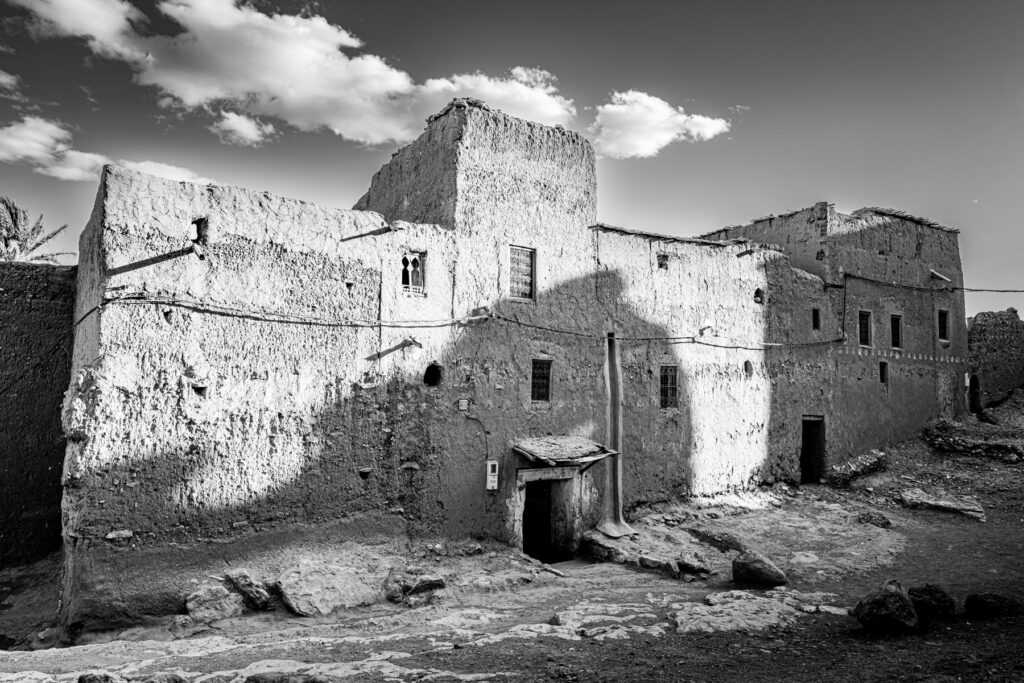
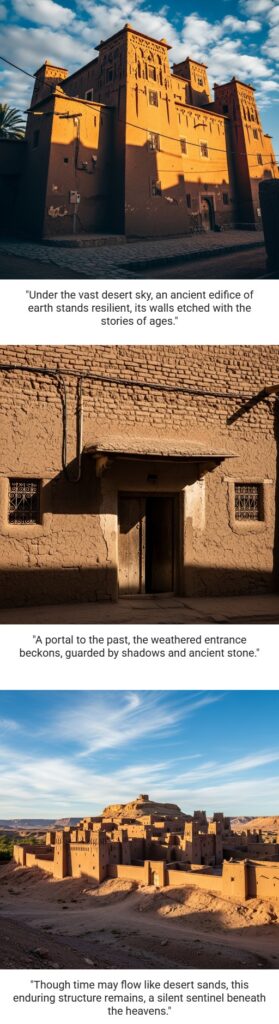
    The first light of dawn always holds a promise, but it was the stark, midday sun that truly revealed the soul of this ancient place. Wandering through the winding paths of what felt like a forgotten world, I came across this magnificent mud-brick structure. The air was dry, carrying whispers of centuries, and the silence was profound, broken only by the distant call of a bird.As a photographer, moments like these are a gift. The rough, textured walls, built layer by layer from the very earth beneath my feet, spoke volumes of resilience and human ingenuity. I knew immediately this had to be in black and white. Color would only distract from the raw power of the light and shadow dancing across its facade. The contrast was incredible; sharp, defined lines carved by the sun on the eastern wall, juxtaposed against the deep, brooding shadows on the western side.I spent a good hour just observing, waiting for the clouds to drift into the perfect position to add depth to the vast sky. Each window, each doorway, felt like an eye peering back from a different era. There’s a particular kind of magic in capturing architecture that feels so intrinsically linked to its environment, almost grown from it. The challenge was to convey its monumental presence while also highlighting the intricate details – the subtle patterns on the windows, the rough plaster, the simple, practical lines of its construction.This image isn’t just a building; it’s a testament to life enduring in harsh landscapes, a silent guardian of history. It reminds me that sometimes, the simplest forms, stripped of unnecessary adornment, hold the most profound beauty.

    The mud-brick architecture, often seen in regions like Morocco’s Atlas Mountains and pre-Saharan valleys, is a cornerstone of traditional Berber settlements. Structures like Kasbahs (fortified houses) and Ksours (fortified villages) are built using a technique called ‚pisé‘ or ‚tabia,‘ where moist earth, often mixed with straw or gravel, is compacted into formwork. This method is incredibly sustainable, utilizing readily available local materials, and provides excellent insulation against both extreme heat and cold. These buildings were not just homes but often served defensive purposes, with high walls, few external windows, and narrow, winding alleys designed to deter invaders. They represent a remarkable adaptation to the arid environment and a deep connection between the people and their land, a heritage that dates back centuries and continues to shape the landscape.

    25 story panels
  • Sahara

    Marokko 2024 
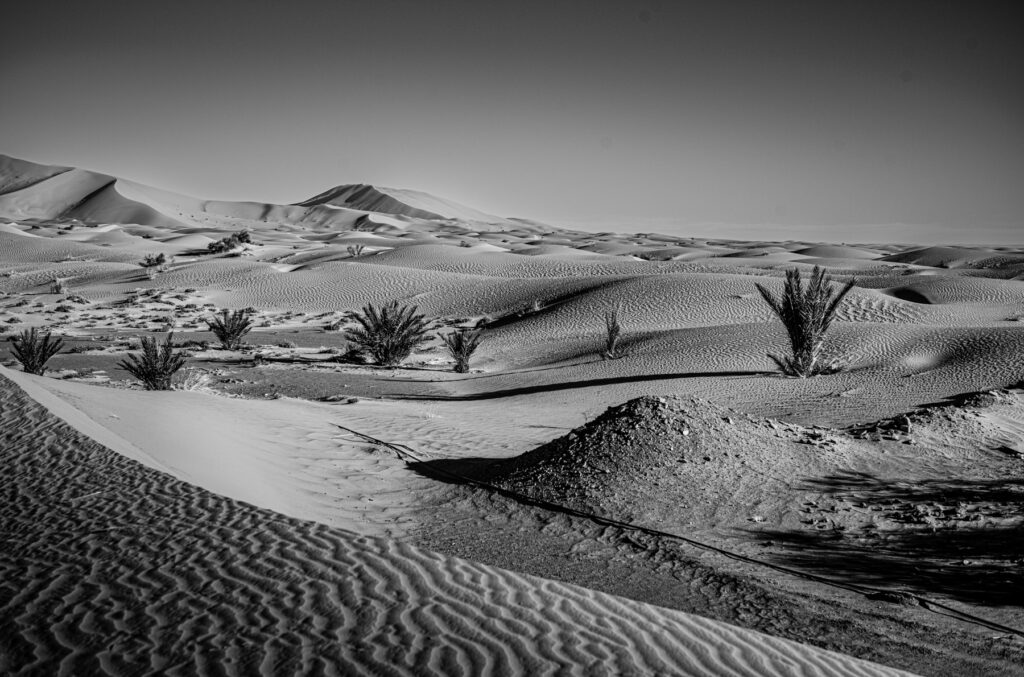
Dramatic black and white landscape of the Sahara desert, featuring textured sand dunes, resilient palms, and long, early morning shadows.

    Waking up before dawn in the Sahara, the air was crisp, hinting at the immense heat to come. My goal was to capture the desert in its raw, unfiltered beauty, and black and white felt like the only true way to convey its soul. This shot, which I’ve titled ‚Sahara, Marokko‘, emerged from that incredibly quiet morning. The vast expanse of dunes, their crests sculpted by endless winds, stretched as far as the eye could see. What truly struck me was the interplay of light and shadow, dancing across the intricately textured sand. Each ripple and undulation became a testament to the desert’s quiet, yet powerful, presence. The hardy desert vegetation, those small, resilient palms, stood defiantly against the immense backdrop, casting long, dramatic shadows that guided the eye deeper into the frame. There’s a profound sense of solitude here, a timelessness that washes over you. It’s not just a landscape; it’s an experience. The process involved a bit of a trek across soft, shifting sands, finding the right vantage point as the sun began its slow ascent, and patiently waiting for that perfect moment when the shadows were long and defined, adding incredible depth and drama to the scene. The desert truly speaks a language of its own, and in this photograph, I hope I’ve managed to capture a whisper of it. It’s a place that humbles you, reminding you of nature’s enduring artistry.

    22a story panels
  • Morocco – Sahara

    Marokko 2024 

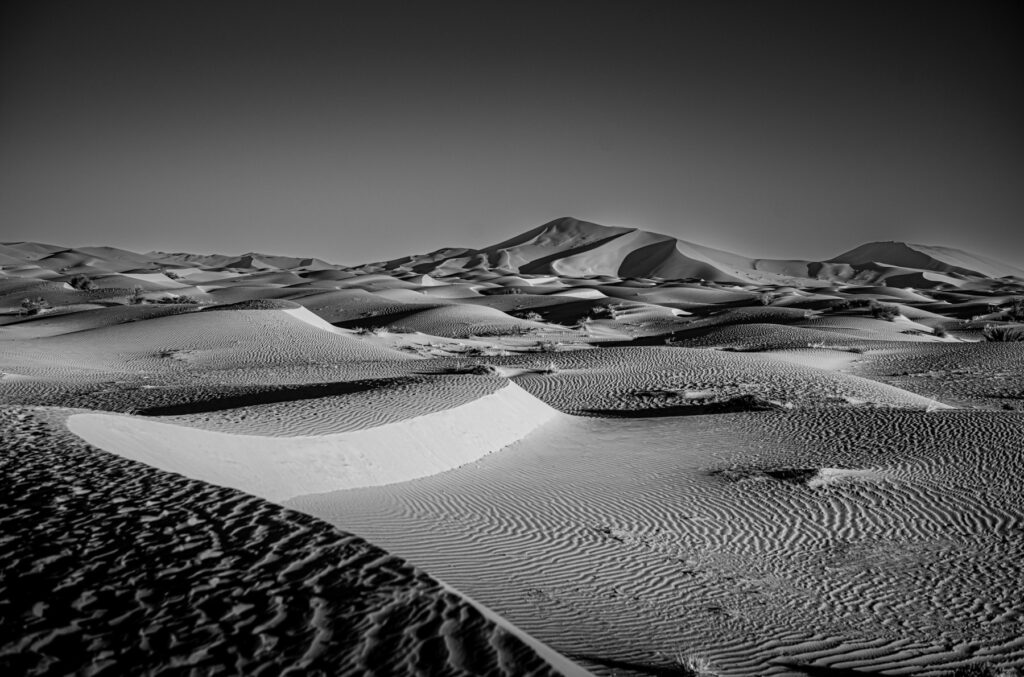
Captivating black and white landscape of the Marokko Sahara, showcasing the dramatic curves and intricate patterns of the endless sand dunes under a clear sky.

    There are moments in photography when everything aligns – the light, the subject, and that profound sense of awe. This image, titled ‚Marokko Sahara,‘ is one such moment for me. Standing amidst the vast, undulating landscape of the Moroccan desert, as the sun began its ascent, casting incredibly long and dramatic shadows, was an experience I’ll never forget. The sheer scale of the Sahara is breathtaking, but it’s the intimate details that truly captivated my lens. I wanted to capture the essence of this timeless place in a way that stripped away distractions, focusing purely on form, texture, and light. The decision to render it in black and white felt instinctively right. It amplifies the sculptural quality of the dunes, turning them into a symphony of curves and lines. Every ripple in the sand, meticulously sculpted by the wind, tells a story of constant movement, yet the scene itself exudes an immense stillness. It’s a testament to the raw, untamed beauty of nature, an endless canvas of light and shadow, waiting patiently for the photographer to find its heart. The silence out there was almost palpable, broken only by the gentle whisper of the wind, making each click of the shutter feel like a sacred act.

    20 story panels
  • Morocco – Mountains

    Marokko 2024 16

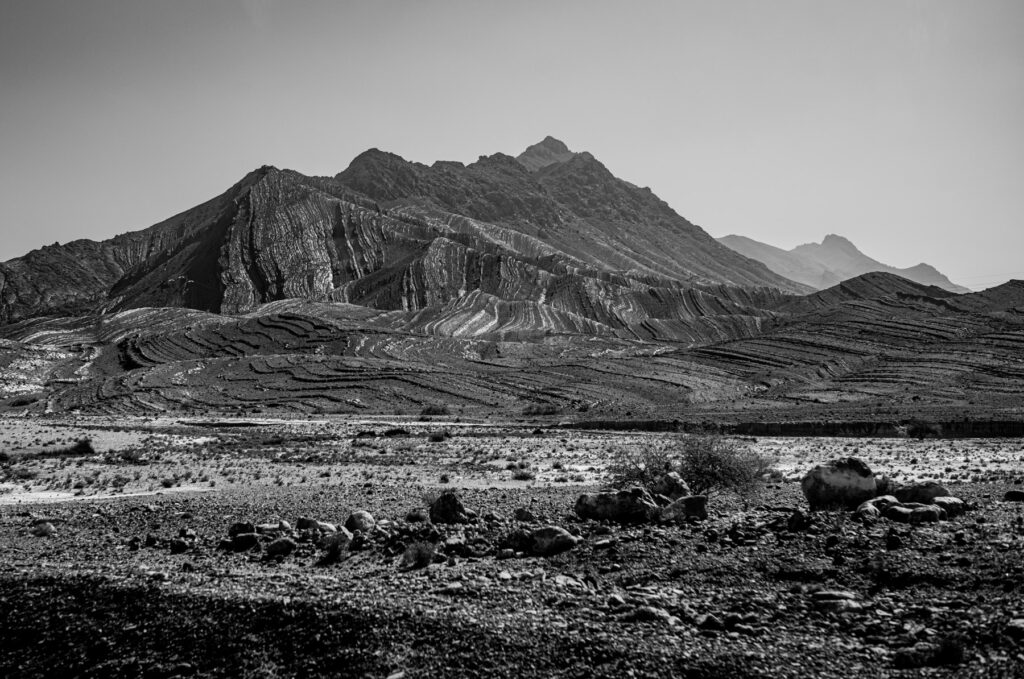
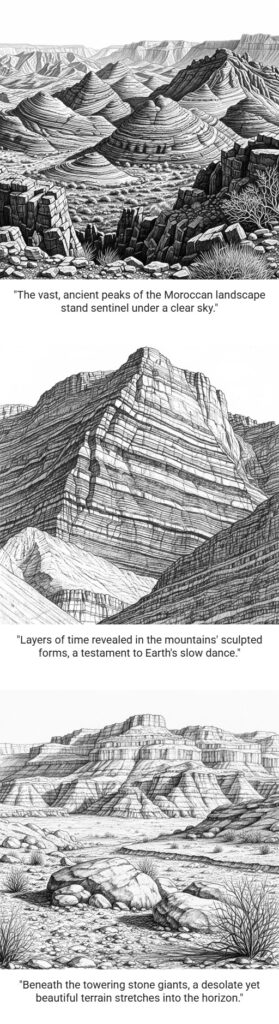
    There are moments in photography when everything aligns – the light, the landscape, and a deep sense of connection to the scene before you. My journey through Morocco was filled with many such moments, but few imprinted themselves on my soul quite like the one that led to this image, simply titled ‚Marokko‘. Looking at this black and white landscape, the first thing that strikes you is the sheer scale and the incredible geological drama unfolding across the mountains. The sun, though unseen directly, casts harsh yet defining light, carving out deep shadows and highlighting the intricate, layered textures of the rock faces. These aren’t just mountains; they are ancient scrolls of earth, each ripple and fold telling a story millions of years in the making. The patterns are almost hypnotic, reminiscent of contour lines on a map, but rendered with the raw power of nature’s artistry. In the foreground, the dry, rocky terrain stretches out, dotted with sparse vegetation – a testament to the resilience of life in such an arid environment. It’s a vast, silent expanse that leads the eye toward the majestic peaks. The atmosphere is one of profound solitude and timelessness. There’s a certain stark beauty in this desolation, a powerful silence that allows the mind to wander and reflect. I remember that day vividly. We were deep in the Moroccan interior, far from the bustling medinas, when this panorama unfolded before me. The light was transitioning, casting long shadows that accentuated every ridge and valley. I immediately knew black and white was the only way to convey the raw essence of this place. Color would have been a distraction; I wanted to strip away everything but the form, the texture, and the play of light and shadow. I wanted to capture the ancient spirit of ‚Marokko‘ itself – a land of stark contrasts, enduring beauty, and untold stories. It was a humbling experience, standing there, feeling the wind, listening to the silence, and attempting to translate that profound sense of awe into a single frame. This photograph is more than just a picture; it’s a feeling, a memory of a land that truly captures the imagination.

    16 story panels
  • Morocco Sheeps

    Marokko 2024 15

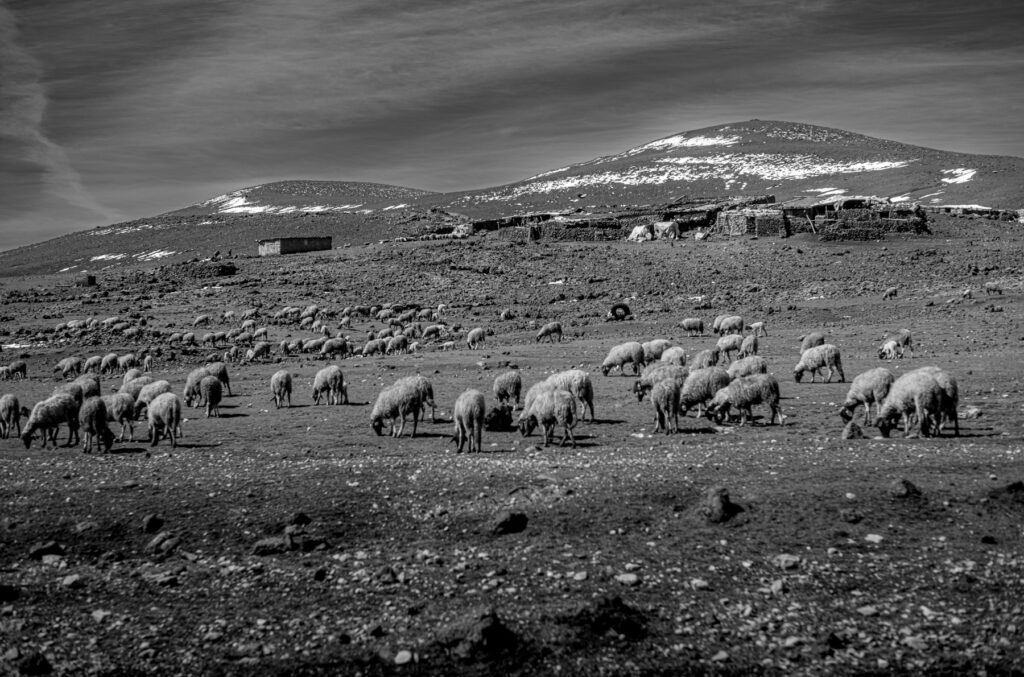
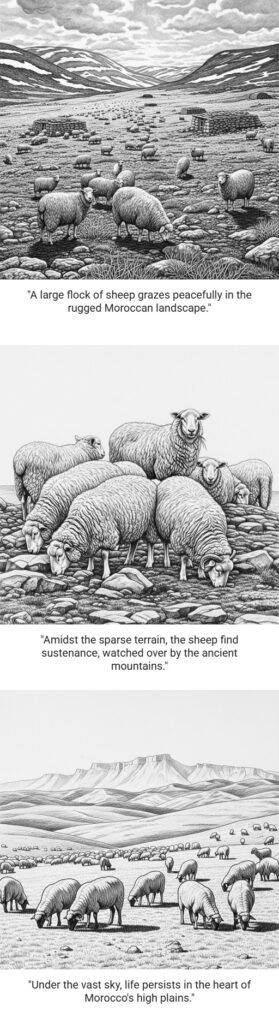
    The dusty roads of Morocco often lead to unexpected wonders. On one such journey, amidst the rugged terrain that seemed to stretch endlessly towards the horizon, I stumbled upon a scene that instantly captivated my photographer’s eye. It was this moment, now titled ‚Marokko Sheeps‘, that truly defined a part of that trip for me. The landscape itself was a symphony of textures in varying shades of grey and black. Rolling hills, still bearing patches of stubborn snow on their distant peaks, framed a vast, stony plain. Scattered across this sparse, almost lunar-like ground, was a sprawling flock of sheep. Hundreds of them, it seemed, diligently grazing on whatever sparse vegetation they could find. Their woolly forms, caught in the harsh yet beautiful Moroccan sun, created a captivating contrast against the stark earth. I remember pulling over, the silence of the vast expanse broken only by the soft, rhythmic sounds of the sheep. There was an old, weathered structure in the mid-ground, a silent testament to human resilience in this unforgiving environment. It spoke volumes about a way of life deeply connected to the land. I chose to render this image in black and white, feeling it best conveyed the raw, timeless atmosphere. The monochrome palette stripped away distractions, allowing the forms, the light, and the sheer scale of the scene to truly shine. It highlighted the textures of the land, the soft fleeces of the sheep, and the dramatic clouds above. Capturing ‚Marokko Sheeps‘ wasn’t just about pointing the camera; it was about soaking in the profound sense of peace and the quiet struggle for existence that permeated the air. Each sheep, a small point of life against the immense backdrop, seemed to tell a story of simple survival. This photograph is more than just a record; it’s a reflection on the beauty found in starkness, the resilience of nature, and the quiet dignity of life lived in harmony with the earth. It’s a reminder of those moments when the world slows down, and you’re left with nothing but the profound beauty of what’s right in front of you.

    15 story panels