• Coastal Pastures: A Timeless Black and White Narrative of Land, Sea, and Livestock

    Coastal Pastures: A Timeless Black and White Narrative of Land, Sea, and Livestock

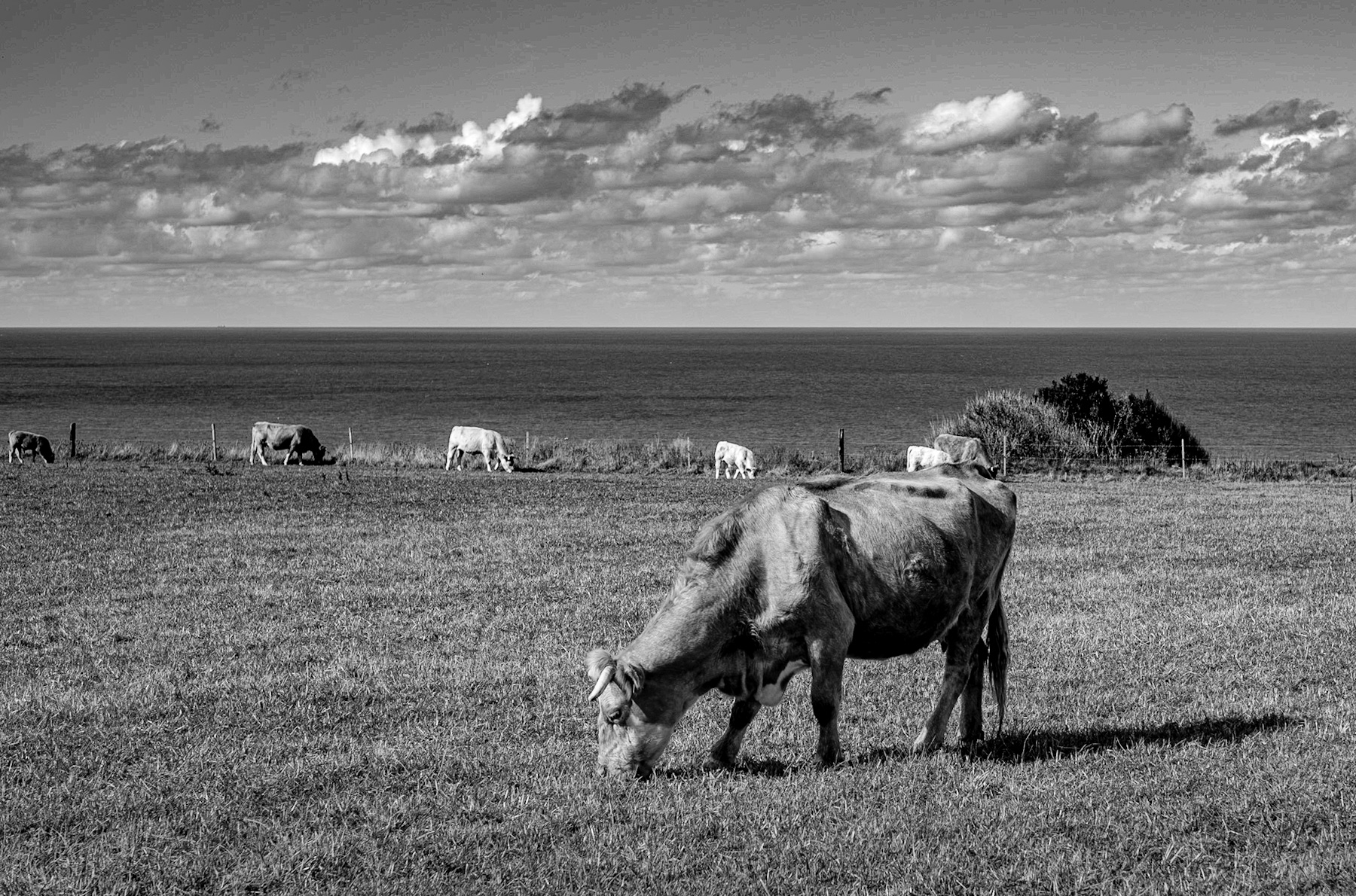
    Die Fotografie entführt uns in eine ruhige Küstenlandschaft, die in eindringlichem Schwarz-Weiß gehalten ist. Diese bewusste Wahl betont Textur, Licht und Schatten und verleiht der Szene eine klassische, beinahe malerische Qualität.
    **Ein visueller Tanz von Licht und Schatten**
    Im Vordergrund dominiert eine robuste Kuh den unteren rechten Bildbereich, ihren Kopf gesenkt, während sie fleißig auf dem saftigen Grün weidet. Die monochrome Darstellung hebt die Konturen ihres muskulösen Körpers und die feinen Variationen ihres Fells hervor, die scharf mit dem fein texturierten Gras unter ihren Hufen kontrastieren. Ihr Schatten erstreckt sich hinter ihr, eine scharfe Silhouette vor dem sonnenbeschienenen Feld, die auf die Tageszeit und den klaren, wenn auch bewölkten, Himmel darüber hinweist.
    Weiter im Mittelgrund setzt eine kleine Herde weiterer Rinder ihr friedliches Grasen fort, über das sanft geschwungene Feld verstreut. Ihre helleren Felle heben sich vom dunkleren Gras ab und schaffen visuelle Anker, die das Auge zum weiten Horizont führen. Eine einfache Zaunlinie, markiert durch Pfosten, grenzt subtil den Rand der Weide ab und schafft eine Grenze zwischen dem kultivierten Land und der Weite jenseits davon. Rechts fügt eine Ansammlung niedrig wachsender Büsche oder kleiner Bäume einen Hauch wilderer Vegetation hinzu und unterbricht die glatte Linie der fernen Landschaft.
    **Wo Ozean und Himmel sich treffen**
    Jenseits des Feldes erstreckt sich ein dunkles, ununterbrochenes Band des Ozeans über die Mitte des Bildes, dessen Oberfläche ruhig und tief erscheint. Die Horizontlinie ist scharf und klar und trennt Land vom Meer und Meer vom Himmel. Darüber bildet der Himmel eine dramatische Leinwand aus verstreuten Wolken, deren voluminöse Formen das Licht einfangen und ein dynamisches Zusammenspiel von leuchtendem Weiß und tiefem Grau erzeugen. Dieses himmlische Drama verleiht der ansonsten ruhigen Szene eine Note von Grandeur und verbindet die unmittelbare pastorale Aktivität mit den umfassenderen Kräften der Natur.
    **Ein Blick in die Vergangenheit: Die ewige Verbindung von Mensch und Tier**
    Historisch gesehen zeugt die Präsenz von Rindern in einer solchen Küstenlandschaft von Jahrtausenden menschlich-tierischer Interaktion und landwirtschaftlicher Entwicklung. Die Domestizierung von Rindern, die vor etwa 10.500 Jahren in Regionen wie Anatolien und dem Fruchtbaren Halbmond begann, hat die menschlichen Gesellschaften grundlegend verändert. Diese Tiere wurden zentral für die Subsistenz, lieferten Milch, Fleisch, Häute und entscheidende Arbeitskraft für das Pflügen und den Transport. Die Szene von Kühen, die friedlich auf einer Weide grasen, ist ein direktes Echo des Pastoralismus, einer alten Wirtschafts- und Kulturpraxis, die Landschaften und Gemeinschaften auf allen Kontinenten über Tausende von Jahren geprägt und eine tiefe, dauerhafte Bindung zwischen Menschen und Nutztieren gefördert hat.
    **Schwarz-Weiß: Zeitlosigkeit im Fokus**
    Die Wahl der Schwarz-Weiß-Fotografie verstärkt die historische Resonanz des Bildes zusätzlich. Von den frühesten Tagen der Fotografie im 19. Jahrhundert war Monochrom die einzige Option, und sie wird auch heute noch verwendet, um Farbablenkungen zu eliminieren und den Betrachter auf Komposition, Form und die rohe Emotion oder Zeitlosigkeit eines Motivs zu konzentrieren. Diese ästhetische Wahl verwandelt hier eine zeitgenössische Szene in eine, die sich archetypisch anfühlt und uns mit Generationen von Bauern und ihren Herden verbindet.
    Die Kühe selbst, Symbole für Nahrung, Reichtum und oft sakrale Verehrung in verschiedenen historischen Kulturen, stehen als lebendige Verbindungen zu einem Erbe, das tief im Land und seinen Ressourcen verwurzelt ist. Diese Fotografie ist daher nicht nur ein Schnappschuss, sondern eine visuelle Erzählung, die natürliche Schönheit, landwirtschaftliche Geschichte und die dauerhafte menschliche Verbindung zu Land und Meer miteinander verwebt. Sie lädt uns ein, über die tiefen Wurzeln unserer Beziehung zur Natur und zu den Tieren nachzudenken, die unsere Zivilisationen geformt haben.
  • # Echoes in Silhouette: A Timeless Dance of Nature and History

    # Echoes in Silhouette: A Timeless Dance of Nature and History

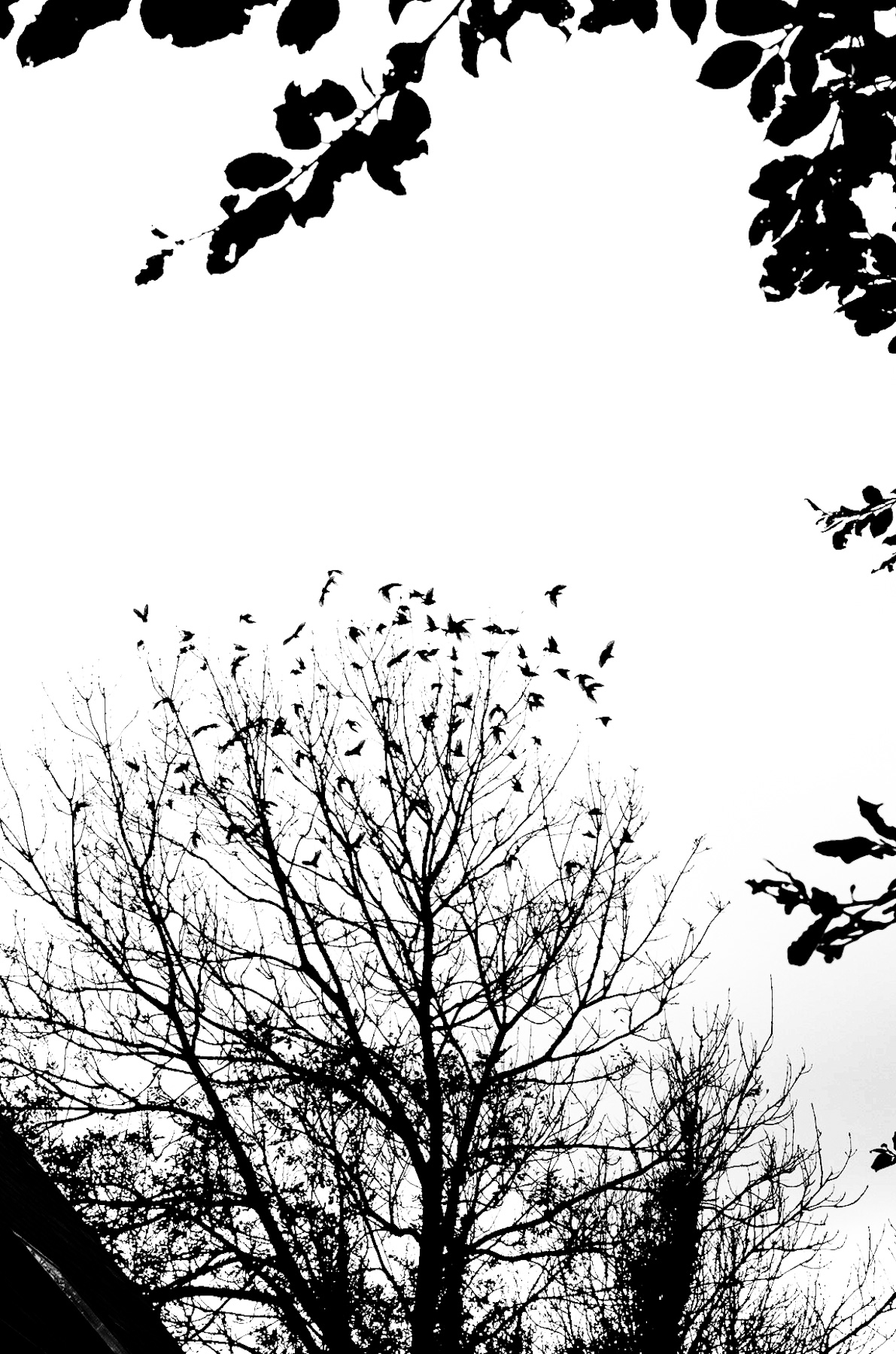
    Against a stark, luminous sky, a dramatic tableau unfolds, captured in the timeless purity of **black and white**. The image presents a powerful **silhouette** of a bare, deciduous tree, its intricate network of branches reaching upwards like a complex vascular system. This skeletal form dominates the lower and central frame, its delicate structure a testament to winter’s embrace or the dormancy of a seasonal cycle. In the upper corners, leafy branches, also in deep shadow, frame the scene, suggesting a broader natural environment, yet maintaining focus on the central subject.
    A dynamic **flock of birds** animates the upper canopy of the tree, some perched amidst the branches, others in various stages of flight, creating a swirling vortex of motion against the static backdrop. Their collective presence adds a vital, almost sentient energy to the otherwise serene composition. The high contrast treatment strips away color, emphasizing form, texture, and the interplay of light and shadow, inviting a deeper contemplation of the scene’s inherent symbolism.
    ## The Enduring Power of the Silhouette
    Historically, the **silhouette**, as an artistic technique, holds a rich legacy. From ancient shadow plays to the popular portraiture of the 18th and 19th centuries, the art of capturing form purely through outline against a contrasting background has always conveyed a sense of mystery, **timelessness**, and essential truth. This photographic rendition echoes those **historical applications**, distilling the natural world to its fundamental shapes and movements, transcending specific time or location. It’s a masterclass in **silhouette art**, leveraging the inherent drama of form against light.
    ## The Bare Tree: A Symbol of Resilience and Renewal
    The **bare tree** itself carries profound historical and cultural weight. Across diverse civilizations, deciduous trees losing their leaves have symbolized **cycles of death, dormancy, and eventual rebirth**. In many ancient mythologies and folklore, the „World Tree“ or „Tree of Life“ often underwent seasonal transformations, reflecting cosmic cycles of creation and destruction. A bare tree can represent **resilience**, **endurance through hardship**, and the **promise of renewal**, a concept deeply ingrained in human narratives from agricultural societies to spiritual traditions. Its starkness can also evoke introspection, a moment to reflect on life’s transient nature and **seasonal change**.
    ## Avian Messages: Interpreting the Flight of Birds
    Furthermore, the **avian collective** within the frame offers another layer of **historical interpretation**. **Flocks of birds** have, for millennia, been observed with fascination and attributed significant meaning. In ancient Rome, the practice of *augury* involved interpreting the flight patterns and calls of birds to divine the will of the gods and predict future events. Throughout various cultures, birds have been seen as messengers between worlds, symbols of freedom, community, or even harbingers of change. A large gathering, like the one depicted, can evoke a sense of collective consciousness, a shared journey, or the intricate social structures within the natural world that humans have long sought to understand and emulate. This rich tradition is part of **avian folklore**.
    ## A Visual Dialogue with History and Nature’s Narratives
    This image, therefore, is more than a mere depiction of nature; it is a visual dialogue with history and symbolism. The silent interplay of bare branches and dynamic birds, rendered in a stark black and white, invites viewers to connect with universal themes of **nature’s cycles**, resilience, communication, and the enduring human quest for meaning within the natural world. It is a timeless moment, frozen, yet pulsating with historical echoes and profound natural narratives, making it a compelling piece for **photo analysis** and **timeless art**.
  • Sahara, Morocco

    Www.ralf kayser.de
    www.ralf-kayser.de

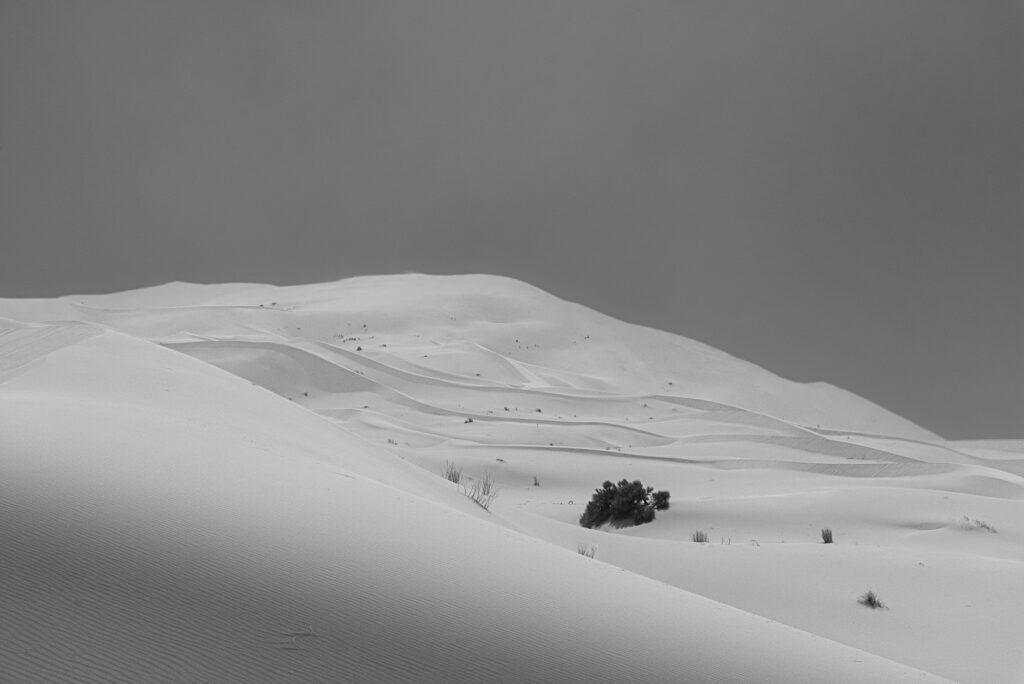
    Stepping into the vastness of the Sahara is an experience that transcends mere travel; it’s a journey into the soul of the Earth itself. This particular shot, which I’ve titled ‚Sahara,‘ captures a moment of profound solitude and stark beauty. I remember the silence out there – a silence so deep it almost hums. The sun, though veiled by a slight haze, sculpted the dunes into an endless canvas of light and shadow, even in monochrome. I chose black and white for this image specifically because it strips away the distractions of color, allowing the viewer to truly appreciate the incredible textures and the graceful, undulating forms of the sand. The way the wind has etched delicate ripples onto the foreground dune, leading the eye towards that solitary, resilient bush – it’s nature’s own masterpiece. That bush, standing firm amidst the endless expanse, became my anchor, a symbol of life persevering against all odds. I spent hours walking, feeling the fine sand beneath my boots, searching for this exact composition. The light was challenging, but the muted tones enhanced the graphic quality I was after. It felt like photographing a dream, a timeless landscape where every grain of sand tells a story stretching back millennia.


    Historical bakground:

    The Sahara Desert, the largest hot desert in the world, is far more than just sand dunes. Its history is a testament to dramatic climate shifts; what is now an arid expanse was once a lush, savanna-like environment teeming with wildlife and ancient human settlements, as evidenced by rock art depicting giraffes and hippos. For millennia, it has been a crucial crossroads for trans-Saharan trade routes, facilitating the exchange of goods, ideas, and cultures between sub-Saharan Africa and the Mediterranean world. Despite its harsh conditions, it supports a unique biodiversity, with resilient plant species like the one seen in the photograph adapted to extreme temperatures and scarce water, reminding us of nature’s incredible adaptability.

    W7 story panels
  • Fes el-Bali, Morocco

    Www.ralf kayser.de
    www.ralf-kayser.de

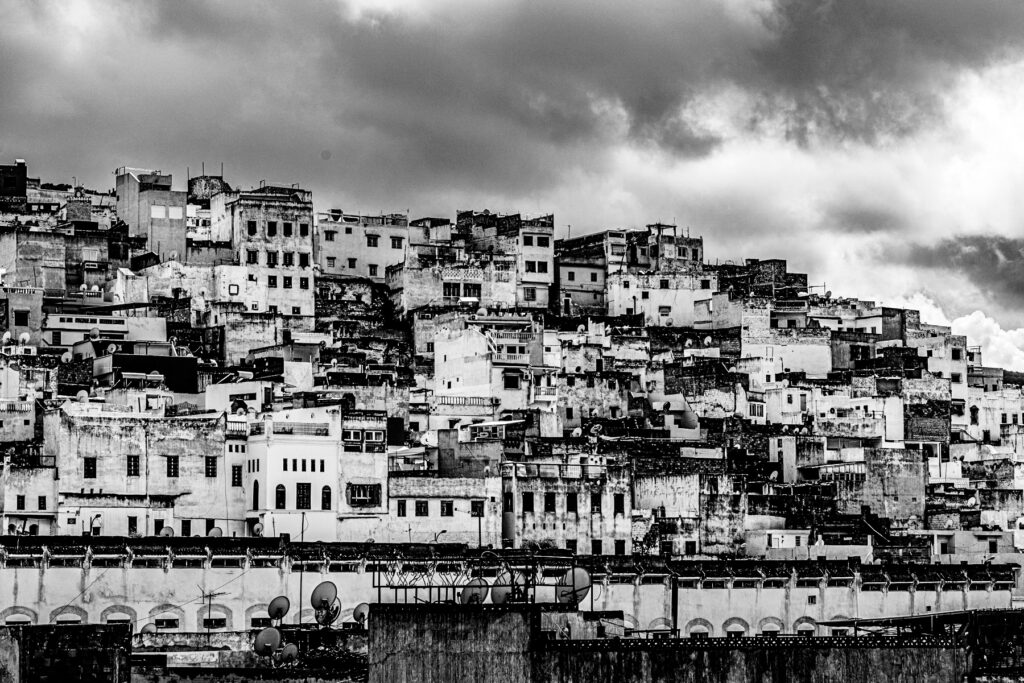
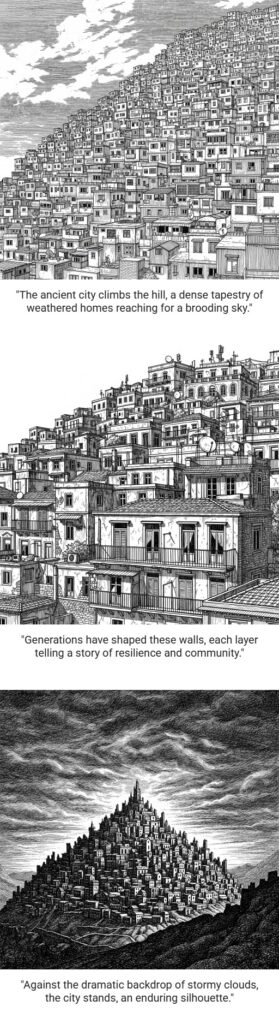
    Stepping onto that rooftop, the air was thick with the scent of spices and history. Below me, the city sprawled, an intricate tapestry woven from countless homes, shops, and alleyways, all cascading down the hillside towards the unseen heart of the medina. This wasn’t just a collection of buildings; it was a living, breathing organism that had grown organically over centuries. The sky above was a photographer’s dream – heavy, dramatic clouds gathering, promising rain but, for now, offering a perfect, diffused light that sculpted the ancient structures in incredible detail. I knew immediately that this scene demanded black and white. Color would have diluted the raw essence, the stark contrasts, and the incredible textures that spoke volumes about time and resilience. Each building, with its weathered facade and small, dark windows, seemed to whisper stories of generations. The density was almost overwhelming, yet within that chaos, there was a profound order, a natural flow that only centuries of human habitation can create. My eye was drawn to the rhythm of the rooftops, the seemingly endless repetition of forms, broken only by the occasional glint of a modern satellite dish – a subtle nod to the present amidst the overwhelming weight of the past. The challenge was to isolate a narrative within this vastness. I wanted to convey the feeling of being utterly immersed, yet also standing apart, observing. I framed the shot tightly, letting the stacked architecture fill the frame, creating a sense of claustrophobic beauty. The play of light and shadow was crucial; the bright facades against the deeper shadows of the alleys, the stark silhouettes of distant buildings against the dramatic sky. It was a moment of profound quiet for me, despite the distant hum of city life, as I tried to capture the soul of this place, a place where history isn’t just preserved, but actively lived, breathed, and rebuilt, layer upon layer, under a watchful, dramatic sky.


    Historical background:

    The city depicted in this image is most likely Fes el-Bali, the old walled section of Fes, Morocco. Founded in the 9th century, it is considered one of the world’s largest medieval cities and home to the oldest continually operating university in the world, the University of Al-Karaouine. A UNESCO World Heritage site, Fes el-Bali is renowned for its labyrinthine alleys – reportedly over 9,000 of them – making it the largest car-free urban area globally. Its architecture reflects centuries of cultural influences, from Andalusian to Ottoman, with homes, souks (markets), tanneries, and madrasas (Islamic schools) all crammed together, forming an incredibly dense and vibrant urban fabric that has remained largely unchanged for centuries, a true living museum.


    55 story panels
  • Morocco Olives

    Marokko 2024 42

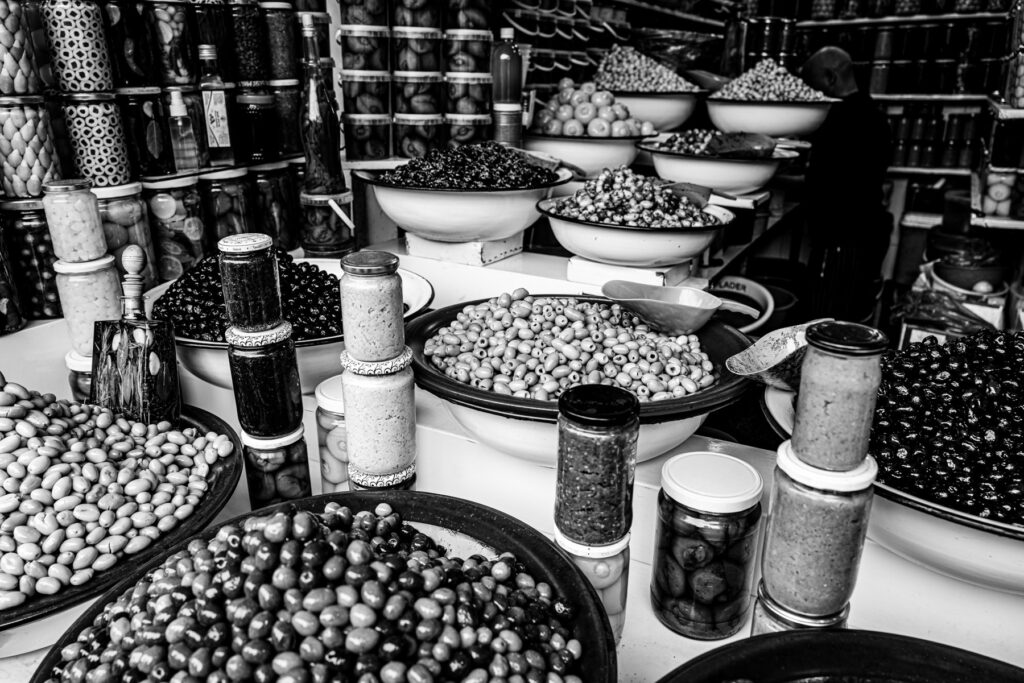
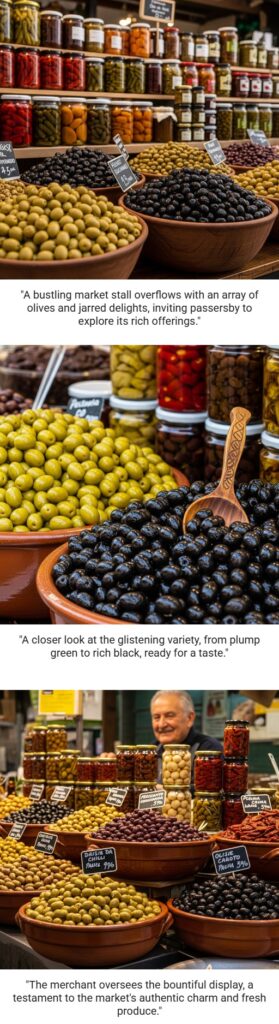
    As a photographer, walking into a market like this is a visceral experience, a sensory overload even before you lift the camera. But in this case, I chose to strip away the riot of color, opting for black and white to distill the scene down to its essence. What immediately captivated me was the sheer abundance, the organized chaos of a thousand olives spilling from generous bowls, the stacked jars holding secrets of pickled delights. It felt timeless, a tableau that could have existed centuries ago, untouched by modern fleeting trends. My lens sought to capture that feeling, the deep-rooted tradition.

    The challenge was the light – or rather, the interplay of light and shadow that the black and white conversion would accentuate. I wanted to highlight the textures: the smooth, plump olives, the rough glass of the jars, the subtle gleam on the metal bowls. The careful stacking of the jars, each one a miniature monument of preservation, spoke volumes about the care and craft involved in preparing these staples. In the background, a lone figure, a silent guardian of this edible treasure trove, adds a human element, grounding the scene in reality while maintaining its almost painterly quality.

    This isn’t just a photograph of food; it’s a window into a culture, a testament to enduring traditions, and a quiet moment of beauty found amidst the daily grind. It’s about the rhythm of life, the bounty of the earth, and the artistry of presentation, all rendered in shades of grey, emphasizing form, contrast, and the undeniable charm of a traditional marketplace. Every time I look at it, I can almost hear the gentle murmur of conversation, the rustle of bags, and the quiet pride of the vendor.


    Historical background:

    Olives have been a cornerstone of Mediterranean culture and cuisine for millennia. Evidence suggests olive cultivation began over 7,000 years ago in the Eastern Mediterranean, with the tree quickly becoming a symbol of peace, longevity, and prosperity. The ancient Greeks and Romans valued olives not only for their culinary use (both the fruit and oil) but also for religious ceremonies, medicine, and cosmetics. Olive oil was a vital trade commodity, shaping economies and facilitating cultural exchange across empires. Traditional markets, much like the one depicted, have been central to this heritage, serving as hubs where the bounty of the land – including various preparations of olives, pickled vegetables, and preserves – has been exchanged and celebrated for centuries, connecting modern life to ancient practices.

    42 story panels
  • Moroccan butcher

    Marokko 2024 41

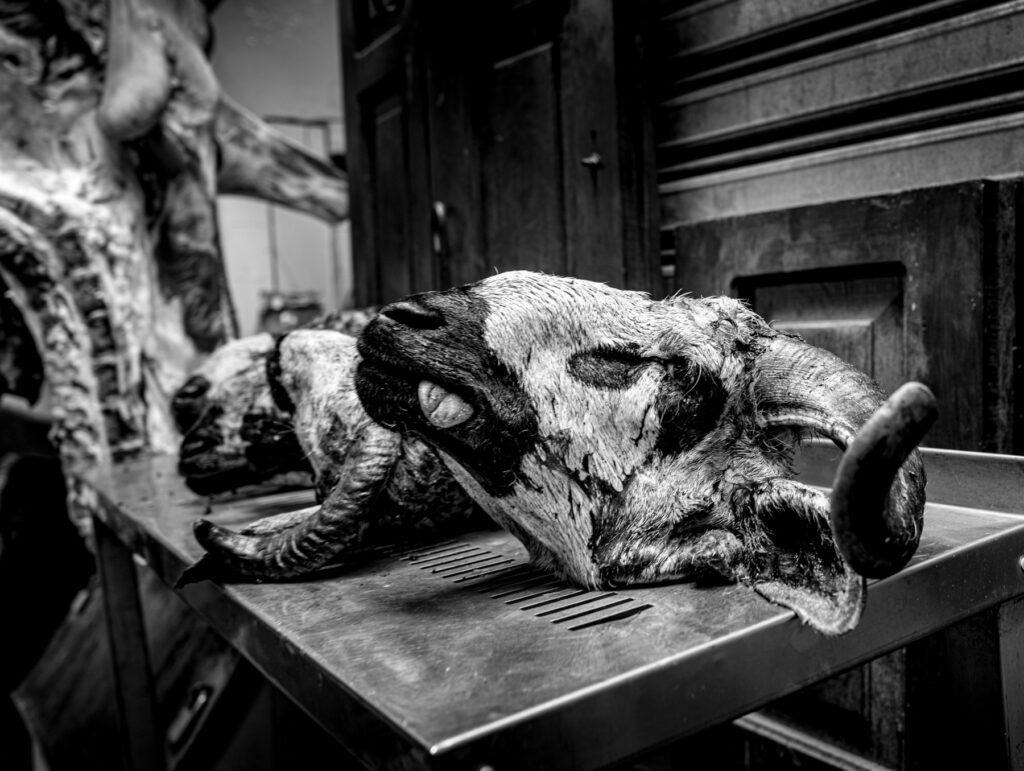
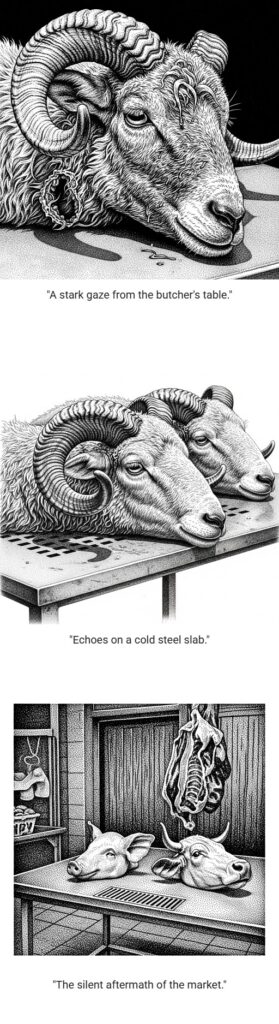
    The scene hit me with a visceral honesty, a stark reminder of where our food comes from. Stepping into this traditional market, the air was thick with a unique blend of spices and the unmistakable scent of raw meat. My eyes were immediately drawn to the display on a cold, metal counter: a line of severed lamb heads, meticulously arranged, awaiting their next purpose. It wasn’t grotesque; it was real. I wanted to capture that raw authenticity, the unvarnished truth of a butcher’s trade. I chose to shoot in black and white to strip away any potential distractions of color, forcing the viewer to confront the textures, the lines, the stark contrasts. The fur, still clinging to the bone, felt almost alive in the monochromatic rendition, each strand sharply defined. The vacant eyes, the slight curl of a tongue – they told a silent story of life concluded, now prepared for sustenance. The horns, weathered and robust, spoke of the animal’s past, its wildness perhaps. My lens zoomed in, focusing on the nearest head, trying to capture the intricate details, the almost sculptural quality of the subject. It wasn’t about shock value; it was about respect for the animal and the tradition. In the background, out of focus, hung the larger carcasses, a blurred reminder of the cycle. This image, for me, is a meditation on the journey from farm to table, a challenging yet essential part of human existence, frozen in time and tone.


    Historical Background:

    The practice of consuming animal heads is deeply rooted in many cultures worldwide, often stemming from a philosophy of utilizing every part of the animal to avoid waste. Historically, in many traditional societies, meat was a precious commodity, and no part was discarded. Lamb or goat heads, in particular, are considered delicacies in various cuisines across the Middle East, North Africa, and parts of Europe and Asia. Dishes like ‚Pacha‘ (Iraq/Syria), ‚Maghreb‘ (North Africa), or ‚Smalahove‘ (Norway) highlight the head as a central ingredient, often slow-cooked to tender perfection, emphasizing flavor derived from the brain, tongue, and cheek meat. This tradition not only reflects culinary resourcefulness but also a deep historical connection to the land and livestock that sustained communities for centuries.

    41 story panels
  • Marrakech Souk

    Marokko 2024 40

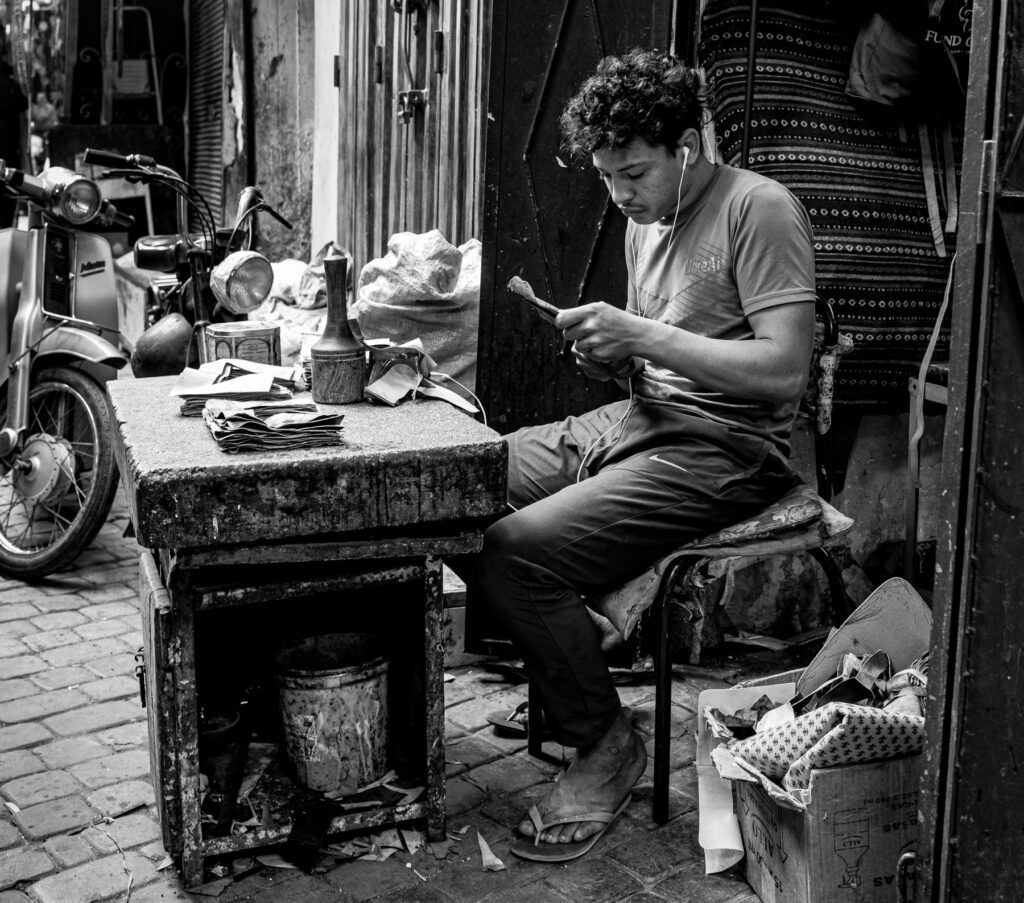
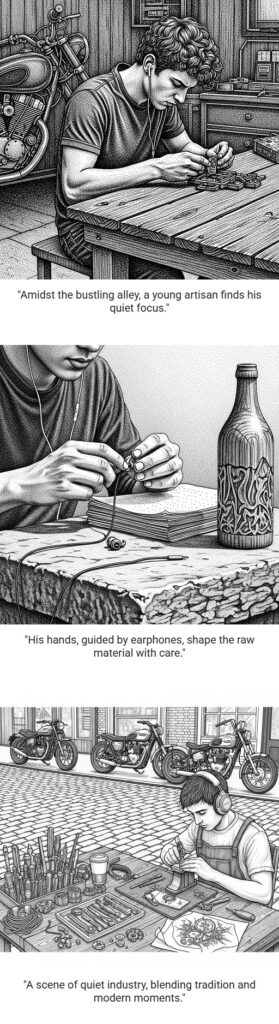
    Stepping into a souk, particularly in a city like Marrakech, is an assault on the sensesua symphony of sounds, smells, and vibrant colors. Yet, sometimes, amid the glorious chaos, you find a pocket of profound quiet. This image, captured in monochrome, is one such moment. My eye was immediately drawn to this young man, his curly hair framing a face lost in concentration. He sat on a humble stool by a weathered stone table, his hands deftly working on an unseen craft. What struck me most was the juxtaposition: traditional tools and the age-old rhythm of artisan work, set against the stark white of his earbuds. He was listening to something, perhaps music, perhaps a podcast, but in that instant, he was entirely absorbed in his own world, a silent island in a sea of street noise.I remember carefully composing the shot, trying to include enough of the surroundings the old moped hinting at the movement of the city, the stacked papers and a wooden vessel on his table speaking of his trade, the patterned fabric behind him without overwhelming his quiet focus. The black and white conversion felt essential here; it stripped away the distractions of color, allowing the textures, the light, and the raw emotion of the scene to truly shine. It’s a portrait not just of a person, but of a specific kind of urban existence, where ancient crafts persist, adapting to the hum of the 21st century.


    Historical background:

    The setting for this image, evocative of a bustling North African or Middle Eastern city, likely points to a souk an ancient, open-air market that has been the heart of commerce and community for centuries. These markets, particularly famous in cities like Marrakech or Fes in Morocco, are not just places to buy goods; they are living testaments to ancient trading routes and artisanal traditions. Generations of craftsmen have honed their skills here, from leatherworking and metal crafts to textiles and spice trading. The visual blend of traditional craft with modern elements like the young man’s earbuds highlights the ongoing evolution of these historic spaces, where heritage and contemporary life intertwine daily.

    40 story panels
  • market, Morocco

    Marokko 2024 39

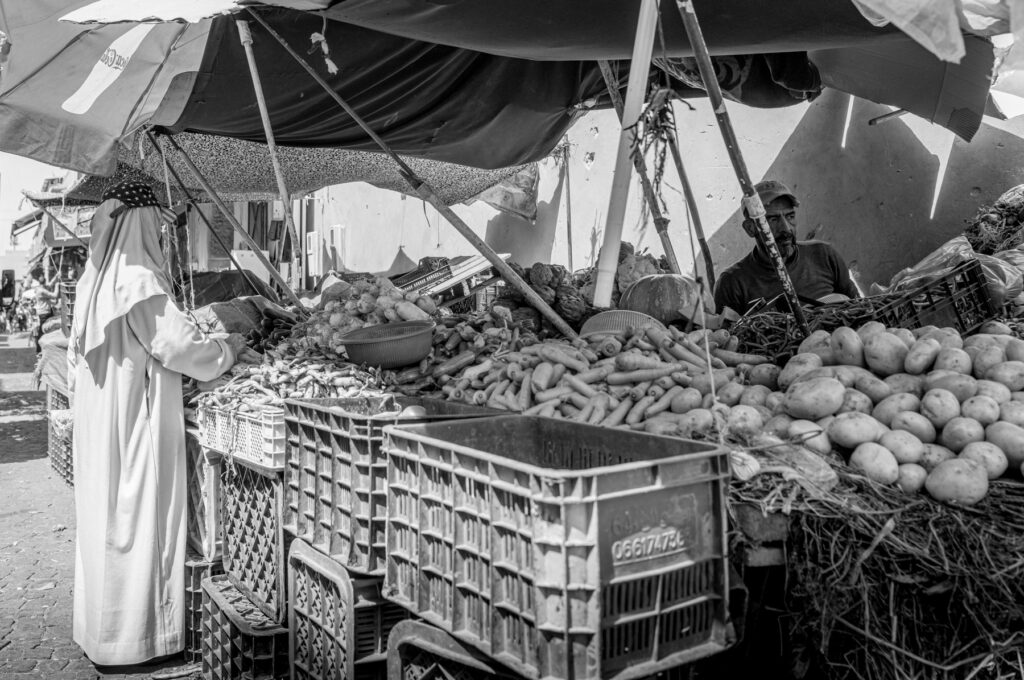
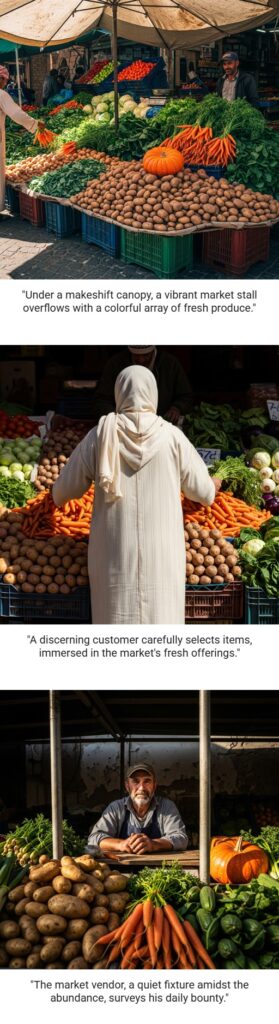
    Walking through the labyrinthine streets, the scent of spices and fresh produce hung heavy in the air. This market, a true sensory overload, was exactly what I sought to capture. My eyes scanned for moments of quiet interaction amidst the vibrant chaos, and then I saw it: a customer, cloaked in traditional attire, meticulously examining the carrots, their hand gently sifting through the abundant pile. Beneath a makeshift umbrella, offering a welcome respite from the harsh sun, the vendor sat patiently, almost a silent guardian of his colorful bounty. I chose to render this scene in black and white, believing it stripped away distractions, forcing the viewer to focus on the textures – the rough crates, the smooth skin of potatoes, the patterned fabric of the shade, and the expressions, however subtle. The deep shadows and bright highlights created a dramatic tension, perfectly mirroring the dynamic energy of the place. It wasn’t just about selling vegetables; it was about the continuity of tradition, the quiet rhythm of daily life playing out in front of my lens. I held my breath, framed the shot, and waited for that perfect second when the customer’s attention was fully immersed, a fleeting moment of contemplation in a bustling world. This image, for me, is a testament to the enduring spirit of these ancient marketplaces.


    Historical background:

    Traditional open-air markets, known as ’souks‘ in North Africa and the Middle East, have been vital centers of commerce and community for centuries, dating back to ancient times. More than just places to buy and sell goods, souks served as social hubs where news was exchanged, stories were told, and cultural traditions were preserved. They were often strategically located along major trade routes, facilitating the exchange of goods from diverse regions. The design, often a maze of narrow alleys and stalls, was practical, offering shade from the sun and creating an intimate atmosphere. The act of haggling, or bargaining, is an integral part of the souk experience, reflecting a long-standing tradition of personal interaction and negotiation between vendor and customer.

    39story panels
  • Essaouira, Morocco

    Marokko 2024 36

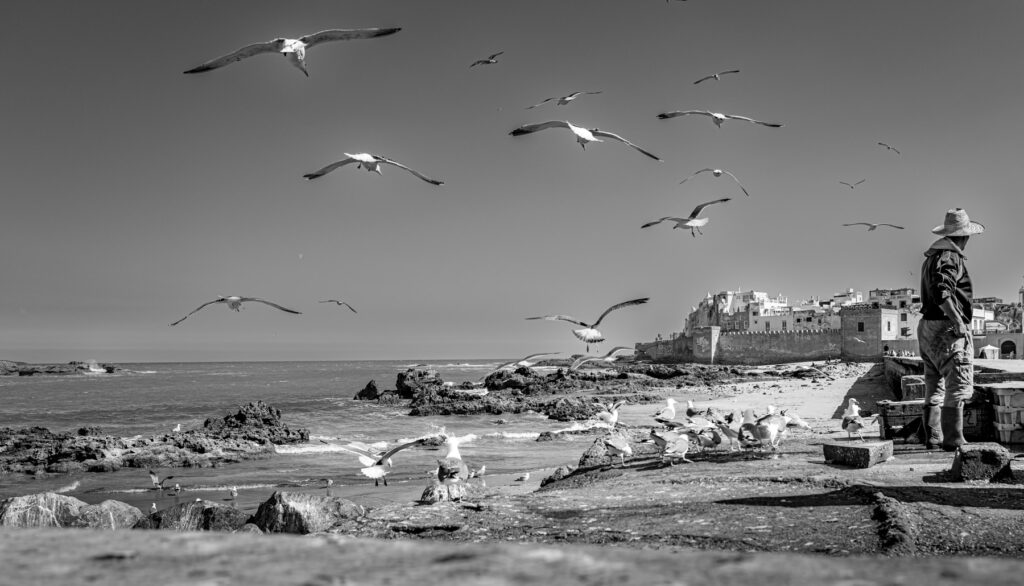
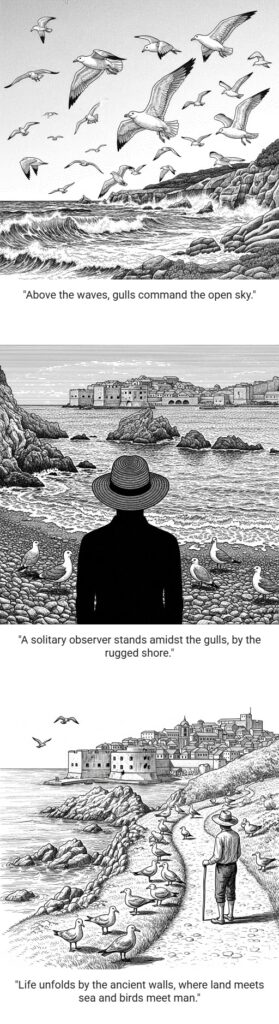
    Als Fotograf gibt es Momente, in denen sich alles perfekt zusammenfügt und eine Szene entsteht, die sich sowohl zeitlos als auch zutiefst persönlich anfühlt. Dieses Bild aus Essaouira, Marokko, ist einer dieser Momente. Ich erinnere mich, wie ich an der felsigen Küste stand, der Atlantikwind ein ständiger Begleiter, und dem Auf und Ab des Lebens rund um den alten Hafen zusah. Die Entscheidung, dies in Schwarz-Weiß festzuhalten, war fast instinktiv; es entfernt Ablenkungen und zwingt das Auge, sich auf Textur, Licht und die rohe Emotion der Szene zu konzentrieren.Der Vordergrund wird von der dynamischen Bewegung der Möwen dominiert. Sie sind überall – hoch am Himmel schwebend, anmutig kreisend und auf den nassen Felsen versammelt, fast wie in einem Gespräch. Ihre im Flug festgehaltenen Flügel schaffen wunderschöne Führungslinien, die den Blick nach oben und über den Rahmen ziehen. Dann ist da noch die einsame Gestalt, ein Mann mit einem Strohhut, mir den Rücken zugewandt, der aufs Meer hinausschaut. Er verkörpert eine stille Kontemplation, eine Verbindung zu diesem Ort, die sich zutiefst authentisch anfühlte. Er könnte ein Fischer sein, ein Einheimischer oder einfach ein Wanderer, aber seine Anwesenheit verankert das lebhafte Chaos der Vögel.Im Mittelgrund erheben sich die mächtigen Befestigungsanlagen von Essaouira, ein Zeugnis jahrhundertelanger Geschichte. Die weißen Gebäude, die sich hinter den Mauern schmiegen, leuchten unter der hellen Sonne, ein starker Kontrast zu den dunklen, strukturierten Felsen und dem aufgewühlten Meer. Ich wartete, was sich wie eine Ewigkeit anfühlte, beobachtete geduldig den Rhythmus der Wellen und den Tanz der Möwen. Die Herausforderung bestand darin, sowohl die weite Freiheit der Vögel als auch das geerdete, menschliche Element einzufangen, alles im Kontext dieser großartigen historischen Umgebung. Dieses Foto ist für mich nicht nur ein Bild; es ist ein Atemzug, ein beobachteter Moment, eine stille Geschichte, die sich unter der marokkanischen Sonne entfaltet.


    Historischer Hintergrund:

    Die abgebildete Stadt, Essaouira, ist ein Juwel an Marokkos Atlantikküste und wird oft als „Windstadt Afrikas“ bezeichnet. Im 18. Jahrhundert von Sultan Sidi Mohammed ben Abdallah gegründet, wurde sie von einem französischen Architekten, Théodore Cornut, entworfen, der europäische Militärarchitektur mit marokkanischen Stilen verband. Diese einzigartige Mischung führte zu ihrer Aufnahme in die Liste des UNESCO-Weltkulturerbes. Historisch diente Essaouira (ehemals Mogador) als entscheidender internationaler Handelshafen, der Marokko mit Europa und dem Rest der Welt verband. Ihre beeindruckenden, im Bild sichtbaren Stadtmauern wurden zur Verteidigung der Stadt und ihres wertvollen Handels errichtet. Die lebendige Fischereiindustrie, die auch heute noch aktiv ist, sorgt dafür, dass Möwen ein allgegenwärtiges Merkmal sind, die sich um den Hafen scharen und zur lebhaften Atmosphäre der Stadt beitragen. Sie war auch ein Schmelztiegel der Kulturen, über Jahrhunderte Heimat verschiedener ethnischer Gruppen und einer bedeutenden jüdischen Bevölkerung, was zu ihrem reichen Erbe beitrug.

    36story panels
  • weaving in Morocco

    Marokko 2024 29

    Stepping into this quiet space, I felt an immediate pull to capture the scene before me. The soft light filtering in, combined with the rhythmic click of the shuttles and the focused concentration of these two women, created an almost meditative atmosphere. My lens was drawn to the intricate dance of their hands, swiftly moving through a complex tapestry of threads on a large, robust loom. I chose black and white for this image, believing it would strip away distractions and truly highlight the textures – the rough walls, the delicate threads, the worn fabric of their traditional attire, and the emerging patterns of the rug itself. It emphasizes the timeless nature of their craft, a silent testament to generations of skill passed down. There was an undeniable sense of purpose in their every movement, a dedication that speaks volumes without a single word. This photograph, for me, isn’t just about weaving; it’s about the beauty of human endeavor, the preservation of heritage, and the quiet dignity found in honest work.

    Historcal background:

    The art of rug weaving holds profound historical and cultural significance, particularly in regions like North Africa and the Middle East, where this image was likely taken. For centuries, Berber women, in particular, have been the custodians of this intricate craft, transforming raw wool into magnificent hand-knotted rugs. These rugs, often called ‚Berber carpets‘ or ‚Kilims,‘ are far more than mere floor coverings; they are narratives woven in yarn. Each pattern, color, and motif carries symbolic meaning, telling stories of tribal identity, family history, spiritual beliefs, and the natural world. The designs are often passed down through generations, evolving subtly over time while maintaining their ancestral roots. The traditional loom, similar to the one seen here, allows for the creation of durable, artistic pieces that serve both utilitarian purposes and as valuable heirlooms, embodying a rich heritage that continues to thrive today.

    29 story panels