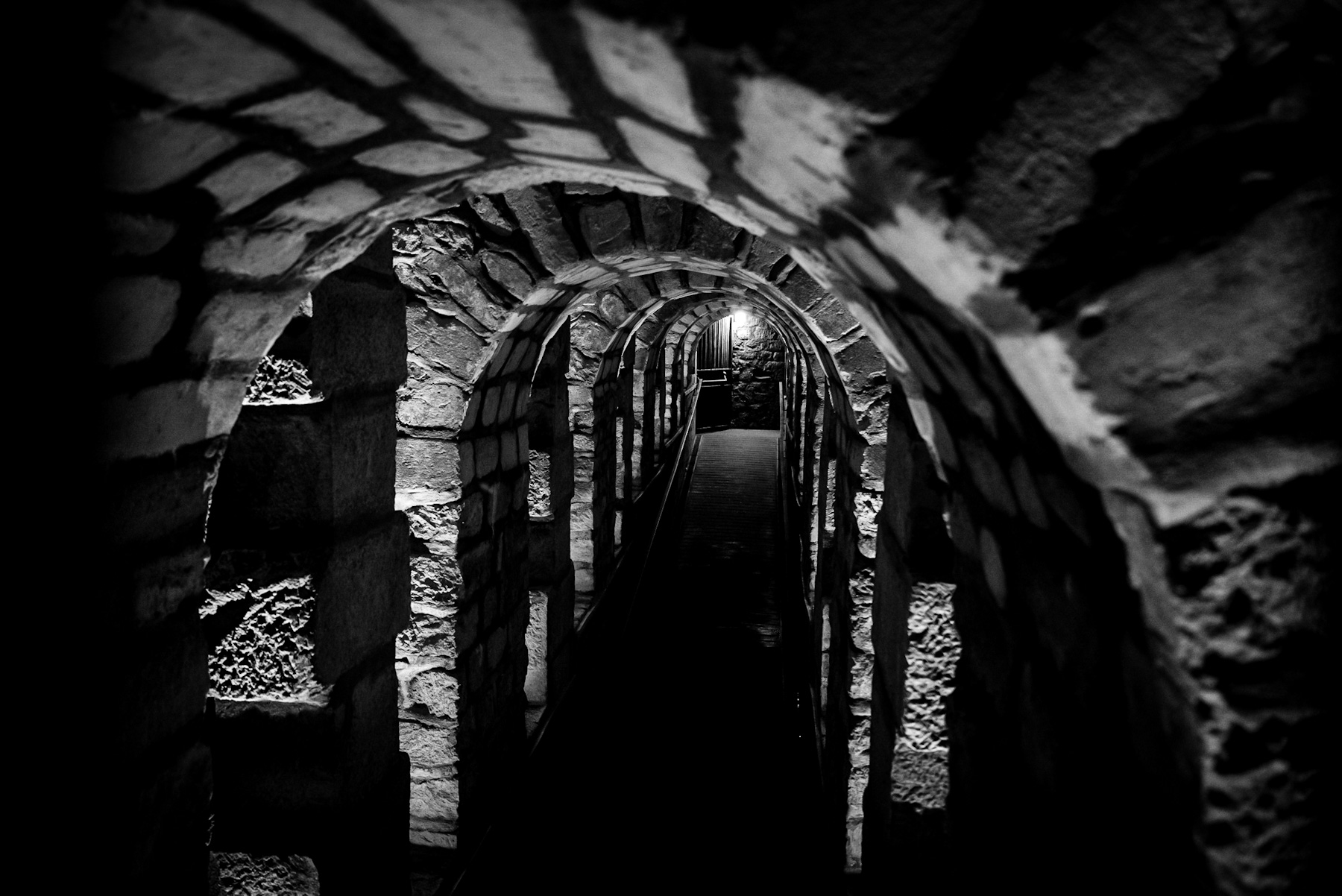
The monochrome photograph captures a deep, arched passageway, inviting viewers into a world steeped in history and shadow. The image’s high contrast and black and white palette emphasize the textures of ancient stone and the dramatic interplay of light and darkness, creating an atmosphere of profound solemnity and timelessness.
**Architectural Grandeur and Subterranean Design**
This impressive structure is a powerful example of historical subterranean architecture. Robust stone blocks form a series of repetitive arches that recede into the distance, creating a strong sense of depth and perspective. These arches are supported by sturdy pillars, also constructed from rough-hewn stone, showcasing the durability and exceptional craftsmanship of ancient builders. The irregular, organic texture of the stone walls and ceiling speaks to centuries of existence, bearing the indelible marks of time and human endeavor.
A modern, slightly inclined walkway with a handrail guides the path through the tunnel, indicating that this historical site is carefully preserved and made accessible for contemporary visitors. This thoughtful blend of ancient construction and modern infrastructure highlights the ongoing effort to connect with and understand our past. A single visible light source at the far end acts as a beacon, drawing the eye deeper into the passage while simultaneously emphasizing the vastness of the surrounding darkness.
**Whispers of History: Crypts and Catacombs**
The visual evidence within the image, particularly the architectural style and specific details, strongly suggests the site functions as a historical crypt or **catacombs**. On the left wall, several niches are visible, containing what appear to be carefully stacked elements. While the monochrome rendering makes definitive identification challenging, these elements bear a striking resemblance to ossuaries or stacked skeletal remains—a common and poignant feature in historical burial grounds.
Throughout history, **underground tunnels** and chambers like these served various critical purposes. **Catacombs**, derived from the Greek meaning „among the tombs,“ are ancient subterranean cemeteries, famously utilized by early Christians and later by cities like Paris and Rome to manage growing populations and limited burial space. These vast networks often housed the remains of millions, offering a tangible link to past populations and their funerary practices. Similarly, crypts, typically found beneath churches or basilicas, were designated spaces for the interment of religious figures, nobility, or prominent citizens.
**The Enduring Legacy of Underground Spaces**
The existence of such **historical sites** underscores humanity’s long-standing relationship with the subterranean world, not just for practical reasons like shelter or storage, but also for spiritual and commemorative purposes. Exploring these **ancient tunnels** offers a unique perspective on the customs, beliefs, and engineering prowess of bygone eras. Visitors traversing these ancient paths are invited to reflect on the passage of time, the cycle of life and death, and the enduring human desire to honor and remember those who came before.
This photograph, with its deep shadows and illuminated arches, captures more than just stone; it encapsulates the essence of a place where history resonates through every arch and along every stone, inviting contemplation on the profound narratives held within these **subterranean depths**. It serves as a powerful reminder of the importance of **archaeological preservation** and the continuous relevance of our shared heritage.
**Architectural Grandeur and Subterranean Design**
This impressive structure is a powerful example of historical subterranean architecture. Robust stone blocks form a series of repetitive arches that recede into the distance, creating a strong sense of depth and perspective. These arches are supported by sturdy pillars, also constructed from rough-hewn stone, showcasing the durability and exceptional craftsmanship of ancient builders. The irregular, organic texture of the stone walls and ceiling speaks to centuries of existence, bearing the indelible marks of time and human endeavor.
A modern, slightly inclined walkway with a handrail guides the path through the tunnel, indicating that this historical site is carefully preserved and made accessible for contemporary visitors. This thoughtful blend of ancient construction and modern infrastructure highlights the ongoing effort to connect with and understand our past. A single visible light source at the far end acts as a beacon, drawing the eye deeper into the passage while simultaneously emphasizing the vastness of the surrounding darkness.
**Whispers of History: Crypts and Catacombs**
The visual evidence within the image, particularly the architectural style and specific details, strongly suggests the site functions as a historical crypt or **catacombs**. On the left wall, several niches are visible, containing what appear to be carefully stacked elements. While the monochrome rendering makes definitive identification challenging, these elements bear a striking resemblance to ossuaries or stacked skeletal remains—a common and poignant feature in historical burial grounds.
Throughout history, **underground tunnels** and chambers like these served various critical purposes. **Catacombs**, derived from the Greek meaning „among the tombs,“ are ancient subterranean cemeteries, famously utilized by early Christians and later by cities like Paris and Rome to manage growing populations and limited burial space. These vast networks often housed the remains of millions, offering a tangible link to past populations and their funerary practices. Similarly, crypts, typically found beneath churches or basilicas, were designated spaces for the interment of religious figures, nobility, or prominent citizens.
**The Enduring Legacy of Underground Spaces**
The existence of such **historical sites** underscores humanity’s long-standing relationship with the subterranean world, not just for practical reasons like shelter or storage, but also for spiritual and commemorative purposes. Exploring these **ancient tunnels** offers a unique perspective on the customs, beliefs, and engineering prowess of bygone eras. Visitors traversing these ancient paths are invited to reflect on the passage of time, the cycle of life and death, and the enduring human desire to honor and remember those who came before.
This photograph, with its deep shadows and illuminated arches, captures more than just stone; it encapsulates the essence of a place where history resonates through every arch and along every stone, inviting contemplation on the profound narratives held within these **subterranean depths**. It serves as a powerful reminder of the importance of **archaeological preservation** and the continuous relevance of our shared heritage.