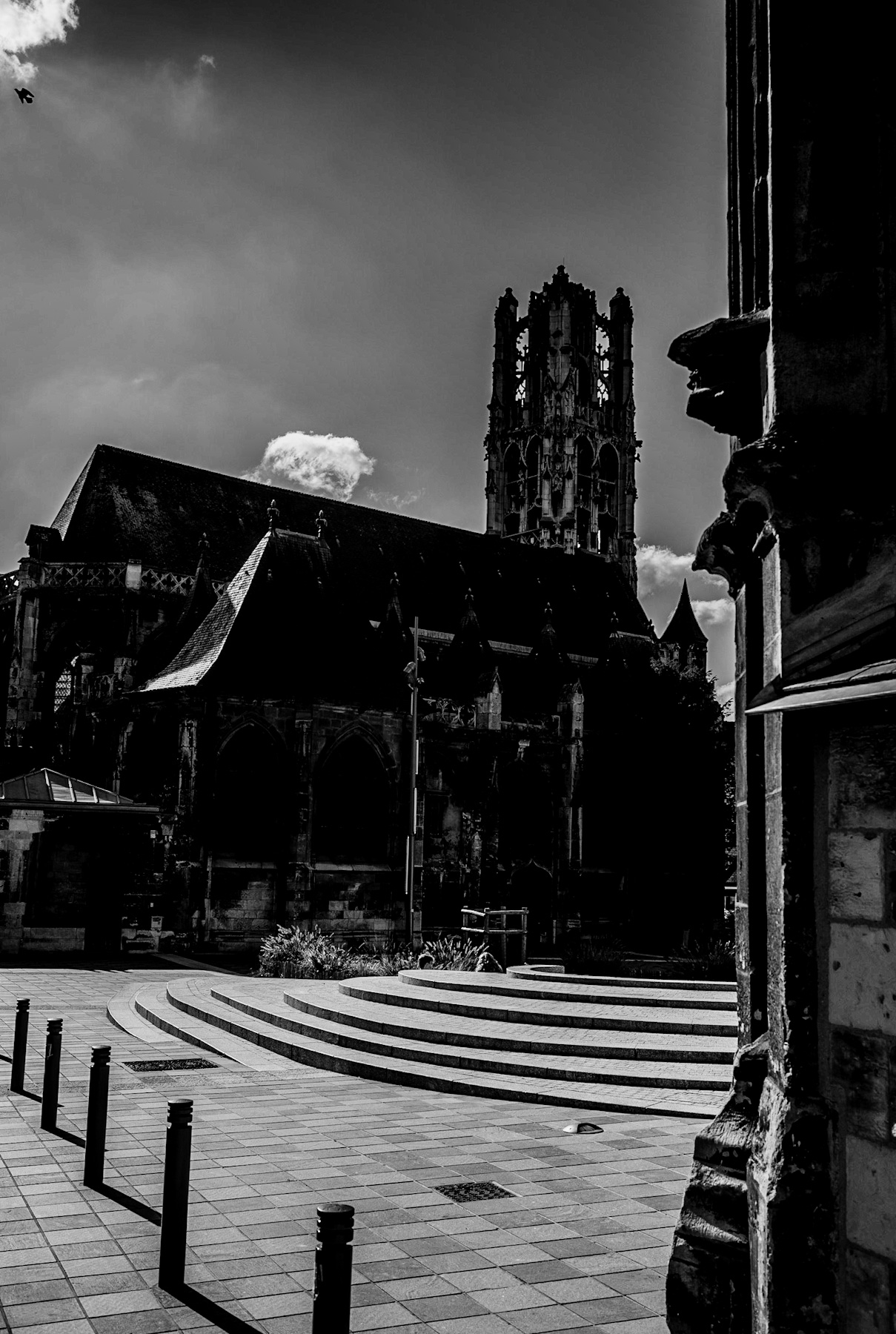
The photograph presents a compelling black and white study of a monumental Gothic structure, immediately evoking a sense of history and architectural mastery. Dominated by the soaring silhouette of what is unmistakably the Rouen Cathedral in Normandy, France, the image captures the building’s imposing presence and intricate details through a dramatic interplay of light and shadow. The monochrome palette strips away distractions, allowing the viewer to focus on form, texture, and the raw, enduring power of medieval craftsmanship.
A Masterpiece in Monochrome: Visual Analysis
The composition is framed by the cathedral’s towering structure, particularly its elaborate tower, likely the famous Tour de Beurre, which rises majestically against a partially clouded sky. The dramatic lighting casts much of the edifice into deep shadow, enhancing its formidable scale and intricate tracery, pinnacles, and arched windows. This chiaroscuro effect lends a mysterious, almost ethereal quality to the ancient stone.
In the foreground, a modern paved square with gracefully curved steps and bollards provides a stark contrast, subtly emphasizing the passage of time and the integration of historical landmarks into contemporary urban life. To the right, a fragment of an adjacent stone structure, adorned with a grotesque or gargoyle, offers a closer look at the decorative elements characteristic of Gothic design, adding depth and a sense of architectural context to the scene. The lone bird soaring in the upper left corner introduces a dynamic element, a fleeting moment against a backdrop of enduring stone. The black and white conversion masterfully highlights the textures of the aged stone, the patterned paving, and the varying cloud formations, creating a rich visual tapestry.
Rouen Cathedral: A Chronicle in Stone
The subject of this striking photograph, the Cathédrale Notre-Dame de Rouen, stands as a profound testament to centuries of French history and architectural evolution. Its construction began in the 12th century, evolving through various Gothic styles, from Early Gothic foundations to the flamboyant flourishes of its later additions, including the iconic Tour de Beurre (Butter Tower), completed in the early 16th century. This tower, captured prominently in the image, is renowned for its rich ornamentation and represents the zenith of Flamboyant Gothic artistry.
Throughout its existence, Rouen Cathedral has witnessed pivotal moments. It played a significant role during the Hundred Years‘ War and was where Joan of Arc was famously tried and condemned in the nearby Vieux-Marché square in 1431. The cathedral also holds a special place in art history, having been the subject of a celebrated series of paintings by Claude Monet, who captured its façade in various lights and seasons, exploring the ephemeral qualities of perception. This enduring artistic legacy underscores the cathedral’s iconic status, not merely as a religious site but as a cultural touchstone.
Enduring Legacy and Architectural Significance
The architectural ambition of Rouen Cathedral, like many Gothic masterpieces, was to reach towards the heavens, creating spaces of awe and spiritual reflection. Its soaring vaults, intricate carvings, and the innovative use of flying buttresses (though not distinctly visible in this particular angle, they are integral to its structure) allowed for immense height and expansive stained-glass windows, flooding the interior with divine light. The cathedral has survived numerous challenges, including the devastating bombardments of World War II, which caused significant damage but ultimately failed to diminish its spirit. Its resilience serves as a powerful metaphor for the enduring strength of human endeavor and faith.
This photograph, with its dramatic lighting and monochrome treatment, encapsulates the cathedral’s profound historical depth and architectural grandeur. It invites contemplation on the layers of history embedded within its stones, the countless lives it has touched, and its unwavering presence as a beacon of heritage in the modern world. It is a visual dialogue between the ancient and the contemporary, a reminder that some legacies, like the monumental Rouen Cathedral, transcend time.
A Masterpiece in Monochrome: Visual Analysis
The composition is framed by the cathedral’s towering structure, particularly its elaborate tower, likely the famous Tour de Beurre, which rises majestically against a partially clouded sky. The dramatic lighting casts much of the edifice into deep shadow, enhancing its formidable scale and intricate tracery, pinnacles, and arched windows. This chiaroscuro effect lends a mysterious, almost ethereal quality to the ancient stone.
In the foreground, a modern paved square with gracefully curved steps and bollards provides a stark contrast, subtly emphasizing the passage of time and the integration of historical landmarks into contemporary urban life. To the right, a fragment of an adjacent stone structure, adorned with a grotesque or gargoyle, offers a closer look at the decorative elements characteristic of Gothic design, adding depth and a sense of architectural context to the scene. The lone bird soaring in the upper left corner introduces a dynamic element, a fleeting moment against a backdrop of enduring stone. The black and white conversion masterfully highlights the textures of the aged stone, the patterned paving, and the varying cloud formations, creating a rich visual tapestry.
Rouen Cathedral: A Chronicle in Stone
The subject of this striking photograph, the Cathédrale Notre-Dame de Rouen, stands as a profound testament to centuries of French history and architectural evolution. Its construction began in the 12th century, evolving through various Gothic styles, from Early Gothic foundations to the flamboyant flourishes of its later additions, including the iconic Tour de Beurre (Butter Tower), completed in the early 16th century. This tower, captured prominently in the image, is renowned for its rich ornamentation and represents the zenith of Flamboyant Gothic artistry.
Throughout its existence, Rouen Cathedral has witnessed pivotal moments. It played a significant role during the Hundred Years‘ War and was where Joan of Arc was famously tried and condemned in the nearby Vieux-Marché square in 1431. The cathedral also holds a special place in art history, having been the subject of a celebrated series of paintings by Claude Monet, who captured its façade in various lights and seasons, exploring the ephemeral qualities of perception. This enduring artistic legacy underscores the cathedral’s iconic status, not merely as a religious site but as a cultural touchstone.
Enduring Legacy and Architectural Significance
The architectural ambition of Rouen Cathedral, like many Gothic masterpieces, was to reach towards the heavens, creating spaces of awe and spiritual reflection. Its soaring vaults, intricate carvings, and the innovative use of flying buttresses (though not distinctly visible in this particular angle, they are integral to its structure) allowed for immense height and expansive stained-glass windows, flooding the interior with divine light. The cathedral has survived numerous challenges, including the devastating bombardments of World War II, which caused significant damage but ultimately failed to diminish its spirit. Its resilience serves as a powerful metaphor for the enduring strength of human endeavor and faith.
This photograph, with its dramatic lighting and monochrome treatment, encapsulates the cathedral’s profound historical depth and architectural grandeur. It invites contemplation on the layers of history embedded within its stones, the countless lives it has touched, and its unwavering presence as a beacon of heritage in the modern world. It is a visual dialogue between the ancient and the contemporary, a reminder that some legacies, like the monumental Rouen Cathedral, transcend time.
Schreibe einen Kommentar