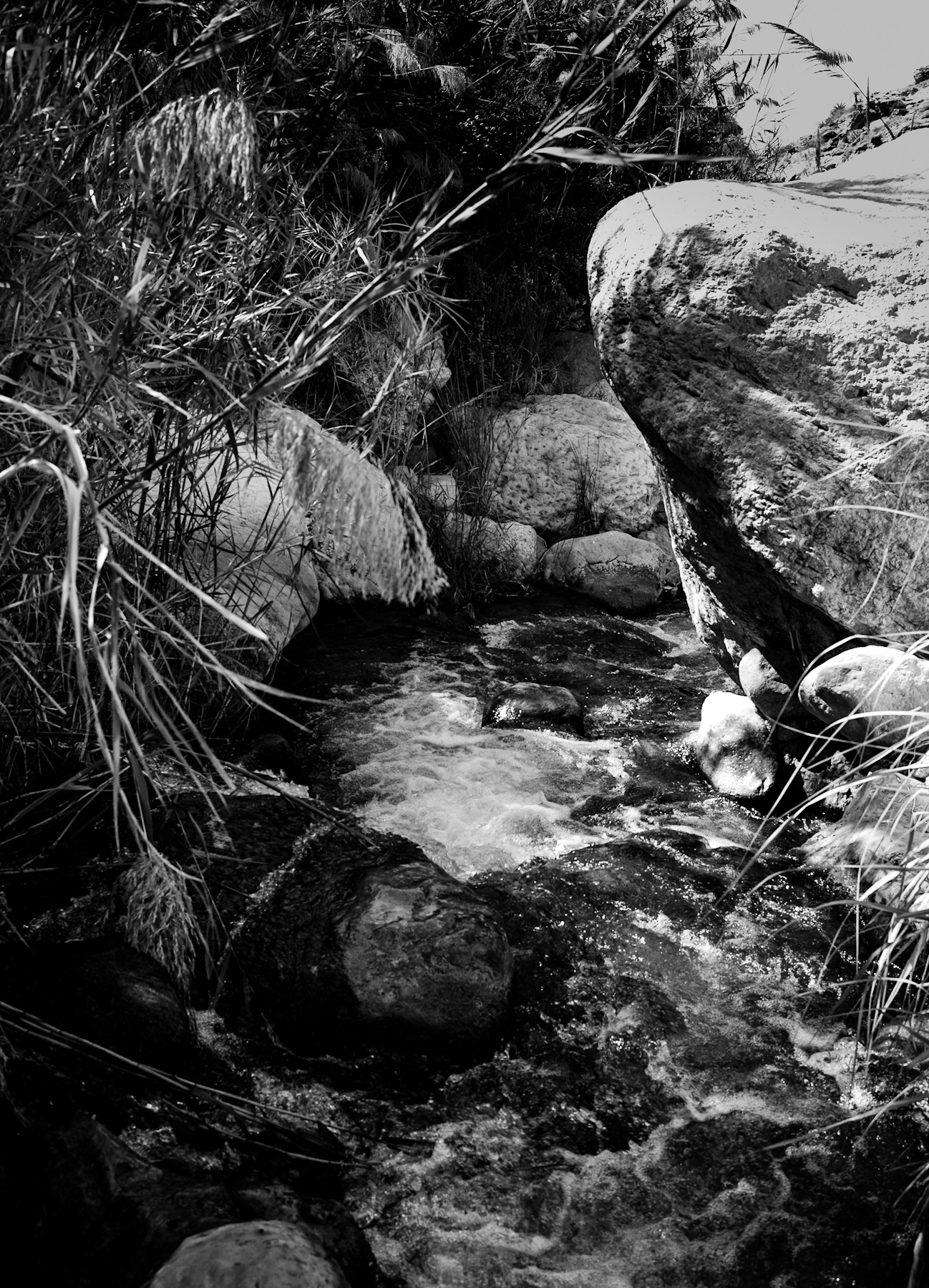
Imagine a scene frozen in time: freshwater rushing dynamically through a rugged, rocky landscape. A swift stream cascades over dark, wet stones, creating patches of white foam. To the left, dense stalks of wild reeds, their delicate seed heads bending slightly, frame the water. On the right, massive, weathered limestone boulders rise sharply, showcasing the harsh, arid geology that surrounds this flowing water. This is a classic desert oasis, perfectly capturing the essence of the springs found in the Judean Desert, specifically within the Ein Gedi Nature Reserve near the Dead Sea.
The Hydrological Miracle of the Judean Wilderness
To truly grasp the enduring significance of Ein Gedi, we must first understand the unique hydrology of this remarkable region. The Judean Desert is a rain-shadow desert, notorious for its minimal annual rainfall. Yet, the towering Judean Hills to the west receive abundant winter rains. This precious water percolates deep into subterranean limestone aquifers, flowing silently eastward underground until it encounters impermeable rock layers near the Dead Sea rift valley. At geological faults along the canyon walls of valleys like Nahal David and Nahal Arugot, this hidden water miraculously emerges as perennial freshwater springs. The very stream we envision represents this vital geological phenomenon—a constant, life-giving source in an otherwise barren and hyper-arid environment.
Historical and Biblical Significance
For millennia, the reliable presence of freshwater in this remote region transformed it into a crucial hub for human survival, trade, and even spiritual refuge.
Biblical Refuge In ancient texts, most notably the Hebrew Bible, Ein Gedi famously served as the wilderness sanctuary where David sought refuge from King Saul (1 Samuel 24). The „strongholds of Ein Gedi,“ hidden deep within the canyons, provided ideal hiding places, while the freshwater streams and wild vegetation offered essential sustenance. The dramatic contrast between the harsh desert cliffs and the lush, concealed streams served as a powerful metaphor in ancient literature, symbolizing protection and sustenance amidst adversity.
Ancient Agriculture and the Balsam Industry Moving into the Greco-Roman and Byzantine periods, these vital springs were ingeniously engineered to support highly sophisticated irrigated agriculture. The region became world-renowned for cultivating rare perfumes and medicinal plants, most notably the legendary Judean Balsam (opobalsamum). This highly prized resin, valued more than its weight in gold, was a coveted export throughout the vast Roman Empire. The sophisticated aqueducts and terraced fields built by Jewish settlers of the Second Temple period relied entirely on the constant, unwavering flow of streams identical to the one pictured.
Ecological Sanctuary in the Modern Era
Today, the delicate ecosystem sustained by these precious streams remains critically important. The dense reeds and fresh water provide an indispensable habitat for a diverse array of fauna, including the majestic Nubian ibex and the agile rock hyrax—species that have graced these canyons since antiquity. The enduring visual of a monochrome image, stripping away color, powerfully highlights the timeless struggle and harmony between water and stone. It illustrates with stark clarity why these desert springs have persisted as a vital oasis of life and history for thousands of years, a testament to nature’s enduring power.
The Hydrological Miracle of the Judean Wilderness
To truly grasp the enduring significance of Ein Gedi, we must first understand the unique hydrology of this remarkable region. The Judean Desert is a rain-shadow desert, notorious for its minimal annual rainfall. Yet, the towering Judean Hills to the west receive abundant winter rains. This precious water percolates deep into subterranean limestone aquifers, flowing silently eastward underground until it encounters impermeable rock layers near the Dead Sea rift valley. At geological faults along the canyon walls of valleys like Nahal David and Nahal Arugot, this hidden water miraculously emerges as perennial freshwater springs. The very stream we envision represents this vital geological phenomenon—a constant, life-giving source in an otherwise barren and hyper-arid environment.
Historical and Biblical Significance
For millennia, the reliable presence of freshwater in this remote region transformed it into a crucial hub for human survival, trade, and even spiritual refuge.
Biblical Refuge In ancient texts, most notably the Hebrew Bible, Ein Gedi famously served as the wilderness sanctuary where David sought refuge from King Saul (1 Samuel 24). The „strongholds of Ein Gedi,“ hidden deep within the canyons, provided ideal hiding places, while the freshwater streams and wild vegetation offered essential sustenance. The dramatic contrast between the harsh desert cliffs and the lush, concealed streams served as a powerful metaphor in ancient literature, symbolizing protection and sustenance amidst adversity.
Ancient Agriculture and the Balsam Industry Moving into the Greco-Roman and Byzantine periods, these vital springs were ingeniously engineered to support highly sophisticated irrigated agriculture. The region became world-renowned for cultivating rare perfumes and medicinal plants, most notably the legendary Judean Balsam (opobalsamum). This highly prized resin, valued more than its weight in gold, was a coveted export throughout the vast Roman Empire. The sophisticated aqueducts and terraced fields built by Jewish settlers of the Second Temple period relied entirely on the constant, unwavering flow of streams identical to the one pictured.
Ecological Sanctuary in the Modern Era
Today, the delicate ecosystem sustained by these precious streams remains critically important. The dense reeds and fresh water provide an indispensable habitat for a diverse array of fauna, including the majestic Nubian ibex and the agile rock hyrax—species that have graced these canyons since antiquity. The enduring visual of a monochrome image, stripping away color, powerfully highlights the timeless struggle and harmony between water and stone. It illustrates with stark clarity why these desert springs have persisted as a vital oasis of life and history for thousands of years, a testament to nature’s enduring power.
Schreibe einen Kommentar