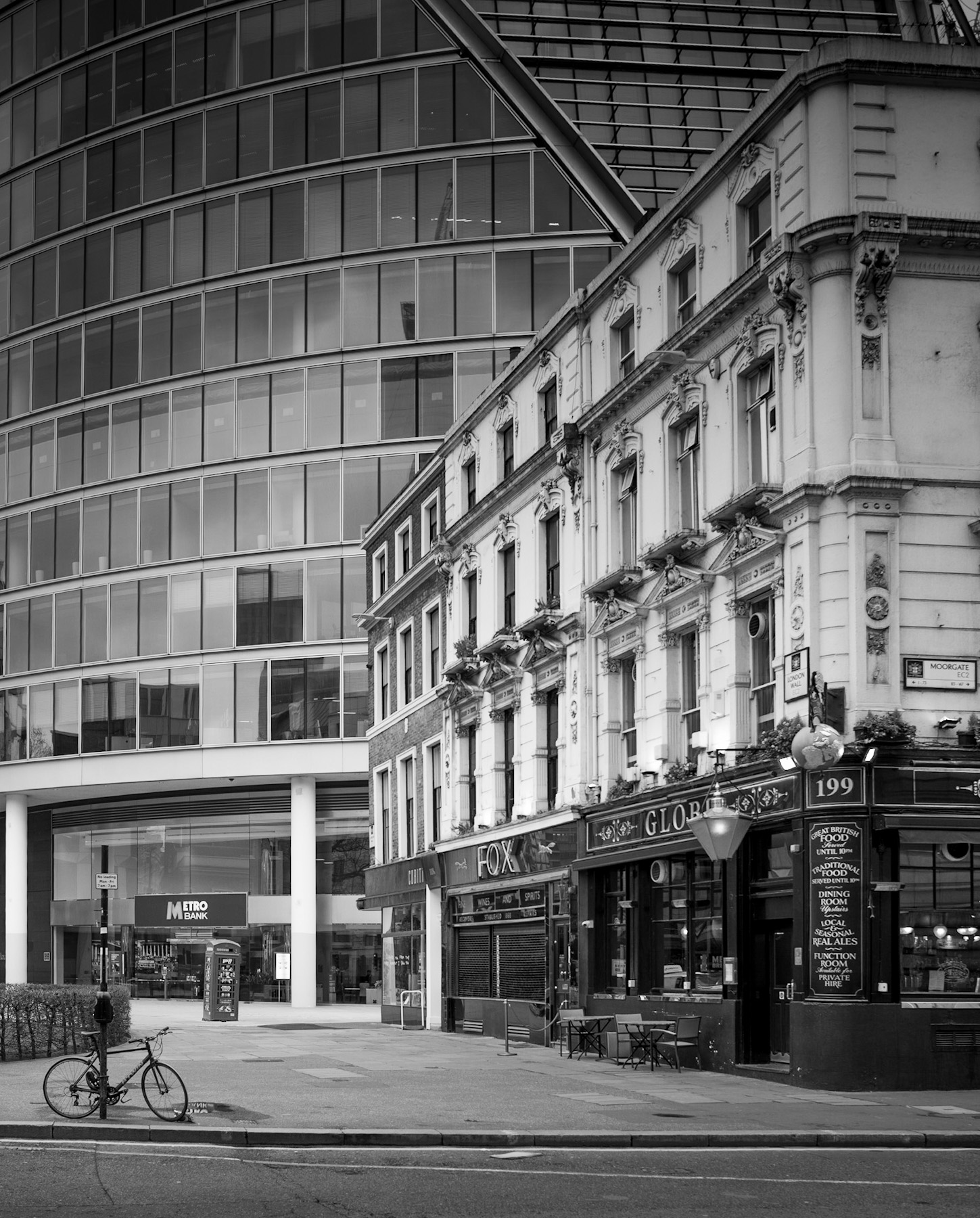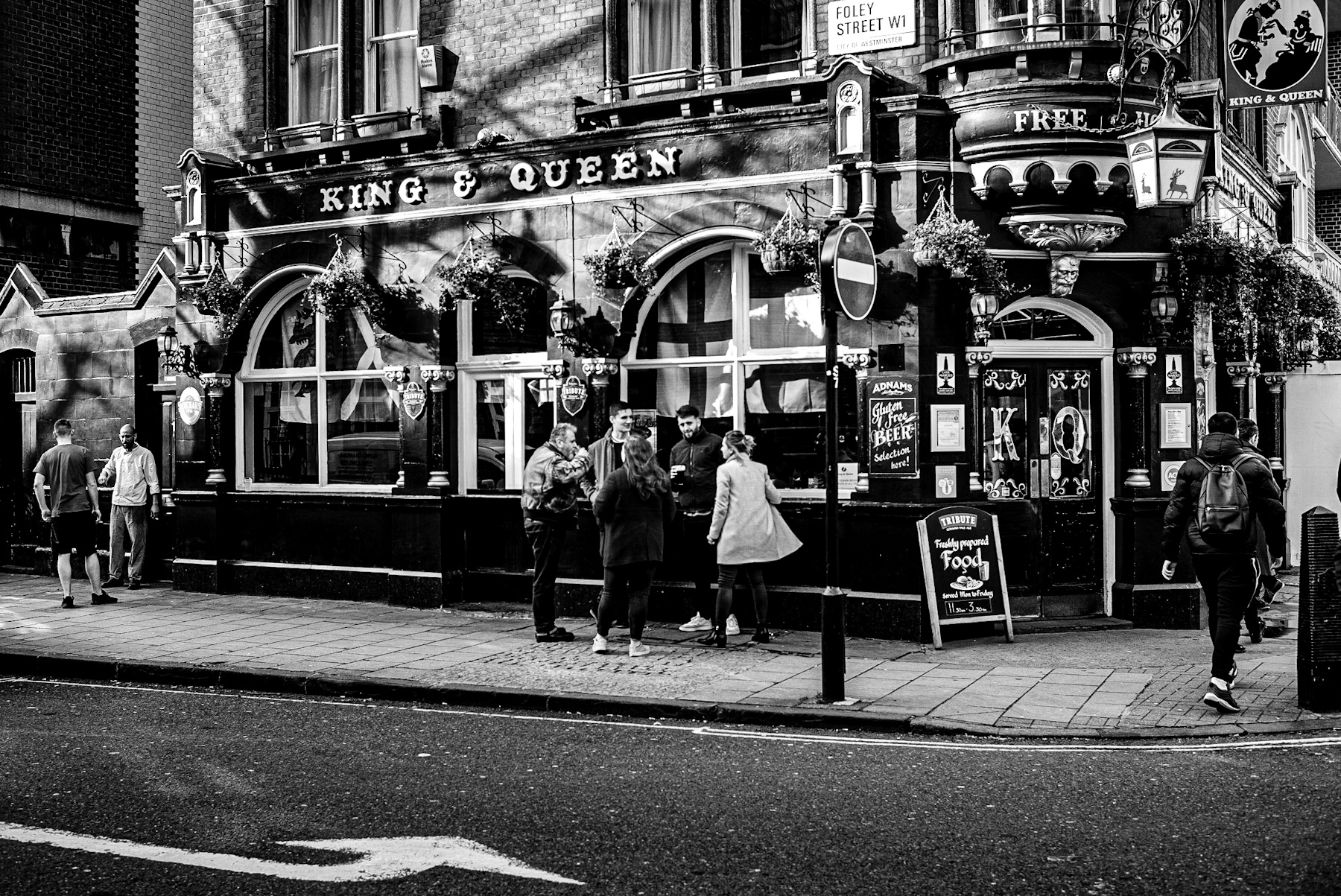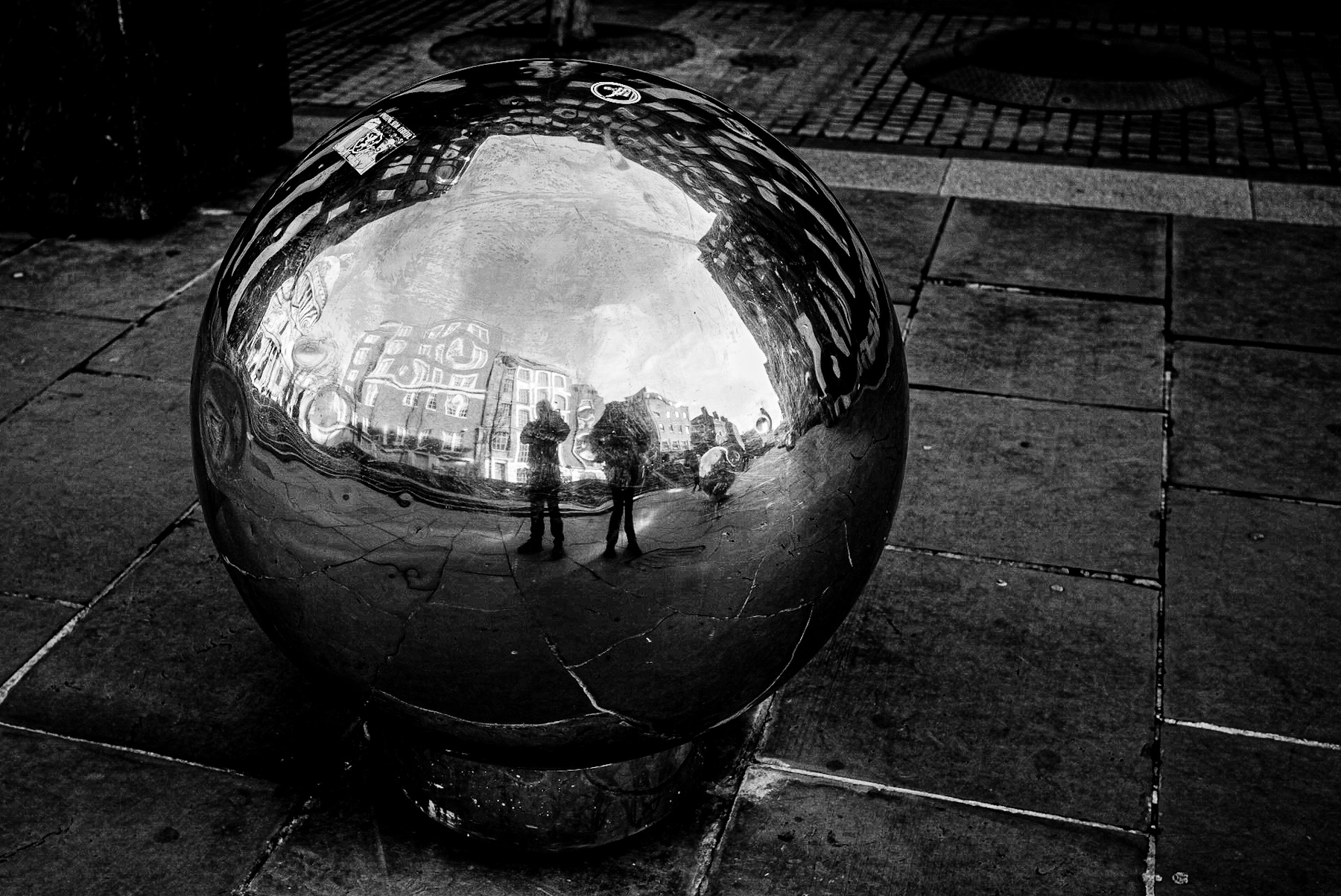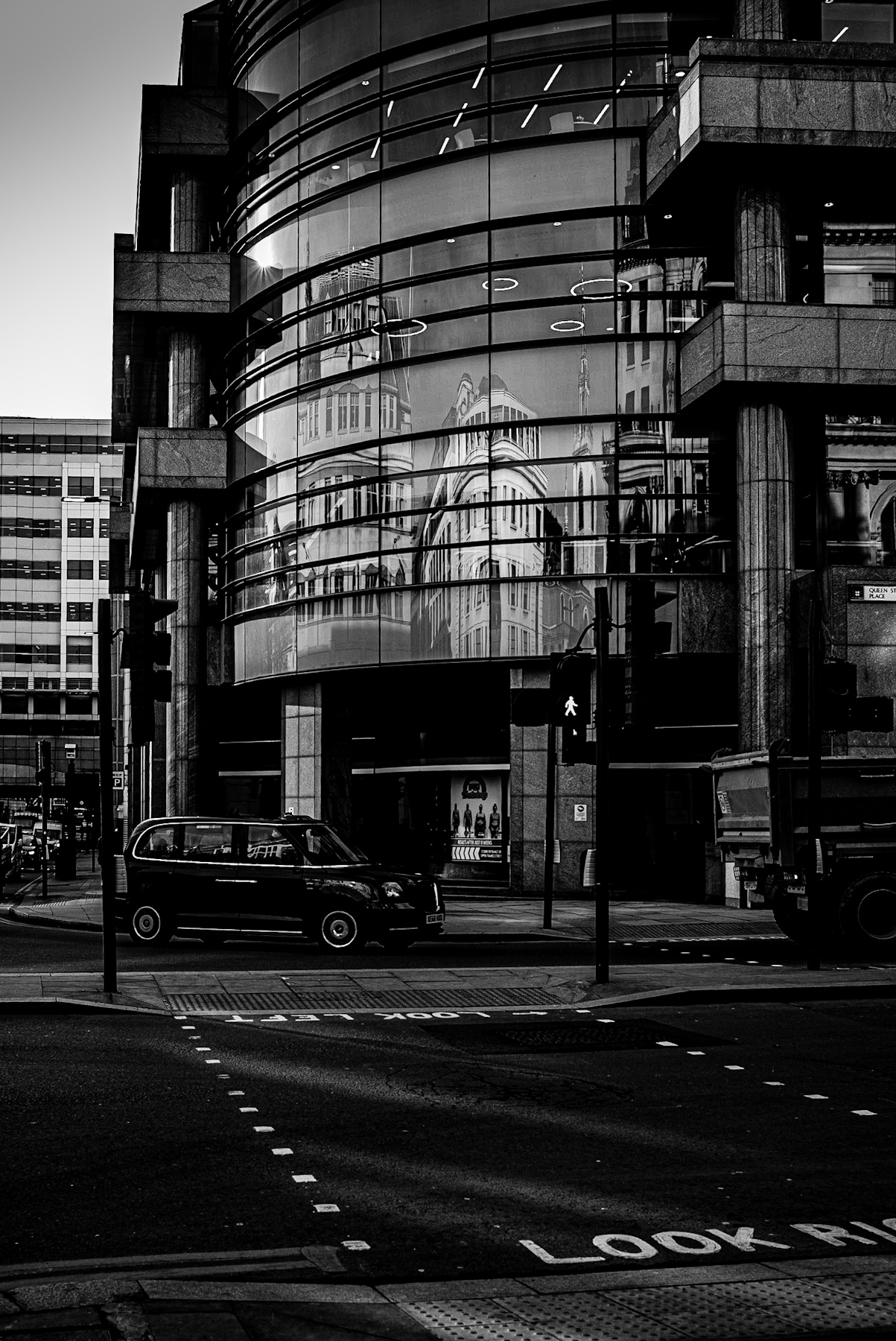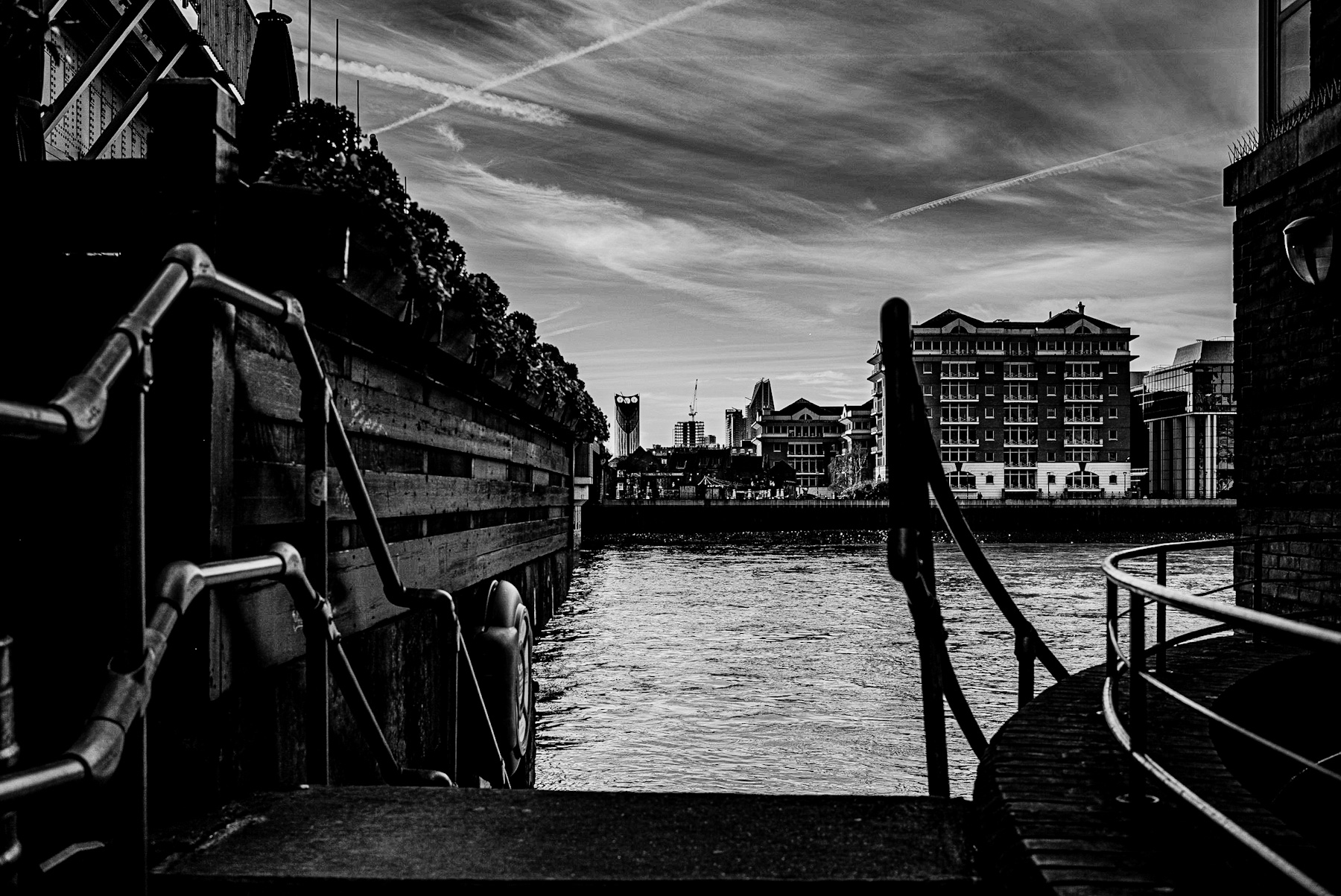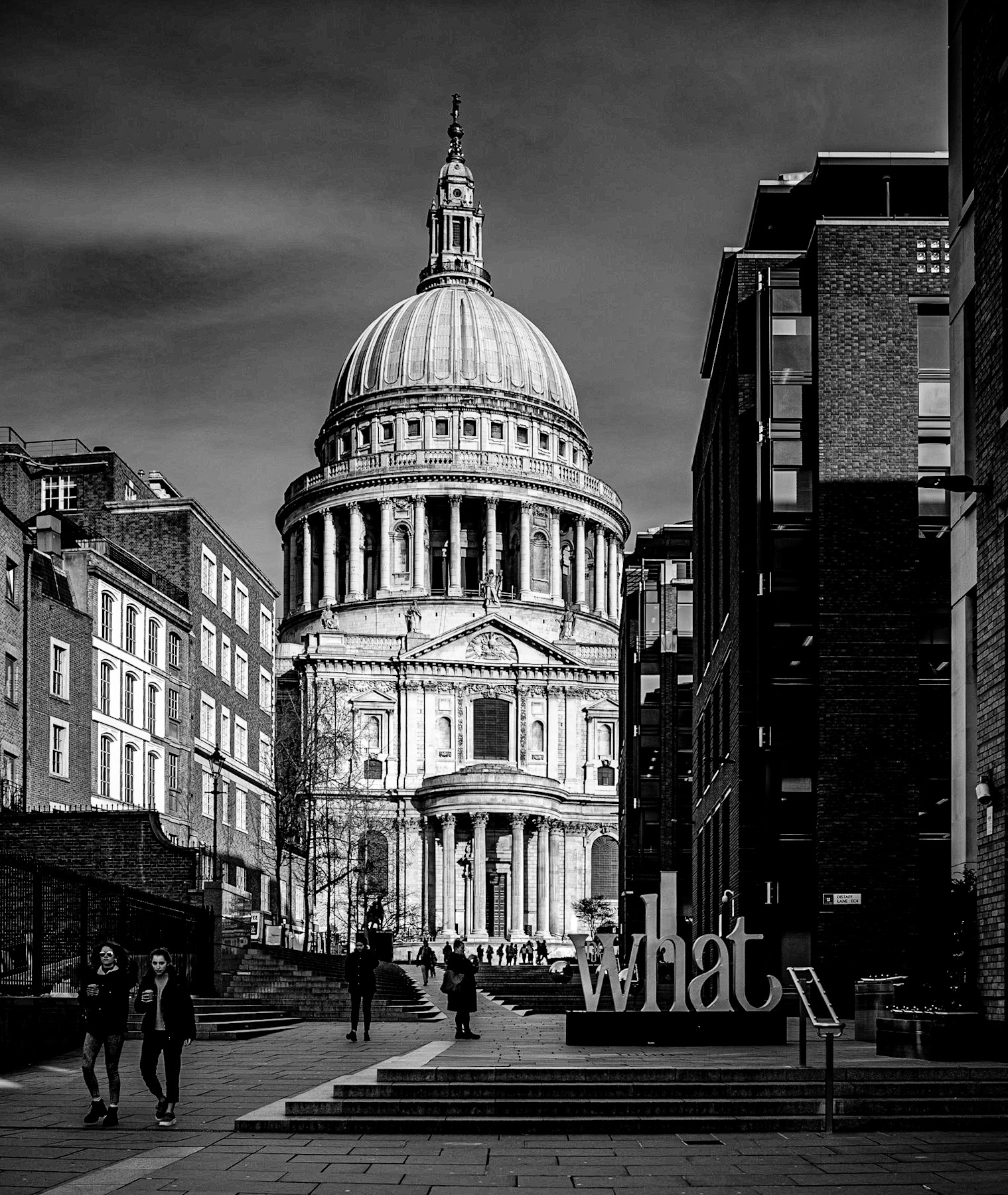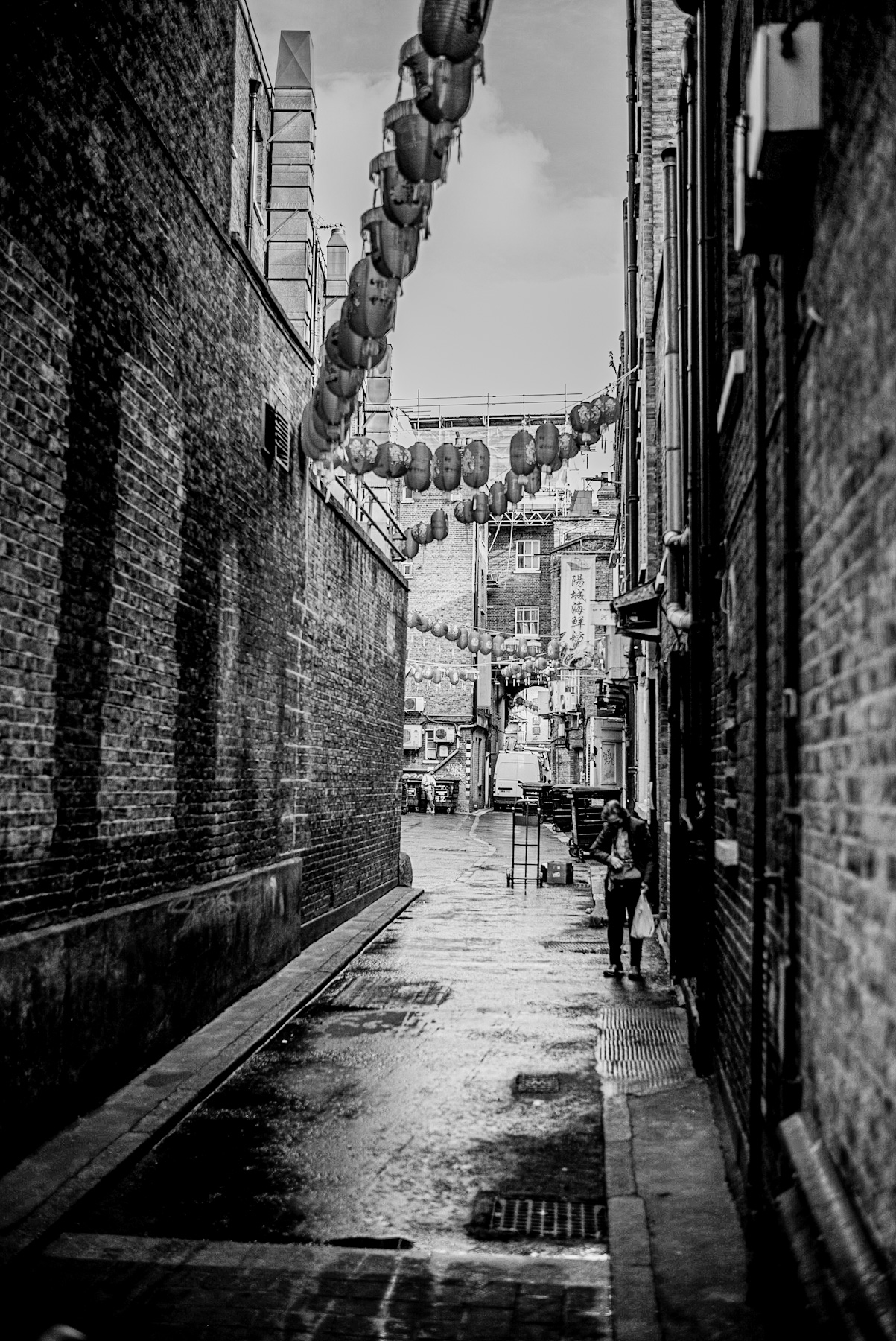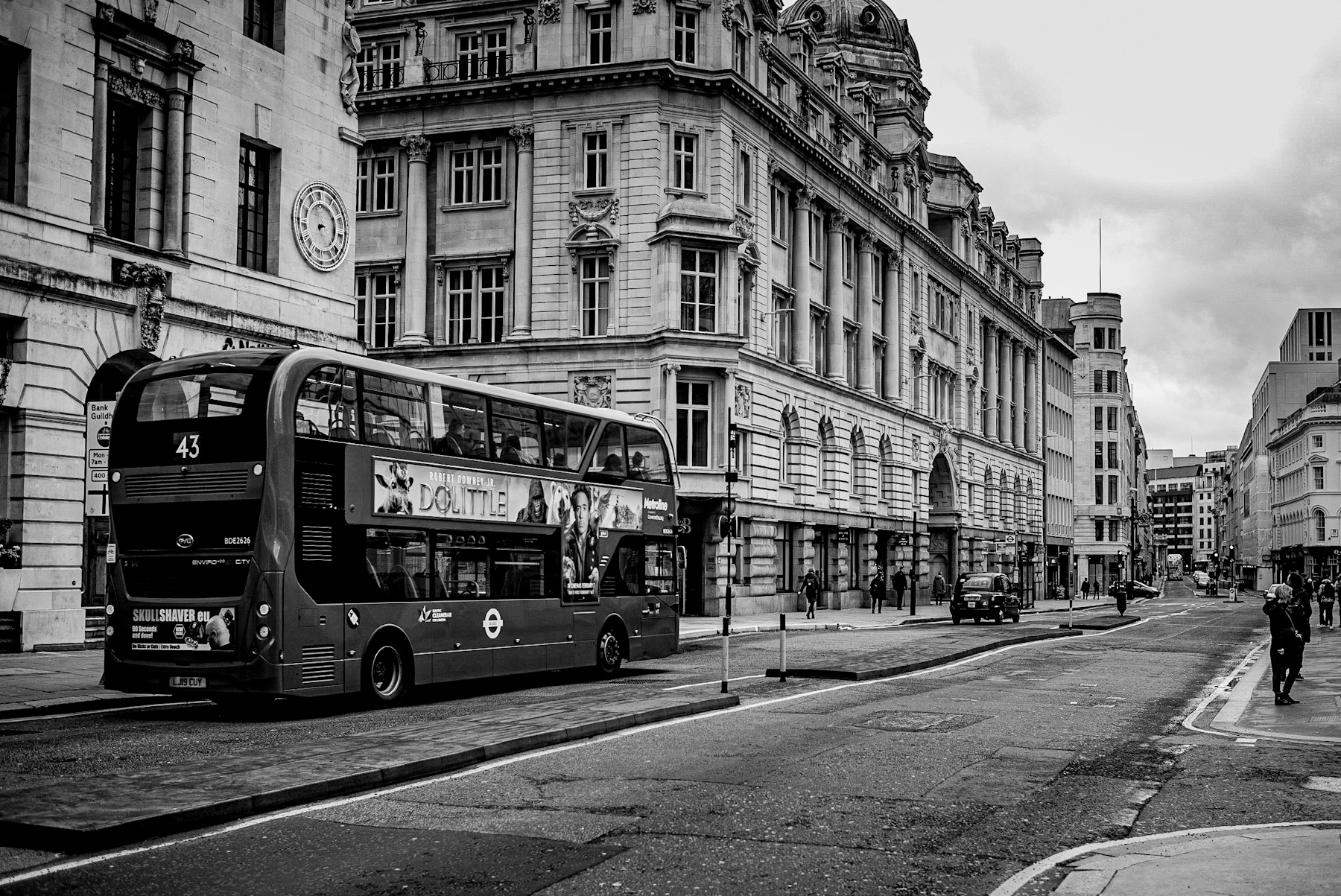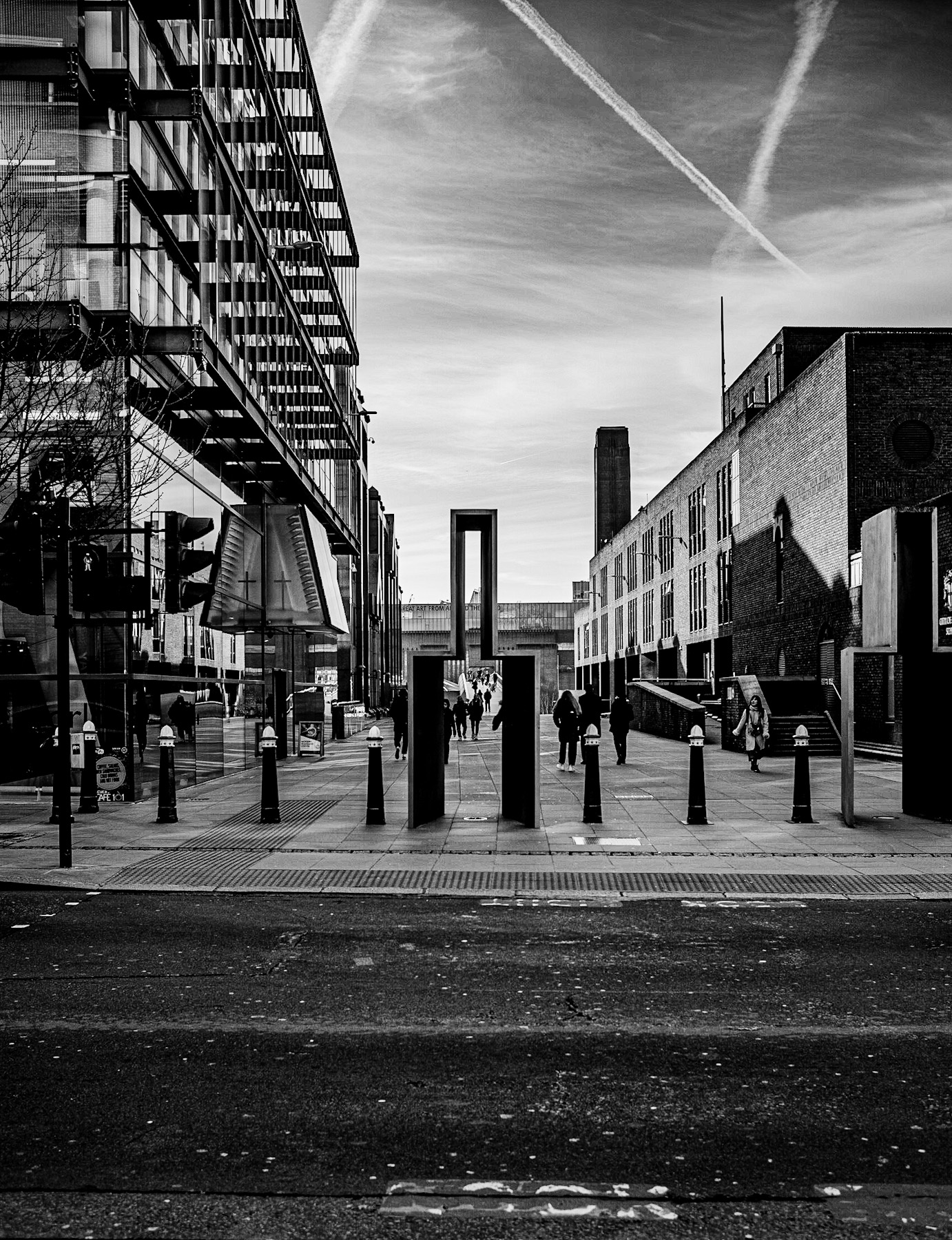
This striking black and white photograph captures a quintessential London scene, a dynamic interplay between historical legacy and contemporary urban design. The monochrome palette accentuates the textures, forms, and dramatic contrasts that define this particular stretch of the city, inviting a closer look at its layered narrative.
**A Glimpse into London’s Urban Fabric**
The image is bisected by a broad pavement, leading the eye towards a distant, imposing structure. On the left, a modern building of glass and steel rises, its reflective surfaces mirroring the sky and fragments of the bare winter trees, creating a complex, almost fragmented visual. Its clean lines and transparency speak to contemporary architectural trends, embodying the continuous evolution of the city’s skyline. In contrast, the right side is dominated by a robust, brick-clad edifice, characterized by its sturdy construction and repetitive window patterns. This building’s heavy, textured facade immediately suggests an older, industrial past, a testament to a different era of urban development.
**Echoes of Industrial Grandeur: The Tate Modern and Bankside**
Central to understanding the historical context of this photograph is the prominent brick building on the right, which is unmistakably the former Bankside Power Station, now home to the world-renowned Tate Modern art gallery. Designed by Sir Giles Gilbert Scott, also known for Battersea Power Station and the iconic red telephone boxes, Bankside Power Station was a significant landmark of industrial might when it was operational from 1952 to 1981. Its colossal chimney, visible towering in the background, remains a powerful symbol of its past life, a silent sentinel over the Thames.
The transformation of Bankside Power Station into the Tate Modern, which opened in 2000, represents a landmark achievement in urban regeneration and adaptive reuse. This conversion not only saved a significant piece of London’s industrial heritage but also repurposed it for a new cultural identity, making contemporary art accessible within a historically rich setting. The area surrounding the Tate Modern, known as Bankside, has since undergone extensive redevelopment, evolving from a post-industrial landscape into a vibrant cultural quarter.
**Modern Interventions and Public Spaces**
The foreground and mid-ground of the photograph showcase this ongoing transformation. The wide, pedestrian-friendly pavement is punctuated by a series of dark, rectangular, open-frame structures that act as both architectural elements and subtle public art installations. These modern interventions guide pedestrians and frame views, emphasizing the thoughtful design of public spaces in this regenerated district. People are seen traversing these pathways, a constant flow of life against the backdrop of architectural grandeur, highlighting the area’s role as a bustling hub for both locals and visitors.
The sky, with its sweeping contrails, adds another layer of modernity, a fleeting reminder of global connectivity above a city deeply rooted in its past. The black and white treatment of the image enhances the dramatic interplay of light and shadow, emphasizing the structural integrity of the buildings and the dynamic patterns of human movement, creating a timeless yet contemporary urban narrative. This photograph encapsulates London’s genius for blending its rich history with an unyielding drive towards the future, making Bankside a compelling example of urban evolution.
**A Glimpse into London’s Urban Fabric**
The image is bisected by a broad pavement, leading the eye towards a distant, imposing structure. On the left, a modern building of glass and steel rises, its reflective surfaces mirroring the sky and fragments of the bare winter trees, creating a complex, almost fragmented visual. Its clean lines and transparency speak to contemporary architectural trends, embodying the continuous evolution of the city’s skyline. In contrast, the right side is dominated by a robust, brick-clad edifice, characterized by its sturdy construction and repetitive window patterns. This building’s heavy, textured facade immediately suggests an older, industrial past, a testament to a different era of urban development.
**Echoes of Industrial Grandeur: The Tate Modern and Bankside**
Central to understanding the historical context of this photograph is the prominent brick building on the right, which is unmistakably the former Bankside Power Station, now home to the world-renowned Tate Modern art gallery. Designed by Sir Giles Gilbert Scott, also known for Battersea Power Station and the iconic red telephone boxes, Bankside Power Station was a significant landmark of industrial might when it was operational from 1952 to 1981. Its colossal chimney, visible towering in the background, remains a powerful symbol of its past life, a silent sentinel over the Thames.
The transformation of Bankside Power Station into the Tate Modern, which opened in 2000, represents a landmark achievement in urban regeneration and adaptive reuse. This conversion not only saved a significant piece of London’s industrial heritage but also repurposed it for a new cultural identity, making contemporary art accessible within a historically rich setting. The area surrounding the Tate Modern, known as Bankside, has since undergone extensive redevelopment, evolving from a post-industrial landscape into a vibrant cultural quarter.
**Modern Interventions and Public Spaces**
The foreground and mid-ground of the photograph showcase this ongoing transformation. The wide, pedestrian-friendly pavement is punctuated by a series of dark, rectangular, open-frame structures that act as both architectural elements and subtle public art installations. These modern interventions guide pedestrians and frame views, emphasizing the thoughtful design of public spaces in this regenerated district. People are seen traversing these pathways, a constant flow of life against the backdrop of architectural grandeur, highlighting the area’s role as a bustling hub for both locals and visitors.
The sky, with its sweeping contrails, adds another layer of modernity, a fleeting reminder of global connectivity above a city deeply rooted in its past. The black and white treatment of the image enhances the dramatic interplay of light and shadow, emphasizing the structural integrity of the buildings and the dynamic patterns of human movement, creating a timeless yet contemporary urban narrative. This photograph encapsulates London’s genius for blending its rich history with an unyielding drive towards the future, making Bankside a compelling example of urban evolution.