Kategorie: Travel

  • Ancient Pathways: Unveiling the Historical Depths of a Desert Wadi

    Ancient Pathways: Unveiling the Historical Depths of a Desert Wadi

    The monochromatic lens captures a dramatic natural gorge, a testament to geological forces and the persistent flow of water in an arid environment. This striking image reveals a deeply carved wadi, its rugged rock walls rising steeply, framing a narrow sliver of sky above. The scene is dominated by the interplay of light and shadow, characteristic of stark desert landscapes under a bright sun, rendered timeless through the black and white medium.
    The floor of the wadi is a rocky bed, likely a seasonal watercourse, strewn with various sized boulders and coarse gravel. Clinging precariously to the almost vertical cliffs are hardy date palms and other resilient, long-leafed vegetation, their fronds cascading downwards, creating a verdant contrast against the pale rock. These plants are indicative of a consistent, albeit often subterranean, water source, transforming this narrow passage into a vital lifeline. The textures are rich and varied, from the smooth, worn surfaces of river stones to the intricate patterns of rock erosion and the feathery details of the foliage.
    Historically, such wadis have been indispensable arteries in the vast, often formidable desert landscapes of the Middle East and North Africa. Far from being mere geographical features, they represent ancient pathways of survival and connection. For millennia, these natural corridors provided essential water, shelter, and navigable routes for nomadic tribes, traders, and explorers. They facilitated the movement of goods, ideas, and cultures across formidable distances, serving as critical links in historical trade networks like the Incense Route or various trans-Saharan paths. Civilizations often emerged and thrived around these rare sources of sustenance.
    Within this ancient tableau, a modern human imprint is visible: graffiti etched onto a prominent boulder in the foreground, appearing to be in Arabic script. This detail adds a contemporary layer to the historical narrative, underscoring the enduring human connection to these landscapes. It mirrors a long tradition of leaving marks, from ancient petroglyphs in similar regions to modern expressions. This act of inscription, whether recent or decades old, speaks to the continuous human interaction with these profound natural spaces, bridging the gap between ancient travelers and present-day visitors.
    The image, therefore, is more than a simple landscape; it is a visual portal to a rich tapestry of natural history and human endeavor. It encapsulates the resilience of life in challenging environments and the timeless allure of places where water carves its way through stone. Exploring such wadis today offers a tangible link to the past, inviting contemplation of the journeys taken, the lives sustained, and the stories embedded within these enduring rock formations and vital oases.
  • Wadi Wonders: A Glimpse into the Historical Soul of the Desert

    Wadi Wonders: A Glimpse into the Historical Soul of the Desert

    The monochromatic capture presents a powerful tableau of a wadi, a geological formation synonymous with life in arid regions. Dominating the frame are robust rock formations, their surfaces etched with the passage of time, providing a stark contrast to the organic vitality of the surrounding flora. A significant date palm, its fronds a dark silhouette against the lighter sky, leans gracefully, hinting at the persistent struggle and triumph of vegetation in this challenging environment.
    **The Landscape Unveiled: A Study in Contrast**
    The foreground features large, rounded boulders, their smooth, pale surfaces suggesting the erosion of water over millennia. Between and around these geological anchors, resilient grasses and reeds sprout, their sharp textures amplified by the black and white rendering. Further back, the wadi walls rise, rugged and imposing, adorned with cascading vegetation that clings to every crevice, creating a tapestry of light and shadow. The overall impression is one of a hidden sanctuary, a verdant artery cutting through an otherwise barren expanse. The absence of color emphasizes form, texture, and light, allowing the viewer to appreciate the raw, enduring beauty of this desert landscape.
    **Oases and Wadis: Lifelines of Ancient Civilizations**
    Historically, wadis and oases have been far more than mere geographical features; they have been the very cradles of life and civilization in the Middle East and North Africa. These natural depressions, where underground water sources emerge or seasonal rainfall collects, created vital pockets of fertility amidst vast deserts. The date palm, prominently featured in the image, epitomizes this survival. For thousands of years, the date palm has provided sustenance, shelter, and materials for tools and construction, making it an indispensable resource for communities. Its ability to thrive in arid conditions, producing nutrient-rich fruit, made settlement possible in regions that would otherwise be uninhabitable.
    Ancient communities, from nomadic tribes to burgeoning empires, strategically located their settlements around these precious water sources. The availability of fresh water and edible plants like dates facilitated human migration, trade, and cultural exchange across vast distances. Without these natural oases, the intricate network of ancient trade routes, such as the Silk Road and various spice routes, would have been impossible. Caravans relied on these wadi systems for replenishment, transforming them into bustling hubs of commerce and interaction.
    **Echoes of History: Enduring Significance**
    The scene depicted in the photograph, with its ancient rocks, resilient palms, and promise of water, evokes the timeless narrative of human perseverance. It represents the enduring struggle against the elements and the ingenuity required to harness natural resources. From the earliest human settlements to the great empires that rose and fell, wadis and oases have played a pivotal role in shaping the historical trajectory of entire regions. They are living museums, silently narrating tales of survival, prosperity, and the interconnectedness of human and natural history.
    Today, these landscapes continue to be vital ecological zones, supporting unique biodiversity and serving as reminders of humanity’s profound reliance on natural resources. The image is a poignant testament to the lasting power and historical depth embedded within these essential desert lifelines.
  • Serpentine Paths Through Time: Unveiling Ancient Routes in a Timeless Landscape

    Serpentine Paths Through Time: Unveiling Ancient Routes in a Timeless Landscape

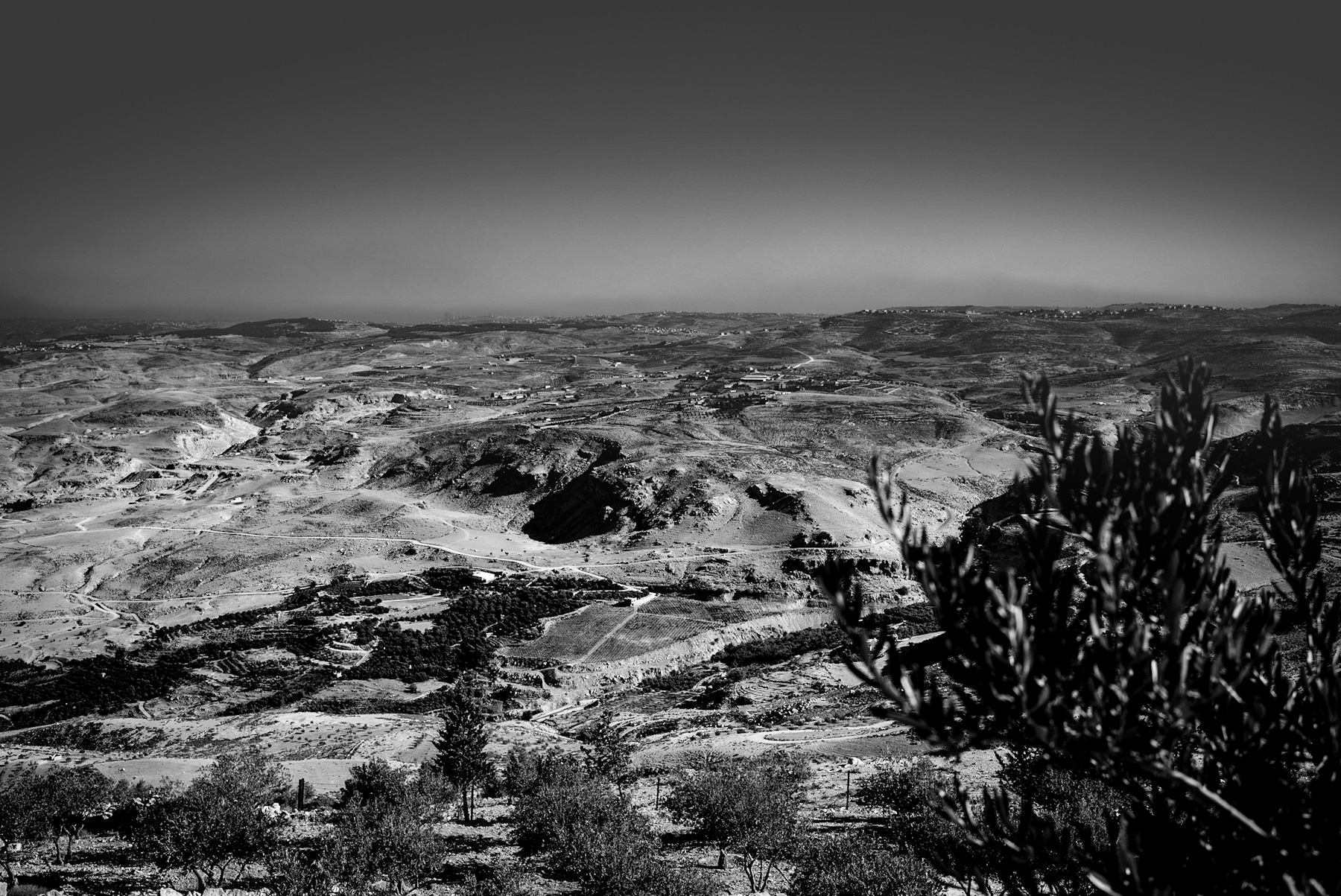
    The accompanying photograph captures a dramatic, expansive mountainous landscape rendered in stark black and white, immediately drawing the viewer into its rugged grandeur. A vast expanse of undulating terrain dominates the frame, characterized by deep valleys, steep slopes, and prominent geological layering that speaks to eons of natural formation. The monochrome palette accentuates the textures and contrasts, highlighting every ridge, crevice, and shadow, imbuing the scene with a profound sense of antiquity and raw beauty.
    A Tapestry of Terrain and Human Endeavor
    At the heart of this formidable panorama lies an intricate network of winding roads, their pale lines snaking across the dark, contoured earth. These serpentine paths, a testament to human ingenuity and persistence, ascend and descend the challenging topography with remarkable precision. Each curve, each switchback, represents an engineering feat designed to conquer the formidable elevation changes. The roads appear both ancient and enduring, seamlessly integrated into the natural contours of the land, hinting at countless journeys undertaken across this formidable terrain. The sheer number of visible paths suggests a vital arteries system, meticulously carved into the very fabric of the earth.
    Echoes of Ancient Civilizations
    Landscapes such as this, particularly prevalent in regions like the Middle East, have historically served as crucial conduits for human interaction. For millennia, these mountain passes and valley routes were not merely paths but lifelines – arteries of trade, pilgrimage, and military movement. They connected disparate civilizations, facilitating the exchange of goods, ideas, and cultures.
    One of the most famous examples is the King’s Highway (Via Regia), an ancient trade route in Jordan, believed to be one of the oldest continuously used roads in the world. Dating back to the Bronze Age, this route connected Egypt with Mesopotamia, Syria, and Arabia, playing a pivotal role in the rise and fall of empires. The Nabataeans, renowned for their mastery of desert environments and intricate trade networks, utilized and likely improved sections of such routes to transport spices, incense, and other valuable commodities. Later, the Romans further developed these paths into a sophisticated network, leaving behind vestiges of their engineering prowess. Crusaders and Ottoman forces also traversed these strategic corridors, each era adding another layer to the rich historical tapestry woven into the very ground. The roads depicted in the photograph embody this enduring legacy, mirroring the ancient paths that once buzzed with caravans, soldiers, and travelers.
    Enduring Legacy and Modern Pathways
    The black and white aesthetic of the image profoundly emphasizes the timeless quality of this landscape. It strips away the distractions of color, focusing instead on form, texture, and the enduring narrative of human interaction with the natural world. These roads, whether modern iterations or ancient remnants, continue to serve as vital connections in a challenging environment. The image is a powerful reminder of how human civilization has consistently adapted, built, and persevered, carving out existence and connection even in the most rugged of places. It invites contemplation on the countless stories embedded within these ancient and formidable mountain passes.
  • Timeless Majesty: The Geological Canvas of Petra’s Nabataean Legacy

    Timeless Majesty: The Geological Canvas of Petra’s Nabataean Legacy

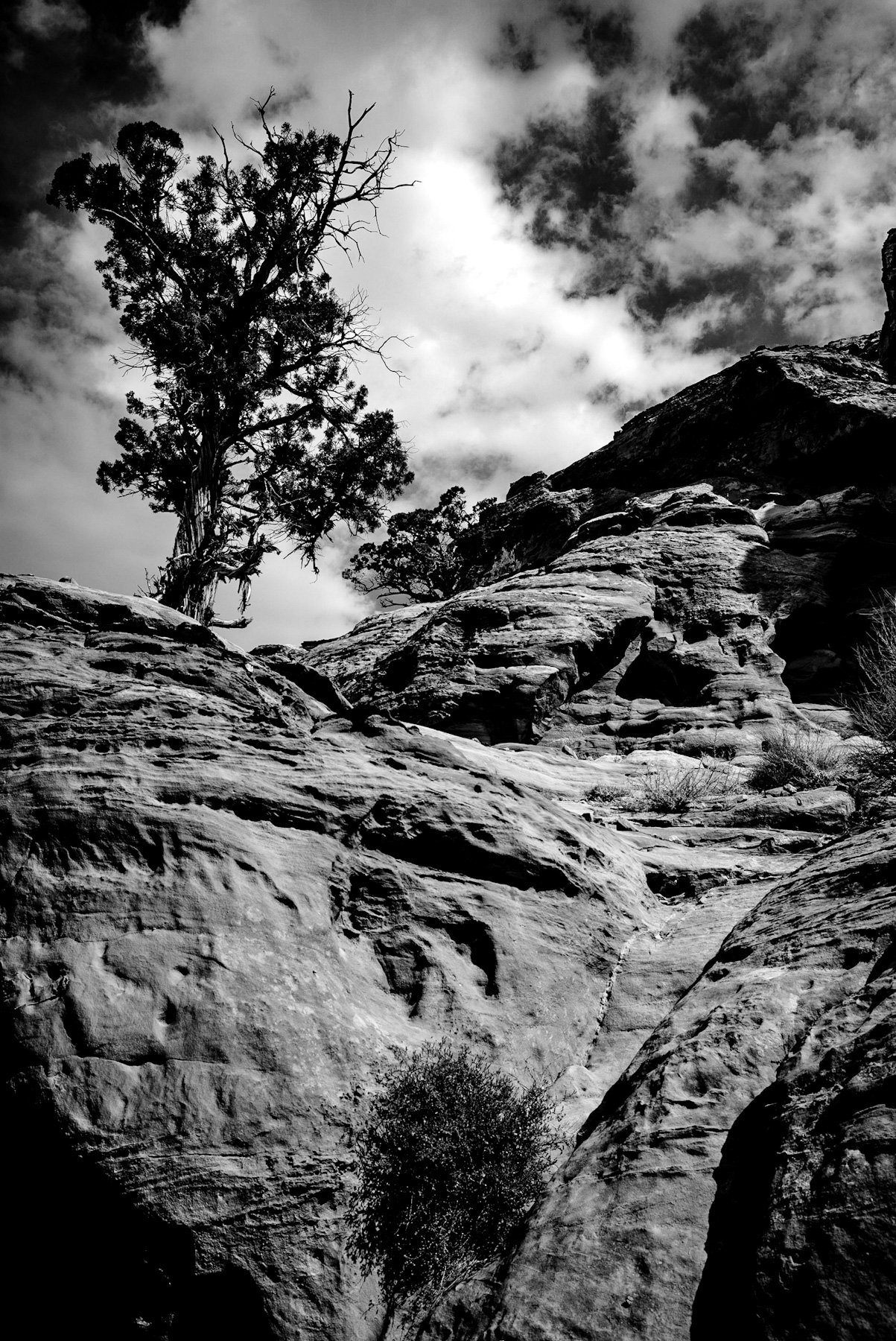
    The monochrome lens captures a scene of profound geological artistry, a dramatic expanse of towering **sandstone cliffs** that rise with immense presence. The image, rendered in stark black and white, emphasizes the intricate textures and deep contours of the rock formations, transforming the landscape into a study of light and shadow. Jagged peaks pierce a sky dotted with wisps of clouds, while the lower sections of the cliffs plunge into deep, almost impenetrable darkness, highlighting the extreme contrasts inherent in this rugged environment.
    The visual narrative is dominated by the raw power of nature’s sculpting hand. Layers of sediment, millennia in the making, are visible as horizontal striations across the rock faces, testament to ancient geological processes. Erosion has carved deep channels, smooth curves, and cavernous hollows into the stone, creating a dynamic interplay of forms that suggest both immense strength and delicate fragility. A solitary, resilient tree clings precariously to a crevice high on one of the sheer walls, a poignant symbol of life enduring amidst the harsh, arid conditions. Its dark silhouette against the lighter rock underscores the tenacity required to thrive in such an environment. The upward perspective of the photograph reinforces the monumental scale, inviting contemplation of the vastness of geological time and the forces that shaped this unique terrain.
    This dramatic landscape is undeniably reminiscent of **Petra, Jordan**, the legendary **ancient city** of the **Nabataeans**. While the image itself showcases natural rock formations rather than explicit architectural carvings, it provides a crucial context for understanding the historical significance of this **UNESCO World Heritage Site**. The Nabataeans, an ancient Arab people, ingeniously harnessed and adapted to this very topography, carving their magnificent city directly into the **sandstone cliffs** from around the 4th century BCE. The natural protection offered by these towering rock walls and narrow gorges, such as the famous Siq, was instrumental in Petra’s strategic importance as a hub on ancient **trade routes** for incense, spices, and other valuable goods.
    The **desert geology** seen in the photograph is not merely a backdrop but an active participant in Petra’s story. The soft, malleable sandstone allowed the Nabataeans to meticulously craft their elaborate tombs, temples, and dwellings. The natural erosion patterns, visible in the image, parallel the processes that would have continually reshaped the landscape around their rock-cut facades, making the city a living testament to the interplay between human endeavor and natural forces. The **historical landscape** of Petra is a profound example of how a civilization can emerge, flourish, and leave an indelible mark by harmonizing with its environment.
    In essence, the photograph captures the very essence of Petra before the chisel, displaying the raw, majestic canvas upon which an extraordinary civilization was built. It speaks of endurance—both of the stone itself, shaped by eons, and of the human spirit that chose to dwell within and transform such an imposing natural wonder. This **black and white photography** distills the scene to its fundamental elements, emphasizing the timeless beauty and profound historical resonance of these ancient rock formations.
  • Ancient Echoes: A Journey Through Time in the Canyon’s Embrace

    Ancient Echoes: A Journey Through Time in the Canyon’s Embrace

    The black and white image presents a powerful study of a rugged canyon landscape, devoid of color to emphasize its profound textures, forms, and the interplay of light and shadow. The vertical composition draws the eye deep into the chasm, revealing layers of geological history etched into the rock face.
    The foreground is dominated by a dramatically twisted, gnarled tree root or branch, forming a natural arch that acts as a visual gateway into the scene. Its rough, weathered surface contrasts sharply with the smoother, sculpted rock behind it. Beyond this natural arch, the canyon walls rise steeply, revealing intricate patterns of stratification and erosion. Sedimentary layers are clearly visible, telling a silent story of ancient deposition.
    Mid-frame, several small alcoves or shallow caves are discernible within the rock, their dark openings hinting at hidden depths. The rock surfaces exhibit varying textures, from smooth, water-worn sections to rough, lichen-covered patches, particularly on a prominent boulder in the mid-left. Streaks of lighter rock material, possibly mineral deposits or areas of recent water flow, cascade down the darker rock faces, adding a dynamic vertical element. The ground is littered with debris – smaller rocks, twigs, and detritus, suggesting the relentless forces of nature that shape this environment. The stark contrast between the bright highlights on exposed rock and the deep, absorbing shadows in crevices and underhangs amplifies the sense of depth and ruggedness inherent in this **canyon landscape**.
    This imagery speaks volumes about the immense **geological processes** that sculpt our planet. Such **canyon formations** are typically the result of millions of years of **erosion**, primarily by water. Over vast timescales, rivers and streams cut through layers of rock, progressively deepening and widening the channels. The distinct horizontal layering visible in the rock walls points to sedimentary origins, where sands, silts, and clays were deposited in ancient seas or floodplains, then compressed and lithified into rock. Subsequent uplift of the Earth’s crust exposed these layers to the relentless forces of wind and water, carving the intricate forms seen today. The smooth, undulating surfaces within the canyon are characteristic of water erosion, where abrasive sediments carried by flowing water act like sandpaper, slowly grinding away the rock, revealing the **desert geology** of this **ancient landscape**.
    Beyond geological time, these landscapes often hold deep historical significance for human cultures. In regions resembling the American Southwest, where such canyons are prevalent, these natural shelters and travel corridors were vital to **indigenous peoples** for millennia. Tribes such as the Ancestral Puebloans, Navajo, and Ute utilized alcoves and caves within canyon walls for shelter, storage, and ceremonial purposes. The presence of natural overhangs and hidden nooks could have provided refuge from extreme weather and served as strategic vantage points. These canyons were not merely physical spaces but were imbued with spiritual meaning, connecting communities to their land and ancestors. The silent walls bear witness to countless generations who lived, traveled, and thrived in harmony with these formidable environments, leaving behind a rich **Ancestral Puebloan heritage** etched into the very fabric of the land.
    The **black and white photography** rendition of this **canyon landscape** underscores its timeless quality. Without the distraction of color, the focus shifts entirely to form, texture, and the raw power of nature. It invites contemplation on the enduring processes that shape our world and the transient nature of human existence against such a backdrop. The gnarled wood in the foreground, itself a product of growth and decay, serves as a poignant reminder of life’s resilience and its inevitable return to the earth, echoing the grand cycles of **geological history**. This image is a testament to the enduring **natural beauty** and historical depth embedded within the Earth’s **ancient landscapes** and the **Southwest wilderness**.
  • Echoes in Stone: Unveiling the Historical Tapestry of Arid Mountain Landscapes

    Echoes in Stone: Unveiling the Historical Tapestry of Arid Mountain Landscapes

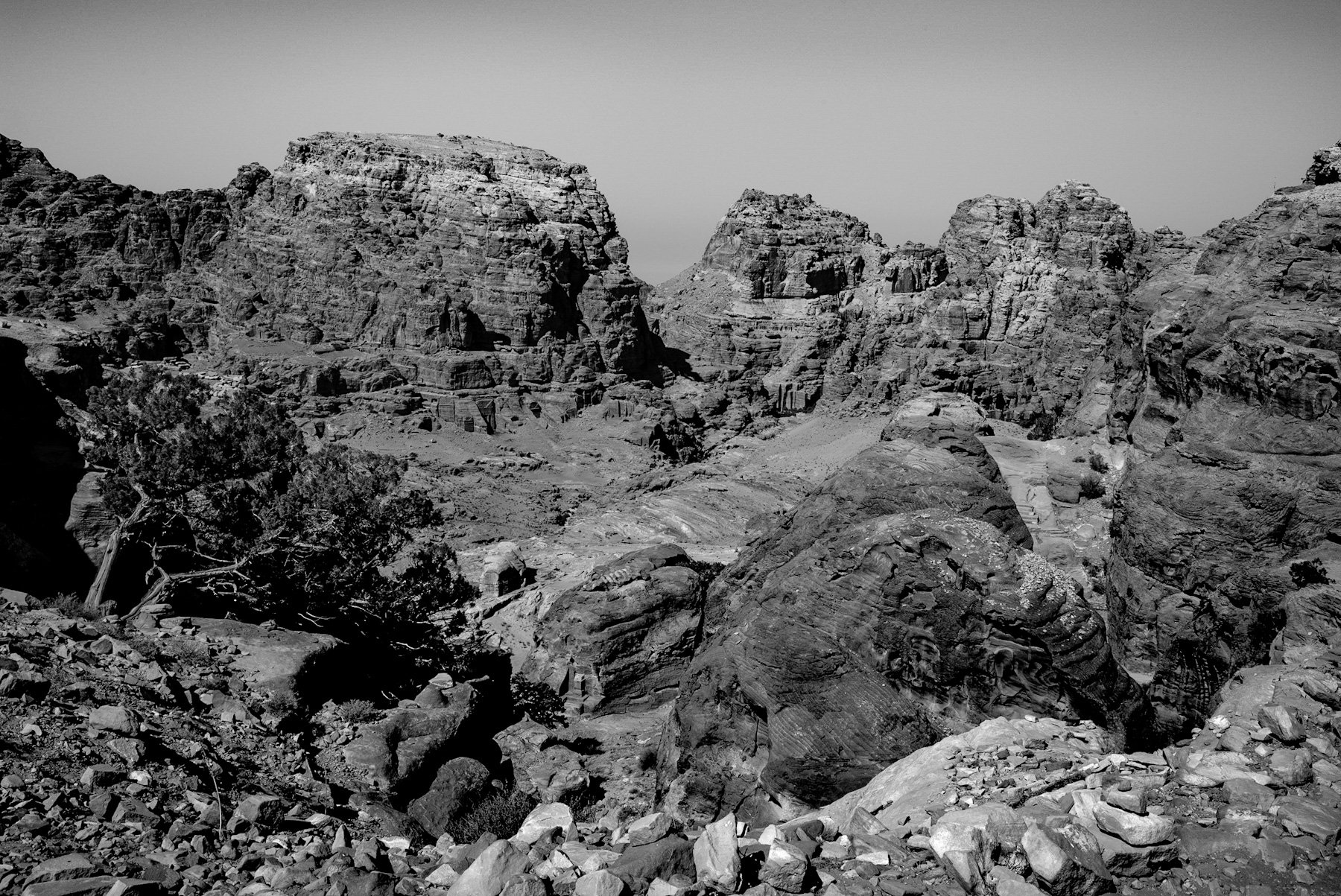
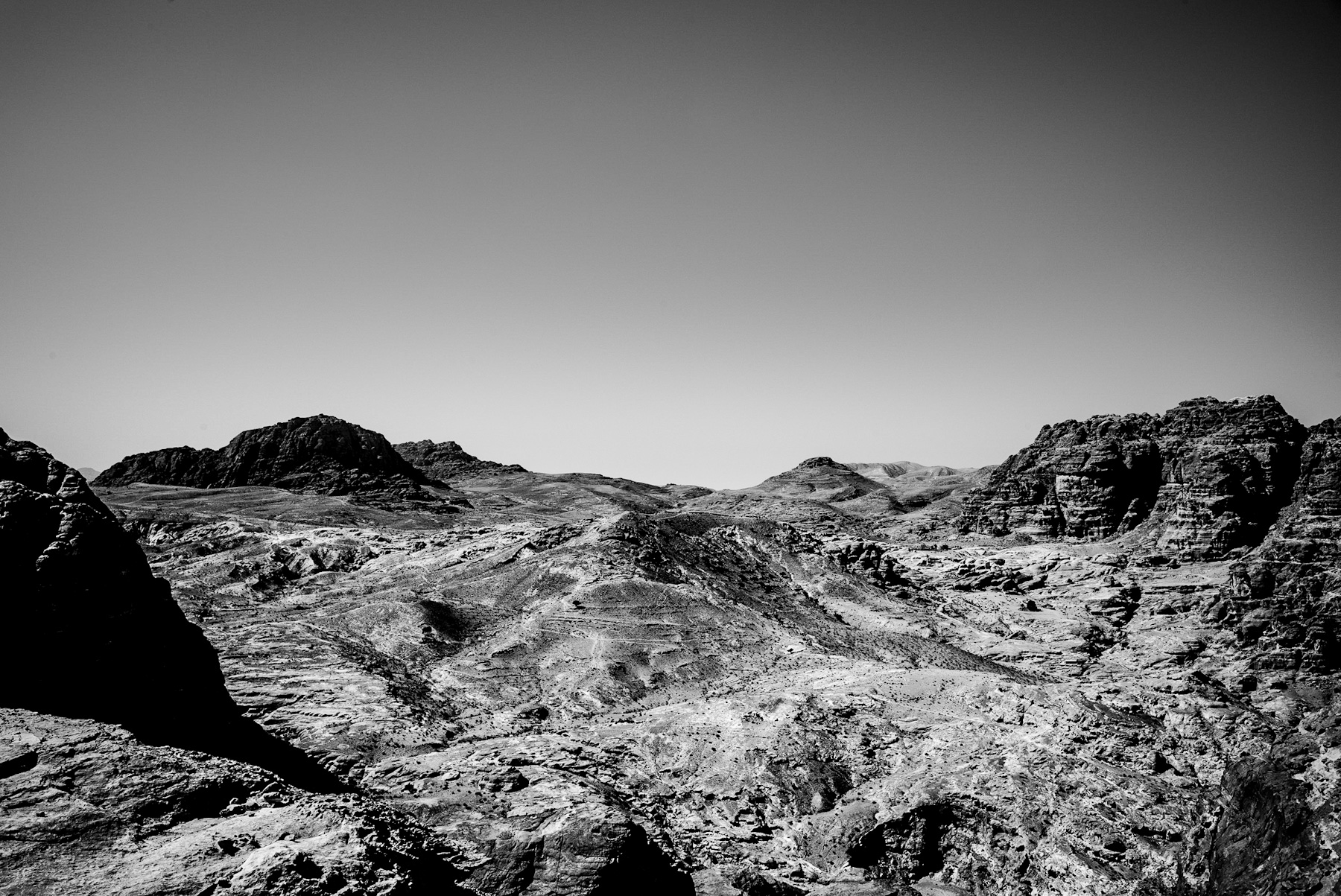
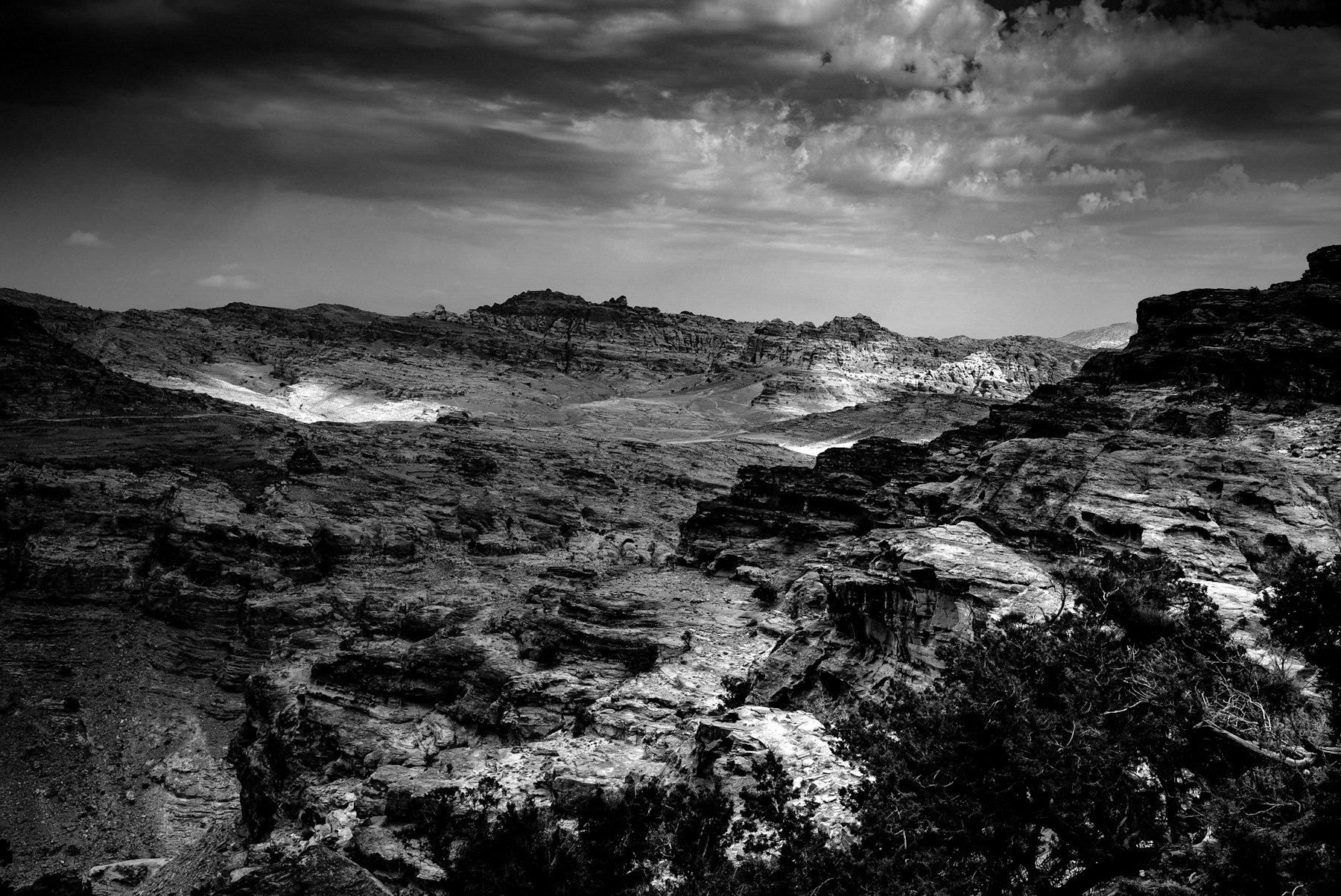
    The stark beauty of an arid mountain landscape unfolds in this monochrome photograph, presenting a scene of rugged grandeur and profound solitude. Rendered in black and white, the image accentuates the dramatic contrasts of light and shadow, revealing the intricate textures of the terrain. Towering mountains flank a central valley, their slopes carved by millennia of erosion, creating a formidable yet captivating environment. The absence of color emphasizes the raw, elemental nature of this wilderness, inviting contemplation of its enduring presence and the stories etched into its ancient stones.
    ### A Detailed Glimpse into the Arid Terrain
    In the foreground, the ground is a mosaic of rocks, gravel, and sparse, resilient vegetation. Small, hardy shrubs and a few isolated trees cling to life, their forms often silhouetted against the brighter slopes, testament to adaptation in harsh conditions. A winding path, barely discernible, hints at past traversals, snaking through the lower elevations and disappearing into the distance. The midground reveals a broader valley floor, leading towards a narrow pass between the distant peaks. The dark, shadowed mountainsides contrast sharply with the lighter sky above, where faint clouds drift, adding a subtle layer of depth to the expansive heavens. This interplay of light and dark transforms the **desert mountain landscape** into a compelling study of form and resilience.
    ### Geological Formations and Ecological Resilience
    Geologically, such landscapes are products of immense forces and time. The folded and uplifted rock formations speak of tectonic movements that shaped the Earth’s crust over millions of years, while the countless loose stones and gravel are remnants of relentless weathering and erosion by wind and occasional flash floods. This **arid environment**, often characterized by extreme temperatures and scarce water, supports a unique ecology. The plants visible are likely xerophytes, species specifically adapted to survive long periods of drought, anchoring themselves tenaciously in the rocky soil. Their very existence underscores the tenacity of life in seemingly barren lands, a testament to nature’s extraordinary adaptive power.
    ### Pathways of Ancient Civilizations and Trade
    Beyond its natural beauty, this **mountain scenery** resonates with profound historical significance. Arid mountain regions have historically served as both formidable barriers and crucial conduits for human activity. For millennia, such valleys and passes were vital arteries for trade, migration, and conquest. One can easily imagine ancient caravans, laden with precious goods like spices, silks, and frankincense, traversing these very routes, connecting distant civilizations along the famed **Incense Road** or other lesser-known desert paths. Nomadic tribes, skilled in navigating these challenging terrains, established temporary settlements and waystations, their intimate knowledge of water sources and safe passage invaluable. This region could easily have been part of the vast networks that linked the Arabian Peninsula, North Africa, or the Levant, witnessing countless journeys of merchants, pilgrims, and soldiers.
    ### Echoes of Human Endeavor
    The subtle paths visible in the image evoke the footsteps of those who came before. These might be remnants of ancient trails used by Nabataeans, Romans, or early Islamic traders, each leaving an indelible, albeit often invisible, mark on the land. Such environments often conceal **archaeological treasures** – ancient rock carvings, forgotten wells, or the ruins of fortified outposts – waiting to be rediscovered, offering tangible links to a rich past. The solitude captured in the **black and white photography** is not merely emptiness but a quiet repository of human endeavor, survival, and cultural exchange over thousands of years. It reminds us that even in the most unforgiving landscapes, humanity has consistently sought to connect, explore, and thrive.
    This photograph of an **arid mountain landscape** transcends a simple visual record; it serves as a powerful portal to a timeless world. It invites viewers to appreciate not only the raw, enduring beauty of nature but also to reflect on the deep historical layers embedded within its silent stones. From geological formation to ancient human pathways, this scene encapsulates the profound interplay between environment and history, a testament to both nature’s power and humanity’s persistent journey through it.
  • Timeless Majesty: Unveiling History Etched in Desert Rock Formations

    Timeless Majesty: Unveiling History Etched in Desert Rock Formations

    The captured image presents a powerful black and white tableau of a desert landscape, dominated by colossal rock formations. Striking in its high contrast, the photograph masterfully employs light and shadow to sculpt a scene of profound depth and ancient grandeur. A singular, radiant beam of light cuts through the dramatic sky, illuminating a textured section of the towering rock face, revealing intricate geological details and casting deep, enigmatic shadows across the surrounding terrain. This interplay creates a sense of profound mystery and timelessness, drawing the viewer into a world shaped by immense natural forces.
    Visual Drama and Geological Wonders
    The composition draws the eye upwards to the immense scale of these natural monuments. The sky, partially obscured by dynamic clouds, adds to the atmospheric intensity, highlighting the raw power of nature and the vastness of the open expanse. Below, the ground consists of sparse desert vegetation and rugged, sandy earth, providing a stark foreground to the monumental backdrop. Small human figures, barely discernible on the sunlit rock face, offer a crucial sense of scale, underscoring the sheer magnitude of these geological wonders and hinting at the persistent human interaction with this formidable environment. The stark black and white photography emphasizes contours and textures, transforming the scene into an almost sculptural study of light, form, and enduring stone, evoking both awe and a sense of isolation.
    Echoes of Ancient Civilizations
    Such desert landscapes are not merely geological marvels; they are often silent witnesses to millennia of human history. Regions characterized by these dramatic rock formations have historically served as cradles for ancient civilizations and vital arteries for trade routes. Imagine the caravans laden with spices, silks, and precious goods, traversing these very paths, seeking shelter and sustenance among these imposing cliffs. The presence of human figures in the image evokes the enduring spirit of exploration and settlement that has defined these territories for centuries. From early nomadic tribes to established empires, these challenging environments forged resilient cultures, demanding ingenuity and cooperation to survive and thrive amidst the arid beauty.
    Carved Legacies: A Glimpse into the Past
    Many of these awe-inspiring rock formations bear the indelible marks of past inhabitants. Throughout history, civilizations have adapted to and utilized these natural structures, carving dwellings, sophisticated water systems, temples, and elaborate tombs directly into the sandstone. These historical sites often reveal sophisticated architectural techniques and rich cultural narratives, telling stories of ingenuity, spirituality, and resilience against the harsh desert elements. The very light that illuminates the rock face in the photograph could once have guided ancient worshippers to sacred precincts or highlighted the entrance to a hidden city, such as those found along the ancient Incense Route. These structures stand as profound testaments to human endeavor against the backdrop of geological time, inviting contemplation on the rise and fall of empires and the enduring human spirit.
    The Enduring Allure of Cultural Heritage
    Today, these landscapes continue to captivate, offering a tangible connection to our cultural heritage. They represent not just natural beauty but also the profound symbiotic relationship between humanity and its environment. The dramatic interplay of light and shadow, so vividly captured, serves as a metaphor for the mysteries and discoveries that lie hidden within these ancient grounds. Exploring such sites is an immersive journey, allowing one to walk in the footsteps of ancestors, contemplate the vastness of time, and appreciate the enduring beauty and historical depth of our world. These historical sites are powerful reminders of the legacies carved into the very earth beneath our feet, inspiring future generations to protect and cherish these invaluable windows into the past.
  • Monochrome Majesty: Unpacking the Historical Layers of a Desert Landscape

    Monochrome Majesty: Unpacking the Historical Layers of a Desert Landscape

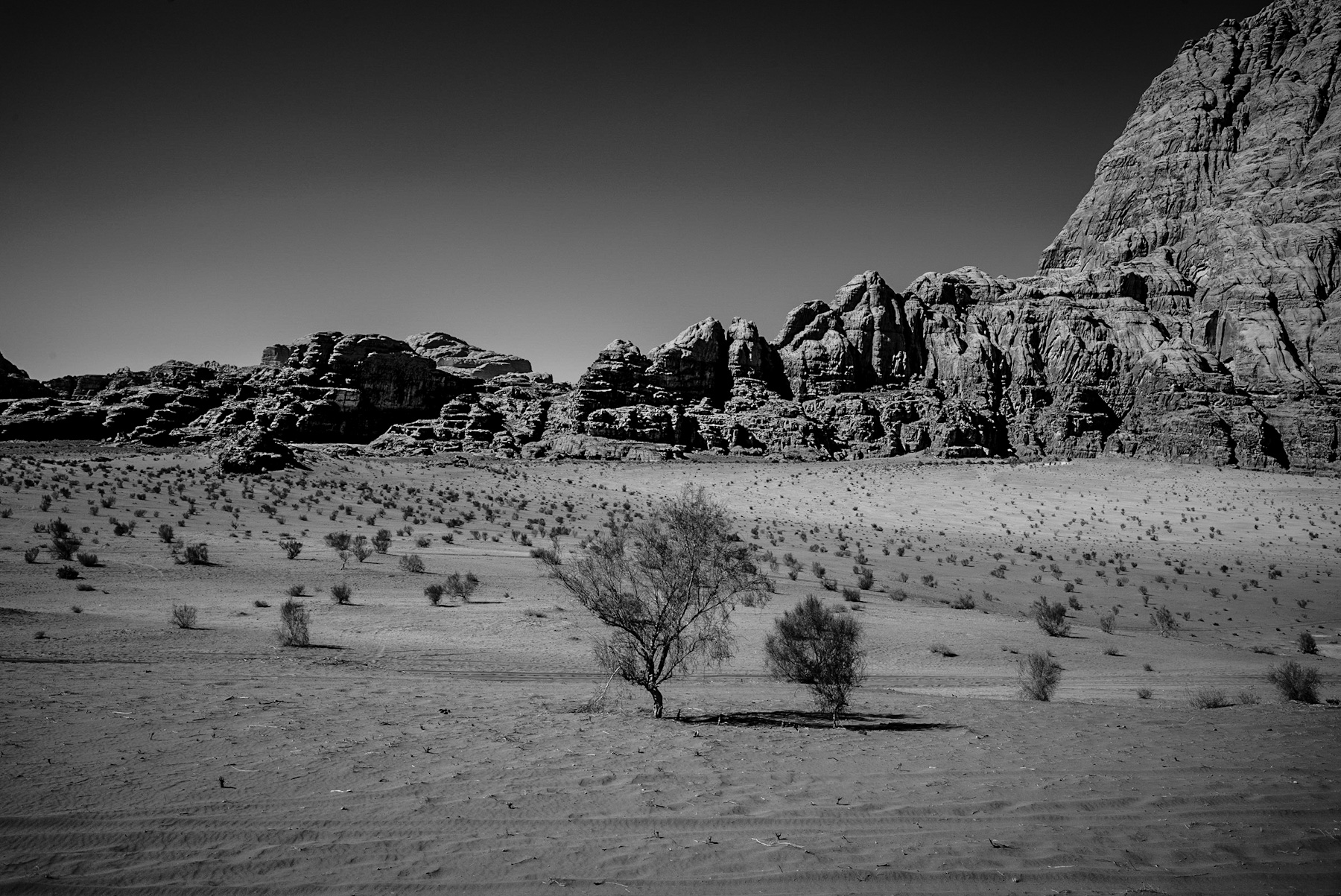
    The striking black and white photograph presents a compelling view of a rugged, arid environment, where nature’s resilience is prominently displayed. Dominated by towering, stratified rock formations, the landscape speaks of ancient geological processes and millennia of erosion. These formidable cliffs, with their intricate patterns and deep crevices, form a dramatic backdrop, suggesting a world shaped by time and elemental forces.
    A Tapestry of Life and Stone
    In stark contrast to the seemingly barren rock, the foreground and mid-ground are rich with vibrant vegetation. Tall, slender grasses and reeds intertwine, creating a dense, textured layer that hints at hidden moisture. Several majestic palm trees, likely date palms, punctuate the scene, their distinctive fronds fanning out, providing shade and a focal point of life. The monochrome palette accentuates the textures and forms, transforming the scene into a study of light and shadow, emphasizing the raw beauty and dramatic contrasts inherent in such environments. The strong sunlight casts deep shadows, further enhancing the three-dimensional quality of the rocks and the lushness of the plant life.
    Oases: Lifelines of Ancient Civilizations
    This particular confluence of rocky terrain and flourishing vegetation strongly suggests the presence of an oasis or a wadi – a dry riverbed that periodically fills with water. Historically, such locations were not merely scenic spots but critical lifelines. Oases served as indispensable hubs in vast desert expanses, providing the vital resources of water, food, and shelter that enabled human and animal survival.
    For millennia, these green pockets were the beating hearts of ancient trade routes, connecting distant civilizations across formidable deserts. Caravans laden with precious goods – spices, silk, gold, and frankincense – relied on oases like these as essential stopping points. They offered respite for weary travelers, a place to replenish supplies, and often served as burgeoning market towns where cultures intersected and commerce thrived. Iconic routes such as the Silk Road, the Incense Route, and trans-Saharan trade networks would have been impossible without the strategic distribution of oases.
    The Enduring Legacy of Date Palms
    The presence of date palms in particular holds significant historical weight. The date palm (Phoenix dactylifera) has been cultivated for thousands of years in the Middle East and North Africa, serving as a cornerstone of survival and culture. Its fruit provided a highly nutritious and storable food source, while its fronds were used for shelter, baskets, and other necessities. The very existence of ancient settlements in many desert regions was often predicated on the successful cultivation and management of date palm groves around a reliable water source.
    A Timeless Testament to Resilience
    This photograph, devoid of modern intrusions, transports the viewer to a timeless landscape. It is a visual testament to the enduring power of nature to foster life even in the most challenging conditions. Beyond its aesthetic appeal, it evokes the rich tapestry of human history woven around these precious desert sanctuaries – a narrative of exploration, trade, survival, and the profound human connection to the land. The image serves as a powerful reminder of how natural resources have shaped societies and continue to hold deep cultural and historical significance.
  • Ancient Echoes: The Timeless Artistry of Sandstone

    Ancient Echoes: The Timeless Artistry of Sandstone

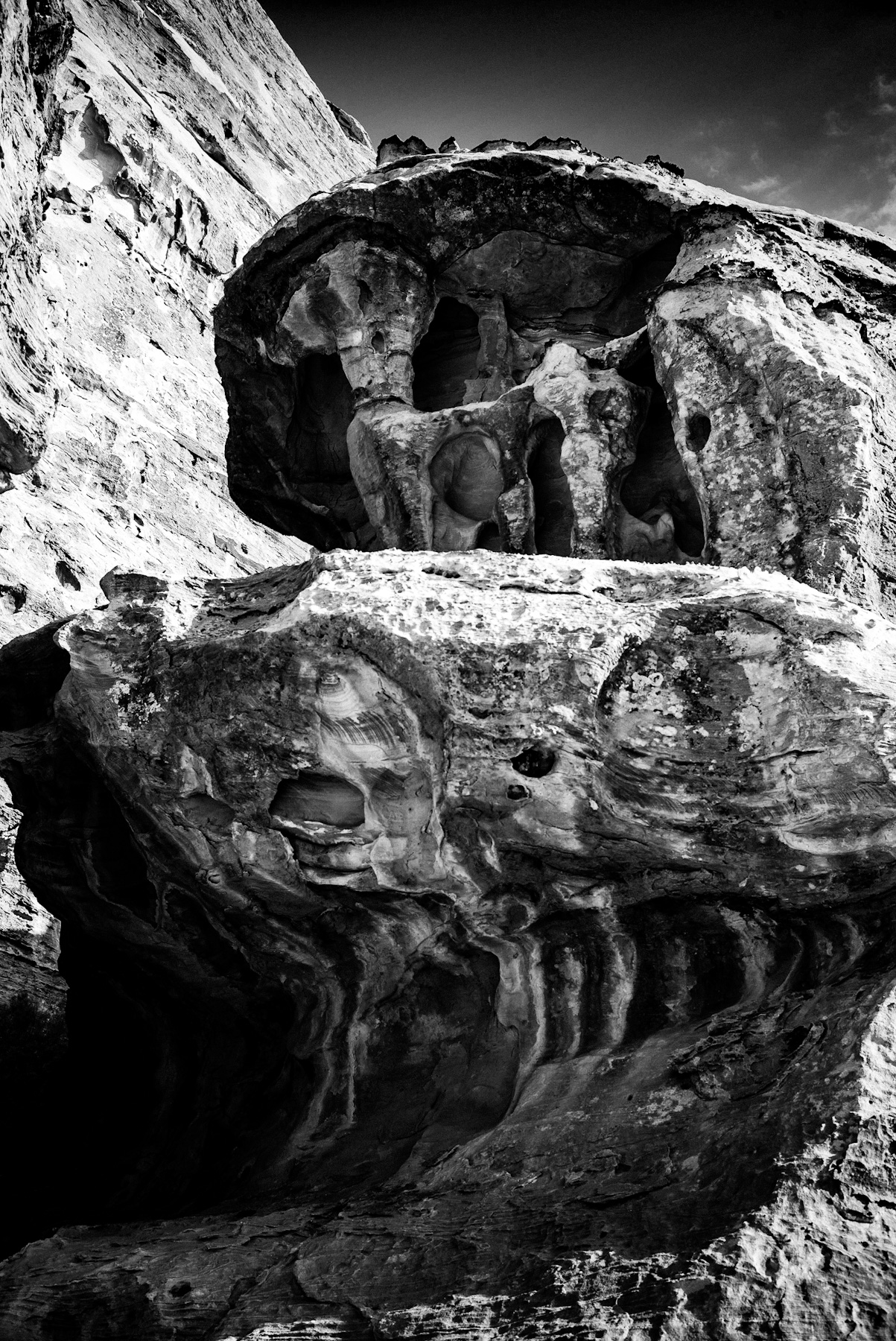
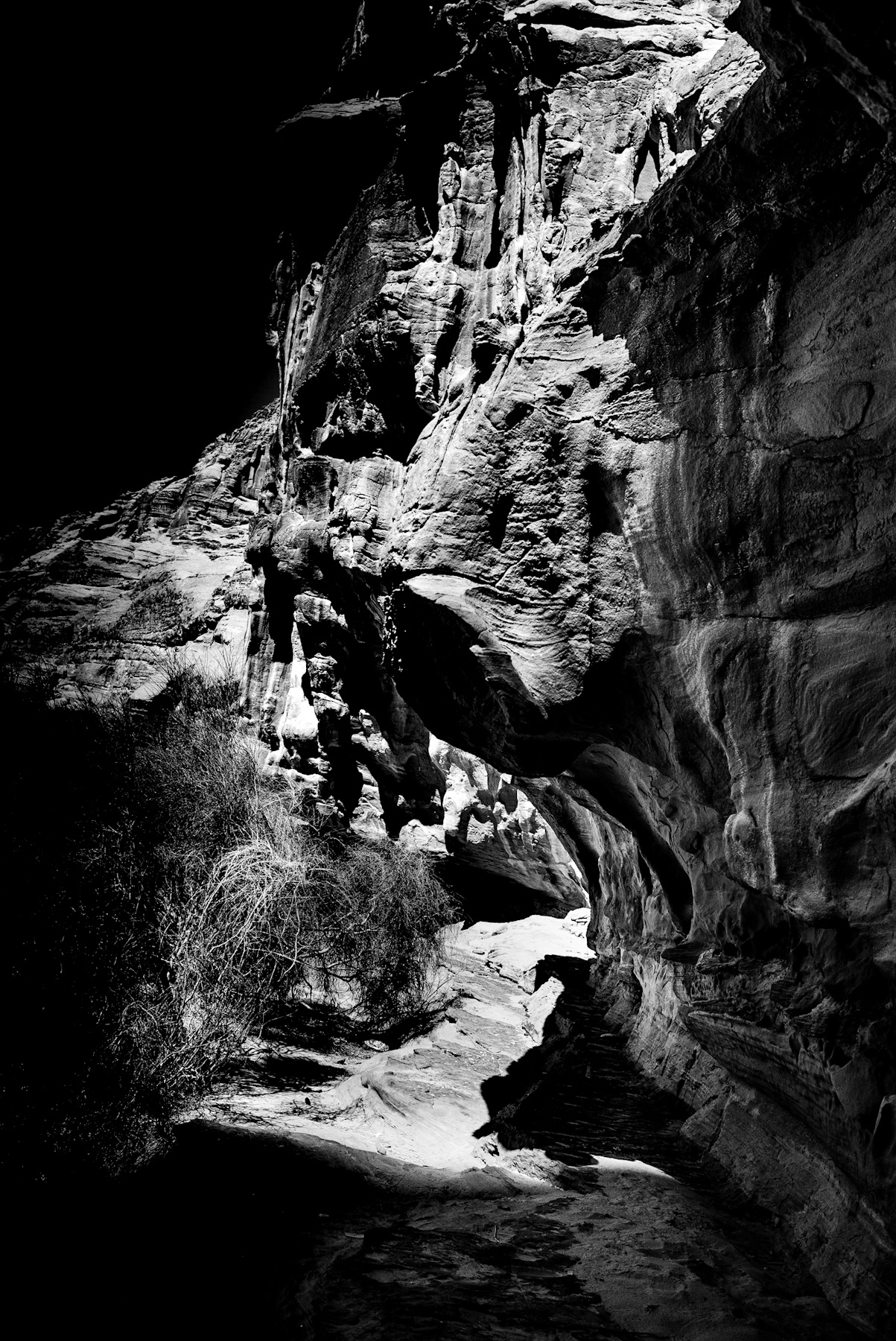
    Dive into the silent story of time etched in stone. This striking black and white image offers a profound study of a monumental rock formation, revealing geological layers and the enduring might of natural forces. Dominated by sculpted sandstone, it captures a landscape shaped over millennia, where intricate textures and organic forms speak volumes about Earth’s ancient artistry.
    A Canvas of Erosion
    Your gaze is immediately captivated by the dramatic contours and deep shadows across the rock face. The lack of color only intensifies the myriad textures – from sleek, weathered expanses to rugged, stratified layers. These horizontal striations are classic features of sedimentary rock, a result of sand and mineral deposits piling up over millions of years. Wind and water, relentless sculptors, have carved this ancient canvas into sinuous lines and undulating curves, giving the stone an almost living, fluid character.
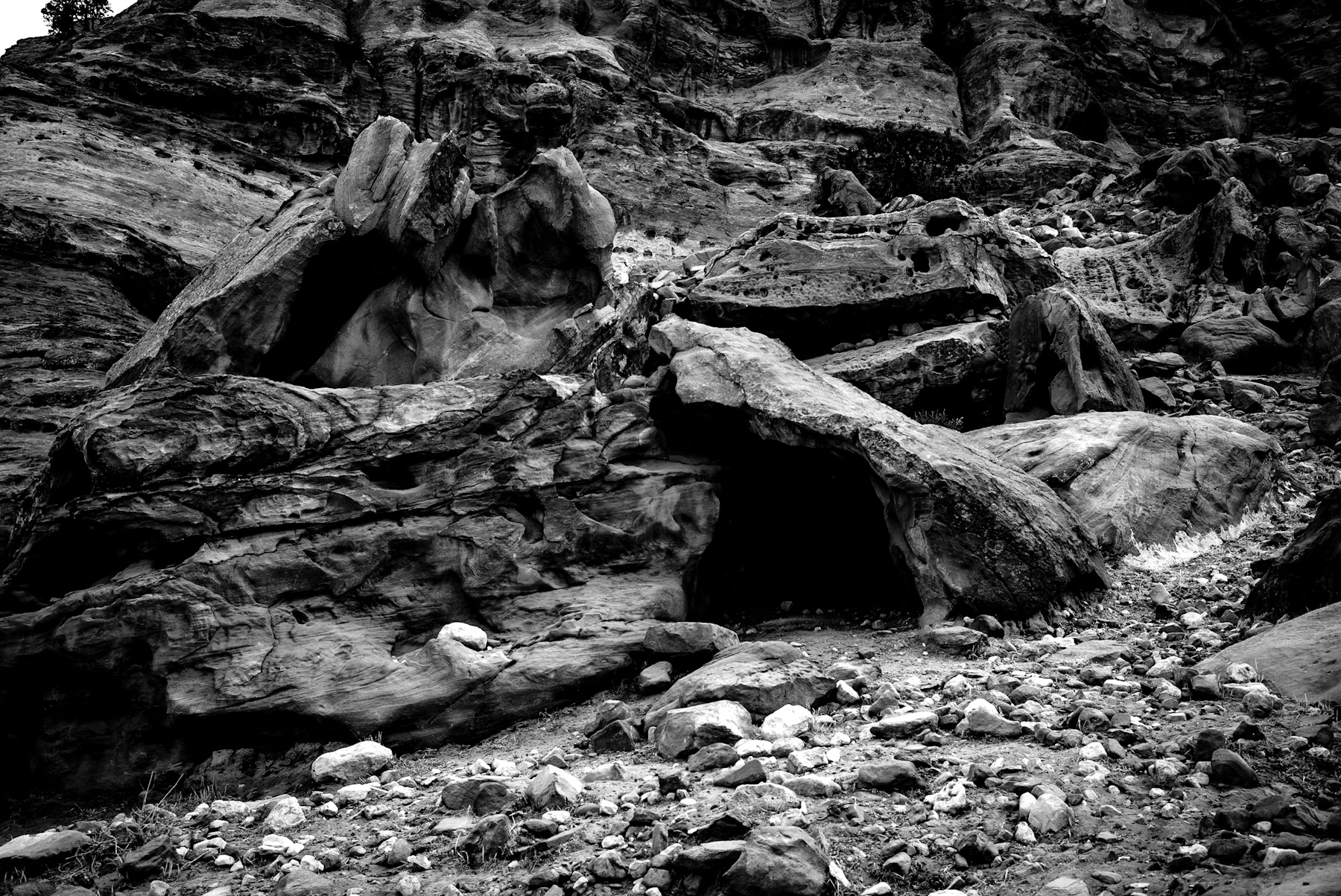
    At its heart, a deep, irregular hollow stands out within a massive, rounded rock face. This alcove, reminiscent of an eye or a cavernous mouth, draws you in, prompting reflection on its natural origins. Around this central void, light and shadow dance, accentuating deep crevices and subtle undulations – clear signs of ongoing erosion. The overall feeling is one of raw, untamed beauty, a powerful tribute to Earth’s slow and deliberate artistry.
    Geological Grandeur and Human Footprints
    Geologically, formations like these thrive in arid or semi-arid zones, where wind and flash floods act as nature’s primary sculptors. Across immense stretches of time, softer layers erode, revealing the more resistant strata that define the dramatic cliffs, canyons, and arches common in desert landscapes. The deep, dark recesses in our image could well be natural shelters or the very genesis of larger cave systems, carved by relentless water.
    Beyond their geological marvel, these monumental rock formations have profoundly shaped human civilization. Since ancient times, natural caves and shelters offered refuge for early humans, protecting them from harsh elements and predators. As societies advanced, these formidable landscapes transcended mere shelter; they evolved into sacred sites, defensive bastions, and magnificent canvases for both artistic and architectural brilliance.
    Think of the ancient Nabataeans, who famously carved the city of Petra directly into Jordan’s rose-red sandstone cliffs. Their elaborate tombs and temples, like Al-Khazneh (The Treasury), stand as rock-cut architectural masterpieces, flawlessly blending human ingenuity with nature’s grandeur. Likewise, across the American Southwest, indigenous cultures such as the Ancestral Puebloans built their impressive cliff dwellings, utilizing the natural alcoves and overhangs of sandstone canyons for their homes and communities.
    Enduring Legacy in Stone
    This photograph is far more than just a picture of rock. It’s a powerful visual metaphor for the deep, unbreakable bond between humanity and the natural world. It serves as a potent reminder: while geological processes unfold on scales we can barely grasp, these very landscapes have profoundly influenced human history. They’ve inspired awe, provided sustenance, and served as the silent backdrop for countless stories. The timeless beauty captured here speaks volumes about Earth’s ancient past and the enduring human spirit that has consistently sought to understand, inhabit, and even transform these magnificent natural sculptures.
  • Echoes in Stone: The Enduring Majesty of Petra’s Treasury

    Echoes in Stone: The Enduring Majesty of Petra’s Treasury

    The photograph captures a profound moment of architectural revelation, presenting a dramatic, high-contrast monochrome view of one of the ancient world’s most iconic structures: Al-Khazneh, commonly known as The Treasury, in Petra, Jordan. Framed by the deep, dark shadows of towering rock formations, the image isolates a vertical sliver of light, within which the intricate façade of The Treasury emerges with striking clarity. The stark black and white rendering emphasizes the monumental scale and the delicate details carved into the rose-red sandstone, highlighting the interplay of light and shadow that defines this archaeological wonder.
    The Visual Narrative of Revelation
    The composition masterfully replicates the experience of approaching The Treasury through the Siq, Petra’s main entrance. This narrow, winding gorge, carved by millennia of water and wind, builds anticipation as its towering walls obscure the outside world. The photograph encapsulates this journey, with the dark, almost silhouetted rock faces on either side creating a natural frame, drawing the eye directly to the illuminated masterpiece within. The upper sections of the facade, including the tholos and the urn, are visible, crowned by a sliver of the sky, suggesting the eventual opening of the canyon. The lower columns and the entrance are also distinctly rendered, showcasing the Hellenistic architectural influences adapted by its Nabataean creators. This visual compression transforms the act of seeing into an act of discovery, mirroring the historical and personal encounter with Petra.
    Al-Khazneh: A Testament to Nabataean Ingenuity
    Historically, Al-Khazneh is not a treasury in the conventional sense, despite its popular moniker, which stems from local Bedouin legends believing it housed pharaoh’s gold. Archaeological evidence suggests it was more likely a tomb for a Nabataean King, possibly Aretas IV, who reigned in the 1st century AD, or a temple. The Nabataeans, an ancient Arab people, were skilled traders who controlled crucial incense and spice routes connecting the East with the West. Their wealth allowed them to construct Petra, their capital, into a thriving metropolis carved directly into the sandstone cliffs.
    The architectural style of Al-Khazneh is a remarkable fusion of classical Hellenistic elements—such as the Corinthian columns, pediments, and friezes—with distinct Nabataean artistic sensibilities. This blend reflects the cosmopolitan nature of the Nabataean kingdom, which absorbed influences from the vast empires it interacted with, including the Greek and Roman worlds. The precision of the carving, executed without the aid of modern tools, speaks volumes about the Nabataeans‘ advanced engineering and artistic capabilities.
    Petra’s Enduring Legacy
    Petra itself is a UNESCO World Heritage site, celebrated for its unique rock-cut architecture, sophisticated water management systems, and its profound historical significance. The city flourished for centuries, a testament to a desert civilization that mastered its environment. Its decline began with shifts in trade routes and natural disasters, eventually leading to its abandonment and subsequent rediscovery by Swiss explorer Johann Ludwig Burckhardt in 1812.
    The image of Al-Khazneh from the Siq remains one of the most powerful symbols of Petra, embodying the ancient city’s hidden grandeur and its capacity to inspire awe. It represents not just a magnificent piece of architecture, but a window into the ingenuity, artistry, and complex history of the Nabataean people, whose legacy continues to captivate visitors and scholars alike. The photograph serves as a poignant reminder of human achievement against the backdrop of natural majesty, preserving a moment of historical revelation for contemporary contemplation.