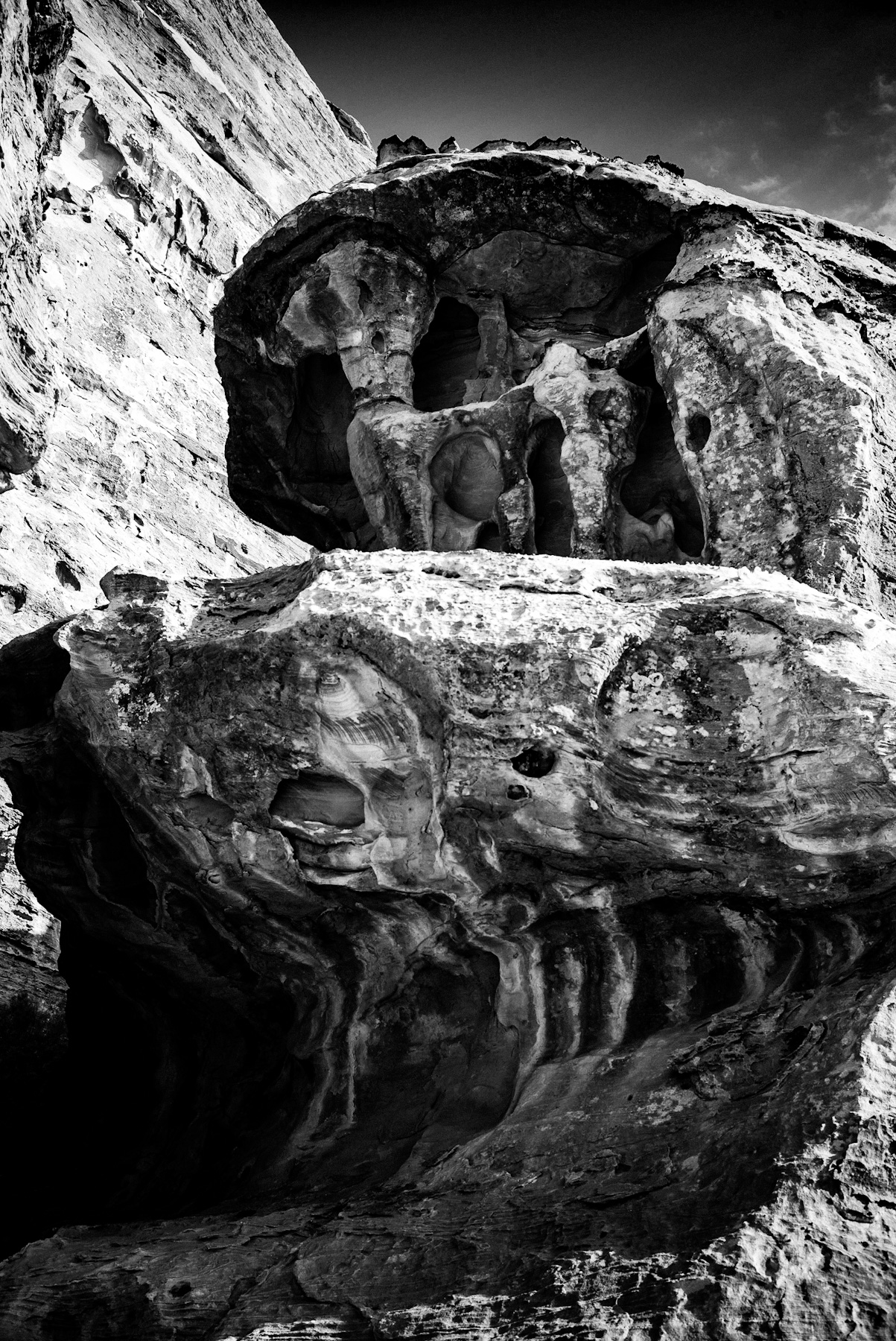
The natural world offers few sights as visually striking as the weathered sandstone formations of the American Southwest. The high-contrast, black-and-white photograph captures a monumental rock structure defined by deep alcoves, hollowed-out chambers, and intricate textures. This dramatic display of light and shadow highlights the rugged, layered surface of sedimentary rock, serving as a visual testament to millions of years of environmental transformation.
To fully appreciate this image, one must understand both the immense geological forces that shaped these structures and the historical human cultures that once sought refuge within them.
The Geological Genesis of Sandstone Formations
The dramatic rock formations featured in the photograph are characteristic of the Colorado Plateau, a region spanning parts of Utah, Arizona, Colorado, and New Mexico. The geological history of these structures began over 150 million years ago during the Mesozoic Era, when vast deserts of shifting sand dunes covered the landscape. Over epochs, these dunes were buried, compressed, and cemented into thick layers of sandstone, such as the famous Navajo and Entrada formations.
The unique cavities and hollows visible in the image are the result of weathering and erosion. Water plays a crucial role in this process; acid rain slowly dissolves the calcium carbonate binding the sand grains together. Additionally, wind erosion and the expansion of freezing water in rock crevices gradually carve out deep alcoves. The smaller, pocket-like holes on the rock surface are known as tafoni, a form of honeycomb weathering caused by salt crystallization and wind action on weaker sections of the stone.
The Historical Significance of Natural Rock Shelters
Beyond their geological appeal, these natural sandstone alcoves hold profound historical and archaeological significance. For thousands of years, various indigenous cultures utilized these geological features for survival in the arid desert environment.
Between 300 and 1300 AD, cultures such as the Fremont people and the Ancestral Puebloans inhabited the canyons of the Southwest. The deep, overhanging alcoves—similar to the ones depicted in the photograph—offered ideal sites for habitation and storage. These natural shelters provided crucial protection from the elements, shielding inhabitants from the intense summer sun and the freezing winter winds.
Within these protective hollows, ancient peoples constructed sophisticated stone dwellings and granaries to store maize, beans, and squash. The dry microclimate inside the alcoves preserved these structures, along with perishable artifacts like baskets, sandals, and organic tools, providing modern archaeologists with invaluable insights into prehistoric life.
The Power of Monochrome in Landscape Photography
The decision to capture this geological wonder in black and white emphasizes form, texture, and contrast over color. Without the distracting vibrant reds and oranges typical of desert sandstone, the viewer’s focus is directed entirely to the physical geometry of the rock. The deep shadows inside the chambers contrast sharply with the sun-drenched exterior surfaces, emphasizing the depth of the alcoves and the ancient passage of time carved into the stone.
To fully appreciate this image, one must understand both the immense geological forces that shaped these structures and the historical human cultures that once sought refuge within them.
The Geological Genesis of Sandstone Formations
The dramatic rock formations featured in the photograph are characteristic of the Colorado Plateau, a region spanning parts of Utah, Arizona, Colorado, and New Mexico. The geological history of these structures began over 150 million years ago during the Mesozoic Era, when vast deserts of shifting sand dunes covered the landscape. Over epochs, these dunes were buried, compressed, and cemented into thick layers of sandstone, such as the famous Navajo and Entrada formations.
The unique cavities and hollows visible in the image are the result of weathering and erosion. Water plays a crucial role in this process; acid rain slowly dissolves the calcium carbonate binding the sand grains together. Additionally, wind erosion and the expansion of freezing water in rock crevices gradually carve out deep alcoves. The smaller, pocket-like holes on the rock surface are known as tafoni, a form of honeycomb weathering caused by salt crystallization and wind action on weaker sections of the stone.
The Historical Significance of Natural Rock Shelters
Beyond their geological appeal, these natural sandstone alcoves hold profound historical and archaeological significance. For thousands of years, various indigenous cultures utilized these geological features for survival in the arid desert environment.
Between 300 and 1300 AD, cultures such as the Fremont people and the Ancestral Puebloans inhabited the canyons of the Southwest. The deep, overhanging alcoves—similar to the ones depicted in the photograph—offered ideal sites for habitation and storage. These natural shelters provided crucial protection from the elements, shielding inhabitants from the intense summer sun and the freezing winter winds.
Within these protective hollows, ancient peoples constructed sophisticated stone dwellings and granaries to store maize, beans, and squash. The dry microclimate inside the alcoves preserved these structures, along with perishable artifacts like baskets, sandals, and organic tools, providing modern archaeologists with invaluable insights into prehistoric life.
The Power of Monochrome in Landscape Photography
The decision to capture this geological wonder in black and white emphasizes form, texture, and contrast over color. Without the distracting vibrant reds and oranges typical of desert sandstone, the viewer’s focus is directed entirely to the physical geometry of the rock. The deep shadows inside the chambers contrast sharply with the sun-drenched exterior surfaces, emphasizing the depth of the alcoves and the ancient passage of time carved into the stone.
Schreibe einen Kommentar