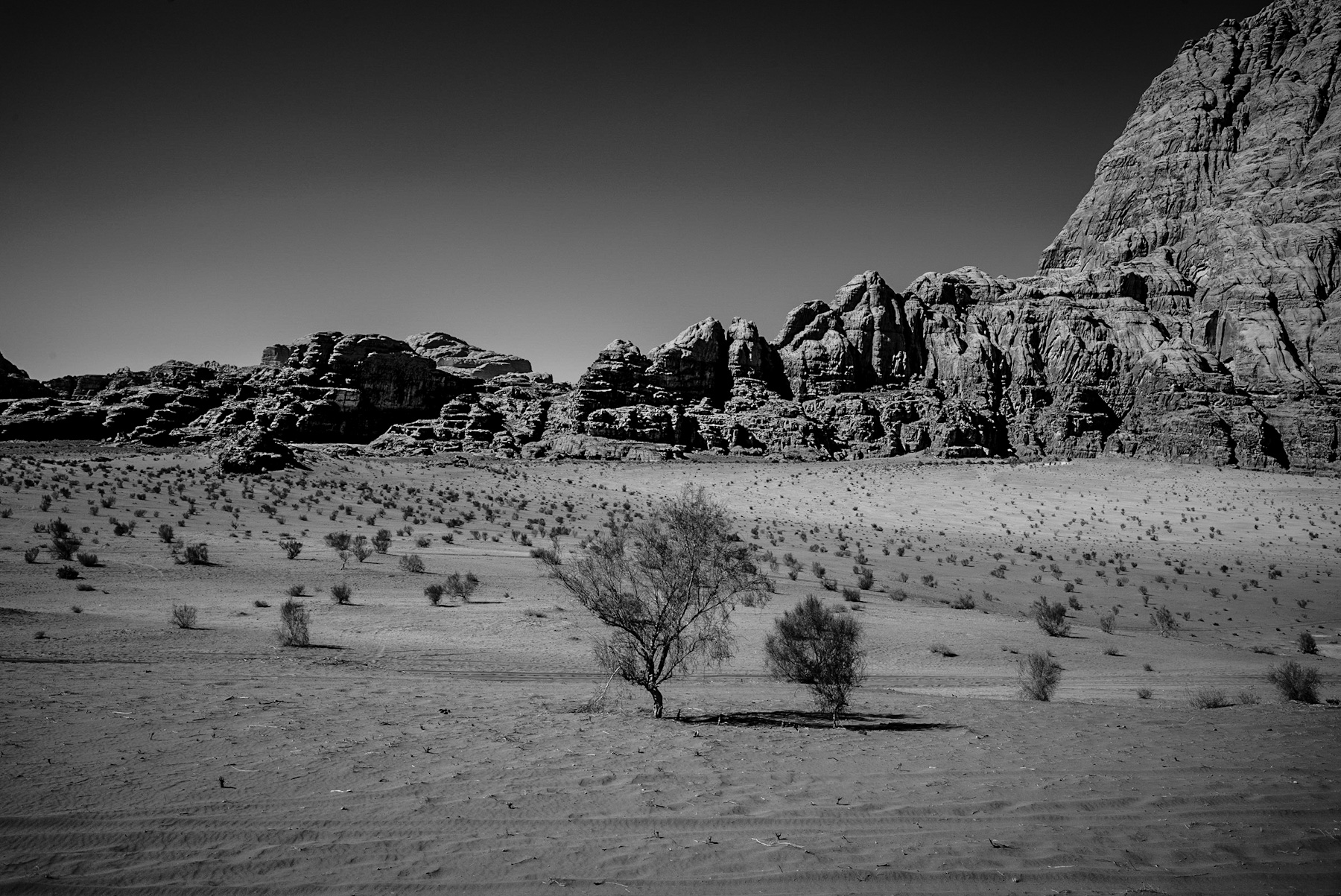
The featured black-and-white photograph captures the stark, elemental beauty of a desert landscape dominated by massive, weathered rock formations. In the foreground, a sandy plain is dotted with sparse, resilient vegetation, including small desert shrubs and two solitary trees that cast long, distinct shadows under a clear sky. In the background, monumental sandstone cliffs rise abruptly from the desert floor, their heavily eroded surfaces revealing centuries of geological activity. This distinct landscape is highly characteristic of Wadi Rum, a famous valley cut into the sandstone and granite rock of southern Jordan.
Geological Formation and Visual Analysis
Wadi Rum, also known as the Valley of the Moon, is renowned for its dramatic topography. The photograph highlights the contrast between the soft desert sand and the rigid, towering cliffs. Over millions of years, wind and water erosion have shaped these sandstone mountains, creating deep canyons, natural arches, and towering domes. The monochrome format of the image emphasizes the intricate textures of the rock faces and the harsh, arid environment where only the most adaptable plant life can survive.
Ancient Inhabitants and Cultural Heritage
Beyond its natural beauty, Wadi Rum holds immense historical significance. Human occupation in this region dates back thousands of years to the prehistoric era. The area is rich in petroglyphs, inscriptions, and archaeological remains that document over 12,000 years of human habitation.
– Nabataeans: During the Nabataean period (around the 4th century BC to the 1st century AD), Wadi Rum served as an important trade route. The Nabataeans left behind temple ruins and inscriptions carved into the rock walls, indicating their control over the region’s vital water sources. – Thamudic Inscriptions: Thousands of rock carvings in various ancient scripts, including Thamudic, can still be found throughout the valley, detailing ancient hunting trips, camel caravans, and tribal identities.
T.E. Lawrence and the Arab Revolt
In modern history, Wadi Rum is closely associated with Thomas Edward Lawrence, famously known as Lawrence of Arabia. During the Arab Revolt of 1916–1918, Arab forces allied with the British against the Ottoman Empire. Lawrence used Wadi Rum as a strategic base of operations. The dramatic landscape served as the backdrop for key military maneuvers. Lawrence’s autobiographical account, „Seven Pillars of Wisdom“, took its name from a prominent rock formation located within the valley, forever linking his legacy to this desert terrain.
Modern Preservation and Bedouin Culture
Today, Wadi Rum is a designated UNESCO World Heritage site, recognized for both its unique natural features and its rich cultural heritage. The region is inhabited by the Bedouin people, who have lived in the desert for generations. Historically nomadic pastoralists, many Bedouin now work in eco-tourism, guiding visitors through the protected area while preserving their traditional knowledge of the desert environment.
This photograph serves as a visual testament to the enduring, timeless nature of Wadi Rum—a place where geology, ancient history, and human resilience intersect.
Geological Formation and Visual Analysis
Wadi Rum, also known as the Valley of the Moon, is renowned for its dramatic topography. The photograph highlights the contrast between the soft desert sand and the rigid, towering cliffs. Over millions of years, wind and water erosion have shaped these sandstone mountains, creating deep canyons, natural arches, and towering domes. The monochrome format of the image emphasizes the intricate textures of the rock faces and the harsh, arid environment where only the most adaptable plant life can survive.
Ancient Inhabitants and Cultural Heritage
Beyond its natural beauty, Wadi Rum holds immense historical significance. Human occupation in this region dates back thousands of years to the prehistoric era. The area is rich in petroglyphs, inscriptions, and archaeological remains that document over 12,000 years of human habitation.
– Nabataeans: During the Nabataean period (around the 4th century BC to the 1st century AD), Wadi Rum served as an important trade route. The Nabataeans left behind temple ruins and inscriptions carved into the rock walls, indicating their control over the region’s vital water sources. – Thamudic Inscriptions: Thousands of rock carvings in various ancient scripts, including Thamudic, can still be found throughout the valley, detailing ancient hunting trips, camel caravans, and tribal identities.
T.E. Lawrence and the Arab Revolt
In modern history, Wadi Rum is closely associated with Thomas Edward Lawrence, famously known as Lawrence of Arabia. During the Arab Revolt of 1916–1918, Arab forces allied with the British against the Ottoman Empire. Lawrence used Wadi Rum as a strategic base of operations. The dramatic landscape served as the backdrop for key military maneuvers. Lawrence’s autobiographical account, „Seven Pillars of Wisdom“, took its name from a prominent rock formation located within the valley, forever linking his legacy to this desert terrain.
Modern Preservation and Bedouin Culture
Today, Wadi Rum is a designated UNESCO World Heritage site, recognized for both its unique natural features and its rich cultural heritage. The region is inhabited by the Bedouin people, who have lived in the desert for generations. Historically nomadic pastoralists, many Bedouin now work in eco-tourism, guiding visitors through the protected area while preserving their traditional knowledge of the desert environment.
This photograph serves as a visual testament to the enduring, timeless nature of Wadi Rum—a place where geology, ancient history, and human resilience intersect.
Schreibe einen Kommentar