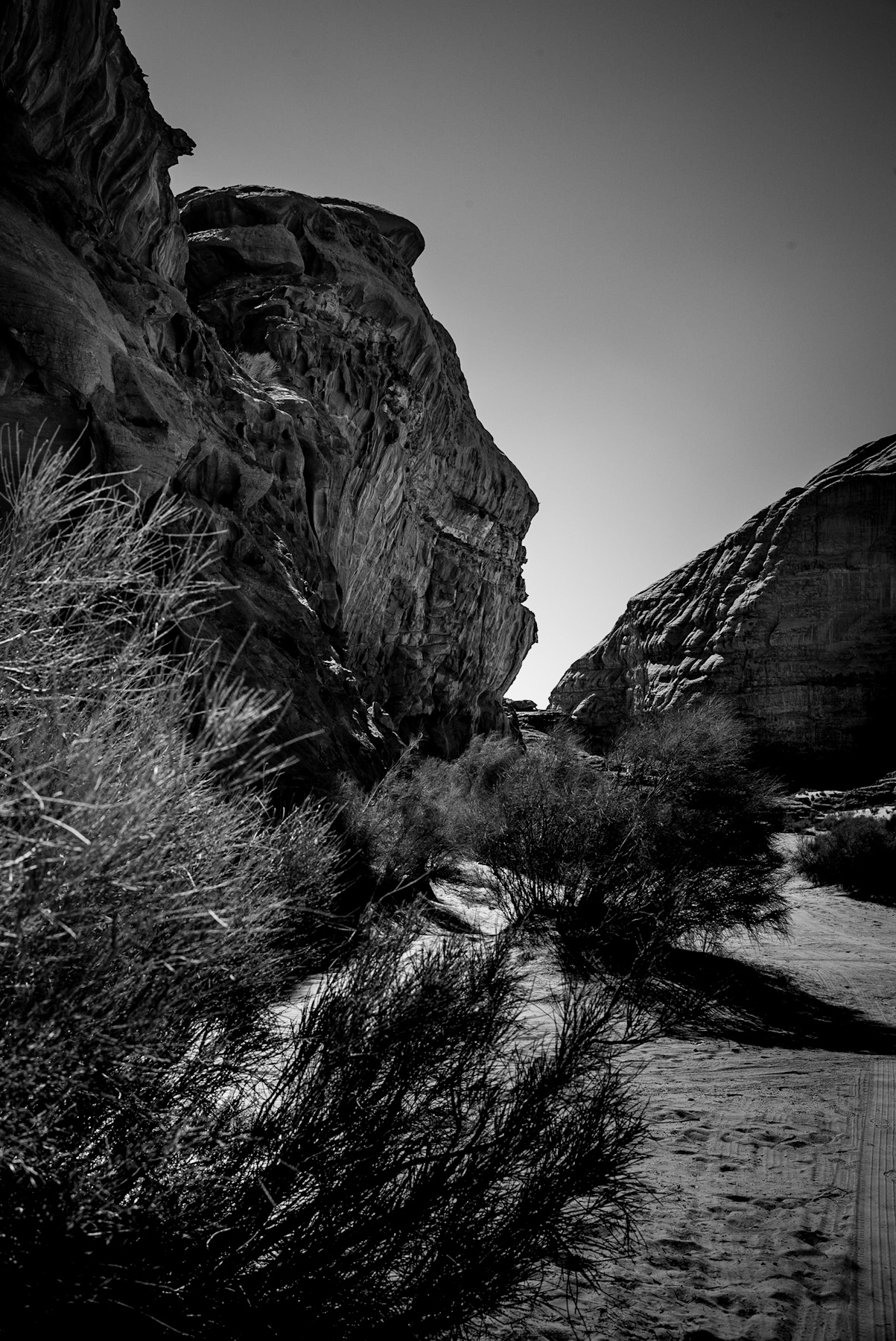
The stark contrast of black-and-white photography captures a dramatic desert canyon landscape, characterized by towering sandstone formations and sparse, resilient vegetation. The high-contrast image emphasizes the raw, textured surfaces of the rock faces, which rise sharply against a clear sky. In the foreground, hardy desert shrubs anchor the sandy ground, framing a path that winds deeper into the gorge. This visual narrative is not merely a study in geological grandeur; it is a gateway to understanding the rich historical tapestry of ancient desert landscapes, particularly those found in the Arabian Peninsula and the Levant.
Geological Characteristics of Sandstone Canyons
The geological features depicted in the image are characteristic of arid canyon systems formed over millions of years through wind and water erosion. Sandstone, a sedimentary rock, is highly susceptible to weathering, resulting in the intricate patterns, crevices, and layered strata visible on the cliff faces.
These natural corridors, often referred to as „wadis“ or canyons, have historically served as crucial pathways through otherwise impassable terrain. Despite the harsh environment, the presence of desert scrub demonstrates the adaptability of flora in arid ecosystems, where deep root systems tap into scarce underground water sources.
Historical Context: The Lifelines of Ancient Trade
From a historical perspective, canyons like the one pictured were the lifelines of ancient civilizations. Regions such as Wadi Rum in Jordan and the AlUla valley in Saudi Arabia served as vital hubs for the Nabataean Kingdom and various nomadic tribes. Between the 4th century BCE and the 1st century CE, these natural corridors facilitated the Incense Route—a network of major ancient land and sea trading paths linking the Mediterranean world with eastern and southern sources of incense, spices, and luxury goods.
Caravans consisting of hundreds of camels navigated these exact types of sandstone passages. The high canyon walls provided essential benefits:
* **Shelter:** The towering cliffs offered crucial shade from the scorching desert sun. * **Protection:** The narrow passages provided natural defense against desert winds and potential raiders. * **Water Access:** The geology of these canyons often concealed hidden water sources, such as natural springs and cisterns carved into the rock by ancient engineers, making them strategic stopping points.
Cultural Legacy and Modern Preservation
Today, many of these historical desert canyons are recognized globally for their cultural and natural significance. Sites like Wadi Rum are designated UNESCO World Heritage sites, celebrated not only for their geological aesthetic but also for the thousands of petroglyphs and inscriptions carved into the rock faces by ancient travelers.
The black-and-white medium of the photograph strips away the modern world, offering a timeless perspective that connects the contemporary viewer to the ancient merchants, nomads, and explorers who once walked these sandy paths.
In conclusion, the image serves as a powerful visual representation of the intersection between nature and human history. The towering sandstone cliffs and the quiet desert path invite reflection on the enduring legacy of these rugged landscapes, which shaped the trade, culture, and survival of ancient civilizations.
Geological Characteristics of Sandstone Canyons
The geological features depicted in the image are characteristic of arid canyon systems formed over millions of years through wind and water erosion. Sandstone, a sedimentary rock, is highly susceptible to weathering, resulting in the intricate patterns, crevices, and layered strata visible on the cliff faces.
These natural corridors, often referred to as „wadis“ or canyons, have historically served as crucial pathways through otherwise impassable terrain. Despite the harsh environment, the presence of desert scrub demonstrates the adaptability of flora in arid ecosystems, where deep root systems tap into scarce underground water sources.
Historical Context: The Lifelines of Ancient Trade
From a historical perspective, canyons like the one pictured were the lifelines of ancient civilizations. Regions such as Wadi Rum in Jordan and the AlUla valley in Saudi Arabia served as vital hubs for the Nabataean Kingdom and various nomadic tribes. Between the 4th century BCE and the 1st century CE, these natural corridors facilitated the Incense Route—a network of major ancient land and sea trading paths linking the Mediterranean world with eastern and southern sources of incense, spices, and luxury goods.
Caravans consisting of hundreds of camels navigated these exact types of sandstone passages. The high canyon walls provided essential benefits:
* **Shelter:** The towering cliffs offered crucial shade from the scorching desert sun. * **Protection:** The narrow passages provided natural defense against desert winds and potential raiders. * **Water Access:** The geology of these canyons often concealed hidden water sources, such as natural springs and cisterns carved into the rock by ancient engineers, making them strategic stopping points.
Cultural Legacy and Modern Preservation
Today, many of these historical desert canyons are recognized globally for their cultural and natural significance. Sites like Wadi Rum are designated UNESCO World Heritage sites, celebrated not only for their geological aesthetic but also for the thousands of petroglyphs and inscriptions carved into the rock faces by ancient travelers.
The black-and-white medium of the photograph strips away the modern world, offering a timeless perspective that connects the contemporary viewer to the ancient merchants, nomads, and explorers who once walked these sandy paths.
In conclusion, the image serves as a powerful visual representation of the intersection between nature and human history. The towering sandstone cliffs and the quiet desert path invite reflection on the enduring legacy of these rugged landscapes, which shaped the trade, culture, and survival of ancient civilizations.
Schreibe einen Kommentar