Kategorie: Travel

  • The Enduring Nexus: Industry, Infrastructure, and Global Currents

    The Enduring Nexus: Industry, Infrastructure, and Global Currents

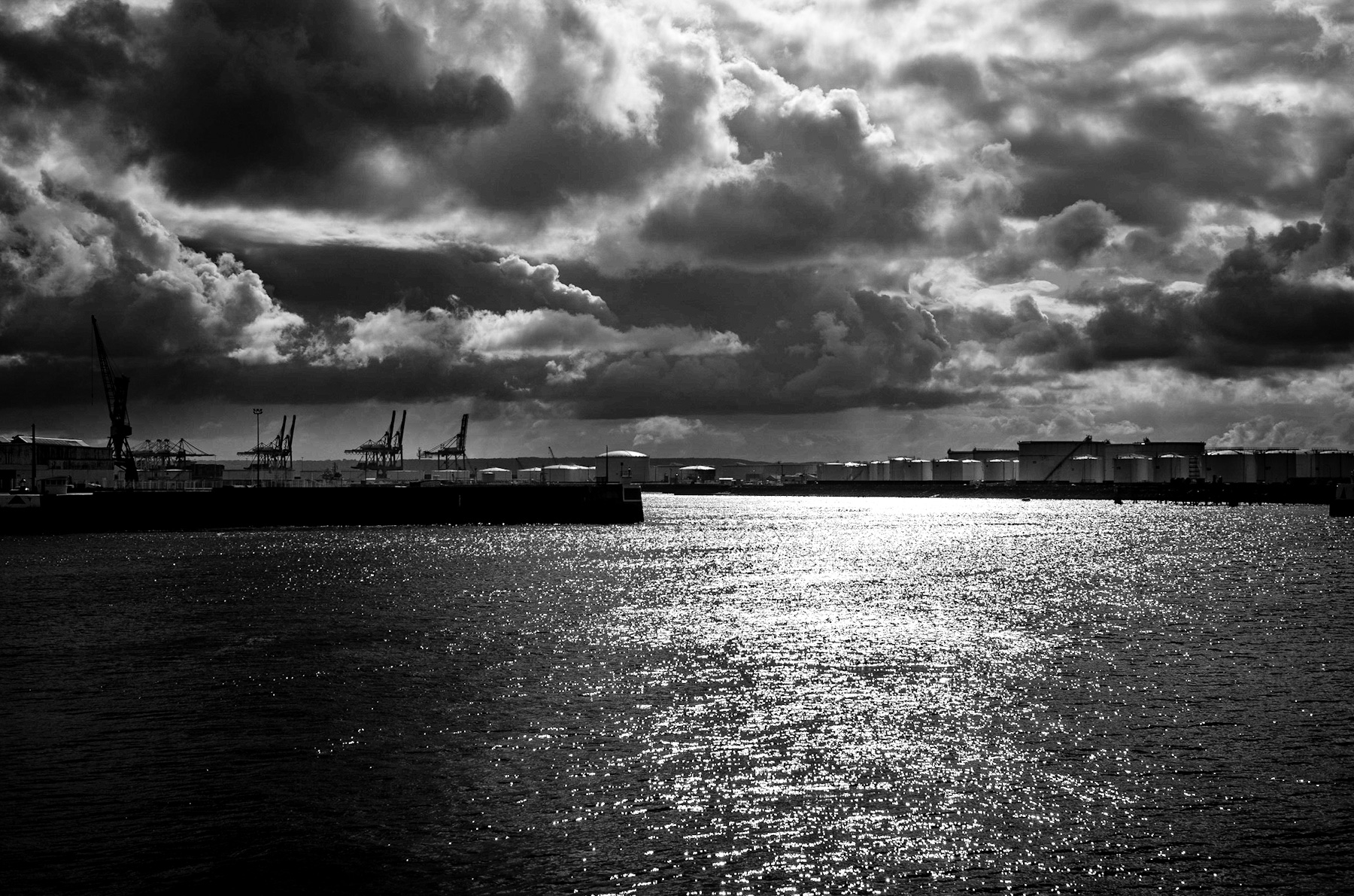
    The presented image captures a compelling black and white vista of an industrial waterfront, a scene where human engineering meets the elemental forces of nature. The composition, characterized by stark contrasts and deep shadows under a dramatic sky, highlights the functional architecture of global commerce and energy infrastructure.
    A Landscape of Logistics and Power
    In the foreground, the water shimmers with reflected light, creating a textured surface that draws the eye across the expanse. Beyond this, the dark silhouette of the landmass reveals a complex array of industrial elements. To the left, a series of towering container cranes stand as sentinels of global trade. These colossal machines, integral to modern port operations, symbolize the efficiency and scale of contemporary shipping industry and maritime logistics. Their presence underscores the continuous movement of goods that underpins the global supply chain, connecting producers and consumers across continents.
    Further along the horizon, to the right, an extensive line of large cylindrical storage tanks dominates the landscape. These structures are typically associated with the energy sector, housing vast quantities of crude oil, refined petroleum products, or various chemicals. Their sheer number and uniform appearance speak to the immense capacity required to manage the world’s energy demands and industrial processes. This segment of the image directly represents the critical role of industrial infrastructure in sustaining modern economies.
    Historical Echoes in Modern Industry
    The historical context of such port infrastructure is deeply rooted in the evolution of trade and industry. From ancient trading posts to the bustling harbors of the Industrial Revolution, ports have consistently served as vital gateways for the exchange of goods and resources. The advent of steam power in the 18th and 19th centuries, followed by the internal combustion engine, revolutionized transport and trade, significantly increasing the volume and speed of maritime commerce.
    The cranes in the image are direct descendants of earlier, less sophisticated lifting mechanisms, evolving to handle the standardized shipping containers that transformed global freight in the mid-20th century. This innovation drastically reduced loading and unloading times, making international trade more efficient and affordable. Similarly, the storage tanks represent a legacy stretching back to the early days of the oil industry in the late 19th century, when the need for bulk storage of petroleum became paramount. These facilities have continuously adapted to meet the escalating requirements of a fossil-fuel-dependent world, playing a pivotal role in economic development and geopolitical dynamics.
    The Monochrome Perspective
    The choice of black and white photography for this scene lends a timeless quality, stripping away the distractions of color to emphasize form, texture, and light. This aesthetic choice highlights the raw, unadorned power of these industrial elements and their stark contrast against the natural environment. The dramatic, cloudy sky further enhances this effect, creating a sense of scale and perhaps a subtle commentary on the powerful, sometimes overwhelming, impact of human industry on the landscape. It encourages contemplation of the enduring nature of these industrial hubs, linking their present function to their long and impactful maritime history.
    This image serves as a visual narrative of the intricate relationship between human innovation, resource management, and the relentless pulse of global commerce, reflecting centuries of industrial landscape development.
  • Timeless Tides: A Black and White Journey Through Coastal History

    Timeless Tides: A Black and White Journey Through Coastal History

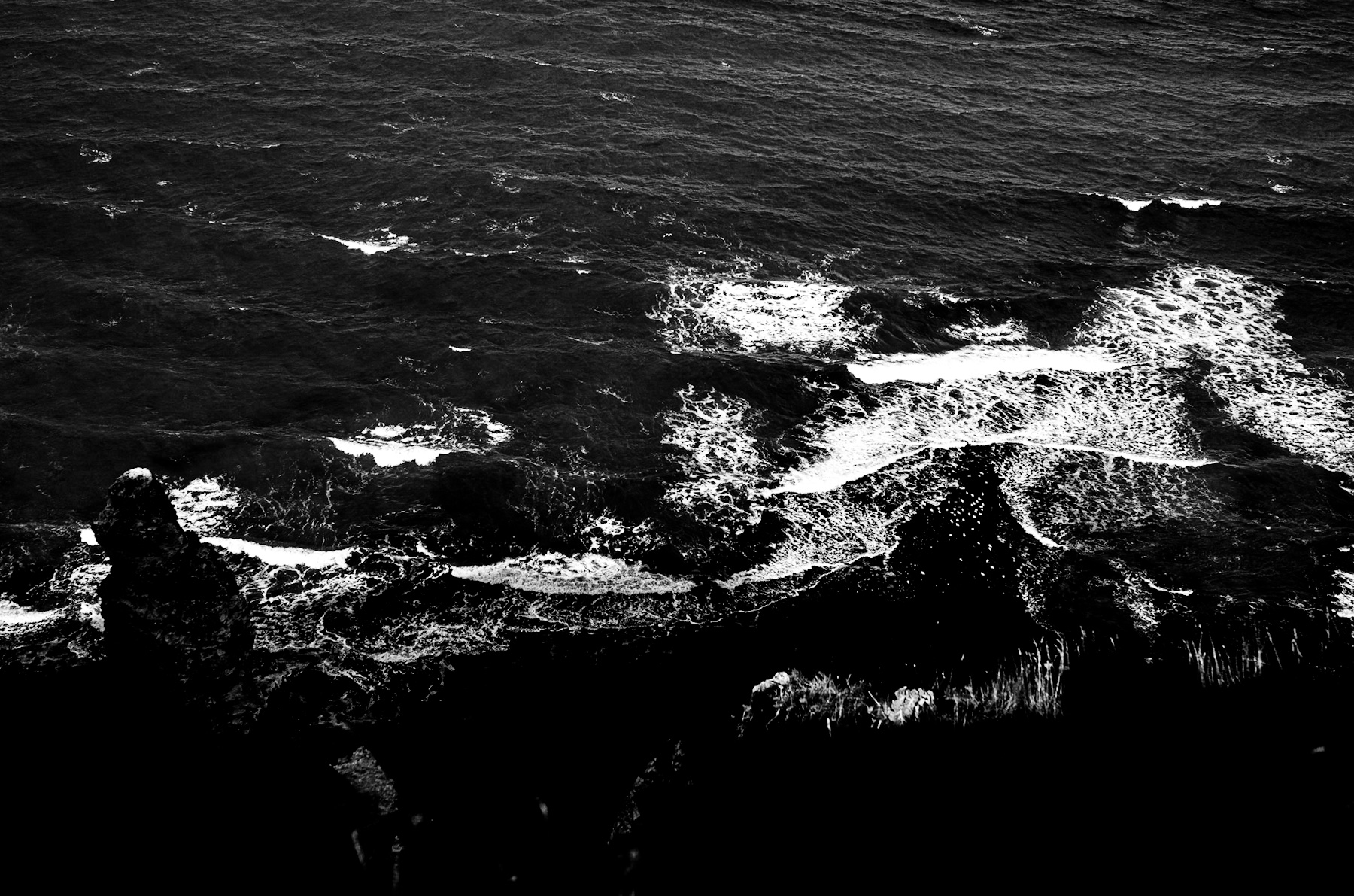
    The stark contrast of a black and white photograph immediately draws the viewer into a world of raw power and timeless drama. This particular image captures a turbulent ocean meeting a rugged, dark coastline from an elevated perspective, presenting a scene that feels both immediate and ancient.
    THE RAW POWER OF THE MONOCHROME SEASCAPE
    In the upper two-thirds of the frame, the ocean dominates. Its dark, undulating surface is a canvas of restless energy, with countless ripples and currents hinting at deeper movements. White, frothing waves crash against the unseen depths, creating dynamic patterns of light against the deep grey and black water. These foamy crests are not merely decorative; they are visual evidence of immense natural force, carving out transient, luminous pathways across the dark expanse.
    Below, the coastline emerges from the shadows, a formidable barrier against the relentless sea. A prominent, jagged rock formation anchors the left side, its craggy texture absorbing much of the light, rendering it almost sculptural. The water here churns violently, white foam enveloping the base of the rocks, illustrating the constant erosion and shaping power of the waves. Towards the lower right, subtle hints of vegetation, perhaps hardy coastal grasses, cling to the dark landmass, a testament to life’s resilience in harsh environments. The high contrast, characteristic of black and white photography, accentuates every detail, from the textured water to the rugged rock, stripping away color to reveal the fundamental forms and movements.
    ECHOES OF MARITIME HERITAGE
    This visual narrative transcends mere scenery, touching upon humanity’s enduring relationship with the sea. For millennia, coastlines like the one depicted have been frontiers of human endeavor, sites of both awe and peril. Imagine ancient mariners, their wooden vessels navigating such unpredictable waters, relying on sheer courage and nascent navigational skills. These shores have witnessed countless departures and arrivals, journeys of exploration, trade, migration, and conflict.
    From the Phoenicians charting new trade routes to the Vikings raiding distant lands, and later, the great Age of Discovery with ships sailing into the unknown, the ocean has been both a highway and a formidable barrier. Coastal communities have historically thrived on its bounty while simultaneously grappling with its destructive potential – storms, shipwrecks, and the constant threat of erosion. The very rocks in this image could have been silent witnesses to forgotten tragedies or triumphant returns, embodying centuries of maritime heritage and human resilience against the elements.
    THE ENDURING ALLURE OF BLACK AND WHITE
    The choice of black and white for this image is not merely an aesthetic one; it’s a deliberate artistic decision that amplifies its historical weight and emotional resonance. By removing the distraction of color, the photograph forces the viewer to focus on texture, form, light, and shadow. This monochromatic palette evokes a sense of timelessness, connecting the contemporary viewer to historical perspectives, much like an old archival photograph or a classical painting. It strips away the ephemeral, revealing the elemental and eternal nature of the ocean and its relentless interaction with the land.
    A VISUAL TESTAMENT TO TIME
    Ultimately, this black and white seascape serves as a powerful reminder of nature’s immutable forces and humanity’s long, complex history with the world’s oceans. It is a visual testament to the constant interplay between power and resilience, a dramatic tableau where every wave breaking on the shore carries echoes of the past into the present.
    Keywords: black and white ocean photography, coastal landscapes, maritime history, seascape art, power of nature, historical perspective, monochrome photography, turbulent sea, rugged coastline, timeless ocean.
  • Monochrome Majesty: Echoes of History on a Wild Coastline

    Monochrome Majesty: Echoes of History on a Wild Coastline

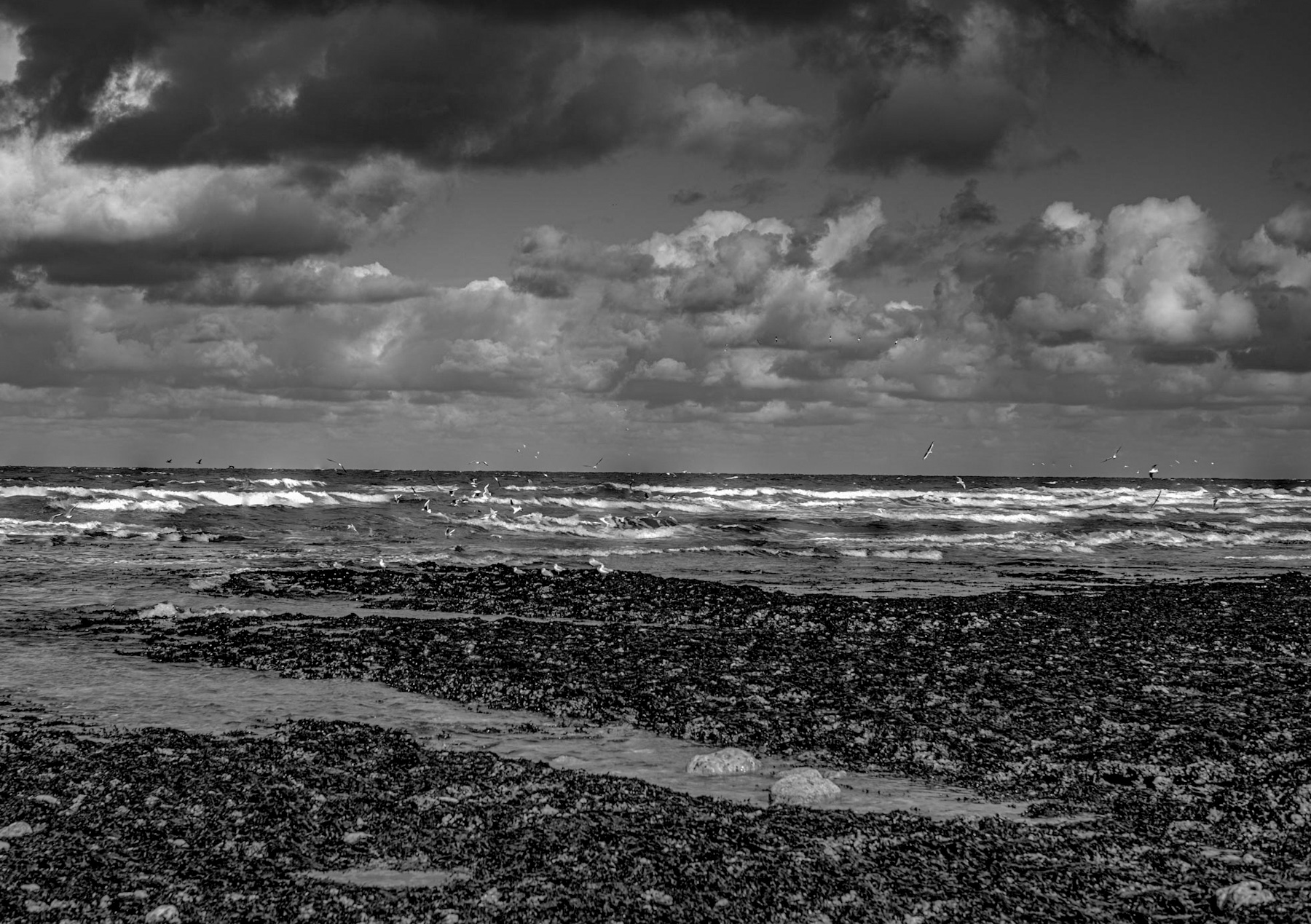
    The scene unfolds in a striking monochrome, immediately drawing the viewer into a world of raw power and timeless natural beauty. Dominated by a dramatic sky, the photograph captures a rugged coastal landscape under a canopy of heavy, brooding clouds. The absence of color strips away distractions, emphasizing textures, contrasts, and the sheer force of the elements.
    In the foreground, the dark, exposed seabed or foreshore is densely covered with what appears to be seaweed and small rocks, creating a rich, textured tapestry. A small pool of water reflects the muted light, and two larger, lighter-toned stones stand out, anchoring the composition. This detail suggests an intertidal zone, a dynamic boundary where land and sea perpetually interact, revealing the hidden life and geological foundations beneath the waves. The uneven, organic patterns of the foreground speak to the constant ebb and flow, a testament to countless cycles of tides and storms.
    Beyond this intricate foreground, the ocean stretches out, alive with motion. Vigorous waves, capped with streaks of white foam, crash and roll towards the shore, conveying the restless energy of the sea. The turbulent surface is punctuated by numerous seagulls, some soaring gracefully against the dark sky, others dipping low over the water, perhaps seeking sustenance in the churned-up waters. Their presence adds a vital element of life and movement, highlighting the ecosystem that thrives even in such wild conditions. The horizon line, though distant, is clearly defined, separating the tumultuous waters from the equally dramatic sky.
    Historically, coastlines like the one depicted have been central to human civilization. For millennia, these rugged shores have served as both a barrier and a gateway. They were the frontiers for ancient mariners, who navigated these challenging waters with rudimentary tools, embarking on voyages of trade, exploration, and migration. Coastal communities have historically adapted to the sea’s unpredictable moods, relying on its bounty for fishing and trade, while simultaneously building defenses against its destructive power. The constant erosion and deposition witnessed on such shores are a continuous geological process, shaping landforms over eons, telling a story of Earth’s relentless transformation.
    This photograph, with its powerful black and white aesthetic, evokes the enduring spirit of these historical interactions. It reflects the timeless struggle and coexistence between humanity and the wild ocean, a relationship forged by the very forces visible here: the powerful waves, the dramatic skies, and the resilient life forms, both marine and avian. The monochrome palette further amplifies this sense of historical depth, inviting contemplation on the countless generations who have gazed upon similar scenes, feeling the same awe and respect for nature’s untamed grandeur. It is a visual reminder of the planet’s dynamic systems and the profound influence they have exerted throughout human history.
  • Gothic Grandeur in Shadow: Rouen Cathedral’s Timeless Allure

    Gothic Grandeur in Shadow: Rouen Cathedral’s Timeless Allure

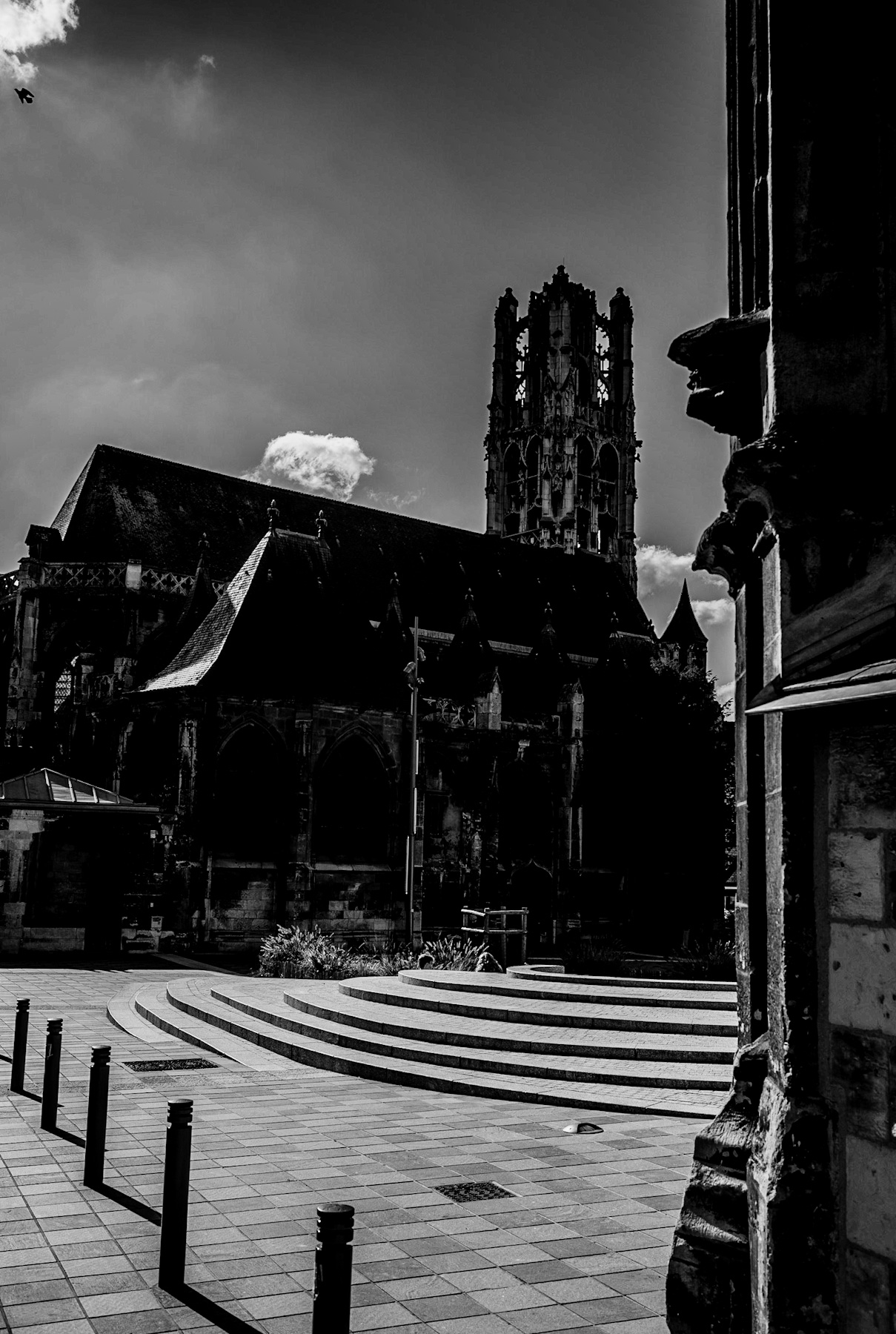
    The photograph presents a compelling black and white study of a monumental Gothic structure, immediately evoking a sense of history and architectural mastery. Dominated by the soaring silhouette of what is unmistakably the Rouen Cathedral in Normandy, France, the image captures the building’s imposing presence and intricate details through a dramatic interplay of light and shadow. The monochrome palette strips away distractions, allowing the viewer to focus on form, texture, and the raw, enduring power of medieval craftsmanship.
    A Masterpiece in Monochrome: Visual Analysis
    The composition is framed by the cathedral’s towering structure, particularly its elaborate tower, likely the famous Tour de Beurre, which rises majestically against a partially clouded sky. The dramatic lighting casts much of the edifice into deep shadow, enhancing its formidable scale and intricate tracery, pinnacles, and arched windows. This chiaroscuro effect lends a mysterious, almost ethereal quality to the ancient stone.
    In the foreground, a modern paved square with gracefully curved steps and bollards provides a stark contrast, subtly emphasizing the passage of time and the integration of historical landmarks into contemporary urban life. To the right, a fragment of an adjacent stone structure, adorned with a grotesque or gargoyle, offers a closer look at the decorative elements characteristic of Gothic design, adding depth and a sense of architectural context to the scene. The lone bird soaring in the upper left corner introduces a dynamic element, a fleeting moment against a backdrop of enduring stone. The black and white conversion masterfully highlights the textures of the aged stone, the patterned paving, and the varying cloud formations, creating a rich visual tapestry.
    Rouen Cathedral: A Chronicle in Stone
    The subject of this striking photograph, the Cathédrale Notre-Dame de Rouen, stands as a profound testament to centuries of French history and architectural evolution. Its construction began in the 12th century, evolving through various Gothic styles, from Early Gothic foundations to the flamboyant flourishes of its later additions, including the iconic Tour de Beurre (Butter Tower), completed in the early 16th century. This tower, captured prominently in the image, is renowned for its rich ornamentation and represents the zenith of Flamboyant Gothic artistry.
    Throughout its existence, Rouen Cathedral has witnessed pivotal moments. It played a significant role during the Hundred Years‘ War and was where Joan of Arc was famously tried and condemned in the nearby Vieux-Marché square in 1431. The cathedral also holds a special place in art history, having been the subject of a celebrated series of paintings by Claude Monet, who captured its façade in various lights and seasons, exploring the ephemeral qualities of perception. This enduring artistic legacy underscores the cathedral’s iconic status, not merely as a religious site but as a cultural touchstone.
    Enduring Legacy and Architectural Significance
    The architectural ambition of Rouen Cathedral, like many Gothic masterpieces, was to reach towards the heavens, creating spaces of awe and spiritual reflection. Its soaring vaults, intricate carvings, and the innovative use of flying buttresses (though not distinctly visible in this particular angle, they are integral to its structure) allowed for immense height and expansive stained-glass windows, flooding the interior with divine light. The cathedral has survived numerous challenges, including the devastating bombardments of World War II, which caused significant damage but ultimately failed to diminish its spirit. Its resilience serves as a powerful metaphor for the enduring strength of human endeavor and faith.
    This photograph, with its dramatic lighting and monochrome treatment, encapsulates the cathedral’s profound historical depth and architectural grandeur. It invites contemplation on the layers of history embedded within its stones, the countless lives it has touched, and its unwavering presence as a beacon of heritage in the modern world. It is a visual dialogue between the ancient and the contemporary, a reminder that some legacies, like the monumental Rouen Cathedral, transcend time.
  • The Timeless Majesty of Étretat: Where Chalk Cliffs Meet Artistic Legacy

    The Timeless Majesty of Étretat: Where Chalk Cliffs Meet Artistic Legacy

    The striking black and white photograph captures a quintessential view of the Normandy coast, dominated by a majestic sea stack rising defiantly from the turbulent waters. Framed by dark, imposing cliffs that hint at the grandeur of the surrounding landscape, the scene is one of raw natural power and enduring beauty. The monochrome palette accentuates the dramatic contrast between the foamy white waves crashing against the base of the stack and the dark, restless ocean stretching towards a horizon veiled by heavy, textured clouds. This solitary sentinel, intricately layered with geological history, stands as a testament to the relentless forces of nature.
    Geological Sculptures: A Million-Year Narrative
    This iconic formation is unmistakably part of the Étretat cliffs in Normandy, France, renowned globally for their spectacular chalk arches and sea stacks. These natural wonders are the result of millions of years of geological processes. The cliffs are primarily composed of Cretaceous chalk, formed from the skeletal remains of ancient marine organisms deposited during periods when the region was submerged under a warm, shallow sea. Over millennia, tectonic uplift exposed these layers, and subsequently, the incessant action of the English Channel’s waves, wind, and rain began their slow, deliberate work of coastal erosion. The softer parts of the chalk were worn away, carving out the dramatic arches, while harder, more resistant sections remained as isolated sea stacks, like the one prominently featured in the image. This continuous natural sculpting ensures that the landscape is ever-changing, a living geological museum.
    A Canvas for Masters: Art and Literature at Étretat
    Beyond its geological significance, the Étretat coastline holds a profound place in cultural history, particularly within the realms of art and literature. The unique light and dramatic scenery captivated the Impressionist painters of the 19th century. Claude Monet, in particular, was a frequent visitor and dedicated numerous canvases to capturing the varied moods and atmospheric conditions of the Étretat cliffs, including the famous „Manneporte“ and „Aiguille“ (The Needle) formations. His series of paintings illustrate how the same historical landscape could be transformed by different times of day, weather, and light, a concept powerfully evoked by the stark contrasts in this black and white photograph.
    The region’s allure extended to literature as well. The French writer Maurice Leblanc famously set parts of his Arsène Lupin detective stories, most notably „The Hollow Needle,“ within the mysterious nooks and crannies of the Étretat cliffs. This literary connection adds a layer of intrigue and adventure to the already captivating natural beauty, weaving tales of hidden treasures and secret passages into the very fabric of the landscape.
    Enduring Legacy: A Natural Wonder
    The photograph, with its timeless black and white aesthetic, perfectly encapsulates the enduring appeal of Étretat. It speaks not only to the raw power of the ocean and the resilience of the earth but also to the deep human connection with such majestic landscapes. Visitors continue to flock to this site, drawn by its dramatic vistas, its rich artistic heritage, and the sheer wonder of witnessing nature’s artistry on such a grand scale. The sea stack, battered yet unyielding, remains a silent witness to countless sunrises and storms, a symbol of permanence in a world of constant change and a truly remarkable natural wonder on the French coast.
  • Normandy’s Enduring Majesty: A Coastal Tapestry of Time

    Normandy’s Enduring Majesty: A Coastal Tapestry of Time

    The striking black and white imagery captures a dramatic coastal panorama, revealing the raw power and timeless beauty of a European shoreline. Foreground cliffs, rugged and textured, anchor the scene, their weathered faces hinting at millennia of geological forces. Beyond, the vast expanse of the sea stretches towards the horizon, its surface agitated by rhythmic waves that crash against a rocky, tide-exposed shoreline. A solitary sea stack stands sentinel in the middle distance, a testament to relentless erosion, while the imposing line of chalk cliffs extends far into the hazy distance, capped by a strip of dark vegetation beneath a brooding, cloud-strewn sky.
    GEOLOGICAL GRANDEUR: THE ALABASTER COAST’S FORMATION
    This formidable landscape is unmistakably reminiscent of the Alabaster Coast (Côte d’Albâtre) in Normandy, France. These iconic chalk cliffs, stretching for over 130 kilometers, are a marvel of natural engineering. Formed during the Upper Cretaceous period, approximately 100 million years ago, they are composed primarily of the skeletal remains of microscopic marine organisms. Over eons, these sediments compacted and solidified, later uplifted and sculpted by the relentless forces of wind and water. The dramatic verticality and distinctive white hue, particularly pronounced in the stark contrast of black and white photography, highlight the chalk’s unique composition. The sea stacks and arches, like the one prominent in the image, are ephemeral sculptures, continually shaped by the powerful currents and tides of the English Channel, showcasing the ongoing process of coastal erosion.
    ECHOES OF HISTORY: NORMANDY’S STRATEGIC SIGNIFICANCE
    Beyond their natural splendor, these Normandy cliffs carry profound historical weight. While the most famous D-Day landing beaches lie further west, the entire coastline, including these formidable chalk formations, played a critical role in 20th-century European history. During World War II, the cliffs served as a natural barrier and a key component of the German Atlantic Wall defenses. Strategic positions along these heights offered commanding views of the Channel, making them vital for observation and anti-invasion measures.
    Notably, the Dieppe Raid in August 1942, a precursor to the D-Day landings, saw Allied forces attempt to seize the port of Dieppe, located along this very stretch of coast. The objective was to test German defenses and gain valuable intelligence. The raid, though costly, provided crucial lessons that significantly influenced the planning and execution of the successful D-Day operations two years later. The rugged terrain and the challenges faced by troops attempting to scale such natural fortifications underscore the strategic importance and defensive capabilities inherent in these French coastlines.
    A TIMELESS LANDSCAPE: ENDURING INSPIRATION
    Today, the Alabaster Coast remains a cherished destination, attracting visitors who come to admire its breathtaking scenery and reflect on its past. The dramatic interplay of land and sea, captured so effectively in this monochrome image, continues to inspire artists, photographers, and travelers alike. It serves as a powerful reminder of nature’s enduring power to shape our world and of the indelible marks left by human history upon its most majestic landscapes. The coastal landscape photography of this region often seeks to convey this blend of raw natural beauty and historical resonance, offering a glimpse into a place where time and tide have carved both rock and memory.
  • Urban Echoes: A Wrapped Fitness Machine and the Layers of History in Public Spaces

    Urban Echoes: A Wrapped Fitness Machine and the Layers of History in Public Spaces

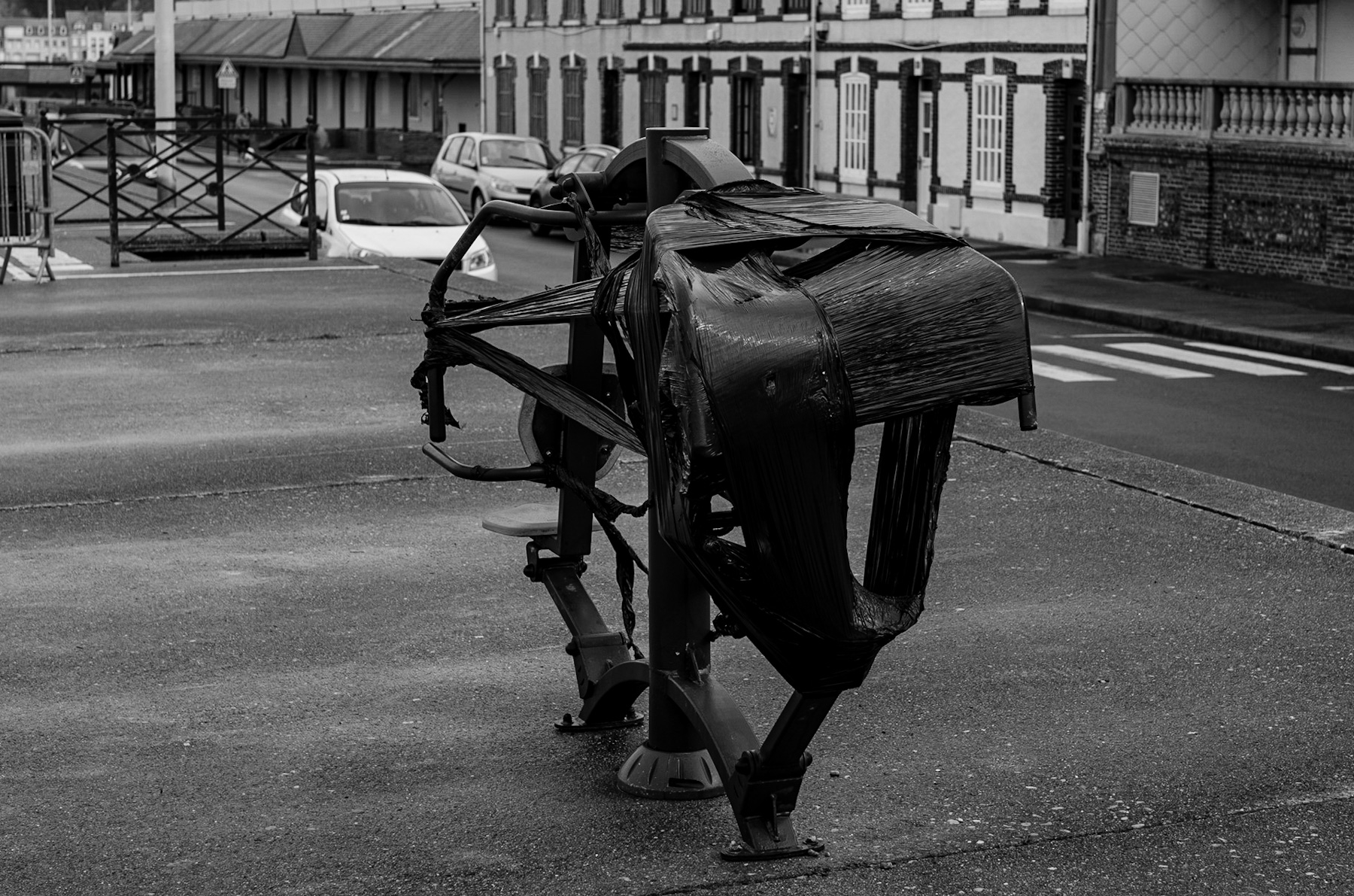
    The monochrome photograph captures a striking scene: an outdoor fitness machine, meticulously wrapped in dark plastic, standing stoically on a paved surface. Its form, a modern apparatus designed for public well-being, is rendered temporarily inert, a silent sentinel in an urban tableau. The visual narrative presented here is one of pause and potential, set against a backdrop rich with architectural history.
    A Moment of Stillness in the Urban Flow
    The central subject, an outdoor leg press or similar exercise apparatus, is entirely enveloped in black plastic sheeting. This wrapping, tightly bound, creates a strong textural contrast against the smooth, gritty asphalt beneath and the muted tones of the distant buildings. It suggests a state of disuse, protection from the elements, or perhaps anticipation of future use, leaving its immediate purpose ambiguous. The choice of black and white photography accentuates the forms and textures, emphasizing the interplay of light and shadow, and lending a timeless, almost contemplative quality to the scene.
    The immediate surroundings feature a paved area, likely a pedestrian zone or part of a public square, leading towards a street. Parked cars, contemporary in design, are visible along the roadside, indicating the ongoing rhythm of daily life that continues around this temporarily dormant installation. To the right, a clearly defined zebra crossing further reinforces the urban setting, denoting structured pedestrian movement.
    Architectural Heritage and Modern Intervention
    Dominating the background are multi-story buildings that exhibit classic European architectural characteristics. Their facades feature regularly spaced windows, many adorned with traditional shutters, some of which are painted in lighter tones, providing subtle visual interest despite the monochrome palette. The brickwork and detailing on these structures suggest a heritage that predates the modern fitness equipment, hinting at a long-established urban fabric. A prominent balcony with a balustrade on one building further enriches this historical architectural context. These buildings stand as tangible links to a deeper past, providing a robust sense of place and continuity.
    Bridging Eras: Public Spaces and Their Evolution
    This image, while capturing a contemporary object, subtly invites reflection on the historical evolution of public spaces. From the ancient agoras of Greece and the forums of Rome, which served as vibrant centers for civic life, commerce, and discourse, to the meticulously planned boulevards of 19th-century European capitals designed for grand promenades, urban areas have continually adapted to societal needs.
    The advent of outdoor fitness equipment itself is a relatively recent phenomenon, emerging from a growing global emphasis on public health and accessible wellness initiatives in the late 20th and early 21st centuries. Historically, physical activity was often integrated into daily labor, military training, or confined to specific sporting arenas. Modern public gyms, like the one depicted, represent a democratization of fitness, transforming urban landscapes into communal wellness zones. They embody a contemporary societal value placed on health and leisure, accessible to all.
    The wrapped machine can be interpreted as a metaphor for the cyclical nature of urban development – periods of construction, active use, renovation, and temporary closure. Just as historical buildings undergo restoration to preserve their legacy, modern public amenities require maintenance and occasional pauses, reflecting ongoing investment in community infrastructure. This temporary state of inactivity, whether for repair, seasonal protection, or logistical reasons, echoes the broader historical narrative of cities constantly renewing themselves, sometimes hiding elements only to reveal them anew. The enduring architecture in the background stands as a testament to the past, while the covered machine points to the ongoing, dynamic story of urban adaptation and public service in a changing world.
  • Monochrome Majesty: Unveiling the History of Étretat’s Iconic Coastline

    Monochrome Majesty: Unveiling the History of Étretat’s Iconic Coastline

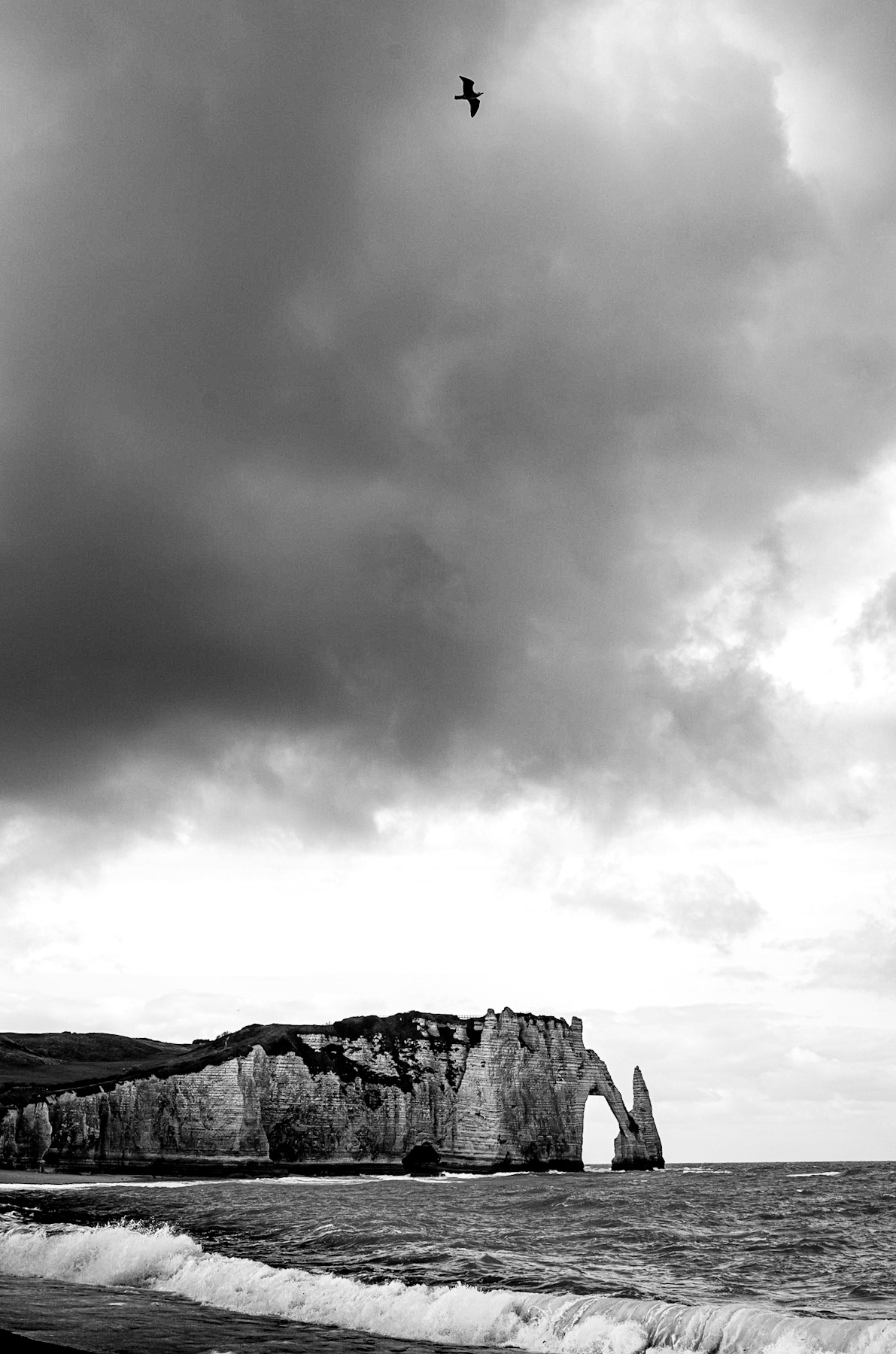
    The dramatic sweep of the Normandy coast unfolds in a striking monochrome tableau, where nature’s artistry is etched against a brooding sky. A lone bird, a silhouette of freedom, soars high above the formidable chalk cliffs of Étretat, its flight a silent counterpoint to the powerful, ancient landscape below. The scene is dominated by the monumental **Porte d’Aval natural arch**, its graceful curve carved by millennia of relentless ocean waves, standing sentinel beside the towering **Aiguille** (the Needle), an isolated stack of rock that pierces the horizon.
    The Visual Narrative: A Study in Contrast
    The photograph masterfully employs black and white to emphasize the raw power and subtle textures of this renowned French landmark. Dark, heavy clouds dominate the upper sky, creating a sense of impending drama and adding depth to the vast expanse above the cliffs. Below, the tumultuous waters of the **English Channel** crash against the shore, their white foam sharply contrasting with the darker tones of the sea. The waves themselves appear dynamic, caught mid-break, conveying the constant, sculpting force of the ocean. The chalk cliffs, with their distinctive striations and rugged contours, reveal layers of geological time, their imposing presence softened yet defined by the monochromatic palette. This absence of color strips away distractions, focusing the viewer’s attention on form, light, and shadow, thereby enhancing the timeless and almost sculptural quality of the scene. The choice of black and white photography further accentuates the dramatic mood, transforming the landscape into an almost abstract study of natural forces.
    Étretat: A Canvas for Time and Art
    Beyond its immediate visual impact, the Étretat coastline is steeped in history, both geological and cultural. These **chalk cliffs**, part of the larger Alabaster Coast, are remnants of a seabed from the Cretaceous period, approximately 70 to 100 million years ago. The relentless erosion by wind and sea has sculpted these magnificent formations, continually reshaping a landscape that has witnessed countless tides and seasons.
    Culturally, Étretat has long been a muse for artists and writers. Its dramatic beauty captivated **Impressionist painters** like **Claude Monet**, who produced numerous series depicting the arches and stack under varying light conditions. His fascination with capturing the fleeting moments of light and atmosphere found a perfect subject in Étretat’s ever-changing scenery. Gustave Courbet and Eugène Boudin also immortalized these vistas, cementing their place in art history.
    The site also holds significant literary connections. French author **Maurice Leblanc** famously set parts of his Arsène Lupin stories here, particularly „The Hollow Needle“ (L’Aiguille Creuse), intertwining the natural wonder with tales of mystery and adventure. This blend of natural grandeur and human storytelling adds layers of intrigue to every vista.
    An Enduring Legacy of Natural Beauty
    The solitary bird soaring above the **Étretat cliffs** serves as a poignant reminder of the enduring wildness of this place. It symbolizes a connection to nature that transcends human timelines, a link to the very forces that shaped these colossal structures. The scene, captured in its stark elegance, invites contemplation on the immense power of nature and the fleeting presence of human existence against such an ancient backdrop. It is a testament to the raw, untamed beauty of the **Normandy coast**, a place where history is written in stone and painted by the sea, continuing to inspire and captivate those who witness its enduring majesty.
  • Echoes of the Sea: A Marina’s Timeless Narrative in Monochrome

    Echoes of the Sea: A Marina’s Timeless Narrative in Monochrome

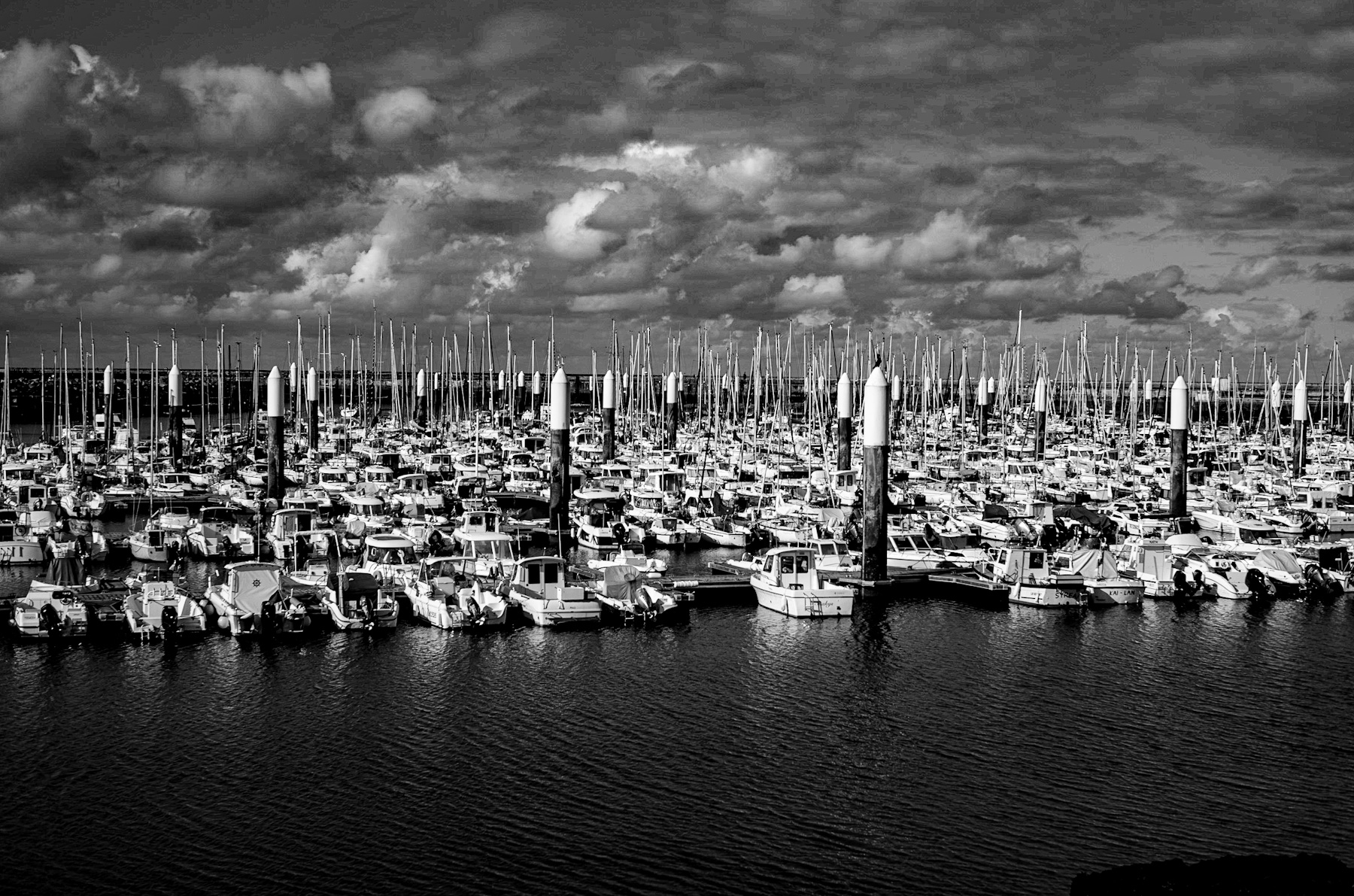
    The striking black and white photograph presents a densely packed marina, a vibrant testament to modern maritime culture. Hundreds of boats, primarily sailing yachts and smaller motor cruisers, are meticulously moored, creating a visually compelling pattern across the water’s surface. The monochromatic palette enhances the scene’s dramatic quality, drawing attention to the intricate details of the vessels and the atmospheric sky above.
    ### A Symphony of Masts and Clouds
    In the foreground, the dark, rippled water provides a stark contrast to the gleaming white hulls and superstructures of the boats. Their vertical masts, slender and numerous, rise like a dense forest, puncturing the horizon and reaching towards a sky heavy with dramatic, textured clouds. These clouds, rendered in varying shades of grey, dominate the upper third of the frame, adding a sense of depth and a slightly brooding atmosphere to the scene. The visual effect is one of ordered chaos, where individual vessels contribute to a larger, unified composition. The robust mooring pylons, stark white caps against dark wood, stand guard, anchoring the scene both literally and metaphorically.
    ### The Modern Marina: A Hub of Leisure
    This image captures the essence of a contemporary marina, a dedicated infrastructure designed to house and service recreational vessels. Marinas represent a significant evolution in humanity’s relationship with the sea. Historically, ports were primarily centers for trade, fishing, and naval operations – functional spaces driven by economic necessity or strategic importance. The rise of leisure boating, particularly since the mid-20th century, has transformed coastal landscapes, leading to the proliferation of such dedicated facilities. These hubs offer not just mooring but also a range of services from maintenance and refueling to social amenities, catering to a growing demographic seeking escape, adventure, and community on the water.
    ### Historical Currents: From Utility to Recreation
    The historical roots of maritime activity are profound, stretching back millennia to the earliest forms of navigation, exploration, and commerce. While the vessels depicted here are modern, their presence in a harbor setting connects directly to this enduring legacy. For centuries, boats were essential tools for survival and development. The shift towards recreational yachting began in earnest in the 17th century with royal patronage, evolving into a more widespread leisure pursuit for the affluent during the Victorian era. However, it was the post-World War II economic boom and advancements in boat manufacturing that truly democratized sailing and motorboating, making it accessible to a broader population.
    Today’s marinas, like the one pictured, are the physical manifestation of this historical trajectory. They embody a synthesis of ancient seafaring traditions and modern technological and societal trends. Each boat, while a personal vessel, is part of a larger collective, echoing the historical fleets that once navigated these same waters for vastly different purposes. The image, therefore, is not merely a snapshot of boats; it is a visual narrative of human ingenuity, evolving leisure, and an enduring connection to the vastness of the ocean. It encapsulates the spirit of maritime heritage, reinterpreted for the modern age, all under the timeless gaze of a dramatic sky.
  • Echoes of Power A Cooling Tower’s Monochromatic Majesty

    Echoes of Power A Cooling Tower’s Monochromatic Majesty

    Dive into a world where industrial might meets artistic grace. This striking black and white photograph captures the colossal elegance of a cooling tower, a silent sentinel of power generation. Shot from a low-angle perspective, its immense, curving surface dominates the frame, drawing the eye upwards along countless vertical lines that hint at its robust concrete construction. It’s a testament to both engineering and photographic vision, transforming a functional structure into an object of stark, dramatic beauty.
    Notice the subtle dance of life and shadow against this monolithic backdrop. In the upper right, a lone bird soars, its silhouette sharply etched against the tower’s lighter tones, casting a distinct shadow that adds an incredible sense of depth. Below, faint access points and a railing at the base provide a crucial sense of human scale against the towering edifice. The stark contrast between the luminous concrete and the deep, inky shadows of the sky amplifies the composition’s almost abstract, powerful quality.
    Historically, these iconic hyperboloid cooling towers became synonymous with industrial growth, especially through the mid-20th century. Their primary mission is crucial: to efficiently dissipate waste heat from power plants into the atmosphere. But their distinctive shape isn’t just for show. It’s a marvel of thermodynamic engineering, designed to create a natural draft, drawing cooler air in from the base and expelling hot, moist air upwards. This continuous flow is vital for the efficient generation of energy that powers our world.
    More than just utilitarian structures, these towers represent a pinnacle of modern engineering and industrial architecture. They symbolize an era of rapid industrialization and escalating global energy demands. While their purpose is purely functional, their monumental scale and unique form have inadvertently made them captivating landmarks. Artists and photographers are frequently drawn to their sculptural qualities, often employing black and white photography to emphasize their architectural lines, textures, and the interplay of light and shadow—much like in this very image.
    This photograph transcends mere documentation; it elevates the functional into a subject for profound contemplation. The image of a soaring bird juxtaposed against the colossal concrete evokes powerful themes: nature’s enduring presence against human innovation, freedom versus monumental constraint, and the intricate relationship between our built world and the natural environment. The monochromatic palette skillfully strips away distractions, forcing the viewer to focus on form, texture, and the powerful, almost timeless, presence of this industrial marvel. It’s a visual reminder of the often-unseen infrastructure that underpins modern society, capable of delivering a truly profound visual impact.