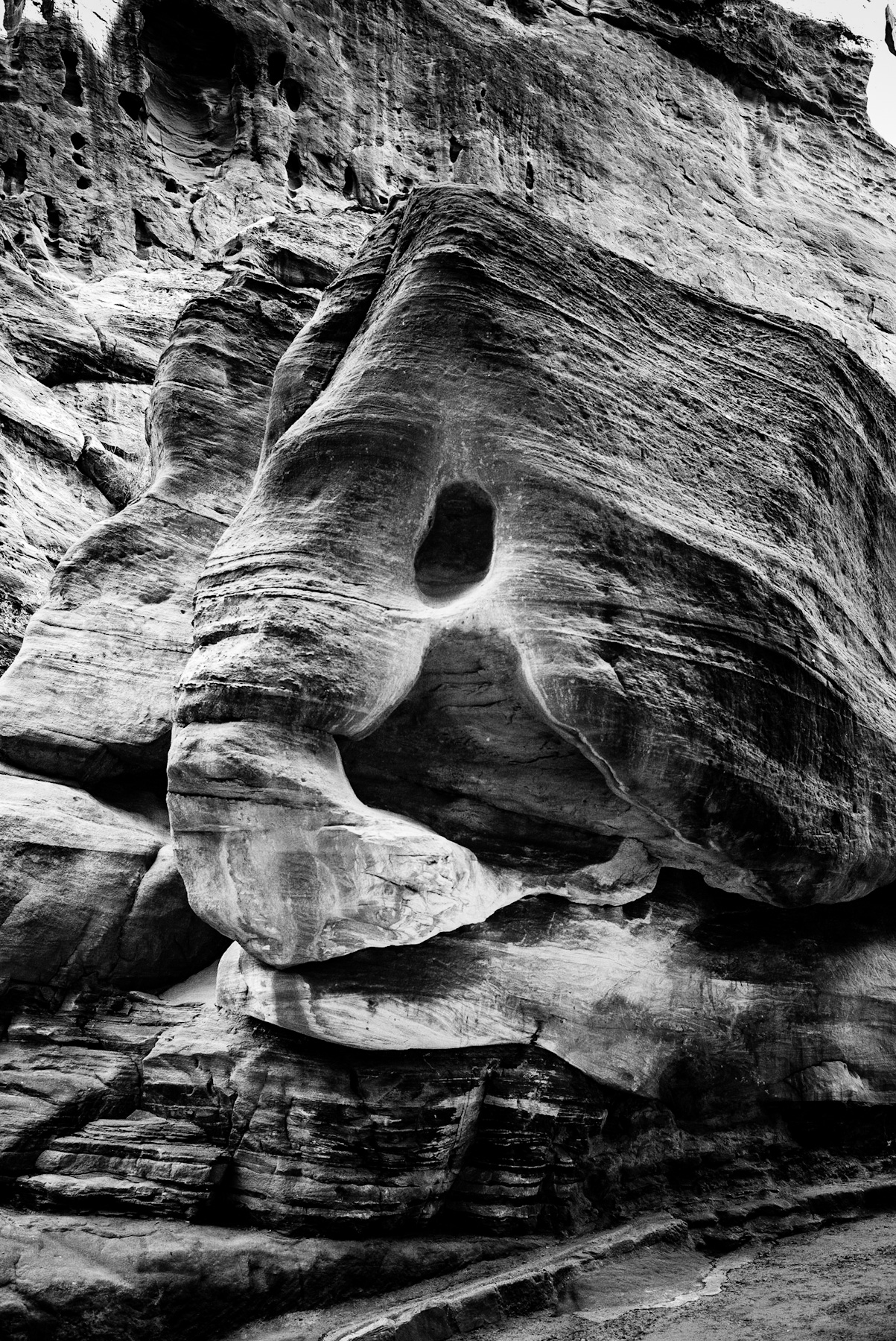
Dive into the silent story of time etched in stone. This striking black and white image offers a profound study of a monumental rock formation, revealing geological layers and the enduring might of natural forces. Dominated by sculpted sandstone, it captures a landscape shaped over millennia, where intricate textures and organic forms speak volumes about Earth’s ancient artistry.
A Canvas of Erosion
Your gaze is immediately captivated by the dramatic contours and deep shadows across the rock face. The lack of color only intensifies the myriad textures – from sleek, weathered expanses to rugged, stratified layers. These horizontal striations are classic features of sedimentary rock, a result of sand and mineral deposits piling up over millions of years. Wind and water, relentless sculptors, have carved this ancient canvas into sinuous lines and undulating curves, giving the stone an almost living, fluid character.
At its heart, a deep, irregular hollow stands out within a massive, rounded rock face. This alcove, reminiscent of an eye or a cavernous mouth, draws you in, prompting reflection on its natural origins. Around this central void, light and shadow dance, accentuating deep crevices and subtle undulations – clear signs of ongoing erosion. The overall feeling is one of raw, untamed beauty, a powerful tribute to Earth’s slow and deliberate artistry.
Geological Grandeur and Human Footprints
Geologically, formations like these thrive in arid or semi-arid zones, where wind and flash floods act as nature’s primary sculptors. Across immense stretches of time, softer layers erode, revealing the more resistant strata that define the dramatic cliffs, canyons, and arches common in desert landscapes. The deep, dark recesses in our image could well be natural shelters or the very genesis of larger cave systems, carved by relentless water.
Beyond their geological marvel, these monumental rock formations have profoundly shaped human civilization. Since ancient times, natural caves and shelters offered refuge for early humans, protecting them from harsh elements and predators. As societies advanced, these formidable landscapes transcended mere shelter; they evolved into sacred sites, defensive bastions, and magnificent canvases for both artistic and architectural brilliance.
Think of the ancient Nabataeans, who famously carved the city of Petra directly into Jordan’s rose-red sandstone cliffs. Their elaborate tombs and temples, like Al-Khazneh (The Treasury), stand as rock-cut architectural masterpieces, flawlessly blending human ingenuity with nature’s grandeur. Likewise, across the American Southwest, indigenous cultures such as the Ancestral Puebloans built their impressive cliff dwellings, utilizing the natural alcoves and overhangs of sandstone canyons for their homes and communities.
Enduring Legacy in Stone
This photograph is far more than just a picture of rock. It’s a powerful visual metaphor for the deep, unbreakable bond between humanity and the natural world. It serves as a potent reminder: while geological processes unfold on scales we can barely grasp, these very landscapes have profoundly influenced human history. They’ve inspired awe, provided sustenance, and served as the silent backdrop for countless stories. The timeless beauty captured here speaks volumes about Earth’s ancient past and the enduring human spirit that has consistently sought to understand, inhabit, and even transform these magnificent natural sculptures.
A Canvas of Erosion
Your gaze is immediately captivated by the dramatic contours and deep shadows across the rock face. The lack of color only intensifies the myriad textures – from sleek, weathered expanses to rugged, stratified layers. These horizontal striations are classic features of sedimentary rock, a result of sand and mineral deposits piling up over millions of years. Wind and water, relentless sculptors, have carved this ancient canvas into sinuous lines and undulating curves, giving the stone an almost living, fluid character.
At its heart, a deep, irregular hollow stands out within a massive, rounded rock face. This alcove, reminiscent of an eye or a cavernous mouth, draws you in, prompting reflection on its natural origins. Around this central void, light and shadow dance, accentuating deep crevices and subtle undulations – clear signs of ongoing erosion. The overall feeling is one of raw, untamed beauty, a powerful tribute to Earth’s slow and deliberate artistry.
Geological Grandeur and Human Footprints
Geologically, formations like these thrive in arid or semi-arid zones, where wind and flash floods act as nature’s primary sculptors. Across immense stretches of time, softer layers erode, revealing the more resistant strata that define the dramatic cliffs, canyons, and arches common in desert landscapes. The deep, dark recesses in our image could well be natural shelters or the very genesis of larger cave systems, carved by relentless water.
Beyond their geological marvel, these monumental rock formations have profoundly shaped human civilization. Since ancient times, natural caves and shelters offered refuge for early humans, protecting them from harsh elements and predators. As societies advanced, these formidable landscapes transcended mere shelter; they evolved into sacred sites, defensive bastions, and magnificent canvases for both artistic and architectural brilliance.
Think of the ancient Nabataeans, who famously carved the city of Petra directly into Jordan’s rose-red sandstone cliffs. Their elaborate tombs and temples, like Al-Khazneh (The Treasury), stand as rock-cut architectural masterpieces, flawlessly blending human ingenuity with nature’s grandeur. Likewise, across the American Southwest, indigenous cultures such as the Ancestral Puebloans built their impressive cliff dwellings, utilizing the natural alcoves and overhangs of sandstone canyons for their homes and communities.
Enduring Legacy in Stone
This photograph is far more than just a picture of rock. It’s a powerful visual metaphor for the deep, unbreakable bond between humanity and the natural world. It serves as a potent reminder: while geological processes unfold on scales we can barely grasp, these very landscapes have profoundly influenced human history. They’ve inspired awe, provided sustenance, and served as the silent backdrop for countless stories. The timeless beauty captured here speaks volumes about Earth’s ancient past and the enduring human spirit that has consistently sought to understand, inhabit, and even transform these magnificent natural sculptures.
Schreibe einen Kommentar