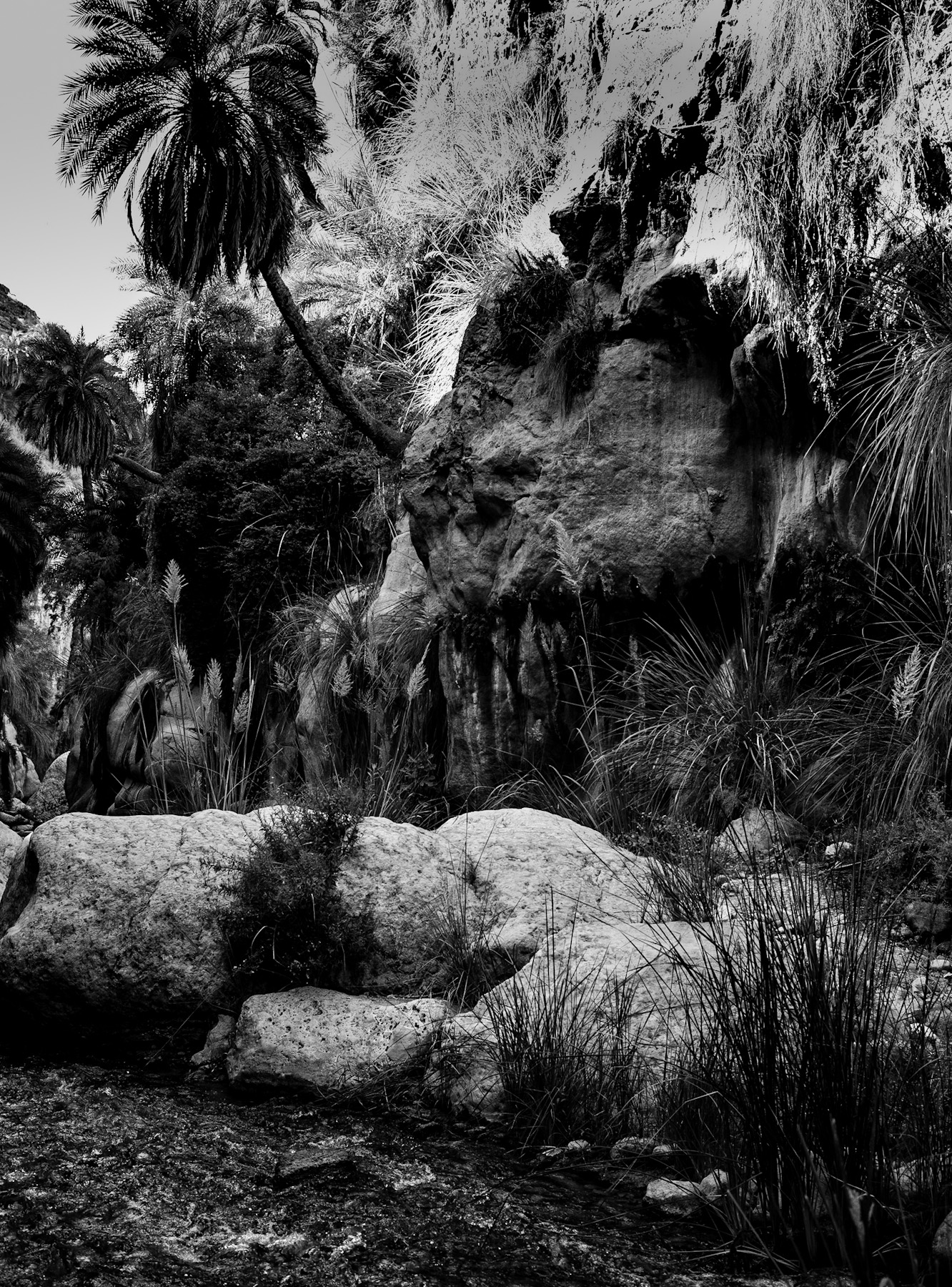
The monochromatic capture presents a powerful tableau of a wadi, a geological formation synonymous with life in arid regions. Dominating the frame are robust rock formations, their surfaces etched with the passage of time, providing a stark contrast to the organic vitality of the surrounding flora. A significant date palm, its fronds a dark silhouette against the lighter sky, leans gracefully, hinting at the persistent struggle and triumph of vegetation in this challenging environment.
**The Landscape Unveiled: A Study in Contrast**
The foreground features large, rounded boulders, their smooth, pale surfaces suggesting the erosion of water over millennia. Between and around these geological anchors, resilient grasses and reeds sprout, their sharp textures amplified by the black and white rendering. Further back, the wadi walls rise, rugged and imposing, adorned with cascading vegetation that clings to every crevice, creating a tapestry of light and shadow. The overall impression is one of a hidden sanctuary, a verdant artery cutting through an otherwise barren expanse. The absence of color emphasizes form, texture, and light, allowing the viewer to appreciate the raw, enduring beauty of this desert landscape.
**Oases and Wadis: Lifelines of Ancient Civilizations**
Historically, wadis and oases have been far more than mere geographical features; they have been the very cradles of life and civilization in the Middle East and North Africa. These natural depressions, where underground water sources emerge or seasonal rainfall collects, created vital pockets of fertility amidst vast deserts. The date palm, prominently featured in the image, epitomizes this survival. For thousands of years, the date palm has provided sustenance, shelter, and materials for tools and construction, making it an indispensable resource for communities. Its ability to thrive in arid conditions, producing nutrient-rich fruit, made settlement possible in regions that would otherwise be uninhabitable.
Ancient communities, from nomadic tribes to burgeoning empires, strategically located their settlements around these precious water sources. The availability of fresh water and edible plants like dates facilitated human migration, trade, and cultural exchange across vast distances. Without these natural oases, the intricate network of ancient trade routes, such as the Silk Road and various spice routes, would have been impossible. Caravans relied on these wadi systems for replenishment, transforming them into bustling hubs of commerce and interaction.
**Echoes of History: Enduring Significance**
The scene depicted in the photograph, with its ancient rocks, resilient palms, and promise of water, evokes the timeless narrative of human perseverance. It represents the enduring struggle against the elements and the ingenuity required to harness natural resources. From the earliest human settlements to the great empires that rose and fell, wadis and oases have played a pivotal role in shaping the historical trajectory of entire regions. They are living museums, silently narrating tales of survival, prosperity, and the interconnectedness of human and natural history.
Today, these landscapes continue to be vital ecological zones, supporting unique biodiversity and serving as reminders of humanity’s profound reliance on natural resources. The image is a poignant testament to the lasting power and historical depth embedded within these essential desert lifelines.
**The Landscape Unveiled: A Study in Contrast**
The foreground features large, rounded boulders, their smooth, pale surfaces suggesting the erosion of water over millennia. Between and around these geological anchors, resilient grasses and reeds sprout, their sharp textures amplified by the black and white rendering. Further back, the wadi walls rise, rugged and imposing, adorned with cascading vegetation that clings to every crevice, creating a tapestry of light and shadow. The overall impression is one of a hidden sanctuary, a verdant artery cutting through an otherwise barren expanse. The absence of color emphasizes form, texture, and light, allowing the viewer to appreciate the raw, enduring beauty of this desert landscape.
**Oases and Wadis: Lifelines of Ancient Civilizations**
Historically, wadis and oases have been far more than mere geographical features; they have been the very cradles of life and civilization in the Middle East and North Africa. These natural depressions, where underground water sources emerge or seasonal rainfall collects, created vital pockets of fertility amidst vast deserts. The date palm, prominently featured in the image, epitomizes this survival. For thousands of years, the date palm has provided sustenance, shelter, and materials for tools and construction, making it an indispensable resource for communities. Its ability to thrive in arid conditions, producing nutrient-rich fruit, made settlement possible in regions that would otherwise be uninhabitable.
Ancient communities, from nomadic tribes to burgeoning empires, strategically located their settlements around these precious water sources. The availability of fresh water and edible plants like dates facilitated human migration, trade, and cultural exchange across vast distances. Without these natural oases, the intricate network of ancient trade routes, such as the Silk Road and various spice routes, would have been impossible. Caravans relied on these wadi systems for replenishment, transforming them into bustling hubs of commerce and interaction.
**Echoes of History: Enduring Significance**
The scene depicted in the photograph, with its ancient rocks, resilient palms, and promise of water, evokes the timeless narrative of human perseverance. It represents the enduring struggle against the elements and the ingenuity required to harness natural resources. From the earliest human settlements to the great empires that rose and fell, wadis and oases have played a pivotal role in shaping the historical trajectory of entire regions. They are living museums, silently narrating tales of survival, prosperity, and the interconnectedness of human and natural history.
Today, these landscapes continue to be vital ecological zones, supporting unique biodiversity and serving as reminders of humanity’s profound reliance on natural resources. The image is a poignant testament to the lasting power and historical depth embedded within these essential desert lifelines.
Schreibe einen Kommentar