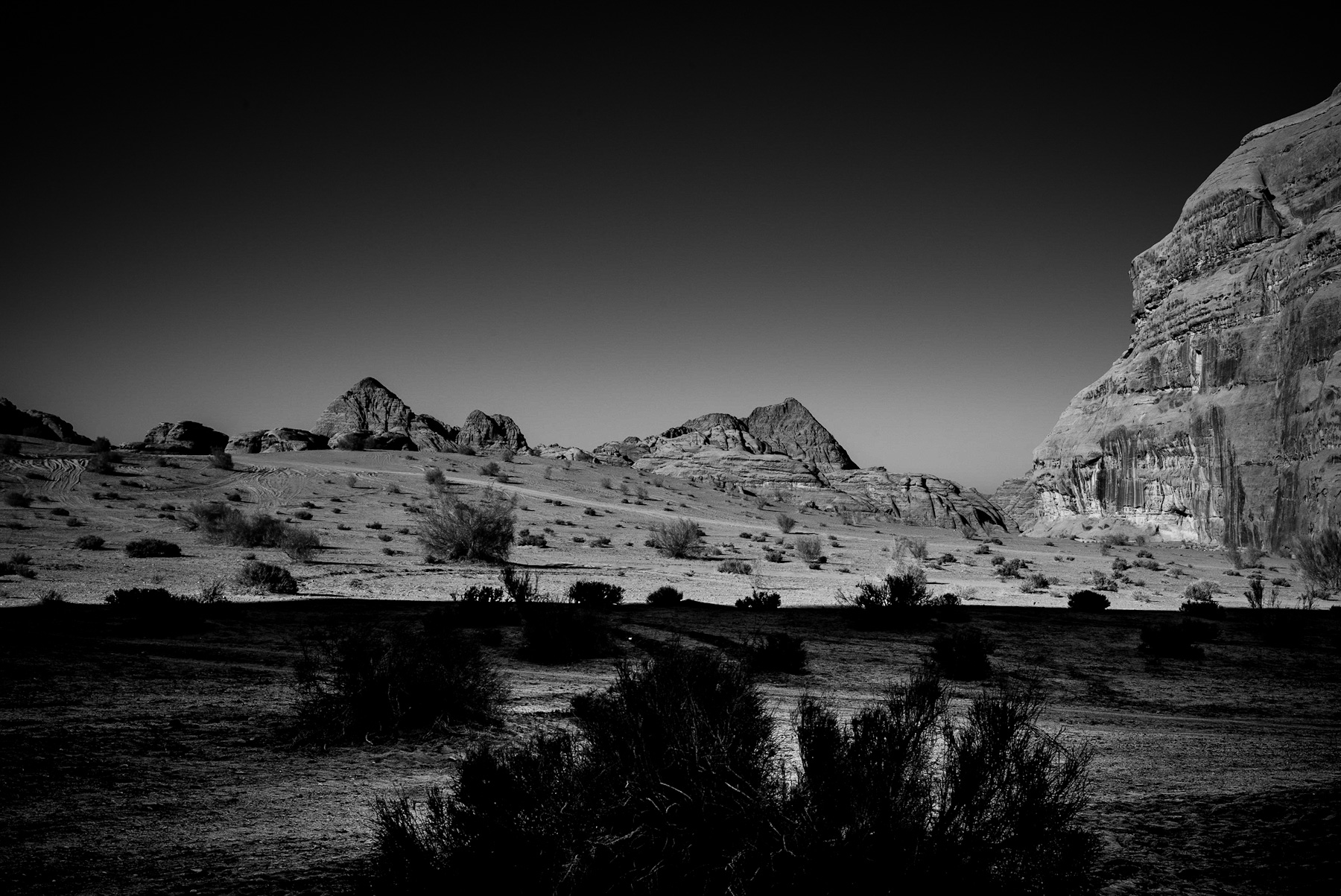
This striking black and white photograph instantly transports you to a dramatic desert landscape, a realm of high contrast and geological grandeur. Deep shadows in the foreground cradle sparse desert vegetation, anchoring the scene with a strong tonal presence. Further back, the terrain unfolds into a sunlit, gravelly plain dotted with low-lying shrubs. To the right, a towering, sheer sandstone cliff dominates the frame, its vertical weathering and intricate geological layering a testament to ages past. In the distance, rugged, pyramid-like rock formations pierce a dark, cloudless sky, underscoring the profound isolation and vastness of this arid environment. This powerful visual composition strongly evokes the unique topography of southern Jordan, particularly the famed Wadi Rum valley, often revered as the Valley of the Moon.
A Landscape Forged by Time: The Geological Foundation
From a geological standpoint, the landscape captured in the image is a masterpiece forged over millions of years by unrelenting tectonic activity, fierce wind erosion, and persistent water carving. The massive sandstone and granite formations you see are characteristic features of the ancient Arabian Shield. The monochrome presentation of the photograph masterfully accentuates these textures, drawing out the subtle interplay between the soft sand, the resilient desert scrub, and the rigid, deeply weathered surfaces of the ancient cliffs. This visual dialogue creates an almost tangible sense of timelessness, presenting a landscape that has stood virtually unchanged for millennia.
Whispers of Ancient Civilizations and Trade Routes
Beyond its breathtaking natural beauty, landscapes like the one depicted here carry profound historical significance, echoing stories from forgotten ages. For thousands of years, these arid regions served as vital corridors, facilitating human migration, bustling trade, and vibrant cultural exchange.
During classical antiquity, southern Jordan became the heartland of the Nabataeans, a remarkable nomadic Arab people who ingeniously forged a powerful trading empire. They didn’t just survive the harsh desert conditions; they mastered them, developing sophisticated water-harvesting systems that allowed them to control the immensely lucrative incense, spice, and silk trade routes connecting distant southern Arabia with the vibrant Mediterranean world. The massive sandstone cliffs, much like the one prominently featured on the right of the photo, frequently bear ancient petroglyphs and inscriptions in Thamudic, Nabataean, and early Arabic scripts. These intricate carvings are more than just art; they serve as a living historical archive, meticulously documenting the lives, beliefs, and languages of ancient travelers and nomads who once traversed these very paths.
The Enduring Legacy of the Arab Revolt and Cultural Heritage
In more recent history, this specific desert landscape gained global recognition through the pivotal events of the Arab Revolt (1916–1918). It was here that British officer T.E. Lawrence, globally immortalized as Lawrence of Arabia, traversed these expansive desert realms alongside Arab forces. The strategic geography of the rocky canyons and wide-open plains played an absolutely crucial role in the innovative guerrilla warfare tactics employed during the campaign against the Ottoman Empire.
Today, this storied area remains the cherished home of the Bedouin people, who have diligently preserved their traditional knowledge of the desert ecosystem for generations. Recognized as a prestigious UNESCO World Heritage site, the region is celebrated not only for its unparalleled natural aesthetic but also for its remarkable cultural continuity. The silent, enduring rocks depicted in this photograph have witnessed the majestic rise and poignant fall of empires, the countless passages of ancient caravans laden with exotic goods, and the daily, resilient lives of desert nomads. They stand as an enduring monument to both human resilience and the vast tapestry of natural history.
A Landscape Forged by Time: The Geological Foundation
From a geological standpoint, the landscape captured in the image is a masterpiece forged over millions of years by unrelenting tectonic activity, fierce wind erosion, and persistent water carving. The massive sandstone and granite formations you see are characteristic features of the ancient Arabian Shield. The monochrome presentation of the photograph masterfully accentuates these textures, drawing out the subtle interplay between the soft sand, the resilient desert scrub, and the rigid, deeply weathered surfaces of the ancient cliffs. This visual dialogue creates an almost tangible sense of timelessness, presenting a landscape that has stood virtually unchanged for millennia.
Whispers of Ancient Civilizations and Trade Routes
Beyond its breathtaking natural beauty, landscapes like the one depicted here carry profound historical significance, echoing stories from forgotten ages. For thousands of years, these arid regions served as vital corridors, facilitating human migration, bustling trade, and vibrant cultural exchange.
During classical antiquity, southern Jordan became the heartland of the Nabataeans, a remarkable nomadic Arab people who ingeniously forged a powerful trading empire. They didn’t just survive the harsh desert conditions; they mastered them, developing sophisticated water-harvesting systems that allowed them to control the immensely lucrative incense, spice, and silk trade routes connecting distant southern Arabia with the vibrant Mediterranean world. The massive sandstone cliffs, much like the one prominently featured on the right of the photo, frequently bear ancient petroglyphs and inscriptions in Thamudic, Nabataean, and early Arabic scripts. These intricate carvings are more than just art; they serve as a living historical archive, meticulously documenting the lives, beliefs, and languages of ancient travelers and nomads who once traversed these very paths.
The Enduring Legacy of the Arab Revolt and Cultural Heritage
In more recent history, this specific desert landscape gained global recognition through the pivotal events of the Arab Revolt (1916–1918). It was here that British officer T.E. Lawrence, globally immortalized as Lawrence of Arabia, traversed these expansive desert realms alongside Arab forces. The strategic geography of the rocky canyons and wide-open plains played an absolutely crucial role in the innovative guerrilla warfare tactics employed during the campaign against the Ottoman Empire.
Today, this storied area remains the cherished home of the Bedouin people, who have diligently preserved their traditional knowledge of the desert ecosystem for generations. Recognized as a prestigious UNESCO World Heritage site, the region is celebrated not only for its unparalleled natural aesthetic but also for its remarkable cultural continuity. The silent, enduring rocks depicted in this photograph have witnessed the majestic rise and poignant fall of empires, the countless passages of ancient caravans laden with exotic goods, and the daily, resilient lives of desert nomads. They stand as an enduring monument to both human resilience and the vast tapestry of natural history.
Schreibe einen Kommentar